
Descargar la aplicación


Soporte al cliente

Desert Online General Trading LLC
Warehouse # 7, 4th Street, Umm Ramool, Dubai, 30183, Dubai
Descargar la aplicación
Soporte al cliente
Desert Online General Trading LLC
Warehouse # 7, 4th Street, Umm Ramool, Dubai, 30183, Dubai
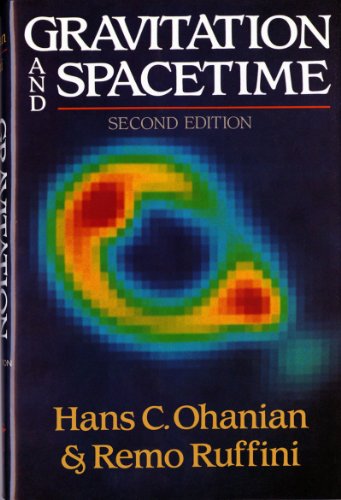
Gravitation and Spacetime
D**S
Make sure you are familiar with Tensor Notation
The author has a good approach but a few more fully worked out examples would have been helpful. Make sure you are familiar with tensors as this is vital for understanding the technical aspects of this subject.
N**.
Five Stars
I feel like its a good book for start reading GR
P**L
A Marvelous Book That Can Work as an Undergrad text!
Ever since the Gravity B probe observed frame -dragging and associated effects predicted by GR, a push has been on to begin introduction to advanced physics undergrads. In fact a number of useful possible approaches have been explicated which bear further examination and comparison, see e.g. 'Teaching General Relativity to Undergraduates' in Physics Today, June, 2012, p. 41.The authors of the Physics Today article note that historically, hitherto, teaching GR to undergrads was not on since it was "considered as prohibitively difficult" given the need to interject differential geometry and tensors. In my own teaching of special relativity, I often found a number of pre-existing mental barriers to the concepts though many of these could be overcome by using advanced algebra to demonstrate the validity. (In chapters 21 and 22 of my book, 'Astronomy & Astrophysics: Notes, Problems and Solutions' I present the basic notes and plans I used as well as the problems.)So, having said that, it was refreshing to be inspired by O'Hanian and Ruffini's book, to actually consider a possible 1 term course for undergraduates in GR.What content would I choose, say for implementing a GR course to follow my special relativity?Equivalence of gravitational and inertial mass (pp. 21-35 including evidence) would definitely provide a start, then going on to the tidal field as a local measure of gravitation (p. 45).The 'Formalism of Special Relativity' (Chapter 2) would be a next logical step - given it would be useful in reinforcing the concepts of special relativity, and also introducing students to 'Tensors in Spacetime' (p 72). The amount of content in Chapter Two covered would, of course, depend on the instructor, but I'd certainly want to finish with Sec. 2.6 at least 'Differential Forms and the Exterior Calculus'. (p. 97)'The Linear Approximation' and its whys and wherefores is the next set of content, and with some emphasis on the non-relativistic limit (p. 158) then going to the 'Geometric Interpretation; Curved Spacetime', p. 163.(The Lagrangian formalism can be treated or glossed over somewhat, depending on the instructor and students. In any case, in the problem set, p. 174,, problems 1-4 and 6-7 ought to be eminently doable.'Applications of the Linear Approximation' (Chapter Four ) would come next and I especially liked the authors' treatment of gravitational time dilation (p. 179). "Gravitational time dilation" refers to a slowing down of clocks in a gravitational field. However, in applying it, one must take care to distinguish between clocks at differing distances, say to obtain the proper time.As an illustration, let two clocks be placed at finite distances r1 and r2, so if one reckons a delay, dt, between successive signals (say traveling from r1 to r2) then the ratio for the proper times (that the clocks at r1, r2 respectively indicate) can be worked out to:dt2/ dt1 ~ 1 - GM/r2 + GM/r1Where G is the Newtonian gravitational constant (6.7 x 10^-11 Nm^2/kg^2), and M the gravitating mass (say M = 6 x 10^24 kg for the Earth)More conveniently, one expresses the fractional deviation between times registered by the 2 clocks (at r1, r2):viz.{dt2 - dt1}/dt = GM[1/r1 - 1/ r/2]If the 2 clocks are near the Earth's surface, say, then one can use the approximation (page 182):GM[1/r1 - 1/ r/2] ~ g (dr/ c^2)where dr is the height differential between the clocks and g is the acceleration of gravity and c, the speed of light - all in cgs units. (Thus: g = 980 cm/s^2, c = 3 x 10^10 cm/sec, and say ....let dr = 10 km = 10^6 cm)Then, using these one would obtain:dt/t ~ (980 cm/s^2)x [10^6 cm/ (3 x 10^10 cm/sec)^2] ~ 10^-12Note the result, since it's fractional, is dimensionless!What it's saying is that the differential or delay in time dt, associated with some clock time t, is going to be:dt ~ (10^-12) tThen if t = 1 sec, dt = 10^-12 secThis shows the curious undergrad, that although tiny indeed, the effect is discernible! (Espcially with atomic clocks)Evidence for curved spacetime and 'gravitational lensing' (p. 203) would probably conclude my idealized undergrad course, but if time were left (say for a typical semester - a quarter term would be too short) I'd look for other material in later chapters to whet students' curiosity. For example, experiments with detectors of gravitational radiation (p. 281) and Geodetic Precession (p. 414).While one might be tempted to inject some black hole exposure, e.g. with reference fo the 'maximal Schwarzschild Geometry' (p. 449) or The Kerr Solution (or Reissner - Nordstrom Solution) - p. 459, this content is perhaps a tad too ambitious for an undergrad exposure in one term. Maybe a second term.I awarded the book five stars because it has the content in the manner of presentation I like, to offer a lot of enrichment for a potential undergraduate course. Given how general relativity is more and more becoming relevant, I don't believe we can keep the undergrads from it much longer. This text is an excellent place to start with material that offers a workable solution!
O**D
interesting book
Although I must admit that, as a non-physics undergraduate, I was not able to fully follow all the calculations and derivations in this book, I still found it a very nice read. The first chapter on Newtonian Gravitation, with all the experimental facts and illustrious history leading to the advent of modern theories of gravitation, was the most enlightening of all. Moreover, I do agree with the reviewer who noted the book's refreshing approach to derive the "Einstein Equation" first through a linear approximation of gravitation. In fact the linear approximation of gravitation is used to make the most prominent predictions of general relativity such as gravitational waves and the bending of light beams due to massive celestial objects (the one prediction that was first confirmed by experiment). However, I wish that the calculations be more detailed. Instead, the author usually left out the last steps and asked the reader to complete them. But more likely this dissatisfaction of mine is largely due to my own inability to do theoretical calculations. Having said that, I still find that any textbook on general relativity written so that even non-physics undergrads can appreciate it, is by all means worth reading.
H**R
My favorite book on general relativity
I taught myself general relativity (and tensor calculus) out of the first edition of this book. After struggling with Weinberg (no problems!) and Misner, Thorne, and Wheeler (off-putting preachy style--as noted by Chandrasekhar in his Physics Today review), I found this book a godsend. Ohanian's prose is straightforward and interesting. Every chapter is interspersed with instructive exercises (work them!); there are also good selections of end-of-chapter problems. I have rarely enjoyed working through a physics book as much as I did this one. Among many high points, I found section 7.1, General Covariance and Invariance, particularly enlightening.The second edition, with Ruffini added as co-author, updates the first. It adds a concise, straightforward account of differential forms. In this respect, an excellent exposition is made even better.
D**Z
Exemplary production values.
I don't have much to add except to say that the production values are exemplary. Each chapter has an extensive section of further reading and a list of references. There are answers to all even problems (though none for the many "exercises left for the reader"), a section of color plates, and a good index. Typesetting and figures are very attractive. I'd only wish for wider margins for notes.As others have mentioned, Ohanian introduces linearized GR (in a completely logical and satisfying manner) before Riemannian geometry. Most GR books at this level dump a huge load of mathematics on the student before much physics is ever seen, but Ohanian's approach allows many applications -- the bending and retardation of light, gravitational lenses, the Lense-Thirring effect, and a whole chapter on gravitational waves -- before the full Riemannian apparatus is introduced.You'll need a pretty solid grasp of undergraduate mechanics (including Lagrangian mechanics) and electrodynamics to get the most out of the book.
Trustpilot
Hace 3 semanas
Hace 2 semanas