We remain fully operational. Our teams are working around the clock to ensure your deliveries continue safely.

Descargar la aplicación


Servicios al cliente
Sobre nosotros
Copyright © 2025 Desertcart Holdings Limited
Descargar la aplicación

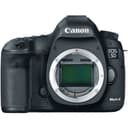
📷 Elevate your craft with the Canon 5D Mark III — where precision meets power.
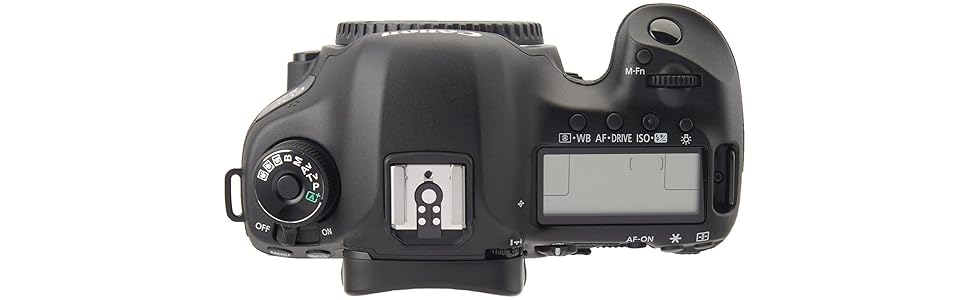
The Canon EOS 5D Mark III is a professional-grade full-frame DSLR featuring a 22.3MP CMOS sensor, advanced 61-point autofocus, and 6 fps continuous shooting. It offers robust 1080p HD video capabilities with manual controls, housed in a durable magnesium alloy body with enhanced dust and weather resistance. Ideal for photographers and videographers seeking high-resolution, reliable performance in diverse shooting environments.



| ASIN | B007FGYZFI |
| Age Range Description | Kid |
| Aperture modes | F4.0 |
| Are Batteries Included | Yes |
| Aspect Ratio | 4:3 |
| Auto Focus Technology | Automatic with Manual |
| Autofocus | Yes |
| Autofocus Points | 61 |
| Best Sellers Rank | #97,817 in Electronics ( See Top 100 in Electronics ) #127 in DSLR Cameras |
| Bit Depth | 14 Bit |
| Brand | Canon |
| Built-In Media | Camera and Standard Items |
| Camera Flash | Built-In |
| Camera Lens | EF 24-105mm f/4L IS USM Lens |
| Color | Black |
| Compatible Devices | Computers, HDMI-compatible devices |
| Compatible Mountings | Canon EF |
| Connectivity Technology | USB |
| Continuous Shooting | 6 FPS |
| Customer Reviews | 4.1 out of 5 stars 685 Reviews |
| Digital Scene Transition | True |
| Digital-Still | No |
| Display Fixture Type | Fixed |
| Display Resolution Maximum | 720 X 480 Pixels |
| Display Type | LCD |
| Dots Per Screen | 103.125 dots per square inch |
| Effective Still Resolution | 22 |
| Expanded ISO Maximum | 25600 |
| Expanded ISO Minimum | 100 |
| Exposure Control | Aperture priority AE, Automatic, Custom (x3), Manual, Program AE, Shutter priority AE |
| File Format | JPEG |
| Flash Memory Bus Interface Type | Parallel ATA or SDIO |
| Flash Memory Installed Size | 16 |
| Flash Memory Type | Compact Flash Type I (UDMA compatible), SD/SDHC/SDXC |
| Flash Modes | Automatic |
| Flash Sync Speed | 1/200_sec |
| Focus Features | TTL-CT-SIR |
| Focus Mode | Continuous-Servo AF (AF-C), Single-Servo AF (AF-S) |
| Focus Type | Automatic with Manual |
| Form Factor | Mid-size SLR |
| Global Trade Identification Number | 00013803142433 |
| HDMI Type | Type C Mini HDMI |
| Hardware Interface | AV Port |
| Has Color Screen | Yes |
| Image Capture Type | Stills |
| Image Stabilization | Optical |
| Image stabilization | Optical |
| Item Weight | 30.34 Ounces |
| JPEG Quality Level | Basic, Fine, Normal |
| Lens Construction | Telephoto |
| Lens Type | Telephoto |
| Manufacturer | Canon Cameras US |
| Manufacturer Part Number | 5260B002 |
| Maximum Aperture | 2.8 f |
| Maximum Image Size | 0.22 Inches |
| Maximum Shutter Speed | 1/8000 Seconds |
| Memory Slots Available | 2 |
| Metering Methods | Multi, Center-weighted, Spot, Partial |
| Minimum Focal Length | 18 Millimeters |
| Minimum Shutter Speed | 30 seconds |
| Model Name | Canon EOS 5D Mark III |
| Model Number | 5260B002 |
| Model Series | 5D |
| Movie Mode | Yes |
| Night vision | No |
| Optical Zoom | 1 x |
| Photo Sensor Resolution | 22.3 MP |
| Photo Sensor Size | Full Frame (35mm) |
| Photo Sensor Technology | CMOS |
| Real Angle Of View | 0.56 Radians |
| Recording Capacity | 29.59 Minutes |
| Remote Included | No |
| Screen Size | 3.2 Inches |
| Self Timer | 10 Seconds |
| Sensor Type | CMOS |
| Series Number | 5 |
| Shooting Modes | HDR (High Dynamic Range) |
| Special Feature | Live View |
| Supported File Format | JPEG |
| Supported Image Format | JPEG |
| Total Still Resolution | 22.3 MP |
| Total USB 2.0 Ports | 1 |
| Total USB Ports | 1 |
| Total Video Out Ports | 1 |
| UPC | 013803142433 138031424332 |
| Video Capture Format | mpeg-4;h.264 |
| Video Output | HDMI |
| Video Resolution | FHD 1080p |
| Viewfinder | Optical |
| Viewfinder Magnification | 0.71x |
| Warranty Description | 1 year coverage for labor, 1 year coverage for parts |
| White Balance Settings | Auto |
| Wireless Technology | yes |
| Write Speed | 6 fps |
| Zoom | Digital Zoom, Optical Zoom |
J**.
Wooooooooooaaaaaaaaahhhhhhhhh
I used a 7D prior to this. I have both bodies now. I'll spare you the technical aspects of the camera, because honestly, I don't think it matters that much. What is important to me is that the camera has the ability to do what you need it to, and it doesn't make it a chore to do so. It needs to remove itself from the process as much as possible so you can make the art not master how to flip switches or earn the high score at The Game of Menus. I'll preface the remainder of the review with some information about my shooting style. 1. I'm a RAW only guy; I just don't think about JPG. 2. I can sometimes be an IQ geek (I try not to be). 3. I only shoot in manual mode... because I don't ever remember that Av and Tv exist (I've long forgotten about P and A). 4. I turn off just about every setting that exists. Highlight priority, Noise reduction, long exposure comp, etc... all off. 5. I usually only shoot in Expanded AF Area or Spot AF. 6. I process everything through LR. Now... here's what I like about the 5D Mark III: - The 5D III has some wonderful ISO response, especially compared to my 7D. I was only marginally content up to ISO 400 on the 7D, but I'm happy with ISO 6400 on the 5D before I feel the need to apply some noise reduction (I shoot with all that off). This lets me shoot in darker places without my own light, which is great. - Handling the camera is a joy, but man does it have menus out the yingyang. Sometimes it is a bit annoying to have to go from one end of the menus to another (e.g., from Mirror Lock up to Format Card). I am glad they took Mirror Lock up out of the Custom functions... of course... there are custom functions. For that mirro lock up bit, just set a "Tripod mode" to one of the C's on the dial and problem solved. Easy. In my hands, I really like the 5D III w/ Grip. It's bulky and heavy. It definitely feels like a tool and not a toy. Then again... I'm one of those people that liked the original O controllers for the Xbox. I held it in a bit of a weird way, though. - The AF system is great (coming from the 7D). Now when I shoot with my 7D, I feel the same as when I used a 5D II from using the 7D's AF system. The viewfinder is oddly... bare on the 7D. - The dial lock is amazing. My 7D is always ending up in Bulb or a Custom mode (it hangs at my hip from a strap). 5D III? Never changes modes, and I surely never want it to... except for tripods, which is so rare anyway. - Images come out great (when I don't suck). This is really more a consequence of the glass on the front (and my own skills holding the camera still), but the 5D III doesn't hinder the process at all. - Very well rounded. Decent FPS (7D is faster, which is why I keep it around), great ISO response, Full Frame, great AF, and wonderful button placement. Naturally, I could go to a 1DX from the 7D, but that's a lot of money, and then I lose the "1.6x crop factor" (which is only a composition/FOV thing; there is no actual magnification... beyond the differences in different size and pixel pitch senors and so forth. That's all really beside the point). All in all, it's a great camera. More MP than you need, well thought out ergonomics, and so many functions. If you are looking for a Full Frame camera that isn't $6,000, this is a wonderful option. There's also the 6D, too, and they're pretty much the same thing minus some choice features. I bought this camera before the 6D came out, and I don't regret it. If you are a professional photographer, I don't really know why you are reading this review. You already know way more than I do. If you are a serious photographer looking for a good FF camera, I give this thing a thumbs up. If you are a serious [money] amateur looking for a great all around camera (or a great FF), sure, I'd wager you won't be disappointed. If you're tight on cash, buy a much cheaper camera and invest the rest in your retirement or in glass. After all, glass matters more than the camera. I've never met anyone who can look at a photo and tell me which camera it was shot with or even which brand. Lens maybe, camera definitely not. Give a photographer a Canon Powershot, and I'm sure he/she can make better stuff than I can with this fancy pants 5D III.
M**1
Absolutely great
The switch from Nikon: After being with nikon for 16+ years, I recently threw in the towel. As a wedding shooter, I count on my equipment and need things to work correctly. I had purchased two nikon d600's 1 year apart and both had the horrible dust/debris issue. After repeat cleanings and 20,000+ shots, both cameras still had the issue. I got tired of wet cleaning the sensors and got tired of nikons poor customer service. Nikon decided that the D600 owners just had to either deal with repeat sensor cleanings or send in the camera to "possibly" have the issue resolved. Nikon had no proven fix besides switching out the shutter and praying that the issue went away. Nikon released the d610 and left the rest of the people hanging. Leaving nikon was extremely difficult for me because I had a big investment in the bodies, accessories and glass. I made the move at a huge loss but am extremely happy that I did. The differences: I purchased both a 6D and the 5D mark III from amazon. The immediate thing that I have noticed is that all my canon glass has been good with focus right out of the box. With almost every nikon lens/camera combo, I had to pull out a focus chart and focus tune software and apply fine tuning. I also noticed that the focus system on my canons do not have the tendency to act up under tungsten lighting like my nikons did. My d600's and d7000 had a tendency to back-focus under heavy tungsten lighting. The canon DPP software is a pleasure to use. I hated Nikon capture NX2. It was slow and the user interface was horrible. Canon DPP loads quickly and applying batch changes is amazing. I do miss the Nik software selection point feature of CNX2. The one thing I don't like is the fact that canon makes you purchase your lens hoods separately and at a premium. I do like the fact that the canon equipment is made in japan and has a quality feel to it compared to cameras like the d600 that are made in Thailand. The 5D mark iii vs D800: Prior to leaving nikon, I also spent a week with the nikon D800. I found that the d800 produced a lot of noise in the raw files when pushed to higher iso's. This alone was enough to turn me off. I did test my sample of the d800 for left focus issues. I did not have the left AF issue of older d800's but the camera I got had some focus issues that required fine tuning all my glass to the body. In some cases the fine tune was at +20. The D800 files did have a lot of detail and dynamic range but the file size was huge. If you shoot a lot of landscape and want lots of dynamic range, the d800 is a good option. But the dynamic range comes at the cost of nikons lack of quality control. If dynamic range is not your main goal but want a great reliable camera with a killer AF system (better in my testing) and smaller files, the canon 5D mark III is amazing. I suggest not to get caught up in the megapixel game unless you do some very heavy cropping like birds in flight for which the d800 may be a better choice. The 5D mark III files are great and have plenty of latitude for most users. 5D mark III: Focus: Focus Focus Focus. The 5D mark III has a killer focus system. The best that I have used. The focus system is lighting fast, accurate and very very customizable. It is a pleasure to be able to customize my focus system like this. I recently shot an event and out of 700+ images, I scrapped maybe 10 shots because of focus. The ones I did delete because of focus was do to me not placing the focus point on the right area of the image. No back/front focus like my nikons had. No focus shift under tungsten lighting like some nikons. The hit rate on focus is amazing. You want to know why canon can charge a premium for this camera? Because of its pure amazing focus system! If you absolutely need the best focus system on any camera, this is it. Customization: You can assign buttons to do certain functions and to your own shooting style. This is a god send compared to nikons lack of customization. Body: The camera is solid with a good feel in the hand. The buttons are easy to operate and cleverly located. Coming from nikon is an adjustment because the camera buttons are in a different layout. It will become easy to use after some time and practice. I did not like the fact that canon has no built in removable screen protector like the nikon. This is a minor gripe but one that I resolved by buying the vello stick on glass protectors. I know the nikon plastic screen protectors are not fancy but they did a good job of protecting the screen from bumps. Images: The 5D makr III images are fantastic. The auto white balance works much better compared to my nikons I had owned. The 5D mark III is not able to pull details from the shadows like the D800 or D600 so it is a sacrifice in dynamic range if that is the most important thing to you. Nikon still has canon beat in dynamic range. I will personally will take a in focus, sharp, good out of camera white balance and dust free image out of a canon any day vs a hit and miss focus and dusty d600 image with dynamic range. An out of focus image with dirt is useless to me. Conclusion: If you shoot anything that requires this focus system, this reliability and this customization, BUY THIS CAMERA. I found the 5d and 6d is a perfect combo. I use the 6D with the wifi feature when working in a studio paired to an ipad and use the 5D when shooting a wedding or anything that moves at a fast pace. The 5d mark III continues to sell even at the higher price because it is a proven camera and you cant go wrong with it. I love it and will update this review as I use it more. I am glad I left nikon and I hope they learn one day that customer loyalty is earned.
M**K
Poor build quality. Exorbitant repair costs.
The 5d Mark III has great specs as we all know, but is the build quality sufficient for professional use? Short answer - no. It's the little bits and pieces that simply cannot stand up to extended use. The two big issues that everybody is talking about are the joystick and the mode dial. The cover to my mode dial fell off after light use (no drop, no water damage, just regular use). The cover is a thin piece of metal that has the modes on it (Av, Tv, M, etc.). It is not essential for the camera to function but without it it is difficult to tell which mode you are in. When I sent my camera into Canon I was expecting the cost of repair to reflect the nature of the piece that fell off. When I got word from Canon that it would cost $250 to have the cover replaced, I was shocked. When I expressed my disappointment to them, they began negotiating the price and eventually told me they could do it for around $200 so I told them to send the camera back unrepaired. Several of my friends and colleagues have also had their mode dial covers fall off so this is evidently a common issue. None of them have been willing to pay the cost of repair and have decided to simply tape a piece of paper to the mode dial so they can know which mode is which. It is a shame that customers who spent over $3,000 on their cameras must take this route, lest they spend hundreds of dollars on a little metal cap. I have found that the build quality has drastically decreased from the Mark II to the Mark III. I did not previously see myself switching brands but have some serious thinking to do.
M**L
Converted from D7000
Wow, where do I begin. To start with, I've been a Nikon guy up until this point. Going back to my first SLR with the N80 film camera back in the day (god only knows how many rolls of film I exposed with that thing), to the D70, the D200, and the D7000. I was skeptical of all the hype around the 5D3, so being a cautious man I rented it and a 16-35 LII first. As soon as I held the camera in my hand, I knew I was hooked on the ergonomics alone. Further shooting continued to impress with it's amazing user experience, refined menus, and incredible autofocus performance. So I ended up buying a 5d3 along with a 35 1.4 L. (16-35 had too much distortion for my applications) Ergonomics: This thing fits your hand like a well worn glove. My hands are on the small side being only 5'7" tall, but even the big full frame body just snugs in my hand like it was custom designed for me. You really need to hold this camera to believe how ergonomically amazing it really is. It balances perfectly both with the 16-35L II and the 35 1.4 L. The physical buttons are very customizable, letting you configure the camera to make it's operation so intuititve, it just gets completely out of the way and let's you focus completely on shooting. User Experience: The top notch physical ergonomics and the customizeable buttons combine to make a user experience like I've never had before. I liken it to my Volkswagen GTI - everything is in the perfect spot and the product feels like it was designed to maximize the joy in the user experience. It really must be used to be believed. Refined Menus: Despite being a Nikon DSLR users since 2004 with the D70, I've never got used to Nikon's menus. On my D7000, changing anything takes me forever just to find the item. I've had the 5D3 for less than a week, and I can already find items right away. Maybe it has to do with Canon's method of Horizontally orienting the menus, instead of Nikon's veritical orientation. I'm really not sure, but I know for me the menu is so much more intuitive than Nikon. Autofocus Performance: Autofocus performance is simply stunning. I've heard it said in the photography world that Nikon has accurate and slow autofocus, and Canon has inaccurate but fast autofocus. I've used the 5D3 to shoot challenging indoor sports, and I'm blown away by it's speed AND it's accuracy. On both the 16-35 and the 35 1.4, the autofocus feels like it BITES into the subject. It's very confidience inspiring, letting you worry about important things like Light, Color and Gesture. Screen: While I admit that I have not personally tried a D800, several reputable review sites complain of it's green tinted dispaly. This is not confidence inspiring. The 5D3's display is just gorgeous - bright enough to see outdoors, responsive, quick, and accurate. Why I went with the 5D3 instead of the D800: After analysis, I felt like 5D fit my 'shoot from the hip' style of photography best. The d800, as evidenced in DxO Mark and other sources, cleary gives better technical IQ. But as most of my work is indoor sports and candid photography, the 5D was the clear winner for it's silent continuous AF-DRive mode, higher FPS (4 vs 6) in fast mode, user experience, and legendary canon autofocus. Conclusion: This camera was cleary designed with THE PHOTOGRAHER in mind. It becomes transparent , letting you focus on what matters - Light Color and Gesture. To me, this is the clincher. LCG are really what is most important in photography. Update 10.24.2012 Color: I used to convert all my images to B&W when I shot Nikon. With this camera however, I find myself loving the way color images look. Colors are deep and smooth, without being overly saturated and harsh. I find myself using Silver EfxPro less and less. I'll A/B in lightroom between the color image and the B&W converted image, and the color image has some inexplicable ethereal quality that I love. Remember Kodack NC and VC film? This camera renders skin tones like NC, and colors like a slightly less saturated VC. It's a beautiful balance - it has a soul to it, like an old Fender Twin reverb tube guitar amplifer. Smooth and soulful. Now admittedly this could just be an evolution of my style, but I thought I would throw this in here and you can take it with a grain of salt. Also note that I think a lot of my love for this camera comes from my love of the 35 1.4 L that stays glued to it. Also #2, I always shoot RAW. So I can not comment on the camera's color modes or .JPG engine. Also #3, I've learned with this camera to "overexpose" by about 2/3 EV and turn down exposure by 1/3 to 2/3 in post. When you do this, the noise performance in the shadows is stunning. Update 01.11.2013 I'm continually amazed at how clean the sensor says. Using the D7000 in the same environment I'm using the 5D3 in, I was forced to continually clean the sensors. The 5D3's sensor cleaner is quite effective - I have a sensor loupe, and even upon inspecting the sensor that closely I still haven't seen a single particle of dust adhere to the sensor. This could also be a testament to the 5D3's weather sealing. You may think "yea, big deal" but dust can be difficult to remove from photos without leaving any traces. Loving this camera more and more. Update 05.07.2013 I know I mentioned the autofocus above, but I wanted to talk about how much I love the spread of those cross type focus points. Having 41 (YES, FORTY-ONE) of those things to choose from really enables some creative freedom with regards to composition. I shoot a lot at f/1.4, so the whole "focus then recompose" thing just doesn't cut it for me. The focus points cover a large portion of the frame, which lets you put your subject closer to the edge of the frame for some cool negative space or environmental compositions. It can be tough to see your photo this way, but once you realize you can do it it becomes a powerful story telling tool.
N**A
Excellent Camera
I upgraded from a Canon Rebel T3i to this camera. I was at the point where the Rebel was limiting me mainly in terms of high ISO image quality and the AF. I was unsure whether to try out another APS-C camera (the T4i or 7D potentially or a maybe even a mirrorless alternative) or make the "leap" to a Full Frame (FF) camera. As you can tell I decided to make the leap to a FF camera. I ended up selling my 17-55 zoom, 85 1.8 and 40 mm pancake and bought this 5D along with a used 135L that has been my only lens until today. Here is what I will tell you about this camera: 1) You will not be disappointed in it unless maybe you are coming from a 1DX for some reason. The only thing about this camera that I wish was better is its burst rate, period. There is nothing else that disappoints me about it. - Battery life? Amazing. - High ISO? I have no issue keeping pictures taken at 12800 ISO. - AF? Blazing fast and all those AF points are glorious. 2) It will likely make you spend a lot more than its $3k entrance price on lenses and other camera accessories. If you get the zoom lens with the kit you may eventually get the urge to upgrade to a faster zoom or a prime and even if you don't get the kit lens and use it with some of the better non-L lenses (85 f1.8, 100 f2) you will likely still catch the L bug and move up to some L primes (135L, 35L, 50L etc etc) due to their amazing image quality, build quality etc. Honestly, if you're buying this camera you will want to pair it with the best your money can get you because it will just continue to give back the more you give to it. 3) It is, in my mind, worth every penny of its entrance price. I've gotten way more out of this camera than I dreamed of getting from my old setup. Keep in mind that I had a T3i with 17-55mm f/2.8 (great lens), 85mm f/1.8 (great lens) and 50mm f/1.8 and I am telling you that I've gotten more out of my 5D with just a 135mm f/2 (amazing lens) attached to it. I've just recently purchased a 35L to add to my collection. 4) Take your time to learn all of the settings and really get used to the camera. I take a lot of pictures of my dog so getting to know the different AI Servo settings and learning about the focus points has been very helpful. 5) If you're worried about weight then this guy is quite heavy. But what I will tell you is that weight is the #1 reason that I used to have the Rebel series because I thought this was way larger and heavier but in reality I've come to learn that the extra bulk is actually something I like. I'm never in a position where I think "Oh man my Rebel would have been so much easier to carry right now" but I'm always in a position where I'm thinking "Gosh I could not have taken this photo with my Rebel". 6) The better bokeh you by grabbing a FF camera is noticeable and great. If you like bokeh then you will love this camera (just be sure to link it up with some fast glass). Otherwise, there's not much to say. You can probably tell I love the camera and I of course love my lens. If you don't have very much money I'd say grab this with the kit lens (24-105) since it's a well-reviewed lens but if you have some money to spend I would skip that and go for 1 or 2 primes if you can. Feel free to peruse through some photos of mine on my blog (photos taken with the 5D are labelled as such): [...]
D**D
Should you upgrade? Photo and video shooters, read and decide!
I was able to pre-order and the Canon 5D Mark III arrived on March 29th. I had mixed feelings when the press release first came out with the specs on the new Mark III. Several features that were high on my wish list didn't make it into the camera, but when I started seeing some of the image samples, particularly in low light, I knew I wanted it anyway. I'm currently an owner of the 5D Mk II and the 60D and my expectations were that the Mk III would inherit many of the superior handling features of the newer 60D. I am an enthusiast and not a professional photographer but I do make my living shooting product photography for online sales. For pleasure I shoot nature, architecture, and the occasional portraits. I'm also an avid fan of DSLR video and the fact that these cameras can literally capture Hollywood quality footage with few modifications is a big deal to me and a lot of people in the independent cinematography community. The much anticipated release of the 5D Mark III was a bit of a letdown to me initially. One of the things I LOVE about the 60D is the articulating screen. The articulating screen is so handy to have and a joy to use in situations where the camera needs to be at an odd angle, such as low to the ground, high above your head or in tight quarters. The other indispensable use for the articulating screen is shooting self-portraits and videos of yourself. As a one-man act, you can't shoot a video and also be in it at the same time if you can't see the screen! So I really couldn't believe it when Canon came out with the specs on the Mark III -- and NO articulating screen!? It's a feature that has been in the lower-grade 60D and T3i for over a year and a half already, and here we're paying three times the price of the 60D we don't get it? COME ON, Canon! Canon's reason for not including an articulating screen to preserve weatherproofing. To remedy this I'm getting the Swivi 5.6" HDMI LCD Screen which is a giant 5" articulating LCD screen that even has FOCUS PEAKING (really cool). I guess I'm making lemonade out of the lemons in this situation. Another feature that didn't make it into this camera that has all the cinematographers grumbling is there is no clean HDMI output which would allow the uncompressed video footage to be captured on an external recorder. This feature would have made this a true high-end movie making machine to rival the $30,000 RED ONE and knock the socks off the Panasonic GH2 and even the AF100. For myself, not a deal breaker... but the Nikon D800 has this. [UPDATE: The latest Canon Firmware Update 1.2.3 has enabled clean HDMI output, but it's a disappointment. The uncompressed footage is still hampered by an internal processing system that delivers soft footage.] Probably the most vexing thing that did not make it onto my wish list is the elimination of the rolling shutter problem. It has been reduced a little, but it has by no means been eliminated, so the jello effect remains an issue and impossible to completely remove in post. And so far, there has been NO program that has been able to eliminate it entirely without creating additional artifacts (believe me, I've wasted untold hours trying them all). Rolling shutter has only been reduced by 20% or so and I won't be fully satisfied shooting video until we get the global shutter and eliminate this unprofessional looking artifact altogether. Continuous autofocus during video? It's not even an option. The Panasonic GH1/GH2 have it, and do it well. And now the Nikon D800 can auto focus continuously during video recording too, and includes face detection to keep subjects in focus. The only option for autofocus with this camera whole shooting video is still the old way: press the AF-ON button, and you'll set a clunky, noisy, re-focus point. So don't think about replacing your camcorder yet. Shooting video with this camera remains a manual focus affair best handled with a rig and follow-focus setup... classically handled as a two-man operation. Those are my three primary disappointments. Now the fun part: all the great things (and more) that DID make it into my wish list: 1. Live View focusing with half depress of shutter button. The Mk II had a really awkward way of focusing while in Live View mode. You had to depress the separate AF button on the BACK of the camera, then hold absolutely still while you moved your finger back to the shutter button, and then take the shot. The Mk III acts just like the 60D in that you half press the shutter to focus, just as it SHOULD, which is to say exactly like shooting with a viewfinder. And you no longer have to go into the menu and set Live View to Stills-Only in order to get Exposure Simulation: The Mark III has a handy dedicated movie/stills mode switch. 2. Better low-light performance. Nikon has been beating out Canon in high ISO performance since the D3, then the D3s, the D3x, and the D700. It's taken two product cycles for Canon to finally catch up. The Mk II was the low-light king when it came out, and still performs exceptionally well, but the Mk III takes it to a new level. My initial test shots show that ISO 12800 on the Mk III has about the same noise levels as ISO 6400 on the Mk II, but with better sharpness and improved color rendition. ISO 12800 is actually usable for high-quality work, whereas at ISO 25600 things start to fall apart--but still plenty good enough for smaller web images. These ISO settings will allow you to actually get the shot even at night in situations that were previously unthinkable. Most importantly, overall image quality in terms of dynamic range and the quality of the noise at high ISOs has been improved for both stills and video. The claims were that ISO 25600 on this camera was going to be like ISO 6400 on the Mark II, a two stop improvement. The truth is that it's not. It's just about a one stop improvement, maybe slightly more, but that's still a significant achievement. 3. No megapixel escalation! I was relieved that Canon DIDN'T try to stuff 36 megapixels into the Mk III. They kept it roughly the same at 22mp. Way to go, Canon! It's been proven time and time again that more megapixels doesn't make for a sharper image, only larger file sizes. "More megapixels equals better image quality is what's known as "the megapixel myth" Cramming in more megapixels means a lower signal-to-noise ratio and less full well capacity for each photo site. At some point you don't get more detail with a higher pixel count; you just spread the detail around on more pixels. I hardly ever need 21mp as it is, and I am absolutely relieved not to be dealing with larger files because I often shoot RAW. 4. Exposure bracketing. The Mk II could only do 3 exposure bracket shots automatically; the Mk III can do up to 7. Bingo! But you have to go to page 316 in the manual under Custom Settings to read how. It's not even in the index and the main entry under Exposure Bracketing says it does 3 (the default) and doesn't even mention that it can do up to 7. There is also White Balance Bracketing (redundant if you shoot RAW), but unfortunately no focus bracketing (focus stacking). That would have thrilled me. (Focus bracketing/stacking function is available via the Unified Magic Lantern Firmware for the 550D/60D/600D/50D/500D.) 5. Chromatic aberration correction. A feature inherent to Nikon and Panasonic micro 4/3, it's about time Canon got it. But it's unclear whether RAW images processed with PhotoShop Adobe RAW already have this applied or not... and you have to load in lens profiles manually. I will have to experiment with this. 6. Improved White Balance settings. One of the major gripes I have with all cameras is the accuracy of the Auto White Balance. Sure AWB works fine outdoors in natural light, but in indoor light it's usually awful. Even the tungsten setting is rarely accurate. Invariably I've had to create custom white balance settings on all my cameras using a white card. But FINALLY, on the Mk III, not only is the tungsten setting accurate, even the Auto setting gives decent results indoors. 7. Electronic Level. The 60D has it on the LCD. The 5D Mk III now has it. But get this--the Mk III not only has a side-to-side level, it has a FRONT TO BACK level too! Great for architectural photography. And there's more--a grid overlay and electronic level in the VIEWFINDER. (Once again you must go into Custom settings to set a shortcut button to enable this.) This is way more than I was hoping for and Canon gets bonus points for this. 8. Quiet shutter. The shutter noise from "mirror slap" has been greatly reduced even in Standard mode, and there's a new "silent shooting mode" where you don't hear the mirror at all. This is something I've always wanted in an SLR, and was pleasantly surprised. I guess Canon WAS listening after all. 9. Auto ISO in manual mode. This is so cool. You can set the camera to M, set the exact shutter speed and f/stop that you want, and let Auto ISO choose the ISO for the correct exposure. Considering that this camera gives good results up to ISO 12800, this is a really great way to achieve the exact depth of field and stop motion effect that you want, and let the camera pick the right ISO. Couldn't do this in Mk II. Works with stills and video. 9. Full video exposure control. Speaking of videos, the ability to control exposure when shooting videos has been greatly improved. The Mk II was the camera that started the whole DSLR movie craze. I'm sure that Canon never imagined when they stuck this feature onto the Mk II as an add-on, that it would explode into the DSLR cinematography revolution that it has. But the Mk II was severely hampered by crude exposure control. Now, full manual control is available. Strangely though, only auto ISO is available in Av, Tv, and P. There are more shooting modes: 1080p at 24, 25, or 30 FPS and 720p mode now does 50 or 60 FPS, with two compression options,including an I-frame only compression for better quality suitable for grading. A whole wave of enthusiasts use the Magic Lantern firmware patch that allows cinematographers to gain access to enhanced functionality like manual audio, zebras, focus assist tools, and more. The Mk III now handles a few of these functions naively such as manual audio (and a headphone jack), plus a video ISO range that goes to 12,800 with 25,600 as an option. UPDATE 6-2013: A MAJOR BREAKTHROUGH IN THE MAGIC LANTERN FIRMWARE: Amazingly, Magic Lantern has released a version that enables recording of 14-Bit RAW 1080p directly to a CF card. This is a total game changer and a huge buzz in the DSLR video community right now. (!!) the RAW footage blows away the internal H.264 codec in terms of both resolution and dynamic range. Once again a Canon camera called 5D is shaking up the independent cinematography industry big time! Stay tuned. 10. The 4GB video file size limitation. Finally, Canon has crossed the 4gb file size barrier and supports file spanning. Now clips can go as long as 30 minutes instead of 12. A big improvement, but come on... The Panasonic GH1 & GH2 have been able to shoot video with NO time limitation for years. Continuous shooting is a MUST HAVE for event videographers. Sorry, this wish-list item still doesn't make the full cut. Why do camera manufacturers hamstring this when it's obvious these cameras are capable of unlimited video recording? Thirty minute cutoff due to a European tax law... can someone fix this PLEASE? There is much more... of course the completely overhauled complex AF system, primarily for action shooters, dual CF and SD card support, and in-camera HDR and other image combining effects... Biggest annoyance: the AF point selection button no longer controls magnification in Live View and playback mode. This is a big pain when you want to use focus assist in Live View, because you can no longer just use your right thumb... you have to take your left hand from the lens to press the magnify button which is now on the left side of the LCD. I hate when they move a button from the perfect spot to one that is NOT ERGONOMIC. Workaround: You can assign Magnify to the `Set' button which is on the right (but not to the old button which would have been better). So here's the big question: at list price of thirty-five hundred dollars, should you upgrade? My thoughts: A. If you are primarily a through-the-viewfinder still photographer shooting in good light (outdoors and flash), it's rather hard to justify the extra cost. Many of us have barely scratched the surface of the creative possibilities of the Mk II, and in many ways this is not a major upgrade for traditional style, properly lit photography. This camera isn't going to make you a better photographer, though some of the new tools like the electronic level are quite handy. B. Cinematographers: There's already a lot of carping and moaning in the video camps that this upgrade is a big disappointment. I think it's great for part-time video shooters like me, but it's missing a lot of features that the pros were hoping for. Of course if they want all those pro features they can buy the Canon C300 for $16,000. But current users locked into Magic Lantern are probably going to have to wait for Magic Lantern to catch up anyway. They've already got Magic Lantern for the T2i, T3i, 50D and 60D, so it's just a matter of time. [UPDATE: THE MAGIC LANTERN HACK IS AVAILABLE WITH EVEN MORE OPTIONS INCLUDING SHOOTING RAW VIDEO.] C. Low light / night photographers, action sports, theater and concert shooters, documentary videographers: This upgrade is a MUST! This camera sets a new benchmark for image quality in less than optimal light conditions. That one stop advantage, better color depth and dynamic range in existing light is important to these guys and gals. The image quality improvement in low light is very noticeable. C. The rest of us. Many pros are going to want this model, if not now, eventually. The state-of-the art feature set is quite impressive; the handling improvement is modest. For hobbyists, the steep price may be difficult to justify. The Mk II is still a fantastic tool and unless you really need ISO 12800 this isn't going to give you significantly better images than you can already achieve with the marvelous Mk II. My verdict: An enthusiastic Five Stars as a still photography camera; Four Stars overall due to the lack of three important features that have been available from Panasonic for several years already: articulating screen, continuous autofocus during video, and unlimited video recording time. If you're on the fence about upgrading or even a first time buyer, I hope my review has been useful. Happy Shooting!
A**A
Incredible and Amazing camera!!! Incredible RAW and JPEG!!!
I originally had the Canon XT, then upgraded to the Canon 50D and now the Canon 5D Mark III. As all the reviewers have mentioned, this is simply a great camera. The most annoying factor in my previous camera(s) was the AF. No AF issues with this camera even in low light. The improved AF is the reason I chose it over the 5D Mark II. No significant noise even in minimal light and easily correctable in Lightroom. Silent mode is fantastic. Feels substantially more rugged than my 50D. I shoot mainly JPEG unless traveling or special events. This camera produces great jpegs. (RAW is still the best for IQ.) The menu settings were daunting at first, but these are the ones I use. Shoot I: Image quality JPEG L Image review: 2 secs. Beep: Enable Release Shutter without card: Off Lens Aberration correction: Enabled. you do have to load your lens profile manually. External Speedlight Control: Firing Enable, ETTLII Meter Evaluative, Flash sync in Av AUTO, Mirror Lockup OFF (will change if I need to) Shoot 2 AEB 0 ISO Speed Setting: Iso range 50-12800 Auto ISO 100-12800 Min Shutter speed: Auto ALO: Enable Color space: Adoble RGB Shoot 3 Picture Style: Auto or Faithful Long Exposure NR: OFF (will correct in LR) High ISO Speed NR: Standard Highlight Tone Priority: ON (unless it is sunny then OFF) Multiple Exposure: Disable HDR Mode Enable Shoot 4: no preference AF 1 Case 2 AF 2 AI Servo 1st Image Priority AF3 USM after One shot AF: ON AF-Assist Beam Firing: ON AF4 Lens drive when AF Impossible: OFF Selectable AF points: Only Cross Type AF area Select Mode: Click the first 4. AF area Selection Method: M-Fn Orientation Linked AF: Same for horz. and vertic. AF5 Manual AF point ...pattern: Continuous AF point display during focus: Selected VF display illumination: On AF microadjustment: Currently off (but will enable it when Focal software can do it automatically.) Playback 3 Highlight alert Enable AF point display Enable Playback grid OFF Histogram disp: Brightness Movie: no preference Magnification: Actual size (image is now at 100%) Setup 1 Autorotate ON Setup 2 Autopower off: 1 minute C.Fn 1 no change C. Fn 2 Warnings in viewfinder: None Custom controls DOF preview: one shot <-> AI servo This changes to single shot when I am in AI servo. Lens AF stop button: AF-OFF M-Fn: * Set: ISO Multicontroller dial: AF point direct selection. Main Dial: Tv Quick Dial: Av Hope this helps.
D**B
My new favorite camera
UPDATE as of 17 June 2012: I have now taken more than 10,000 shots with my new 5D mk3. I have returned from a trip to Italy where I took about 4000 shots over 11 days. I traveled light and only used two lens (24-105 IS and 70-200 IS), 90% using the 24-105. I did not use a flash, about 70% were inside shots. The low light (many at ISO 12,800) performance was very good to excellent and allowed shots that could not have been taken as flash was not allowed in many inside locations. My outside shots were excellent with outstanding color and sharpness. This is a great camera! The July 2012 issue of Popular Photography has reviews of the Canon 5D mk3 and the Nikon D800. The Test Results sections are very interesting. Keep having fun. Original Review: First let me say that I don't appreciate people who write a review on a product that they have not used. I believe that anyone who rates the new 5D MkIII below 4 stars has not properly evaluated this camera. It is excellent and I only have one gripe (I wish it had a simple built-in fill flash as my D700 and 7D have/had). My last two favorite DSLRs were the Nikon D700 and Canon 7D; both were excellent and worthy of a five star rating when they were introduced. Until now the D700 was my only Full Frame DSLR but I gave it to my nephew (my nephew has become a very good photographer) after I used my 7D for several months. Because of the high cost of lens and other accessories, I have now decided to standardize on Canon. As a side note, I plan to keep my 7D or it's replacement as I like the 1.6 crop factor for telephoto work. The 7D body is less expensive than most good telephoto lens ( I already own the EF 100-400 ). I received my new 5D MkIII from Amazon on March 26th and have taken about 1200 shots. What I like best about the new 5D is the quality of my pictures. I also enjoy 2 stops + or - higher ISO performance ( vs D700 and 7D ) and at a recent Easter dinner event was able to take all my shoots w/o a flash (95% were taken inside) using f/4 lens (24-105 IS and 70-200 IS). I used Av mode with Auto ISO ( Auto ISO set to Max range ). I try to keep Av at f8 unless I have a depth of field, shutter or ISO issue. The 61 Point AF worked well but I also used single-point Spot AF alot. Auto WB was excellent. Evaluative metering was used as my default but I used Spot metering with certain light issues. I did not record in RAW for this family event. I recorded Large jpegs to my CF card and small jpegs to the SD card. Only a few shots needed a slight adjustment in Photoshop. I absolutely LOVE the Q function when I forget what I am doing ( thanks 7D ). I have played a little bit with my 50mm f/1.4 len in low light and my pictures are better than "my eyes". So far all is good and I am having fun.
Trustpilot
Hace 1 mes
Hace 3 días