We remain fully operational. Our teams are working around the clock to ensure your deliveries continue safely.

Descargar la aplicación


Servicios al cliente
Sobre nosotros
Copyright © 2025 Desertcart Holdings Limited
Descargar la aplicación

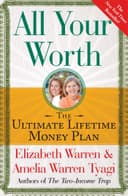
All Your Worth: The Ultimate Lifetime Money Plan (A Guide to Personal Finances) [Warren, Elizabeth, Tyagi, Amelia Warren] on desertcart.com. *FREE* shipping on qualifying offers. All Your Worth: The Ultimate Lifetime Money Plan (A Guide to Personal Finances) Review: Truly Versatile and Sustainable "Diet" for your Finances; Nonjudgmental, Specific, Practical Advice - I won’t rehash the basic premise of the book because it’s already been covered by a lot of reviewers. Instead I’ll just talk about some rationalizations I came up with while reading the book and trying to “debunk” it. (As a side note, I am lucky that I am in great shape financially, but this book definitely gave me some rules to live by). --“But there’s no way I can cut down my Must-Haves. I already signed contracts to pay $XXXX per month on my house/car/insurance/daycare/college tuition before I found this book.” The book suggests: 50-30-20 is a goal. If you can’t cut it quite down to 50%, how about 54%? 58%? Basically do the best you can. Shop for a better deal on your current arrangements. Think of it as your ideal weight. If you weigh 250 pounds and your goal weight is 180 pounds, nobody’s asking you to drop 70 pounds overnight. Also, the book advises that it is not worth your time to obsess about the pennies because 1) you literally don’t have the time to be constantly vigilant about every single thing you spend money on, and 2) you’ll get more results faster if you focus on the big-ticket items. For example, this book recommends that we shop carefully for a better deal on our mortgage, car payments, health insurance payments—Big-ticket items that account for the biggest portions of our spending. And this book has a lot of specific advice on exactly how to do that and what to look for (How many “points” and extra fees is hidden in the mortgage fine print? Is there a “balloon payment”? Is there a prepayment penalty? Is there/how much is the commission paid to the mortgage broker? Etc.). Yes it takes a lot of work (Get at least 5 quotes from different companies! READ all the fine print again the day of the closing, because a lot of companies try to sneak something in there on the day of, in hopes that you’ll just assume you’re getting the same deal and sign without looking). It sounds like a huge pain in the butt, and I admit my eyes did glaze over a bit during some parts, but one should spend time doing this rather than stressing out over how many times one eats out or goes to Starbucks. Literally, more bang for your buck. Also unlike the penny-pinching way of trying to save money where you have to pay attention to it constantly, once you get a better deal that will save you money, say on your mortgage, you will automatically pay less for your mortgage every month, which means you will AUTOMATICALLY save money every month. --“But I’ll never reach the goals described in this book. It’s just not possible.” Book says: Doing anything is better than nothing. There are 5280 feet in a mile and 2352425312531 drops of water in the ocean and all that. Just get started and each step will make the next a little bit easier. The process is about gradual improvement, not overnight miracle makeovers. --“But *I*’m good with money. It’s my spouse/boyfriend/partner who’s the bum that blows all our money on stuff we don’t need.” Great, you’re a saint. Now what? Does placing blame put more money in your pocket or make creditors go away? No. This book says: Do what YOU can do. Try to get your spouse on board with small specific things – “Let’s put $50 a week in the bank” rather than “hand over 20% of your paycheck now!” --“But the advice in the book doesn’t apply to me, because it’s for people who don’t have a sudden layoff/sick relative who needs round the clock care/spouse who walked out on me/Other sudden life emergencies.” This book has a whole separate chapter on what to do in financial emergencies – “Financial CPR.” The 50-30-20 balance plan is the goal for the rest of the time. This chapter also has very specific advice such as exactly how to deal with creditors (try to work out a plan, threaten bankruptcy if necessary, and GET EVERYTHING IN WRITING). Speaking of which… Don’t feel bad about filing bankruptcy. “If you find yourself considering bankruptcy, reflect on the fact that most of those lenders knew you would have a tough time paying them back. They had your credit reports. They knew how much money you earned, and they knew how much you owed. They took a calculated risk.” --“But the advice in this book is common-sense. I mean, duh. Save money? Live within your means? I can’t believe the authors are making money on advice I’ve already figured out for myself.” If it’s so common-sense, then why has bankruptcy rates soared in just 30 or 40 years? Even a decade ago when this book was written, it is citing some chilling statistics: 1 in 7 families in deep financial trouble. More people file bankruptcy per year than get divorced, graduate from college, or get cancer. Knowing the stuff in this book in theory is one thing, practicing it is something else. ----------------- Misc highlights in the book I found most memorable: “Do not judge how you or your spouse spends Want money.” -- This book is big on no-judgment, guilt-free spending on Wants. Extra savings above 20% is a Want. Gambling in Vegas is also a Want. As long as you have first figured out how much is left over after Must-Haves and Savings are taken care of, spend those leftovers on absolutely whatever you want. Because just like people can't keep up a completely spartan diet with no chocolate, steak, or cupcakes allotment whatsoever, a completely spartan budget is also not sustainable. If you have steely superhuman willpower, then great. But most people myself included need some chocolate every now and then. “Renting is not necessarily bad” - You didn’t get nothing out of paying rent. You got a roof over your head. Are you slowly becoming the owner of the grocery store and power plant when you buy food and pay your electric bill every month? It’s much better to wait until you actually build up enough savings to buy a house and rent in the meantime. If you buy before you can actually afford it, the higher interest rate and fees will make you pay MANY TIMES MORE than if you wait. Way more than any equity that you can build up in the meantime. “Equity loans are NOT a good way to consolidate debt, even though it has lower interest rate than credit cards.” Because if you default on your credit card balance, they can’t take your house. Banks aren't offering lower interest rate on equity loans because they're nice. “Think of a contingency plan BEFORE something bad happens.” People get CPR certification before they become a lifeguard. They don’t stand in front of an unconscious drowning person and flip furiously through a manual for CPR instructions. Think of what you will cut ahead of time and review every year. Bottom line, I think this book has great advice that applies to pretty much everyone. If it doesn't apply to you because you're not in financial trouble, great! Doesn't mean it's wrong. I'm not in trouble but I still found it instructive. I just happened to already be following the advice in the book, albeit inadvertently. I plan to follow it advertently from now on. Review: Unusually well written financial advice. - This is a superb and well written book on personal financial planning and strategy. It is great for young people just starting out, for older people to recoup their losses, and for the middle class to correct their errors, and guarantee a more free and happy life. You may have to sacrifice to achieve your goals, but the advice wherever you find yourself financially is crystal clear and effective. Whether you make $25,000, $50,000, or $150,000, if you understand their formula, you will eventually find yourself in a better financial position over time, and you can even enjoy the journey and have the feeling of a job well done. They are very creative in assisting people in working with their spouse, or significant other. They also give attention to people who have gone through divorce. Couples can negotiate in their relationship accordings to their wants, needs, and future savings. I recommended this book to several young people, including my daughters. It is especially important to learn these principles and apply them in today's world. The authors are astute, understanding, experienced, and well educated,and they are encouraging with the many examples of people who have been helped. They themselves have been single mothers, taught business to Harvard law students, and have conducted financial counseling clinics for people on the edge of poverty as well as for those who are economically more fortunate. If it is too complex for anyone to understand, that person or persons should study to understand finance until the message the book is sending is clear to them, and they will avoid a lot of financial stress and chaos in their life.
| Best Sellers Rank | #218,597 in Books ( See Top 100 in Books ) #502 in Budgeting & Money Management (Books) #612 in Finance (Books) #2,341 in Success Self-Help |
| Customer Reviews | 4.6 4.6 out of 5 stars (755) |
| Dimensions | 5.5 x 0.9 x 8.38 inches |
| Edition | Reprint |
| ISBN-10 | 0743269888 |
| ISBN-13 | 978-0743269889 |
| Item Weight | 2.31 pounds |
| Language | English |
| Print length | 304 pages |
| Publication date | January 17, 2006 |
| Publisher | Free Press |
B**K
Truly Versatile and Sustainable "Diet" for your Finances; Nonjudgmental, Specific, Practical Advice
I won’t rehash the basic premise of the book because it’s already been covered by a lot of reviewers. Instead I’ll just talk about some rationalizations I came up with while reading the book and trying to “debunk” it. (As a side note, I am lucky that I am in great shape financially, but this book definitely gave me some rules to live by). --“But there’s no way I can cut down my Must-Haves. I already signed contracts to pay $XXXX per month on my house/car/insurance/daycare/college tuition before I found this book.” The book suggests: 50-30-20 is a goal. If you can’t cut it quite down to 50%, how about 54%? 58%? Basically do the best you can. Shop for a better deal on your current arrangements. Think of it as your ideal weight. If you weigh 250 pounds and your goal weight is 180 pounds, nobody’s asking you to drop 70 pounds overnight. Also, the book advises that it is not worth your time to obsess about the pennies because 1) you literally don’t have the time to be constantly vigilant about every single thing you spend money on, and 2) you’ll get more results faster if you focus on the big-ticket items. For example, this book recommends that we shop carefully for a better deal on our mortgage, car payments, health insurance payments—Big-ticket items that account for the biggest portions of our spending. And this book has a lot of specific advice on exactly how to do that and what to look for (How many “points” and extra fees is hidden in the mortgage fine print? Is there a “balloon payment”? Is there a prepayment penalty? Is there/how much is the commission paid to the mortgage broker? Etc.). Yes it takes a lot of work (Get at least 5 quotes from different companies! READ all the fine print again the day of the closing, because a lot of companies try to sneak something in there on the day of, in hopes that you’ll just assume you’re getting the same deal and sign without looking). It sounds like a huge pain in the butt, and I admit my eyes did glaze over a bit during some parts, but one should spend time doing this rather than stressing out over how many times one eats out or goes to Starbucks. Literally, more bang for your buck. Also unlike the penny-pinching way of trying to save money where you have to pay attention to it constantly, once you get a better deal that will save you money, say on your mortgage, you will automatically pay less for your mortgage every month, which means you will AUTOMATICALLY save money every month. --“But I’ll never reach the goals described in this book. It’s just not possible.” Book says: Doing anything is better than nothing. There are 5280 feet in a mile and 2352425312531 drops of water in the ocean and all that. Just get started and each step will make the next a little bit easier. The process is about gradual improvement, not overnight miracle makeovers. --“But *I*’m good with money. It’s my spouse/boyfriend/partner who’s the bum that blows all our money on stuff we don’t need.” Great, you’re a saint. Now what? Does placing blame put more money in your pocket or make creditors go away? No. This book says: Do what YOU can do. Try to get your spouse on board with small specific things – “Let’s put $50 a week in the bank” rather than “hand over 20% of your paycheck now!” --“But the advice in the book doesn’t apply to me, because it’s for people who don’t have a sudden layoff/sick relative who needs round the clock care/spouse who walked out on me/Other sudden life emergencies.” This book has a whole separate chapter on what to do in financial emergencies – “Financial CPR.” The 50-30-20 balance plan is the goal for the rest of the time. This chapter also has very specific advice such as exactly how to deal with creditors (try to work out a plan, threaten bankruptcy if necessary, and GET EVERYTHING IN WRITING). Speaking of which… Don’t feel bad about filing bankruptcy. “If you find yourself considering bankruptcy, reflect on the fact that most of those lenders knew you would have a tough time paying them back. They had your credit reports. They knew how much money you earned, and they knew how much you owed. They took a calculated risk.” --“But the advice in this book is common-sense. I mean, duh. Save money? Live within your means? I can’t believe the authors are making money on advice I’ve already figured out for myself.” If it’s so common-sense, then why has bankruptcy rates soared in just 30 or 40 years? Even a decade ago when this book was written, it is citing some chilling statistics: 1 in 7 families in deep financial trouble. More people file bankruptcy per year than get divorced, graduate from college, or get cancer. Knowing the stuff in this book in theory is one thing, practicing it is something else. ----------------- Misc highlights in the book I found most memorable: “Do not judge how you or your spouse spends Want money.” -- This book is big on no-judgment, guilt-free spending on Wants. Extra savings above 20% is a Want. Gambling in Vegas is also a Want. As long as you have first figured out how much is left over after Must-Haves and Savings are taken care of, spend those leftovers on absolutely whatever you want. Because just like people can't keep up a completely spartan diet with no chocolate, steak, or cupcakes allotment whatsoever, a completely spartan budget is also not sustainable. If you have steely superhuman willpower, then great. But most people myself included need some chocolate every now and then. “Renting is not necessarily bad” - You didn’t get nothing out of paying rent. You got a roof over your head. Are you slowly becoming the owner of the grocery store and power plant when you buy food and pay your electric bill every month? It’s much better to wait until you actually build up enough savings to buy a house and rent in the meantime. If you buy before you can actually afford it, the higher interest rate and fees will make you pay MANY TIMES MORE than if you wait. Way more than any equity that you can build up in the meantime. “Equity loans are NOT a good way to consolidate debt, even though it has lower interest rate than credit cards.” Because if you default on your credit card balance, they can’t take your house. Banks aren't offering lower interest rate on equity loans because they're nice. “Think of a contingency plan BEFORE something bad happens.” People get CPR certification before they become a lifeguard. They don’t stand in front of an unconscious drowning person and flip furiously through a manual for CPR instructions. Think of what you will cut ahead of time and review every year. Bottom line, I think this book has great advice that applies to pretty much everyone. If it doesn't apply to you because you're not in financial trouble, great! Doesn't mean it's wrong. I'm not in trouble but I still found it instructive. I just happened to already be following the advice in the book, albeit inadvertently. I plan to follow it advertently from now on.
D**L
Unusually well written financial advice.
This is a superb and well written book on personal financial planning and strategy. It is great for young people just starting out, for older people to recoup their losses, and for the middle class to correct their errors, and guarantee a more free and happy life. You may have to sacrifice to achieve your goals, but the advice wherever you find yourself financially is crystal clear and effective. Whether you make $25,000, $50,000, or $150,000, if you understand their formula, you will eventually find yourself in a better financial position over time, and you can even enjoy the journey and have the feeling of a job well done. They are very creative in assisting people in working with their spouse, or significant other. They also give attention to people who have gone through divorce. Couples can negotiate in their relationship accordings to their wants, needs, and future savings. I recommended this book to several young people, including my daughters. It is especially important to learn these principles and apply them in today's world. The authors are astute, understanding, experienced, and well educated,and they are encouraging with the many examples of people who have been helped. They themselves have been single mothers, taught business to Harvard law students, and have conducted financial counseling clinics for people on the edge of poverty as well as for those who are economically more fortunate. If it is too complex for anyone to understand, that person or persons should study to understand finance until the message the book is sending is clear to them, and they will avoid a lot of financial stress and chaos in their life.
V**S
Definitely Worth a Read
I highly recommend this book to anyone who wants to feel a little (or a lot) more secure about their financial situation. The authors of this book have done a wonderful job clearly explaining how to be more financially secure. Their tone is conversational and friendly and the book was an easy read. You can tell that they really do want to help solve the average person's money problems. While I am not in debt, reading this book really help me develop a plan and put my money to better use. If you are at all concerned that you aren't being responsible enough with your money, read this book now.
A**L
A little out of date, but definitely worth a read
I bought this book because it was referred to me by a co-worker. She said that if she hadn't read it, she would be broke. Her husband lost his job, but this book kept her afloat and is continuing to help her. I read it and I understand why. It's a no-brainer approach with real-world examples and the best part is they give you space and worksheets to encourage you to write in it. I actually am still in the process of reading it (it makes you feel like crap with your spending - in a good way). It's an eye opening experience and it isn't one of those get-rich-quick schemes either. Honest information for general scenarios (if you have a highly atypical financial situation, it won't fit the book entirely but you will still walk away with valuable information). Good book, solid read.
R**A
En mi caso solo rescato el método 50-30-20, las diferencias entre necesidades y querer. Lo demás se centra mucho en casos de sus clientes.
L**P
I'm amazed that I read this book without a yawn! A lot of real life stories that helped me realise that I'm not alone having to cope with depts...and that whatever is my budget, there's a way to acheive a healthy and balanced financial plan. Decisions are much easier to take when you know how to make your money work out for you....makes me feel confident and much better.
A**O
Im at a stage where I have graduated and want to ensure that I put my life in order. This book has changed my mindset and I look forward to a prosperous life because I am devoted to using this simple formula! It's a must read.
S**S
This is a great book that helped me not only realize that I need to start saving now, but how to go about saving properly. I understand how to budget a bit more sensibly now that this book broke it down so simply for me: needs, wants, savings. I now have a life-long game plan thanks to this book. Really worth the purchase, and simply a good read.
S**A
The most amazing book i've read on how to get rid of debt and start increasing tour finances. A very simple plan that allows you to allocate a part of your income (30% more or less) to your treats and fun spending. Let's be honest no one is able to live on beans or to spend 2 years without indulging in an ice-cream or a take away, and this book teaches you how to handle your money without depriving you of small treats
Trustpilot
Hace 3 semanas
Hace 1 mes