We remain fully operational. Our teams are working around the clock to ensure your deliveries continue safely.

Descargar la aplicación


Servicios al cliente
Sobre nosotros
Copyright © 2025 Desertcart Holdings Limited
Descargar la aplicación
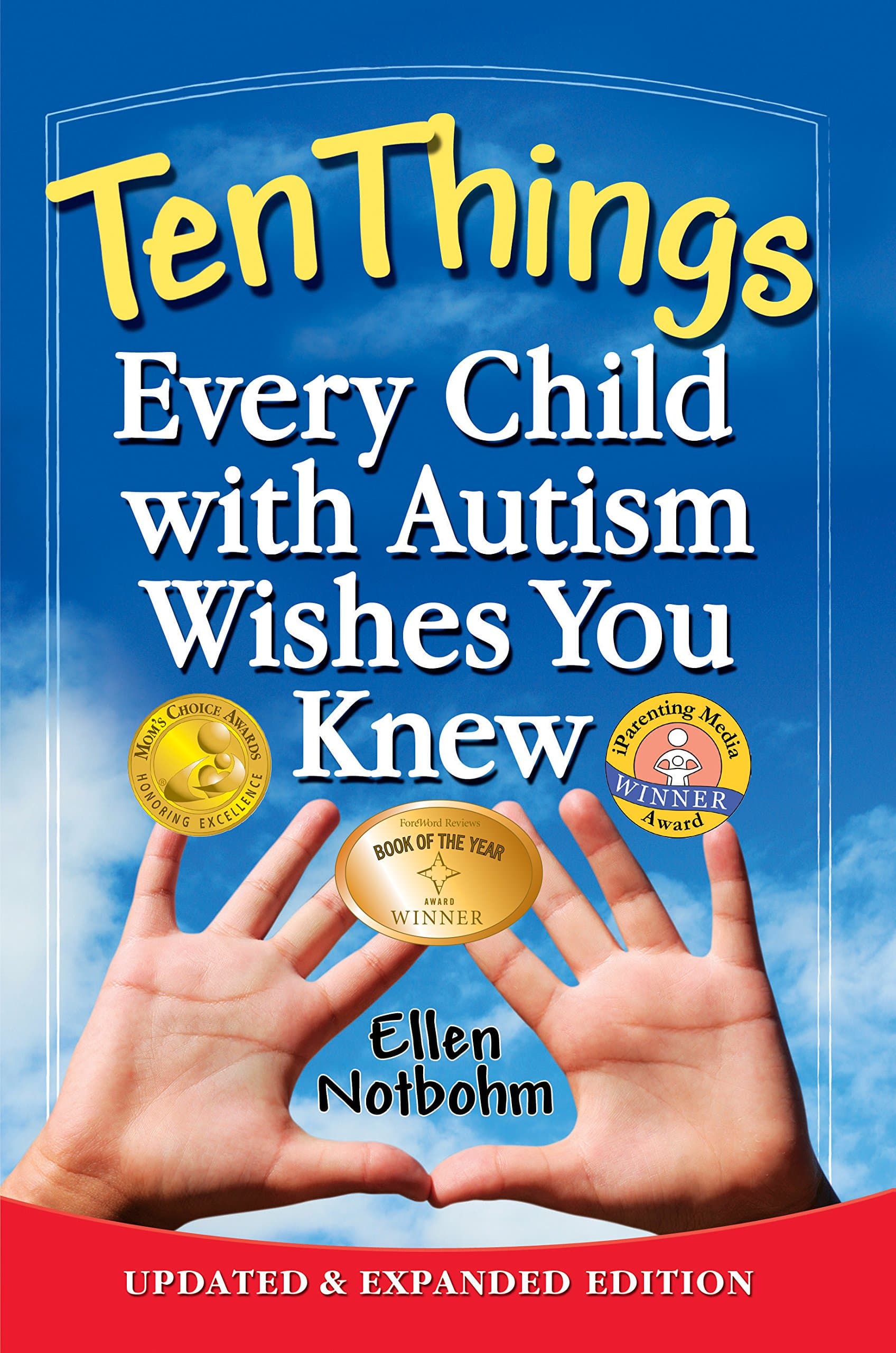

Ten Things Every Child with Autism Wishes You Knew: Updated and Expanded Edition [Notbohm, Ellen, Zysk, Veronica] on desertcart.com. *FREE* shipping on qualifying offers. Ten Things Every Child with Autism Wishes You Knew: Updated and Expanded Edition Review: Brought me peace and understanding - I'm new to the Autism world. My nephew is almost 2 years old, has PDD and SPD. He went from being a kid that tantrummed every 2 minutes, non verbal, to a kid who has ABA 3 times a day, and a sensory gym 3 times a week for OT, PT and ST. He's starting to say a couple of words. His tantrums have gone down considerably. We can almost make it 45 minutes through Mass without him screaming bloody murder. What does this have to do with the book??? From my experience, this book as brought me so much understanding OF WHAT MY NEPHEW IS GOING THROUGH ON A DAILY BASIS. I've read so much about why he might or might not have autism, I've read that he has a sensory disorder and we have all the sensory toys to help him...but it was not until this book, which I finished in one evening, that I ever FELT how he must feel on a daily basis. I see a lot a of reviews for people who think this book can't help if your child is non verbal. I can't comment on something I don't know. But from where I'm coming from, this book has opened my eyes to the ways I should and shouldn't speak, act and shouldn't act, around a litle boy that is seeing the world in an entirely different way frome me. No, I don't have to do those things, but I'm his aunt, and I want to bond with him however I can. And that's the main point of the book. We can change. We are adults. We think neurotypically. Someone with a different perception cannot just conform to the way I think. Even if he tries hard, or wants to...he can't. So it's up to ME to change. I can't wait to share this with the rest of the family. My heartbroken mother who thinks his dreams are shattered, my stressed out sister trying to hold together her last slice of sanity, my aunt who is not sure autism is not just an excuse for bad behavior. I think this book speaks in a very plain, understanding way from a woman who worked VERY HARD not to FIX her son to be what she wanted him to be, but to enter his world and engage him, so that he could then seek her world out as well. And she's sharing how she did that. This book is not a how to book with the secret ingredient to make a child verbal or filled with emotion. Her point is that even if your child never speaks, or never hugs you back, he or she deserves your unconditional love, and she gives you the support and pep talk you need to be that person your child needs. Review: Changed My Outlook and Helped Me Heal - I feel this is an excellent primer for those new to autism, especially those who are still struggling to understand if the behavior they see is identifiable. Our 5-year old son has recently been diagnosed with high-functioning autism, and I bought this book not only for myself, but for his grandparents. His grandmother read the book before coming to stay with my husband for a week while I was out of town, and it helped her immensely. It helps to give you a sense of empathy rather than just frustration when your child acts they way they do; consequently changing how you react to it (I'm much better able to be patient now that I understand that he is struggling to work his way through situations just as hard as I am). While I learned a significant amount of important basics, just as important is that I walked away with a sense of hope, which was incredibly healing for me as I emotionally wrestled with my feelings after the diagnosis. The author shares her experience with her own son, the highs and the lows; and later editions have epilogues in the back with updates on her child who is now a functional, happy, independent adult. While this does not mean that every child will turn out as well-adjusted, at least you feel as though it might actually be possible, instead of being consumed with nightmare scenarios of them as an adult. Another important component in the book is her careful analysis of the language we use to describe people with autism and how much damage it can (and does) do - not only to the psyche of the adult, but also the child, and the world at large (this is such a stigmatized condition, which was part of my struggle when I heard the news - I thought I knew what autism was. I did not). Phrases such as "suffer from autism" for example, are unhelpful and give the wrong impression about a child's daily existence. As another reviewer (who has autism) touches on, even high profile, helpful advocate organizations such as Autism Speaks infer that there is something "lesser-than" about those with autism, by referring to "finding the missing piece of the puzzle" (which is also illustrated in their logo). From this book I realized my son is not missing any pieces, he is just a more complicated puzzle to fit together (and all children are puzzles in their own way, really). While it is true, as several other reviewers have mentioned, there are not many specific strategies other than making you aware of what's going on in an autistic child's brain and how they perceive the world, I don't think this book is meant for that. It is a personalized viewpoint from a mother who has worked her way through this with her own child, and the things she learned that can apply to your child (and you) as well. *Specific* strategies come from therapy, as every child is different, and will need slightly different guidance and help. There's no "one-size-fits-all" remedy (although if you are looking for some basic strategies as well as ideas for how to help your child on an on-going, daily basis, I am finding "1001 Great Ideas for Teaching and Raising Children with Asperger's and Autism" to be helpful). This book literally changed my way of thinking about the future and about my son, and as a mom staring down a new, uncertain, long and winding road, I am very, very grateful.
| Best Sellers Rank | #302,974 in Books ( See Top 100 in Books ) #152 in Children & Adolescent's Autism Spectrum #296 in Parenting Hyperactive Children & Children with Disabilities (Books) |
| Customer Reviews | 4.7 4.7 out of 5 stars (1,524) |
| Dimensions | 6 x 0.75 x 9 inches |
| Edition | Second |
| ISBN-10 | 1935274651 |
| ISBN-13 | 978-1935274650 |
| Item Weight | 10.5 ounces |
| Language | English |
| Print length | 200 pages |
| Publication date | October 1, 2012 |
| Publisher | Future Horizons |
V**.
Brought me peace and understanding
I'm new to the Autism world. My nephew is almost 2 years old, has PDD and SPD. He went from being a kid that tantrummed every 2 minutes, non verbal, to a kid who has ABA 3 times a day, and a sensory gym 3 times a week for OT, PT and ST. He's starting to say a couple of words. His tantrums have gone down considerably. We can almost make it 45 minutes through Mass without him screaming bloody murder. What does this have to do with the book??? From my experience, this book as brought me so much understanding OF WHAT MY NEPHEW IS GOING THROUGH ON A DAILY BASIS. I've read so much about why he might or might not have autism, I've read that he has a sensory disorder and we have all the sensory toys to help him...but it was not until this book, which I finished in one evening, that I ever FELT how he must feel on a daily basis. I see a lot a of reviews for people who think this book can't help if your child is non verbal. I can't comment on something I don't know. But from where I'm coming from, this book has opened my eyes to the ways I should and shouldn't speak, act and shouldn't act, around a litle boy that is seeing the world in an entirely different way frome me. No, I don't have to do those things, but I'm his aunt, and I want to bond with him however I can. And that's the main point of the book. We can change. We are adults. We think neurotypically. Someone with a different perception cannot just conform to the way I think. Even if he tries hard, or wants to...he can't. So it's up to ME to change. I can't wait to share this with the rest of the family. My heartbroken mother who thinks his dreams are shattered, my stressed out sister trying to hold together her last slice of sanity, my aunt who is not sure autism is not just an excuse for bad behavior. I think this book speaks in a very plain, understanding way from a woman who worked VERY HARD not to FIX her son to be what she wanted him to be, but to enter his world and engage him, so that he could then seek her world out as well. And she's sharing how she did that. This book is not a how to book with the secret ingredient to make a child verbal or filled with emotion. Her point is that even if your child never speaks, or never hugs you back, he or she deserves your unconditional love, and she gives you the support and pep talk you need to be that person your child needs.
T**E
Changed My Outlook and Helped Me Heal
I feel this is an excellent primer for those new to autism, especially those who are still struggling to understand if the behavior they see is identifiable. Our 5-year old son has recently been diagnosed with high-functioning autism, and I bought this book not only for myself, but for his grandparents. His grandmother read the book before coming to stay with my husband for a week while I was out of town, and it helped her immensely. It helps to give you a sense of empathy rather than just frustration when your child acts they way they do; consequently changing how you react to it (I'm much better able to be patient now that I understand that he is struggling to work his way through situations just as hard as I am). While I learned a significant amount of important basics, just as important is that I walked away with a sense of hope, which was incredibly healing for me as I emotionally wrestled with my feelings after the diagnosis. The author shares her experience with her own son, the highs and the lows; and later editions have epilogues in the back with updates on her child who is now a functional, happy, independent adult. While this does not mean that every child will turn out as well-adjusted, at least you feel as though it might actually be possible, instead of being consumed with nightmare scenarios of them as an adult. Another important component in the book is her careful analysis of the language we use to describe people with autism and how much damage it can (and does) do - not only to the psyche of the adult, but also the child, and the world at large (this is such a stigmatized condition, which was part of my struggle when I heard the news - I thought I knew what autism was. I did not). Phrases such as "suffer from autism" for example, are unhelpful and give the wrong impression about a child's daily existence. As another reviewer (who has autism) touches on, even high profile, helpful advocate organizations such as Autism Speaks infer that there is something "lesser-than" about those with autism, by referring to "finding the missing piece of the puzzle" (which is also illustrated in their logo). From this book I realized my son is not missing any pieces, he is just a more complicated puzzle to fit together (and all children are puzzles in their own way, really). While it is true, as several other reviewers have mentioned, there are not many specific strategies other than making you aware of what's going on in an autistic child's brain and how they perceive the world, I don't think this book is meant for that. It is a personalized viewpoint from a mother who has worked her way through this with her own child, and the things she learned that can apply to your child (and you) as well. *Specific* strategies come from therapy, as every child is different, and will need slightly different guidance and help. There's no "one-size-fits-all" remedy (although if you are looking for some basic strategies as well as ideas for how to help your child on an on-going, daily basis, I am finding "1001 Great Ideas for Teaching and Raising Children with Asperger's and Autism" to be helpful). This book literally changed my way of thinking about the future and about my son, and as a mom staring down a new, uncertain, long and winding road, I am very, very grateful.
J**S
Worth a read
T**M
..... living with someone on the autistic spectrum. I have read a number of books that purport to help understand the breadth of challenges facing the families of those living with an autistic child. All were helpful, some more than others, with the only deficiencies being perhaps a too narrow focus on the authors personal experience. An understandable approach, given that the majority of those challenged by Autism present different behaviour and symptoms reflecting their position on the spectrum. There does seem to be however a number of consistent core truths and behaviours that are vitally important to understand and come to grips with. Ellen Notbohm manages to capture most of these and presents in a clear and concise manner a road map, if you will, explaining these key elements and offering a well thought out response that I hope you will find, as I did, enormously helpful. You cannot take the square peg representing an autistic child's needs and fit it into the round hole that is our expectations of how to parent a child. The parenting skills we learned from our families, our teachers, our therapists, may be roughly useful to help you cope with the majority of children but there are those who are tuned to a different frequency. They need extra love, extra understanding and a standard Dr. Spock approach may not fit. We need to learn to tune in to the right channel. Ten Things can help you. I highly recommend it.
A**A
Very very good book for parents of autism family.
A**N
Easy to understand and neatly organized. Valuable perspectives from actual experiences help provide very informative, encouraging yet realistic thoughts about autism in a child.
P**U
As a parent of two autistic boys life can be a challenge, every day will show you a side of your child that is as hard to accept as it is to understand. It is sometimes impossible to know what has caused a 'meltdown' and even more difficult to know what to do to calm the situation and return to as near a normality as you can. It seems, sometimes that an autistic child perceives a world that we can only visit on their terms. This book helps you to understand what those terms are and in doing so allows us in, and enables us to make informed and subtle changes that accomodate rather than agitate a complex mind. Ellen Notbohm is a mother of autistic children and deals with the issues of autism in a sensitive and somtimes humourous way and since she is first and foremost a parent, she manages to convert some of the language of the phsycologists into practical, understandable and usable information.
Trustpilot
Hace 1 mes
Hace 3 semanas