We remain fully operational. Our teams are working around the clock to ensure your deliveries continue safely.

Descargar la aplicación


Servicios al cliente
Sobre nosotros
Copyright © 2025 Desertcart Holdings Limited
Descargar la aplicación

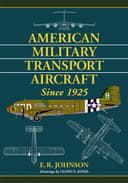
American Military Transport Aircraft Since 1925 [Johnson, E.R.] on desertcart.com. *FREE* shipping on qualifying offers. American Military Transport Aircraft Since 1925 Review: Outstanding! Describes land-based planes, seaplanes, and amphibians. Good data tabulations. - Great book! Each aircraft is given a brief design development history and a tabulation of dimensions and performance characteristics. Land-based, planes, seaplanes, and amphibians are included. Foreign aircraft acquired by the US are also included. Aircraft capacity in terms of number of passengers or troops and weight of cargo (lbs.) is also given. The tabulation a!so in includes the number produced for the military. An appendix describes the Army, USAAC, USAAF, USAF, and Navy designation systems over the years. An oddity that I had never realized before is that North American Aviation apparently never manufactured transport aircraft for the US Navy during World War II. At any rate, no such North American aircraft are described in the book! North American did manufacture transport aircraft for the Air Force -- but not for the Navy. Review: The ultimate bible on US military transport planes - Ever since World War II, the United States has relied on cargo planes as an efficient means of hauling soldiers and military equipment to war zones overseas. The C-5 Galaxy, C-130 Hercules, the now-retired C-141 Starlifter, and C-17 Globemaster III have played an important role in shaping the nature of US military mobility in order to provide logistic support for military operations in Southeast Asia, Mesopotamia, and the Hindu Kush. But military transport planes actually have been around in the US since the 1920s. The C-47 derived from the venerable DC-3 airliner became an icon to US troops who fought in WW2, and the C-54 derived from the DC-4 is better notable as the presidential plane used by FDR. E.R. Johnson provides a historical overview of each fixed-wing military transport plane built in the United States since 1925. From the military cargo adaptions of observation and passenger aircraft of the 1920s to the C-17 Globemaster III, from the J2F duck to modern utility planes, American Military Transport Aircraft since 1925 serves as an identification guide for American cargo and utility planes built for nine decades.
| Best Sellers Rank | #2,751,978 in Books ( See Top 100 in Books ) #4,387 in Military Aviation History (Books) #13,734 in American Military History #48,404 in Engineering (Books) |
| Customer Reviews | 4.7 4.7 out of 5 stars (20) |
| Dimensions | 7 x 0.98 x 10 inches |
| Edition | Illustrated |
| ISBN-10 | 0786462698 |
| ISBN-13 | 978-0786462698 |
| Item Weight | 1.9 pounds |
| Language | English |
| Print length | 488 pages |
| Publication date | April 23, 2013 |
| Publisher | McFarland |
| Reading age | 18 years and up |
B**.
Outstanding! Describes land-based planes, seaplanes, and amphibians. Good data tabulations.
Great book! Each aircraft is given a brief design development history and a tabulation of dimensions and performance characteristics. Land-based, planes, seaplanes, and amphibians are included. Foreign aircraft acquired by the US are also included. Aircraft capacity in terms of number of passengers or troops and weight of cargo (lbs.) is also given. The tabulation a!so in includes the number produced for the military. An appendix describes the Army, USAAC, USAAF, USAF, and Navy designation systems over the years. An oddity that I had never realized before is that North American Aviation apparently never manufactured transport aircraft for the US Navy during World War II. At any rate, no such North American aircraft are described in the book! North American did manufacture transport aircraft for the Air Force -- but not for the Navy.
V**N
The ultimate bible on US military transport planes
Ever since World War II, the United States has relied on cargo planes as an efficient means of hauling soldiers and military equipment to war zones overseas. The C-5 Galaxy, C-130 Hercules, the now-retired C-141 Starlifter, and C-17 Globemaster III have played an important role in shaping the nature of US military mobility in order to provide logistic support for military operations in Southeast Asia, Mesopotamia, and the Hindu Kush. But military transport planes actually have been around in the US since the 1920s. The C-47 derived from the venerable DC-3 airliner became an icon to US troops who fought in WW2, and the C-54 derived from the DC-4 is better notable as the presidential plane used by FDR. E.R. Johnson provides a historical overview of each fixed-wing military transport plane built in the United States since 1925. From the military cargo adaptions of observation and passenger aircraft of the 1920s to the C-17 Globemaster III, from the J2F duck to modern utility planes, American Military Transport Aircraft since 1925 serves as an identification guide for American cargo and utility planes built for nine decades.
G**6
A relative of mine flew C-47's and and C-46's in WW2, I wanted to know about the aircraft he used.
A very concise and through account of every American (and Canadian) transport aircraft flown by the American air forces. Dry but a good read.
R**R
the CURTISS C-46A was also built in Louisville KY c-46a-ck ...
the CURTISS C-46A was also built in Louisville KY c-46a-ck CURTISS 43-43 438 listed in the book U.S. ARMY aircraft 1908-1946 by JAMES C. FAHEY the list is on page 25
T**D
A 'Tour de Force' of American Military Transport Aircraft
This expansive work could be titled "Everything You Always Wanted To Know About American Military Transport Aircraft But Were Afraid To Ask". The author, E.R. Johnson, has compiled a definitive and comprehensive review of the topic, complete with rare photographs courtesy of David W. Ostrowski and detailed illustrations by Lloyd S. Jones. In the preface, Johnson hits the mark from the very first sentence, "Without airlift support, the modern American military machine would come to a screeching halt". The book delivers on the author's stated intention, "to provide the reader with a concise historical survey, including technical specifications, drawings, and photographs, of the various types of fixed-wing military aircraft used over an 86-year period to carry out the airlift mission". The book does that in great detail and with outstanding organizational construct. The Introduction provides a broad historical perspective on the development of the Military Airlift mission from its earliest days. Johnson goes to great lengths to explain how the different services evolved with regard to the organizational development of their major commands and unit structure. He gives the reader a comprehensive and detailed accounting of the evolution of American military airlift during the Postwar Era (post WWII), which is when airlift as a distinct mission really came into its own. In the first paragraph of "Modern Era--1966 to Present", the author accurately explains the most recent and significant shift in U.S. politico-military policy and organization as a result of the Goldwater-Nichols Act, which has defined the way the U.S. has fought wars during the Global War on Terror. In the `Series' sections, which comprise the bulk of the book, the author provides a complete history of each aircraft, including not only the pertinent technical specifications, but interesting and significant facts about a particular aircraft's contributions to aviation advancement. For example, in his description of the Douglas C-1, "the first Army aircraft to be classified under a cargo transport designation", the author points out this aircraft's role as a refueling tanker during the first air-to-air refueling experiments in 1929. In addition, we are treated to the famous photograph of this historic event--the Fokker C-2A "Question Mark" being refueled through a hose from the Douglas C-1. In another example, the Lockheed Model 10 "Electra" is pointed out as being the first aircraft in the world with cabin pressurization, as well as being the aircraft flown by Amelia Earhart when she disappeared in 1937. In the description of the Boeing C-97 (and its tanker variant, the KC-97), Johnson properly recognizes Boeing's invention of the air refueling "flying boom", which was the most significant development in America's future air refueling capability, as this concept was used on all future tankers--the Boeing KC-135, the McDonnell Douglas KC-10, and the now in-procurement Boeing KC-46. I especially enjoyed reading the section on the Boeing C-135, which the author declares, and rightly so, "the single most influential jet transport design of the mid-20th century". Johnson does a good job of covering the C-135 and all of its many variants. However, I would have liked to have seen at least one photo of the venerable KC-135, which has been our nation's primary tanker for 55+ years and counting. In summary, this book is an essential retrospective of American Military Transport Aircraft. It can be a joy to peruse at one's leisure, reading about particular aircraft of interest to the reader. It also stands as a substantial and reliable reference book for the serious aviation historian. This book will have a permanent place in my library. Reviewed by: Roger M. Gallet Colonel, USAFR Col Gallet was commissioned in the U.S. Air Force in 1977, and has been serving continuously for more than 36 years as a tanker and airlift pilot. He served for 15 years on active-duty, then transferred to the Air Force Reserve in 1992. In the course of his 36 year flying career, Col Gallet has accumulated over 7,000 hours of flight time in the KC-135A/E/R, the C-5A, and the C-17. He is currently assigned to the 445th Airlift Wing at Wright-Patterson Air Force Base, Ohio.
Trustpilot
Hace 3 días
Hace 2 semanas