We remain fully operational. Our teams are working around the clock to ensure your deliveries continue safely.

Descargar la aplicación


Servicios al cliente
Sobre nosotros
Copyright © 2025 Desertcart Holdings Limited
Descargar la aplicación
![The Gulag Archipelago [Volume 3]](https://m.media-amazon.com/images/I/712FckuT-TL._AC_SL3840_.jpg)
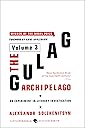
desertcart.com: The Gulag Archipelago [Volume 3]: An Experiment in Literary Investigation (Gulag Archipelago, 1918-1956): 9780061253737: Solzhenitsyn, Aleksandr I.: Books Review: Essential reading to understand the evil and suffering caused by leftist tyranny. - Essential reading for those who want to understand the importance of individual liberty for decreasing suffering and the evil and suffering caused by leftist tyranny. Review: The nail in the coffin of the Soviet State - "A stone is not a human being, and even stones get crushed." This was an absolutely brutal, yet enlightening read. Aleksandr Solzhenitsyn was a young, decorated Red Army officer who served bravely during the war, only to be arrested, tortured, and sent to the Gulag Archipelago (the forced labor camp system) to do a ten year sentence, followed by permanent internal exile. This book is a combination of his own personal experiences, and a general history of the gulag system which he has gathered from research as well as other personal stories sent to him by other inmates. For privately criticizing Stalin, the author was clearly guilty of being a dangerous "enemy of the people" worthy of torture and death,(Solzhenitsyn writes with a brilliant sense of sarcasm) but the fact is, many were arrested quite arbitrarily, many simply because of a need to fill quotas. I'm reminded of a quote by Stalins right hand man Molotov, when speaking about the randomness of arrests, years after the war: "a man could have been a right-winger, and not realized he was a right-winger. We had to be sure." Or something to that effect. These enemies of the people would feed the "sewage disposal system" of the Soviet state. In his sarcastic, metaphorical writing style, the author describes all the horrors of the system, beginning with arrest and torture, *ahem* interrogation, and all through the stages of the camp system where death and cruelty became the only certainties. Ruthlessness, Solzhenitsyn writes, was the measure of a Bolsheviks worth. The more single-mindedly cruel he was, determined his dedication to the state. Any form of kindness toward the accused was seen as a sign of weakness and lack of zeal. Most disturbing was his descriptions of the torture, he claims that there were 52 different methods at the interrogators disposal, to ensure they don't become bored of course! 14 hour work days in subzero temperatures with inadequate clothing and pitiful food rations were also the norm. People were often beaten, terrorized and shot out of hand for the smallest infractions, or occasionally for the mere amusement of the guards. Such is life in the Archipelago! Although some have accused Solzhenitsyn of throwing the baby out with the bathwater, i.e. condemning communism as a whole because of Stalinism, he is absolutely right when he claims that the brutality and terror were started under Lenin and Trotsky. While one can split hairs and argue that things might have turned out differently without Stalin, I see no reason to believe that things would have been THAT different. He also makes a consistent point of comparing the Soviet state to that of the Tsars, claiming that whatever their faults, life in Imperial Russia was never even close to this harsh. I specifically appreciated how he pointed out how easy the Bolshevik revolutionaries had it when they were arrested under the Tsar. Two, maybe three years in lenient exile for trying to overthrow the state! Yet under the Soviets, you would get 10, maybe 25 years of hard labor for practically nothing, which you would probably not survive anyway. All in all, this is a disturbing but brilliant and essential read for understanding the Soviet state. 5 stars.


| Best Sellers Rank | #39,039 in Books ( See Top 100 in Books ) #18 in History & Criticism of Russian & Soviet Literature #21 in Human Rights (Books) #84 in Criminology (Books) |
| Book 3 of 3 | The Gulag Archipelago |
| Customer Reviews | 4.9 4.9 out of 5 stars (830) |
| Dimensions | 5.31 x 0.97 x 8 inches |
| Edition | Reissue |
| ISBN-10 | 0061253731 |
| ISBN-13 | 978-0061253737 |
| Item Weight | 1.05 pounds |
| Language | English |
| Print length | 608 pages |
| Publication date | August 7, 2007 |
| Publisher | Harper Perennial Modern Classics |
M**N
Essential reading to understand the evil and suffering caused by leftist tyranny.
Essential reading for those who want to understand the importance of individual liberty for decreasing suffering and the evil and suffering caused by leftist tyranny.
P**N
The nail in the coffin of the Soviet State
"A stone is not a human being, and even stones get crushed." This was an absolutely brutal, yet enlightening read. Aleksandr Solzhenitsyn was a young, decorated Red Army officer who served bravely during the war, only to be arrested, tortured, and sent to the Gulag Archipelago (the forced labor camp system) to do a ten year sentence, followed by permanent internal exile. This book is a combination of his own personal experiences, and a general history of the gulag system which he has gathered from research as well as other personal stories sent to him by other inmates. For privately criticizing Stalin, the author was clearly guilty of being a dangerous "enemy of the people" worthy of torture and death,(Solzhenitsyn writes with a brilliant sense of sarcasm) but the fact is, many were arrested quite arbitrarily, many simply because of a need to fill quotas. I'm reminded of a quote by Stalins right hand man Molotov, when speaking about the randomness of arrests, years after the war: "a man could have been a right-winger, and not realized he was a right-winger. We had to be sure." Or something to that effect. These enemies of the people would feed the "sewage disposal system" of the Soviet state. In his sarcastic, metaphorical writing style, the author describes all the horrors of the system, beginning with arrest and torture, *ahem* interrogation, and all through the stages of the camp system where death and cruelty became the only certainties. Ruthlessness, Solzhenitsyn writes, was the measure of a Bolsheviks worth. The more single-mindedly cruel he was, determined his dedication to the state. Any form of kindness toward the accused was seen as a sign of weakness and lack of zeal. Most disturbing was his descriptions of the torture, he claims that there were 52 different methods at the interrogators disposal, to ensure they don't become bored of course! 14 hour work days in subzero temperatures with inadequate clothing and pitiful food rations were also the norm. People were often beaten, terrorized and shot out of hand for the smallest infractions, or occasionally for the mere amusement of the guards. Such is life in the Archipelago! Although some have accused Solzhenitsyn of throwing the baby out with the bathwater, i.e. condemning communism as a whole because of Stalinism, he is absolutely right when he claims that the brutality and terror were started under Lenin and Trotsky. While one can split hairs and argue that things might have turned out differently without Stalin, I see no reason to believe that things would have been THAT different. He also makes a consistent point of comparing the Soviet state to that of the Tsars, claiming that whatever their faults, life in Imperial Russia was never even close to this harsh. I specifically appreciated how he pointed out how easy the Bolshevik revolutionaries had it when they were arrested under the Tsar. Two, maybe three years in lenient exile for trying to overthrow the state! Yet under the Soviets, you would get 10, maybe 25 years of hard labor for practically nothing, which you would probably not survive anyway. All in all, this is a disturbing but brilliant and essential read for understanding the Soviet state. 5 stars.
K**R
Read
Great reminder for young people.
C**S
Life after the Gulag
The third and final volume of Solzhenitsyn's epic discusses his life in exile after he had been released from the Gulag. A few of my favorite quotes from Volume 3 are below: "Not death itself, but only the moral preparation for it, holds terrors." (p. 113). "When spiritual death creeps through the land like poison gas, the school and its pupils are of course among the first to suffocate." (p. 429). "We are creatures of mortal clay! Subject to its laws. No measure of grief, however great, can leave us forever sensitive to the general suffering. And until we transcend our clay there will be no just social system on this earth -- whether democratic or authoritarian." (p. 477).
K**S
A human perspective
Often when one reads about an outrage of history the account is dry, numerical, and one sided. What is truly unique about Gulag is that it takes us inside the the minds of the victims and the perpetrators, revealing the central yet unspoken theme of the book. This is a story of human nature, revealed in the most extreme circumstances imaginable. As you read ask yourself, "What would I have done?" The answers may horrify you. On the political side of things Gulag reveals that the Soviet system elucidated the evil in people. Gulag is a call for us to see politics in a different way. Beware of those advancing class envy/warfare. The Soviets adjusted their definition of "rich" down as the people became poorer. The freedom possessed does not seem near as valuable as freedom lost. Gulag demonstrates that faith is the only useful possession that can not be taken. Gulag cites many examples of superhuman courage, toughness, and triumph by those of deep religious devotion. An unspoken theme is that the Soviet system could not exist amongst nation of the faithful. Read this book. I would recommend these books a well for the reader interested in Communism. The Case For Democracy: The Power Of Freedon to Overcome Tyranny And Terror The Road to Serfdom Fiftieth Anniversary Edition
J**R
Critical information for the survival of society
One of the best books ever written. This should be a required reading for every high school student.
B**S
“You can pray freely but just so God alone can hear” Tanya Khodkevich 10 year sentence in gulag.
When you read this you'll realize that the commies are taking over the world. Good luck everyone.
D**R
communism, stalinist russia
What an eye opener! It describes the dispair and horror of stalin's russia. If you want an insight as to why the USA is so staunchly and fanatically anti-communist, read this book! Stalin and his communists tried to build their workers paradise through slavery. Millions were arrested and sent to labor camps because the commies needed slaves, so they arrested them and condemned them for at least 10 years ('a tenner'). A stunning, very well written, page turner that shows there are things worse than death! They crammed 40 people into cells designed for 2 people. Torture, arbitrary doubling of your sentence (from 10 to 20 years), sadistic guards, all for no crime whatsoever! Makes the West look like heaven on earth. And Solzhenitsyn keeps it interesting, even humorous. Like when a crowd was applauding Stalin, and everyone was afraid to be the first one to stop applauding because they knew they would be arrested! So the applause went on for 1/2 hour, with nobody daring to stop! Finally, a brave soul stopped, and he was arrested and sent away the next day. It's a great book. I highly recommend it, especially to lefties who need to see what marxism turns into.
B**O
Everything as expected
R**R
年明けに最初に読み終えたのがこの作品、「収容所群島」の最終巻、第三巻。邦訳では5巻から6巻にあたる。ちなみに、この作品、全体では、トルストイの「戦争と平和」より長いらしい。邦訳では今や絶版。 30年前に、新潮文庫の邦訳で一度読み始めて、第一巻で放り出したこの作品、二年前に、再び読み始めた。途中で、著者の他の作品を読んだりしたり、さらには、昨年の始めには、中古で注文したこの第3巻が届かなかったなどのアクシデントもあり、結局、2年かかった。 実際に、ここまで読み続ける読者ってどのくらいいるのか?著者自身が、第三巻の巻頭の「英訳への序文」で、「第二巻までの暗黒さと苦難に負けずにここまで読み続けるだけの道徳的な力を見出した読者」と言及しているくらいだ。 この第三巻では、収容所の囚人たちの、この体制への異議申し立てが取り上げられる。脱走、収容所内の密告者の処分、収容所の囚人による占拠につながるハンガーストライキなどだ。そのほとんどは、最終的には失敗するよう運命づけられている。しかしながら、それをわかりながら、これらの自由への闘争は繰り返し続けられる。 著者が収容所から釈放され、カザフスタンの村に流刑されるのが、1953年3月、そうスターリンの死の時期と重なっているのだ。その後の1956年のスターリン批判を受けて、大量の囚人が釈放されることになる。収容所の状況は以前に比べると改善されることになるが、その流れは60年台半ばには失速することになる。共産主義体制とイデオロギーが転覆されたわけではない中、体制を支えた治安組織と法体制、さらにはそこに従事する多数の人物はそのままだ。 本書の「結語」で明らかにされているように、本作品は1958年から1967年にかけて執筆された作品。著者が流刑から解放された相当早い段階でその執筆が始められている。資料や個別の事例の収集は、著者が有名になった1962年以降に、拍車がかかったとはいえ、本書を貫くモチーフは、収容所時代にすでに完成されていたと思われる。 逆説的な意味で、収容所の過酷な体験は、芸術作品の触媒となる。過酷な収容所の体験は生の本質と人間の真の姿を残酷なまでに明らかにする。もっともこれを文学作品にまで昇華させるためには、収容所から物理的に抜け出ることが必要であり、この僥倖は少数者にのみしか許されない。これこそがロシア文学の不滅さと奇跡を支えているのかと言ったら言い過ぎか。 「収容所群島」に続く、ソルジェニーツィンの次の大作はロシア革命を扱った「Red Wheel」シリーズだ。ここにきて、立て続けに、英訳が出版されている。「1917年3月」の第3巻まではすでに読了。いよいよレーニンがペトログラードに戻る直前の1917年3月末が描かれる。
R**A
This book is the concluding part of Aleksandr Solzhenitsyn’s monumental work chronicling the forced labor camps in the Soviet Union, collectively called ‘The Gulag.’ I confess to being exhausted at the end of this volume because reading over 2,000 pages of these chronicles will tire the reader. When you finish reading the books, and if you complain of exhaustion as I did, think of the lives of the people incarcerated in the Gulag. Aleksandr Solzhenitsyn devoted considerable space to those who continually tried to escape, focusing on their planning, their escape, their inevitable recapture, and their punishment. The book focuses on various ways in which the prisoners resisted, from passive resistance to extreme forms such as escape. The volumes also explore the brutality of the regime, the underlying fear in society, the brutality and corruption of the state, and the arbitrary arrests. By blending the personal narratives (Aleksandr’s and those of the prisoners) with an exposé of the system, the author has created a searing and unforgettable picture of the Gulag. The book also demonstrates how such a regime causes moral decay, inevitably weakening society. As I mentioned in my review of the previous volumes, the sparse writing style serves to accentuate more than any florid style could. A testament to an era that seems to have passed, and a warning: such horrors can return very easily.
R**K
This is a long read, of a longer experience. This is a history not to be repeated , yet it dwells in our presence. To be read, critically.
D**L
.. but maybe the abridged version would be a better option for some people...
Trustpilot
Hace 1 mes
Hace 1 semana