We remain fully operational. Our teams are working around the clock to ensure your deliveries continue safely.

Descargar la aplicación


Servicios al cliente
Sobre nosotros
Copyright © 2025 Desertcart Holdings Limited
Descargar la aplicación
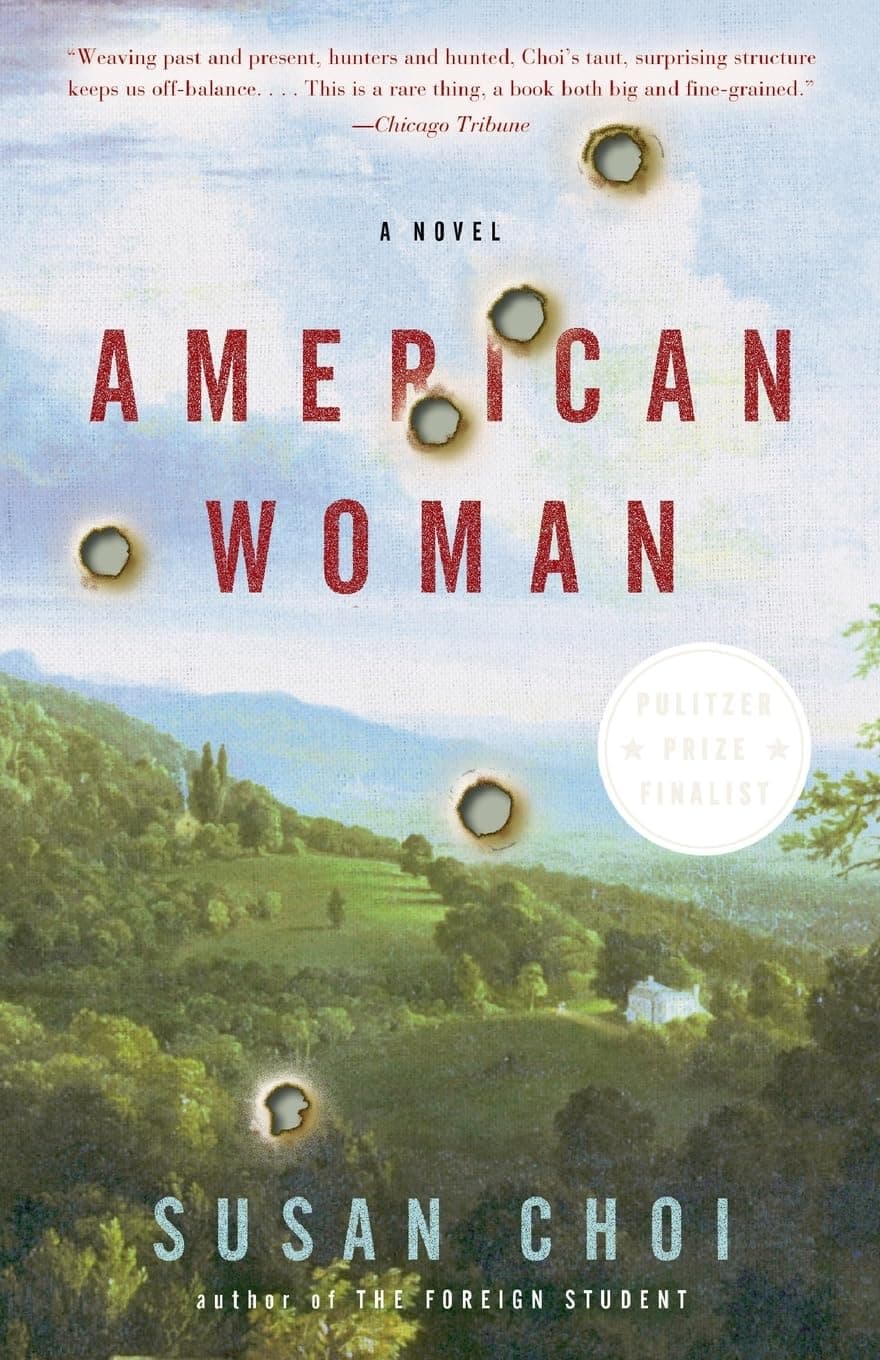
desertcart.com: American Woman: A Pulitzer Finalist Literary Thriller of Fugitive Radicals, Kidnapping, and Paranoia: 9780060542221: Choi, Susan: Books Review: Haunting unusual storyline - Great prose, telling the story of young radicals and t h e i r decisions to fight the establishment, and object to war. Each character comes alive on the page some of them very unlikable, others confusing. Review: Exceptional book which moves beyond real life connection - This is the type of book I typically avoid, but before I had a chance to run I was drawn in by this engrossing account of one fugitive trying to help three more people continue their evasion of the police. I was not far into the book (okay, chapter two) when I realized I was in a fictional account of the Patty Hearst story. For those younger than myself, Hearst is the grandaughter of media giant William Randolph Hearst (see: Kane, Citizen) who was kidnapped by the unknown SLA in 1974, then became devoted to their cause and turned to robbing banks. All but three of the SLA were killed in a shootout and Hearst was arrested about a year later. But Choi avoids some simple fictionalized version of an already bizarre event (this is a time when the idea of truth being stranger than fiction is clearly true). Instead, the "American Woman" is Jenny Shimada, a Japanese-American who is in hiding because of her interest in bomb making, which has put her boyfriend in jail. Shimada has been avoiding exposure by living in a small town doing renovation work for an older woman. Now she is recruited to help these three and we quickly see that all "radicals" are not cut from the same cloth. While she likes to blow up buildings, she does so when no one is in them and she makes sure they belong to the government. The SLA members have kidnapped an heiress and are as interested in armed warfare as they are about their principles, which seem stretched at best. Choi does not judge any of her characters and all are especially well drawn. Shimada is a complex person who seems to have it all figured out one minute, and is completely lost the next. In other words, she is a real person (and yes, she too is based on a real person). Pauline, the Patty Hearst of the story, is interesting not because she is supposed to by Hearst, but because we see how someone taken out of their element and thrown into the extreme opposite responds. She goes from pampered college student to bound, blindfolded, and gagged in closet for days. Her relationship with two of her captors is abusive and dependent, yet she is also drawn to Jenny. What she is not drawn to is her past life -- at one point her and Jenny drive by her old house, but she has no desire to return. That part of her life is gone. Which raises the question of what happens when we do disappear. When they are captured (oops, late spoiler alert for those who did not guess it) they refer to Pauline's year of hiding as "the lost year." But who lost the year? Pauline certainly did not. This plays out as a modern version of if a tree falls in the woods does it make a sound? Choi is playing with the idea of how our lives are and are not dependent on others involved with us, others viewing us, and others we pass by in life. While it seems obvious that losing track of others does not mean they have lost themselves, we often make that assumption -- "they fell off the face of the earth." As Choi is showing, life continues even when the circumstances change. Jenny and Pauline disappear for different reasons, their circumstances both change, and they themselves change, but that does not equate with being lost. But it does raises questions about how we define ourselves when those around us who do define us are gone. What makes make Jenny who she is and which is the "real" Pauline. Choi's prose is full and worth a slow read. The book is cinematic in its layout and she paints clear pictures everywhere she goes. The last section of the book loses some of the hold after the tension has disappeared, but it adds another interesting note to the story in comparing how fame impacts what should be similar situations for two people. Finally, we can return to Choi's title and spend time defining the two words of the title -- American and woman. In what ways is a Japanese-American raised in Japan for many years and an acknowledged bomber of American government properties an American? As the story unfolds the ideas of "woman" are also explored with a range of options considered. In other words, Choi leaves us a lot to think about.


| Best Sellers Rank | #605,269 in Books ( See Top 100 in Books ) #10,110 in Literary Fiction (Books) #20,529 in Suspense Thrillers #54,063 in Contemporary Romance (Books) |
| Customer Reviews | 3.9 3.9 out of 5 stars (390) |
| Dimensions | 5.31 x 0.86 x 8 inches |
| Edition | Reprint |
| ISBN-10 | 0060542225 |
| ISBN-13 | 978-0060542221 |
| Item Weight | 10.5 ounces |
| Language | English |
| Print length | 369 pages |
| Publication date | September 7, 2004 |
| Publisher | Harper Perennial |
S**R
Haunting unusual storyline
Great prose, telling the story of young radicals and t h e i r decisions to fight the establishment, and object to war. Each character comes alive on the page some of them very unlikable, others confusing.
D**9
Exceptional book which moves beyond real life connection
This is the type of book I typically avoid, but before I had a chance to run I was drawn in by this engrossing account of one fugitive trying to help three more people continue their evasion of the police. I was not far into the book (okay, chapter two) when I realized I was in a fictional account of the Patty Hearst story. For those younger than myself, Hearst is the grandaughter of media giant William Randolph Hearst (see: Kane, Citizen) who was kidnapped by the unknown SLA in 1974, then became devoted to their cause and turned to robbing banks. All but three of the SLA were killed in a shootout and Hearst was arrested about a year later. But Choi avoids some simple fictionalized version of an already bizarre event (this is a time when the idea of truth being stranger than fiction is clearly true). Instead, the "American Woman" is Jenny Shimada, a Japanese-American who is in hiding because of her interest in bomb making, which has put her boyfriend in jail. Shimada has been avoiding exposure by living in a small town doing renovation work for an older woman. Now she is recruited to help these three and we quickly see that all "radicals" are not cut from the same cloth. While she likes to blow up buildings, she does so when no one is in them and she makes sure they belong to the government. The SLA members have kidnapped an heiress and are as interested in armed warfare as they are about their principles, which seem stretched at best. Choi does not judge any of her characters and all are especially well drawn. Shimada is a complex person who seems to have it all figured out one minute, and is completely lost the next. In other words, she is a real person (and yes, she too is based on a real person). Pauline, the Patty Hearst of the story, is interesting not because she is supposed to by Hearst, but because we see how someone taken out of their element and thrown into the extreme opposite responds. She goes from pampered college student to bound, blindfolded, and gagged in closet for days. Her relationship with two of her captors is abusive and dependent, yet she is also drawn to Jenny. What she is not drawn to is her past life -- at one point her and Jenny drive by her old house, but she has no desire to return. That part of her life is gone. Which raises the question of what happens when we do disappear. When they are captured (oops, late spoiler alert for those who did not guess it) they refer to Pauline's year of hiding as "the lost year." But who lost the year? Pauline certainly did not. This plays out as a modern version of if a tree falls in the woods does it make a sound? Choi is playing with the idea of how our lives are and are not dependent on others involved with us, others viewing us, and others we pass by in life. While it seems obvious that losing track of others does not mean they have lost themselves, we often make that assumption -- "they fell off the face of the earth." As Choi is showing, life continues even when the circumstances change. Jenny and Pauline disappear for different reasons, their circumstances both change, and they themselves change, but that does not equate with being lost. But it does raises questions about how we define ourselves when those around us who do define us are gone. What makes make Jenny who she is and which is the "real" Pauline. Choi's prose is full and worth a slow read. The book is cinematic in its layout and she paints clear pictures everywhere she goes. The last section of the book loses some of the hold after the tension has disappeared, but it adds another interesting note to the story in comparing how fame impacts what should be similar situations for two people. Finally, we can return to Choi's title and spend time defining the two words of the title -- American and woman. In what ways is a Japanese-American raised in Japan for many years and an acknowledged bomber of American government properties an American? As the story unfolds the ideas of "woman" are also explored with a range of options considered. In other words, Choi leaves us a lot to think about.
N**R
Patty Hearst revisited
It contained some interesting insights on the Patty Hearst kidnaping and subsequent events. I was busy with small children at the time and didn't keep up on the news. While the writing was good, with flashes of brilliance, parts of it seemed to go on too long. I was glad when it was finished.
J**M
This was hard
Reading this book was excruciating- she captures too well both the racism and classism underneath the surface of the American myth of justice and equality- and how d--m confusing it was to be brave and Take a Stand for the Revolution in those times (college grad '69, working class on scholarship talking here). Some of the saddest moments in my young life were watching some friends marching down the road away from me into this world, calling me a coward as they went. Susan Choi deserves her awards but I'm not sure I can stand to read another one.
J**A
Fascinating insights
Fascinating, because I have never read an account of the internment camps, or of real idealistic rebellion through the eyes of the rebels before. A trifle long winded but still a fascinating glimpse into both of those worlds.
T**M
Well conceived and well structured
Well conceived and well structured, Susan Choi's Pulitzer Prize nominated fiction novel "American Woman" was not exactly what I had expected. In terms of the quality of her writing and the unraveling of the book's story, the work was, in my mind, every bit worthy of a nod from the venerable and respected Pulitzer Prize board. What surprised me, though, was Choi's remarkable ability to reach beyond what I can reasonably imagine to be the parameters of her own experience, to give life and detail to a fascinating story taking place in the mid-1970's and involving a young Japanese-American woman and three members of a radical, revolutionary cell. For instance, the artistry with which she describes various types of firearms in the story would have convinced me she was a card-toting member of the NRA, if I didn't know better. That Choi's narrative can breathe credibility and realism into events that are, for lack of a better word, incredible, is a testament to her literary talent.
G**R
American Woman draws its plot from the Patty Hearst Kidnapping in 1974. It is more than a simple retelling of known facts. The author opens up her characters – their psychology, their background. She gives a sense of the times and of real people in those times. The abductors of Hearst were a tiny group of activists who emerged in Berkeley in the early 1970s. They advocated revolutionary violence when most radicals were in retreat as the 60s were left behind. Their bizarre name – the Symbionese Liberation Army – indicates a disconnection from American society and politics. In a brief violent existence, the abduction of Hearst booked the SLA a place in history. SPOILER ALERT Before continuing – I should point out that I assume most readers will have a familiarity with the subject. If you do not, you may want to read this review later. Following her kidnapping Hearst went on the run with her abductors, taking part in bank robberies and other actions. The novel covers this period. An issue then and subsequently was whether she was converted or terrorized or brainwashed. Choi suggests a more complicated picture, but it is not her main interest, nor is Hearst, Pauline in the novel, the principal character. That is Jenny, based on Wendy Yoshimura, Pauline’s companion in hiding. Other characters are based on true figures in the story, though all names are changed. I am intrigued to know whether Choi met with Wendy. I assume Hearst keeps her past off limits these days. The author considers the two women in terms of their social position. Pauline shaped by her privilege and class, Jenny defined by her Japanese ethnicity. However, in the revolutionary underground they are divorced from mainstream society and are stripped of those lives – right down to false names and identities. The author explores what this means for their understanding of themselves and their interaction. They come to be close, to be lovers. Following their arrest and separation class and race are reasserted, trumping gender. As a perspective on the strength or weakness of sisterhood this is the most interesting aspect of American Woman. Susan Choi is a really good writer. Time and place are not referenced by multiple references to TV programmes, fashions or music. Her characters are not wise before their time, not equipped with hindsight. Jenny and Pauline are credible. The political positions of the SLA are neither satirized nor excused – they are stated and elaborated as required. Recommended.
Trustpilot
Hace 1 mes
Hace 2 meses