We remain fully operational. Our teams are working around the clock to ensure your deliveries continue safely.

Descargar la aplicación


Servicios al cliente
Sobre nosotros
Copyright © 2025 Desertcart Holdings Limited
Descargar la aplicación
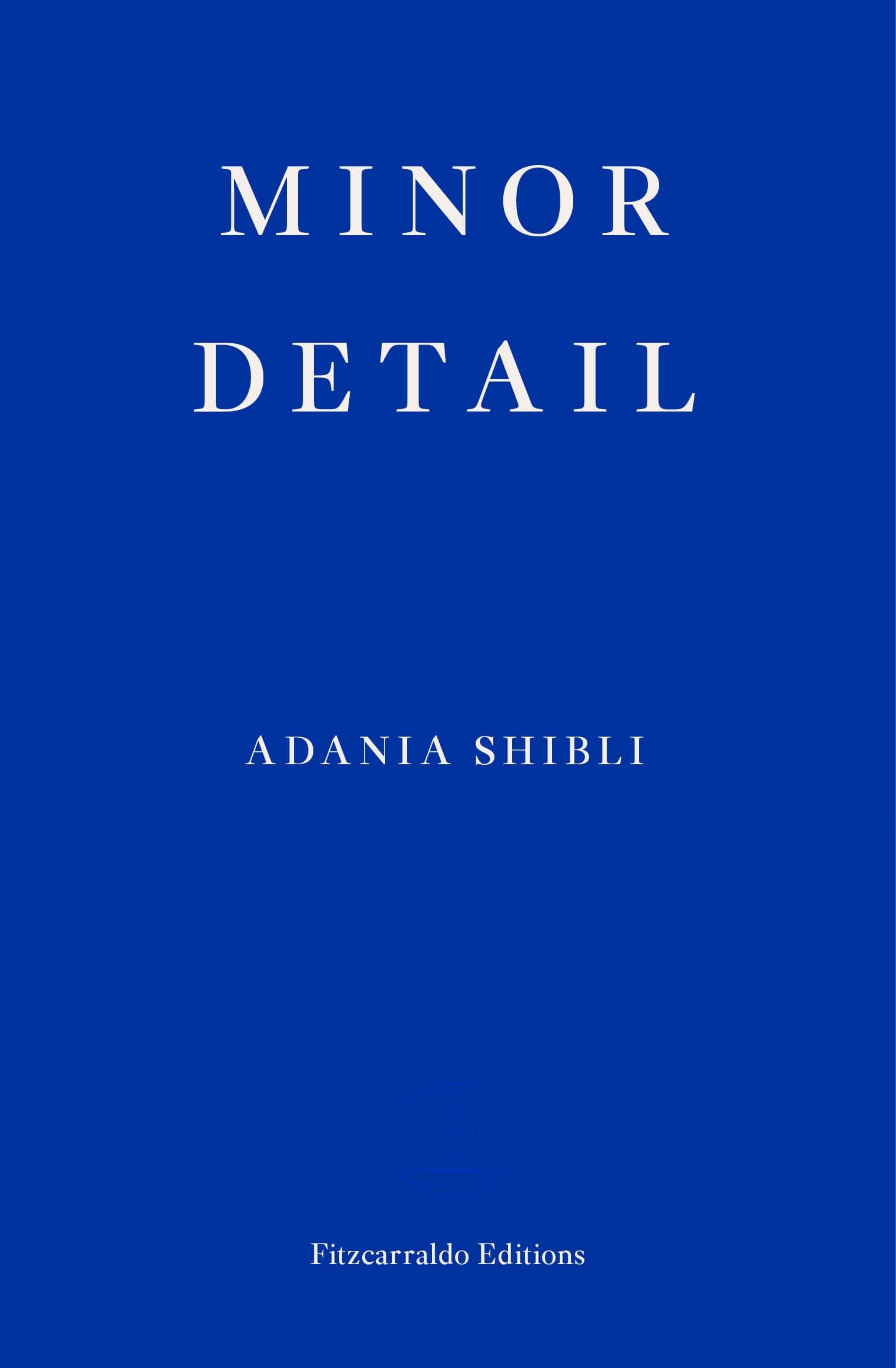
Review: A haunting tale of details - Minor Details is a translated historical fiction. The story has been split into two parts. The first part speaks from the perspective of the soldier who has been appointed to look out the place in Negev. Not to be occupied by any other countries. Everyday, the protagonist goes for the duty from his tent to look after if any people of other countries are surrounded there. One day on going, he suddenly heard a noise coming from the side he was walking. Slowly, the voice was much more clear to him. He saw some camels, a girl lying in blood, and a dog barking constantly. He brought the girl to the tent. Until this, I had the hope that higher officials were having a good heart. But, there happens a twist: he literally digs a hole to make bury it there, that to be alive. Part 2 speaks of a woman from Ramallah who is a journalist. She has fear of things, especially dogs barking. Every night she hears the dark barking in a high pitch from the dessert. She was triggered by particular news. She somehow wanted to know the full details of the story. She goes in search of it. More than the title saying minor details. It was literally haunting details in the second part. Though fictional, I felt the spine chill in my bones. It’s not easy to see things that happened 25 years ago. She learned more about the place and details. It broke my heart to see such things happening even now. The author has wonderfully detailed the history of the place. Though it was only 112 pages. It was more than enough to make me feel haunted by the details. I couldn’t even imagine things. I didn’t spill many details of the story because you should read to know the truth. If you want to read a sad yet very painful story, go ahead with this book. Review: A haunting, unsettling portrayal of loss, erasure and the high cost of losing our humanity - ‘Man, not the tank, shall prevail.’ ‘Sometimes it’s inevitable for the past to be forgotten, especially if the present is no less horrific.’ ‘The horizon materializes as a blue line. The sea! There it is, in real life, after years of absence, years in which it was nothing more than pale blue on a map.’ Unfolding in two carefully linked parts, “Minor Detail” pivots around a crime, based on an actual incident in 1949, and its reverberations many years later when a young woman becomes obsessed with unravelling the truth. But the novel’s real power lies in its stark evocation of loss and erasure, of life under an occupation, of significant realities concealed behind minor, mundane details. In spare, unsentimental prose, Adania Shibli conjures a terrifying vision of the cost of losing our humanity, and the violent consequences this unleashes in perpetuity. The fact that she manages to do this in just over a hundred pages (showing exceptional restraint where other authors might have been tempted to go in for extravagant bombast) is truly masterful. (And Elisabeth Jaquette’s translation makes for a smooth and seamless rendition.) This won’t be a book for everyone, not least because of its grim subject matter, but it is an urgent, necessary book, and a powerful testament to the uncanny ability of literature (and translations in particular) to expand our horizons and remind us that we have more in common than think.
| Best Sellers Rank | #96,851 in Books ( See Top 100 in Books ) #3,106 in Fantasy (Books) #5,995 in Contemporary Fiction (Books) |
| Customer Reviews | 4.4 out of 5 stars 2,480 Reviews |
I**S
A haunting tale of details
Minor Details is a translated historical fiction. The story has been split into two parts. The first part speaks from the perspective of the soldier who has been appointed to look out the place in Negev. Not to be occupied by any other countries. Everyday, the protagonist goes for the duty from his tent to look after if any people of other countries are surrounded there. One day on going, he suddenly heard a noise coming from the side he was walking. Slowly, the voice was much more clear to him. He saw some camels, a girl lying in blood, and a dog barking constantly. He brought the girl to the tent. Until this, I had the hope that higher officials were having a good heart. But, there happens a twist: he literally digs a hole to make bury it there, that to be alive. Part 2 speaks of a woman from Ramallah who is a journalist. She has fear of things, especially dogs barking. Every night she hears the dark barking in a high pitch from the dessert. She was triggered by particular news. She somehow wanted to know the full details of the story. She goes in search of it. More than the title saying minor details. It was literally haunting details in the second part. Though fictional, I felt the spine chill in my bones. It’s not easy to see things that happened 25 years ago. She learned more about the place and details. It broke my heart to see such things happening even now. The author has wonderfully detailed the history of the place. Though it was only 112 pages. It was more than enough to make me feel haunted by the details. I couldn’t even imagine things. I didn’t spill many details of the story because you should read to know the truth. If you want to read a sad yet very painful story, go ahead with this book.
A**E
A haunting, unsettling portrayal of loss, erasure and the high cost of losing our humanity
‘Man, not the tank, shall prevail.’ ‘Sometimes it’s inevitable for the past to be forgotten, especially if the present is no less horrific.’ ‘The horizon materializes as a blue line. The sea! There it is, in real life, after years of absence, years in which it was nothing more than pale blue on a map.’ Unfolding in two carefully linked parts, “Minor Detail” pivots around a crime, based on an actual incident in 1949, and its reverberations many years later when a young woman becomes obsessed with unravelling the truth. But the novel’s real power lies in its stark evocation of loss and erasure, of life under an occupation, of significant realities concealed behind minor, mundane details. In spare, unsentimental prose, Adania Shibli conjures a terrifying vision of the cost of losing our humanity, and the violent consequences this unleashes in perpetuity. The fact that she manages to do this in just over a hundred pages (showing exceptional restraint where other authors might have been tempted to go in for extravagant bombast) is truly masterful. (And Elisabeth Jaquette’s translation makes for a smooth and seamless rendition.) This won’t be a book for everyone, not least because of its grim subject matter, but it is an urgent, necessary book, and a powerful testament to the uncanny ability of literature (and translations in particular) to expand our horizons and remind us that we have more in common than think.
R**A
Outrageously relevant!
Minor detail is a two-part novella narrated with contrasting voices and point of views. The first part is conveyed in the third person narrative about an Israeli soldier who is in command in Negev, Palestine, in 1949. He and his subordinates capture a young Bedouin girl, and physically abuse her before murdering her. The events are narrated with the same nonchalance as explaining his daily habits, like bathing, eating and moving around in his room. The second part happens in the present, in Ramella, exactly 25 years after the death of the Bedouin girl, when an unnamed protagonist is intrigued by the events that occurred in Negev in 1949. She moves out in search of the hidden truth to give voice to the voiceless and, in the process, gets caught in a trap herself. This is one of those influential books that made me regret not picking them up earlier. This 112-page novella is packed with such intense and evocative storytelling that it becomes hard to put it down. I was amazed by how the two parts were narrated with completely contrasting voices - the first part oozed power and arrogance, while the second part screamed anxiety, agony and vulnerability. I couldn't help but gasp with surprise when the author mixed humour in the most painful situations, like how she went on a rant about hating gritty sand particles that disturb her writing process when the building was being bombed and saying the uniform of the officer must belong to the museum as he did not scrutinise her as much as done by others. I mean, it was her way of expressing the habituation of Palestinians to Israeli occupation and atrocities over the years, and it was mind-blowing. The indifference with which rape, murder and bombings were described like daily routines such as reading a newspaper, bathing and cleaning a wound made me realise the purpose behind the title and the book. This unique novella deserves all the attention and is a must-read for its honest commentary on colonialism and war crimes and its reminiscent and powerful storytelling.
T**R
A book worth reading
Can a short 100 pages book hold almost 70 years of terror and occupation?? Yes it does and Adania Shibli has written it straight and poignant. Honestly, I was ashamed of myself when I realized I had no idea what was going on in Palestinian all these years until I picked up this book. I searched the internet so frantically to understand what's happening. The book is a two part novella, the first being a story of a girl being abused and shot by the military troops narrated in one of the officer's perspective and how the pressure from the top makes them behave. The way they killed people without any threat, just by finding them out at a place is so inhumane. And the second part is about the narrator some 50 years later when she finds out about the incident of the girl being raped and murdered in one of the newspapers and states that, what intrigues her is not the news but the time it happened, twenty five years earlier to the date she was born. And that minor detail makes her to risk her own life to find out what happened to the girl. Every part of the book is really heartbreaking. Though the author writes it straight forward without any emotion, about their daily life of permits, borders, bombing, rape and murders, it's just so hard to read it, specifically when it's not just fiction but is reality. The woman in the second part sets up to find out what happened to the girl in the past for the first time in years,taking maps of the current and past Palestine, narrating us how much has changed, how vast number of villages have been erased only to leave yellow sand areas, the wall that seperates them from the outside world. It felt like a vast prison with people inside them prisoners being controlled by the soldiers and shoot anyone if they just suspect without any reason! I just read it and wrote down everything I felt. It might not be enough but more people have to read it and know what's going on. You can find it for free download in kindle.
I**E
A MUST READ
This book portrays two different timelines under occupation. The first half begins in the summer of 1949, one year after the Nakba catastrophe. We follow the story of an Isr@3li soldier who inflicts suffering on the Bedouin people. A young woman is taken captive, raped, and then murdered. In the second half, a young woman from Ramallah reads this story and becomes determined to uncover the truth about what allegedly unfolded. She is in desperate need of a different side of the story. The obsession drives her to confront her fear of the occupation and takes her from her zone to wandering the desert where the crime happened. This story is short yet powerful carrying out the fear and danger of the occupation. The author seamlessly combines these two stories, depicting a present steeped in the past. The translation was at its finest. There were several minor details mirrored in both parts. To be honest, after reading this, I didn't feel like myself. I didn't read anything for days. My words aren't enough to justify this book.
V**H
Just wow
Awesome
S**A
WOW
I am mindblown! I felt the book in all of me. It gave me a really clear insight into how what I may perceive as strength when viewing
R**V
Meh
I saw a lot of great reviews of this book, but personally, I wasn’t a fan. It failed to hold my attention after just a few pages.
Trustpilot
Hace 1 mes
Hace 3 semanas