We remain fully operational. Our teams are working around the clock to ensure your deliveries continue safely.

Descargar la aplicación


Servicios al cliente
Sobre nosotros
Copyright © 2025 Desertcart Holdings Limited
Descargar la aplicación
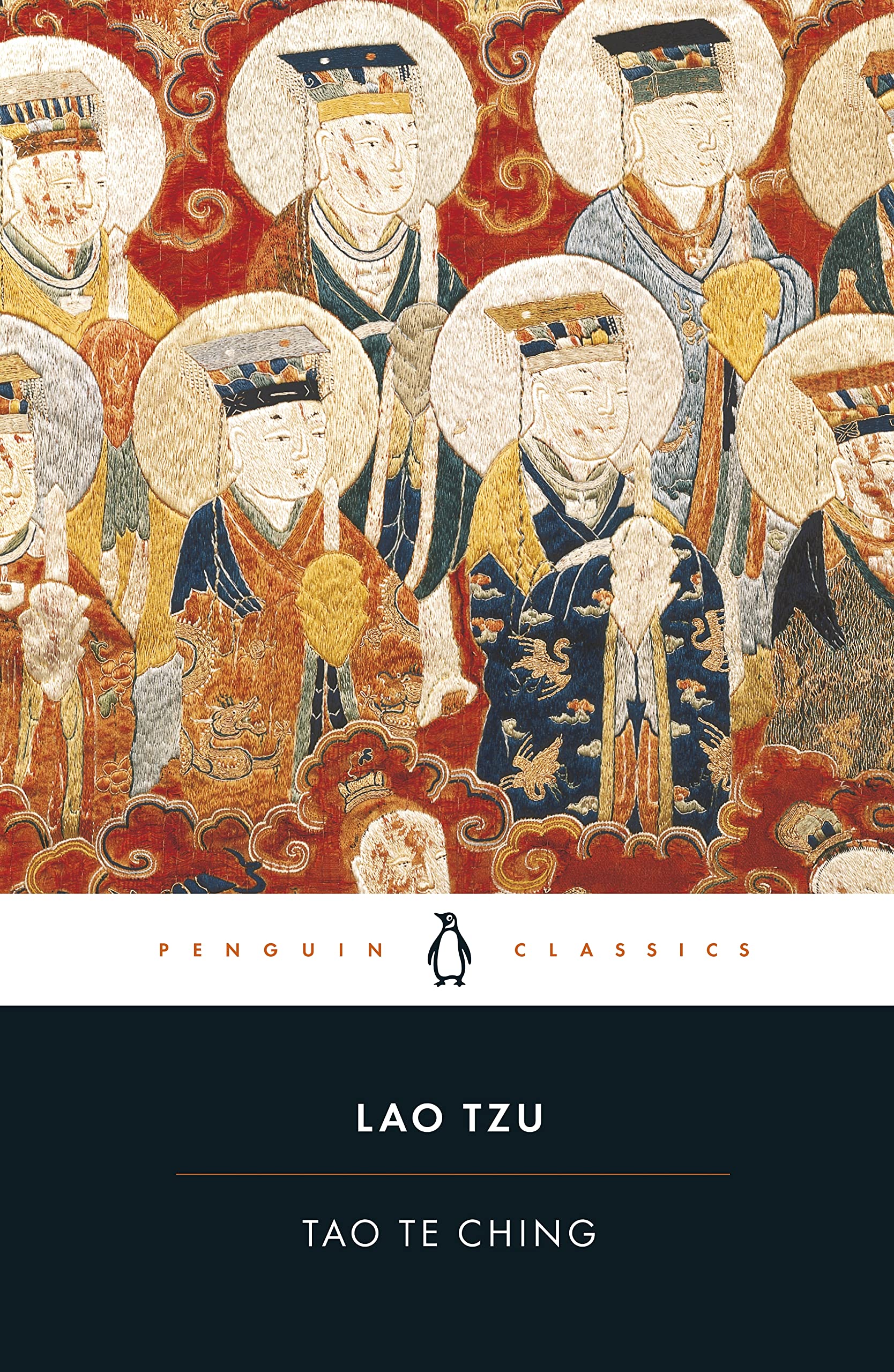
Tao Te Ching [Tzu, Lao, Lau, D. C.] on desertcart.com. *FREE* shipping on qualifying offers. Tao Te Ching Review: The Tao is the way - The Tao is the Way, and the Way is the Tao. But if you expect the "Tao Te Ching" to get much more specific than that, then I’m afraid you’re likely to be disappointed. The Tao Te Ching is not a how-to – or, if you’ll forgive the phrase, a Tao-to. Author Lao Tzu is a highly revered figure in modern China – making it all the more interesting that, as scholar D.C. Lau of the Chinese University of Hong Kong points out in an informative foreword, there is no real way of proving the historicity, even the actual historical existence, of a monk who lived in the 6th century B.C. and was named 老子, Lao Tzu. Therefore, stories about Lao Tzu – like the one in which Lao Tzu supposedly told a young Confucius to “Rid yourself of your arrogance and your lustfulness, your ingratiating manners and your excessive ambition. These are all detrimental to your person” (p. viii) – must be taken with the proverbial grain of salt. What cannot be denied is that the "Tao Te Ching" – whoever its author(s), whatever the circumstances of its composition – provides the basis for one of the world’s great philosophical and religious traditions. In its 81 short, poetic chapters, the "Tao Te Ching" invites the reader to approach life in a spirit of acceptance and humility. That emphasis is no accident, as the book was written during the Warring States period – a singularly turbulent and unstable time, when both ordinary citizens and powerful leaders were only too aware of the uncertainty of human affairs. Small wonder, then, that so many passages from the "Tao Te Ching" emphasize contentment, caution, endurance: “Know contentment/And you will suffer no disgrace;/Know when to stop/And you will meet with no danger./You can then endure” (p. 51). On my first reading of the "Tao Te Ching," I found myself focusing upon areas where I could see the document’s influence on Western culture. In Chapter V, for example, Lao Tzu writes that “Heaven and earth are ruthless, and treat the myriad creatures as straw dogs; the sage is ruthless, and treats the people as straw dogs” (p. 9). Sure enough, it turns out that Sam Peckinpah’s violent and controversial film "Straw Dogs" (1971), with its own thematic focus on ordinary people in a ruthless world, takes its title from this chapter. And then there is Chapter XLVII, the chapter that may be my favorite from the entire "Tao Te Ching": “Without stirring abroad/One can know the whole world;/Without looking out of the window/One can see the way of heaven./The further one goes/The less one knows” (p. 54). Fellow Beatles fans will recognize at once that this passage from the "Tao Te Ching" provides the lyrical inspiration for “The Inner Light,” a 1968 George Harrison composition that originally served as the B-side for the hit single “Lady Madonna.” George’s interest in the great religious traditions of the East is a matter of record, and it makes perfect sense that, amid the chaos of being a Beatle, he would have been drawn to the Tao Te Ching’s message of letting go of the pursuit of material things in favor of seeking spiritual sustenance. To my mind, one of the passages that is most explicit in defining the Way comes in Chapter VIII, when Lao Tzu writes that “Because water excels in benefiting the myriad creatures without contending with them and settles where none would like to be, it comes close to the way” (p. 12). Part of understanding the Way seems to involve the idea that the Way cannot be pinned down like a dead butterfly in a glass case; indeed, attempting to seize control of the Way will only take one further from the Way. “Go up to it and you will not see its head;/Follow behind it and you will not see its rear” (p. 18). In a way, Lao Tzu’s Way reminds me of physicist Werner Heisenberg’s uncertainty principle from quantum mechanics – the idea that one can accurately measure the position or the momentum of a subatomic particle, but not both. The only way to achieve some measure of knowledge is to let go of trying to know everything. How scientific, and how Taoist. One can also, if one looks, find connections with the great religious traditions of the West. When Lao Tzu writes in Chapter 53 that “The great way is easy, yet people prefer by-paths” (p. 60), readers acquainted with the Judeo-Christian heritage might find themselves thinking of one of Jesus Christ’s admonitions from the Sermon on the Mount: “Enter ye in at the strait gate: for wide is the gate, and broad is the way, that leadeth to destruction, and many there be which go in thereat: Because strait is the gate, and narrow is the way, which leadeth unto life, and few there be that find it” (Matthew 7:13-14). And Lao Tzu’s call in Chapter 63 for his disciples to “do good to him who has done you an injury” (p. 70) will similarly bring to mind Jesus’ call for his disciples to “Love your enemies, do good to them which hate you, bless them that curse you, and pray for them which despitefully use you” (Luke 6:27-28). Helpful appendices to this edition of the "Tao Te Ching" deal with the problem of Lao Tzu’s authorship of the "Tao Te Ching," as mentioned above, and with the nature of the work. There is also a glossary of authors and works from the tradition of classical Chinese philosophy, along with a chronological table that takes one all the way from the beginning of the Eastern Chou Dynasty in 770 B.C. through the end of the Eastern Han Dynasty in 225 A.D. – all very helpful for any reader for whom all this history may be relatively new. I read the "Tao Te Ching" while my wife and I were in Beijing; touring the Temple of Heaven complex, a magnificent group of religious buildings associated with the Taoist faith, I wondered how many believers, during the 600 years since the complex’s construction, had walked to or from a ceremony of harvest prayers reciting a favorite chapter from the "Tao Te Ching." I felt very fortunate to be acquainting myself with this world classic of literature, religion, and philosophy while traveling in the land from which it came. Review: Asian Religious Philospophical Text - If Studying Taoism (Daoism) this a must read.



P**L
The Tao is the way
The Tao is the Way, and the Way is the Tao. But if you expect the "Tao Te Ching" to get much more specific than that, then I’m afraid you’re likely to be disappointed. The Tao Te Ching is not a how-to – or, if you’ll forgive the phrase, a Tao-to. Author Lao Tzu is a highly revered figure in modern China – making it all the more interesting that, as scholar D.C. Lau of the Chinese University of Hong Kong points out in an informative foreword, there is no real way of proving the historicity, even the actual historical existence, of a monk who lived in the 6th century B.C. and was named 老子, Lao Tzu. Therefore, stories about Lao Tzu – like the one in which Lao Tzu supposedly told a young Confucius to “Rid yourself of your arrogance and your lustfulness, your ingratiating manners and your excessive ambition. These are all detrimental to your person” (p. viii) – must be taken with the proverbial grain of salt. What cannot be denied is that the "Tao Te Ching" – whoever its author(s), whatever the circumstances of its composition – provides the basis for one of the world’s great philosophical and religious traditions. In its 81 short, poetic chapters, the "Tao Te Ching" invites the reader to approach life in a spirit of acceptance and humility. That emphasis is no accident, as the book was written during the Warring States period – a singularly turbulent and unstable time, when both ordinary citizens and powerful leaders were only too aware of the uncertainty of human affairs. Small wonder, then, that so many passages from the "Tao Te Ching" emphasize contentment, caution, endurance: “Know contentment/And you will suffer no disgrace;/Know when to stop/And you will meet with no danger./You can then endure” (p. 51). On my first reading of the "Tao Te Ching," I found myself focusing upon areas where I could see the document’s influence on Western culture. In Chapter V, for example, Lao Tzu writes that “Heaven and earth are ruthless, and treat the myriad creatures as straw dogs; the sage is ruthless, and treats the people as straw dogs” (p. 9). Sure enough, it turns out that Sam Peckinpah’s violent and controversial film "Straw Dogs" (1971), with its own thematic focus on ordinary people in a ruthless world, takes its title from this chapter. And then there is Chapter XLVII, the chapter that may be my favorite from the entire "Tao Te Ching": “Without stirring abroad/One can know the whole world;/Without looking out of the window/One can see the way of heaven./The further one goes/The less one knows” (p. 54). Fellow Beatles fans will recognize at once that this passage from the "Tao Te Ching" provides the lyrical inspiration for “The Inner Light,” a 1968 George Harrison composition that originally served as the B-side for the hit single “Lady Madonna.” George’s interest in the great religious traditions of the East is a matter of record, and it makes perfect sense that, amid the chaos of being a Beatle, he would have been drawn to the Tao Te Ching’s message of letting go of the pursuit of material things in favor of seeking spiritual sustenance. To my mind, one of the passages that is most explicit in defining the Way comes in Chapter VIII, when Lao Tzu writes that “Because water excels in benefiting the myriad creatures without contending with them and settles where none would like to be, it comes close to the way” (p. 12). Part of understanding the Way seems to involve the idea that the Way cannot be pinned down like a dead butterfly in a glass case; indeed, attempting to seize control of the Way will only take one further from the Way. “Go up to it and you will not see its head;/Follow behind it and you will not see its rear” (p. 18). In a way, Lao Tzu’s Way reminds me of physicist Werner Heisenberg’s uncertainty principle from quantum mechanics – the idea that one can accurately measure the position or the momentum of a subatomic particle, but not both. The only way to achieve some measure of knowledge is to let go of trying to know everything. How scientific, and how Taoist. One can also, if one looks, find connections with the great religious traditions of the West. When Lao Tzu writes in Chapter 53 that “The great way is easy, yet people prefer by-paths” (p. 60), readers acquainted with the Judeo-Christian heritage might find themselves thinking of one of Jesus Christ’s admonitions from the Sermon on the Mount: “Enter ye in at the strait gate: for wide is the gate, and broad is the way, that leadeth to destruction, and many there be which go in thereat: Because strait is the gate, and narrow is the way, which leadeth unto life, and few there be that find it” (Matthew 7:13-14). And Lao Tzu’s call in Chapter 63 for his disciples to “do good to him who has done you an injury” (p. 70) will similarly bring to mind Jesus’ call for his disciples to “Love your enemies, do good to them which hate you, bless them that curse you, and pray for them which despitefully use you” (Luke 6:27-28). Helpful appendices to this edition of the "Tao Te Ching" deal with the problem of Lao Tzu’s authorship of the "Tao Te Ching," as mentioned above, and with the nature of the work. There is also a glossary of authors and works from the tradition of classical Chinese philosophy, along with a chronological table that takes one all the way from the beginning of the Eastern Chou Dynasty in 770 B.C. through the end of the Eastern Han Dynasty in 225 A.D. – all very helpful for any reader for whom all this history may be relatively new. I read the "Tao Te Ching" while my wife and I were in Beijing; touring the Temple of Heaven complex, a magnificent group of religious buildings associated with the Taoist faith, I wondered how many believers, during the 600 years since the complex’s construction, had walked to or from a ceremony of harvest prayers reciting a favorite chapter from the "Tao Te Ching." I felt very fortunate to be acquainting myself with this world classic of literature, religion, and philosophy while traveling in the land from which it came.
D**D
Asian Religious Philospophical Text
If Studying Taoism (Daoism) this a must read.
O**Y
Penguin, when is the next translation coming?
The Tao Te Ching is a gateway to the real world of which we are all an integral part, of which we live and die with. In other words, the world we have forgotten, and are destroying in our blind murder-suicide we are running fast to accomplish. I own seven different translations, and this is the last one I check. Like someone else said, It's time for a new version Penguin! Many of us eagerly awaiting a new taoistic translation of Tao Te Ching.
M**Z
A classic; but Penguin, it's time for a new edition
It's a classic translation, beautiful, and lucidly introduced and annotated. Still, much has happened in the decades since this edition was composed, in terms of archaeology and scholarly debate about this book. Time for a new edition, Penguin.
E**D
Ancient Wisdom
Masterpiece.
C**R
Positive change
How to be a better you.
J**O
Grw
Lived the cover art. Still need to read.
A**L
This translation was unintelligible for me
This translation is said to be one of the closest to the original Chinese text, but maybe this makes its English too awkward. After some struggle, I switched to the Addiss & Lombardo translation.
D**K
Excelente para leitura diária para quem busca viver em equilíbrio
C**R
Prior to reading a page, read the context at the bottom prior to so you will be able to understand it - helps a ton
C**D
Highly regarded interpretation of the Tao Te Ching.
M**S
Bra, men inte i närheten av Stephen Mitchell's version av Tao Te Ching.
M**T
Horrible translation, I've read 3 more version 1 in English 2 in Turkish this was the worst translation I see between those
Trustpilot
Hace 1 semana
Hace 2 meses