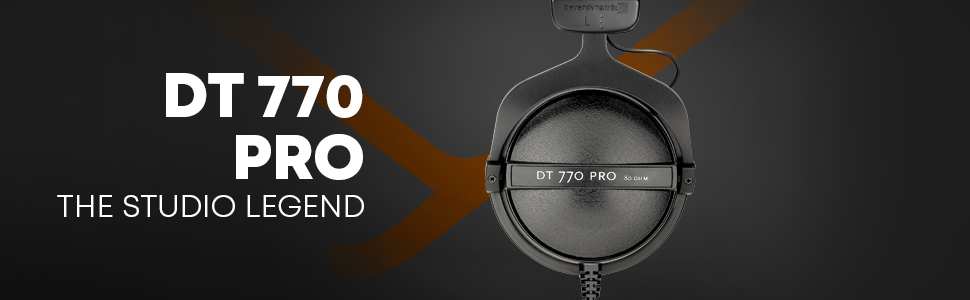
🎶 Elevate your sound game with the legendary DT 770 Pro — where precision meets passion.
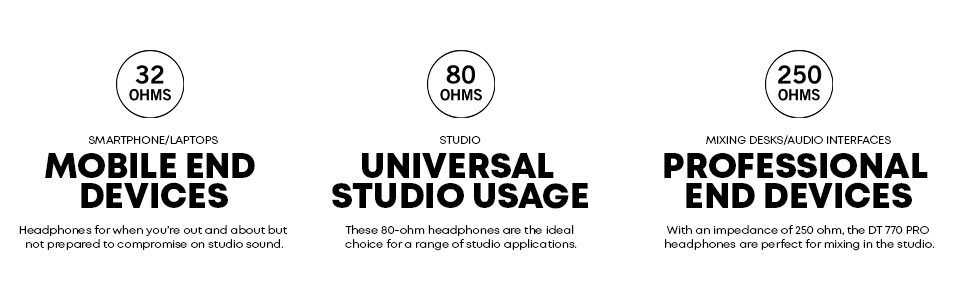
The beyerdynamic DT 770 Pro 80 Ohm Limited Edition headphones deliver professional-grade, closed-back sound isolation with a wide frequency response (5 Hz–35 kHz). Handcrafted in Germany, they combine durable build quality with ergonomic comfort, making them ideal for studio mixing, critical listening, and gaming. Featuring a tangle-free wired connection and universal compatibility, these headphones have been a trusted choice for over 30 years among audio professionals worldwide.


| ASIN | B071XKQQ57 |
| Additional Features | Closed diffuse-field studio headphone, Tangle Free Cord |
| Age Range Description | Adult |
| Antenna Location | Studio Recording, Music, Gaming, Critical Listening |
| Audio Driver Type | Dynamic Driver |
| Best Sellers Rank | #244 in Musical Instruments ( See Top 100 in Musical Instruments ) #4 in Recording Headphone Audio Monitors |
| Brand | beyerdynamic |
| Built-In Media | 1/4" Screw-on Adapter (pre-installed on 3.5mm jack), Drawstring storage bag |
| Cable Features | Tangle Free |
| Carrying Case Color | Black |
| Carrying Case Material | Fabric |
| Color | Black |
| Compatible Devices | Universal |
| Connectivity Technology | Wired |
| Control Method | Remote |
| Customer Reviews | 4.5 out of 5 stars 29,497 Reviews |
| Ear Placement | Over Ear |
| Earpiece Shape | Circumaural |
| Enclosure Material | Faux Leather |
| External Testing Certification | Não aplicável |
| Form Factor | Over Ear |
| Frequency Range | 5 Hz to 35,000 Hz |
| Headphone Folding Features | Over Ear |
| Headphone Jack | 3.5 mm Jack |
| Headphones Ear Placement | Over Ear |
| Impedance | 80 Ohms |
| Is Autographed | No |
| Is Electric | No |
| Item Height | 5 inches |
| Item Weight | 12.2 Ounces |
| Manufacturer | beyerdynamic |
| Model Name | DT 770 PRO |
| Model Number | 717770 |
| Noise Control | Sound Isolation |
| Number of Items | 1 |
| Specific Uses For Product | Entertainment, Gaming, Professional |
| Style Name | Headphones |
| Theme | video_game |
| UPC | 638888649853 |
| Unit Count | 1.0 Count |
| Warranty Description | 2-year Beyerdynamic Warranty |
| Water Resistance Level | Not Water Resistant |
| Wireless Technology | Wired |
H**M
Wow! Incredible.
I do have an audiophile ears, but I do not own any audiophile equipment. Recently I bought a Yeti Plus microphone that has an audio jack for monitoring audio. So, I plugged in my Bose QC35 headphones, using the 3.5 mm audio cable, and it sounded OK. But, it didn't sound great. I decided to subscribe to Apple Music to see what the music sounds like via this setup. It was nothing to write home about. I then plugged the same QC35 headphones to my 2021 Apple M1 Pro MacBook Pro (14"), and it sounded exactly like it did out of the Yeti X microphone's headphone jack. I decided to research and see why the quality was so low. I don't normally listen to music, but I couldn't imagine that the Apple Music streamed (even at the highest selectable quality) would be so unremarkable. So, I looked up the impedance of the audio jack of the Yeti X microphone, and I realized that it's a high-impedance audio output. Then, I looked up the 2021 M1 Pro MacBook Pro specs, and what do you know? It also has a high-impedance output audio jack (unlike the 2020 M1 MacBook and MacBook Pro). So, then I googled what impedance should the headphones have for high-impedance audio outputs and learned that the impedance of the headphones should be at least 8-10 times of the impedance of the audio output in Ohms. Hence, I started the search for the high-impedance headphones. I've read hundreds of reviews, and I finally found the DT 770 PRO 250 Ohm headphones. They were well reviewed, they were relatively inexpensive, they they had a version with 250 Ohm of impedance (which is about 8 times as high as the audio output of the Yeti X audio jack). So, I decided to try these headphones. I ordered them and received them the next day via Amazon Prime shipping. As soon as I plugged them in and started the stream from Apple Music, my jaw dropped. This is what I was looking for, and here it is. Unbelievable I could get a jack pot on the first attempt for under $200 and especially becasue they are made in Germany. How is this even possible? Now, are they comfortable to wear? To me, they are a little too tight. Are they worse than the Bose QC35 when it comes to comfort? Maybe Bose QC35 are a little more comfortable. But, when it comes to the sound, OMG. There is no comparison. Unless you want to pay many times more for premium high-impedence headphones just to get a better fit, then go ahead and get the ones for $1500, $2500, etc. Otherwise, these are amazing when it comes to the audio quality. Can anyone tell that these are better than the QC35? Yes, anyone can tell unless you use these 250 Ohm ones with a low-impedance audio output like in smartphones, older MacBooks, etc. Now, my son has a 2020 M1 MacBook Air, which is an excellent laptop, but it has a low-impedance audio jack output. So, for my son, I've ordered an 80-ohm version to compare to my 250-ohm version. I will let him decide which one to go with. I'd suggest getting both the 80-Ohm and the 250-Ohm version and compare them side by side - as long as you are getting these headphones for a decent piece of audio equipment. If you are getting them for an iPhone (not sure why you would), then maybe you should go with the lowest-impedence version. Edit: I've now compared the 250 Ohm version to the 80 Ohm version. In the beginning, I couldn't tell any difference when using them with my Yeti X microphone's high-impedance audio out jack and the 2021 M1 Pro MacBook Pro high-impedance audio jack. However, the more I listened to both, the more I started hearing the difference. I then switched to testing both 250 Ohm and the 80 Ohm headsets exclusively with the 2021 M1 Pro MacBook Pro's high-impedance audio jack because it turned out that the Yet X audio jack shows its shortcomings when music with serious bass is played out of it. In my opinion, the 250 Ohm headset reproduces the sounds more accurately. When listening to Seven Nation Army by The White Stripes (on Apple Music lossless), I could actually hear some imperfection in the bass guitar (like the string was moved under the player's finger accidentally, resulting in a little distortion), while I couldn't hear this through the 80 Ohm headset. When listening to Bohemian Rhapsody Remastered in 2011 on Apple Muisci (lossless), It appears that mids and the highs are a bit dulled down through the 80 Ohm headset, whereas they are crystal clear through the 250 Ohm headset. We are talking here very subtle differences that can only be detected while listening to the same piece over and over again via both headsets (back to back). It appears that the best songs recommended for testing headsets are: 1. Bohemian Rhapsody Remastered (2011) by Queen. ... 2. Seven Nation Army by The White Stripes. ... 3. Feels Like We Only Go Backwards by Tame Impala. ... 4. Heroes (2017 Remaster) by David Bowie. ... 5. No Time for Caution by Hans Zimmer. ... 6. Diamonds From Sierra Leone by Kanye West. ... 7. Now We Are Free by Hans Zimmer Additionally, I was using the 2021 M1 Pro MacBook Pro's audio jack (which auto-senses high-impedance and low-impedance headphones). I'm not sure what it does for the 80 Ohm headphones: does it consider them low-impedance or high-impedance because, in reality, they are medium-impedance headphones. Compared to other laptops, the 2021 M1 Pro MacBook Pro probably has a decent-quality pre-amp and DAC similar to inexpensive (less than $200) standalone DACs with pre-amps. So, perhaps to hear the difference between the 80 Ohm and 250 Ohm versions of this headset, one should use decent audio equipment. My son hasn't yet tested the two headsets with his 2020 M1 MacBook Air, so I'm not sure which one he decides on. I will post another update later.
F**K
Incredible Sound and Comfort — Worth Every Penny!
These headphones truly exceeded my expectations. I’ve used many studio headphones before, but the DT 770 Pro 80 ohm Limited Edition stands out immediately. The sound is incredibly clear, balanced, and detailed — perfect for recording, editing, or just enjoying music with amazing quality. They are also extremely comfortable, even during long sessions. The build feels solid and professional, and the noise isolation is excellent without feeling too tight. I’m very impressed with the overall performance, and I’m glad I made this purchase. Highly recommended!
A**F
The best headset I have ever owned (to date)
I have used many different brands of headphones throughout the years as I am a music obsessed "junkie." I seriously cannot exist one day without my music! It is my constant energy source (other than coffee) :) I have always been a mostly dedicated Sony girl (still love them), but decided to give these a chance as I love to continue sampling with sound. I can get brand specific, but I am always open minded and adventurous and love to experiment! When you listen to music as much as I do (17-19 hours a day), as well as play around with recording, you like to have a broad spectrum of tools available to you. After reading many of these reviews and researching the specs for each model I decided the 80 ohms were just the right vibe for me and all my applications. Let me say - I love when risks pay off! The minute I slipped these on I was blown away. (which is why this review is rather LONG) Biggest factors were: 1. Comfort - The velour earpads are incredibly luxurious and snug against the head without being claustrophobic or sweat inducing (both of which I have horrible issues with). I was especially concerned about this because it is something that happens to me with pretty much any ear cup trapping heat against my head. I am a hyperhidrosis sufferer of over 28+ years, and since that is never going away and any little thing can trigger a nasty sweating episode, I certainly don't want my number one and favorite activity to be contributing to that! I have been wearing these for hours at a time (longest session was 3.5 hours so far) and at times forget they are on - they are just that comfortable in their design. The cord is long, but if you run it behind your back it never gets in your way or adds considerable weightiness. The adjustable headband is genius in the snap design and I love how sturdy they feel. Although they look heavy I was amazed at how light weight they actually are. Another issue I tend to have with overears is significant pain on the top of my head from plastic rub or behind my ears rubbing. I have been wearing these almost non-stop for about 3 days now and have not had one complaint. I just have to remember to take them off to let my ears have a break from their amazing SOUND. 2. Sound quality (listening) - the 80s are super well balanced if you are using applications that do not require amplification. They are perfectly designed for your every day musical consumption through a computer or smartphone, but I mostly bought this set to record vocals with my mic. They give me a rich, all around balanced experience where i feel the trebles are clear enough and the bass is not so "thuddy" it seems "muddy." It's actually very punchy, warm, and responsive feeling. Don't get me wrong, I err on the side of more bass as I love hearing that rich tone, but I never want it to be overpowered as some in the Beats brand can be. I do use Beats tour 2.0 as my main earbud, but for an over ear they can be a little overpowered. On that note, some headphones require really precise tuning with an EQ to manipulate their best performance, but these Beyerdynamics are as plug and play as you could hope for. I listen to a very broad range of music too - from punk to classic rock to EDM to Alternative to hard rock, to Prog, to some pop and metal etc.. . I'm just an all around music enthusiast and these headphones make me hear all the same songs in a whole new light. And that's exactly what I was looking for since I want to enjoy the same thing over and over, but never tire of having a new experience with something even though it's familiar. You definitely don't need your device turned up too high to enjoy the depth of the sound you get. The pads are not noise cancelling, but they do a great job of isolating sound close enough to you to fully immerse you in the experience. 2.2 Sound (recording) I haven't got to use these as much yet on the recording side with my Blue USB mic, but from the little I sampled with it they are perfectly designed to meet my expectations. They do a fabulous job of isolating the input in your ear, but still allow you to hear some of what is happening around you without it being a distraction. I noticed that right away and loved that aspect. They cut down the distractions, but don't make you "disappear." 3. Aesthetic appeal/long term investment - They are stylish while still being professional - so many headsets can go for one goal and miss out on the other. I think this set does a great job of adding excitement/uniqueness to the design without sacrificing quality. They don't look "stupid" on your head - like a gimmicky, "I just want to be cool" look. But they definitely aren't boring or cheap looking either. In fact, they are less bothersome on my huge head of hair than some headsets have been. If you have alot of hair to hide them, they can almost look like earmuffs instead of headphones, and while possibly an irrelevant point, I thought it was pretty neat. :) All parts are replaceable too! So that sets them apart to be a good long term investment if you find you enjoy the experience as much as I do. Clsoing points are - there is no compromise for quality or well engineered, smartly run, passionate companies. This was my first experience with Beyerdynamic and it has been one well worth having.
S**S
Beyerdynamic DT 770 Pro 250 Ohm Headphones
Before getting these Beyerdynamics, I'd never spent more than $50 on a pair of headphones. Over the last thirty years, I've had headphones in that price category by Sennheiser, Koss, Audio-Technica, and Philips. For the last ten years, I've been unnecessarily content with a pair of Philips SBC HP250 32 ohm headphones. I've missed decades of opportunities to listen to quality sound because of this misplaced frugality. These DT770 Pro headphones resolve and clarify detail that in my previous headphones was a sonic blur. Specifications: Beyerdynamic headphones are made in Germany. The DT770 Pro is available in 80 ohm and 250 ohm. These are the 250 ohm model. Frequency response on either model is 5 Hz to 35 kHz. They are closed back headphones, and the ambient noise attenuation is approximately 18 dbA. THD (total harmonic distortion) is less than 0.2% and nominal SPL (sound pressure level) is 96 dB. Their power handling capacity is 100 mW. The cable is 3 meters long, which is coiled on the 250 ohm model and straight on the 80 ohm model. The coiled cable isn't long enough to wear the headphones and move far from the jack, so I've linked it to a Mogami Gold EXT 10 foot Headphone Extension Cable I bought after getting the phones. This allows me to sit or move around the room some distance from the jack, but I think now that a 15 foot extension would have been a better choice, since I don't like to overstretch the coils on the headphone cable. (This Mogami cable is heavy duty and I absolutely recommend it.) These 250 ohm phones work fine without a headphone amp, plugged straight into my i3 Toshiba Satellite P745 laptop (year 2012 model). I do amplify them, though (because I already had the amp and they sound even better amped), with a (discontinued) Rane HC 4S headphone console. Specs on the Rane amp: This is a four phone amp (actually four amps in one rolled steel, rack-mountable box) designed to take the output of a studio mixer (so it's not an audiophile amp). It takes two ¼ inch phone plugs (tip/ring) for input and then outputs to both a stereo 3.5mm mini jack or stereo ¼ inch stereo phone jack for each headphone (choose one per amp), and is switchable overall from stereo to mono. Each phone has its own volume control and LED overload indicator. The amp has output impedance of 1 ohm max and will drive phones from 32 to 600 ohms, taking them typically up to 120 dB SPL, with 200 mW minimum power for 32 to 150 ohm phones (with 75 ohm phones being optimum at 239 mW, and yielding 146 mW for 300 ohm phones). Frequency response is 10 Hz to 45 kHz (+0/-3 dB). From the computer to the amp: I do not have a DAC between the computer and amp. To connect the laptop to the amp, I use a six foot long Sescom SES-IPOD-QTRM06 cable with 3.5mm stereo plug to dual ¼ inch phone plugs, and plug it into the headphone jack of the laptop. This cable was designed for the iPod and is of higher quality (and more costly) than the three foot long Hosa cable I was using before this. (Sescom also makes cables with a 3.5 mm stereo plug going to two RCA plugs.) I use a right-angle 3.5mm female to 3.5mm male adapter at the headphone jack to protect the cable and jack from developing a short from the weight of the cable. As of this writing, I'm using an adapter from Radio Shack, but I might try a Hosa brand of the same type. The first thing I did on getting the Beyerdynamics was to compare them, using the Rane amp, with the Philips SBC HP250 I've been using for years. The DT 770 at 250 ohms is softer in loudness than the 32 ohm Philips at the same volume setting, but not by much. The difference in clarity and sound quality, especially at high volume, is striking. I'll leave it to others to write about soundstage and presentation of low, mid, and high frequency ranges. I also use these phones with my ten-year-old Sony receiver, straight from the headphone jack, and they are an improvement over my previous headphones. Software: On the laptop, I'm using JRiver Media Center (purchased) and VLC Media Player (free). I started out with foobar2000 (free) for audio, but JRiver is superior and worth the small expense. Media Monkey is another program I tested. It is also free unless you want the more advanced version. I highly recommend JRiver Media Center. I've set it as the default player for videos also, usurping VLC. However, VLC and foobar2000 (along with Irfan View for a picture viewer and simple image editor) are good programs that can replace the Windows media player with advanced features and without cost. They remain on my computer with shortcuts on my desktop. I use iTunes for iTunes U and nothing else. These headphones sound good with this setup, although I suspect there is more quality to be had from them with better mediation between the audio's digital data and the headphones (i.e. audiophile grade DAC and amp, such as those available from Musical Fidelity, Burson, or Lehmann Audio, among many others. I had to return the first pair of these headphones for a replacement before a month was past because the right side cut out. I got them from the Recording Store here at amazon and out in the physical world in New York. They sent me a phone number to call. I asked for a new pair (I really like these headphones), and they happily sent me a return label via email. I had the replacements via USPS Priority within a week (literally) of sending out the defective pair via UPS. Excellent service. Choices (for me) flanking the DT 770 Pro 250 Ohm were the Audio-Technica ATHM50S Professional Monitor Headphones (38 Ohms) (costing less) and the BEYER DYNAMIC DT880-Pro Headphones (250 Ohms) (costing more). Sennheiser was the other brand I considered. I did not listen to any of these before buying. I have no regrets about my choice. You can spend a lot of money on headphones. You can also spend hardly any money at all. You'll hear the tune and pulse of the music in even the cheapest phones. It's up to you to decide how much you're willing to pay to hear more. I think the DT Pro 250 Ohm is a good pair of entry-level audiophile headphones.
O**N
Great headphones, but with some EQ correction, can be excellent headphones
I think one of the strongest selling points for these phones are their comfort. You don't think you need it until you try it once and understand the difference - because it turns out being distracted by any discomfort will disrupt your listening experience in ways you really wish it didn't. These headphones feel incapable of discomfort even if you wore them all day long. As for the sound quality, these phones (like any other headphones) are going to show 'colorization' at certain frequencies and this model has colorization behavior that concerned me and most likely others too. These headphones are a just a bit too bright at louder volumes (particularly for music). It's very clear they are this way if you check out their frequency response graph (see photo) - especially at higher volumes. Another graph clearly shows it gets even more pronounced the louder it gets (see photo). If you don't suspect you will listen to these at louder volumes most of the time, then this isn't really an issue, and can actually be an advantage because brightness at lower volumes generally improves clarity. That said, my impression is that these headphones were not quite intended to be used at higher volumes. From a numbers perspective, the graphs show this, and additionally, this particular model is rated up to 100 mW of power whereas other comparable phones can handle up to 1,000 mW (there's not a lot of room for loud volumes / higher power use). In fact, if you run these at louder volumes, you can tell they start to clip a bit sooner than you might expect. Granted, a lot of people are not going to use these at higher volumes - but I also know there are people out there that really want to listen to music loudly (not ear bleeding!) and these headphones show concerns at the kind of loudness I am trying to describe. If you think you will listen to these loudly - what you can do about it is use software (or hardware) to alter the EQ of whatever you are running these on. I use them on my laptop (behind a DAC/Amp) and for those of you who are using them on a computer, you may be very interested in a free software called Equalizer APO along with the Peace plugin. It will give you a 13 band EQ where you can set the changes wherever and however you want. The most useful feature of this software is you can overlay the picture of the frequency response graph on top of the graph of the changes you are making. When done this way, you can achieve a highly accurate and complete correction of the colorization (see photo). Do note that if you do this, to not apply as much correction as you get closer to the high end because of the way the headphones behave with volume changes - you will want to only correct about 2/3 to 1/2 as much to give some room for these changes. If you bother to do this - it will drastically improve the sound profile of these headphones. It will feel like you added 100's of dollars of value to them because frankly - it's quite difficult to manufacture headphones to sound uncolored by themselves - the physics behind it will always introduce some colorized sound. There is some color you may want and others you don't - but if you don't bother to use something to correct for the colorization - you might find yourself wondering if some other pair of headphones will more closely produce your 'ideal' sound and begin a cycle of trying to find that 'perfect' pair and keep discovering they all have some bit of colorization. If you spend about $150 here you can get top of the line comfort and very capable headphones, and for free, help correct it's sound profile to your needs. Now, you can't improve certain things like sound stage or imaging this way - but if you were concerned about that there's a good chance this model wasn't your first choice because these are closed headphones and not the top of the line model offered by this company. Beyond the brightness colorization, the mid and bass response are great. The mids stay pretty neutral at all volumes. As some people have noted, they can be bassy. Yes - they are very capable of reproducing the low end in ways most headphones just can't. To be more specific, they have pretty good low end *range* - as in you can really hear the sub bass. But, there is a slight problem with their bass response at specifically around 210 Hz. I highly suspect with non-electronic music you may not notice this because it's not the most represented frequency - but if you do listen to electronic music - there's a good chance you will feel the bass doesn't quite sound the way you remember. Well, it happens to be a prominent frequency for kicks and bass lines - so it's fairly present in the sound spectrum for electronic music. I would boost this area specifically to see the difference and leave it at that. There will be some people who think that, overall, the bass is too present, and indeed it's true that there is significant bass response if you look at the frequency response graph. Just like with the brightness, it gets more pronounced the louder you go. For those of you who listen to electronic music, there's a good chance you will really appreciate this - it can be amazing how these headphones respond. However, if you don't listen to electronic music - this is probably unwanted in a lot of cases. Again, I would apply EQ correction for this - but in this case I would just apply an overall bass reduction as the bass response is pretty even unlike the high end which has several peaks and valleys in that range and is more complex to correct. That about wraps out my thoughts on the sound quality. I will say that if you don't have an amp for the 80+ ohm models, you will most likely find these too quiet - they will sound about half as loud as you expect they can achieve. This is expected because of the higher resistance. Most likely, you will want an amp to drive these. That said, I don't recommend the 80+ ohm models for mobile users... those are more for stationary users. If you don't already have an amp, and plan on getting one, do yourself a favor, and make sure that either your amp has a built-in DAC, or plan to get a separate DAC. The main reason for that is the DAC will ensure the amp is getting the kind of electrical signal it's expecting. In my case when I only had the amp and no DAC, the amp was prematurely clipping at lower volumes because of the output from the laptop - this was immediately fixed by the DAC I bought. As for the build quality - pretty sure these will last a lifetime with care. There's nothing particular cheaply made that I noticed about these phones. I'm not concerned with the way they look. They aren't displeasing to me - but I'm also not thinking these are the coolest looking phones, but I don't care about that.
J**M
Great tracking headphones
I got this pair of headphones to track into my Apollo X4 and selected the 250 ohm set so that I could drive them through my Schitt Jotunheim headphone amp. They have great clarity and isolation. They have a neutral-to-bright sound profile which is perfect for tracking vocals or instruments. Very comfortable and lightweight on my ears and seem to fit a huge variety of head sizes. Although they aren’t necessarily cheap, I think they are a great value. Drawbacks: Slightly emphasized treble can fatigue some, but it’s a pro tool for accuracy over fun.
B**B
Good sound quality
I use these high-powered headphones when recording my guitar on my MacBook Pro (M4 chip) and the Motu M2 audio interface. I can report no power issues and high-fidelity sound. And now that I'm spoiled, I even watch TV on the laptop with these headphones. The ear enclosures are a little snug on my medium-sized head, but the ear muff material is extremely soft and keeps me comfortable. The long coiled cord is extremely pliable and makes playing guitar while wearing the headphones a breeze. For the price, I think they are a good value and I would buy them again if I should damage this pair.
A**.
I...I think they're perfect... (Three Year Edit)
Three Years and still going strong. The photos are from this week, and that is out-of-the-box pads still on. Some discoloration, and they are maybe a teeny bit more flat than they were floofy. These have been carried for over two years all over, and have encountered no issues. I have a case if it's going in checked luggage, but otherwise they toss into a bag quite well for a daily travel...although they are not small enough to be remotely considered portable. Well worth the investment, for years on years. _________ Disclaimer: I am not an audiophile. I do not have any experience with recording or studio work or anything other than a simpleton who wants to be comfortable and listen to good music. I paid full price for these (around the two-hundred mark), basically an average consumer. I did read a bunch of reviews before settling on this pair, however. Choosing the company for their modular approach and their user-serviceability. These headphones, firstly, are HUGE. They very easily fit over everyone's ears (and head) and are a dominant piece of headwear. In case that doesn't seem straightforward enough they are NOT PORTABLE. That being said, with a case for protection they can be road or airplane-friendly. I use them for music listening at home, keeping the noise of my neighbours out (and flatmates, who bumble about at all hours) and cannot hear anything but music and the loudest or closest of sounds. Have not been on an airplane... The sound quality is, to my ears, phenomenal. I never knew, for example, that the bass line in "Games Without Frontiers" by Peter Gabriel was so...choppy..until I listened to it through these. Everything sounds very good, although many of the lower-quality rips (and other..acquired musics) sound muffled, muddy. Thankfully, it is not hard to make better rips of all the CDs I have, just time consuming. The pair is easily the most comfortable thing I have ever worn over my ears: as warm as a knit ear-band thing, nowhere near as itchy as any knitted by kind friends out of what I assume to be steel wool. The "velour" (?) earpads are superb, and while they can tickle ears if sensitive, they are so soft it's ridiculous. Sound levels seem fairly even, although I have nothing to compare it to (price-wise). I can say, compared to a pair of Stir-It Up Marleys I own, it is much crisper (?) and nowhere near as bassy. Sometimes I can feel air moving around my ears from lower bass lines, which is a cool feeling (even if somehow psychosomatic). Some YouTube frequency tests (so scientific, I know) prove the range on these, though I am doubtful as to the utility of testing at such piercing ranges. All in all, I would buy them over. I don't need two pairs (they're pricey!), but I would buy another if/when these break, which should be a few years at least..studio phones are durable, and a home-user like me really doesn't test the durability. If you're looking for good phones, go for it, but look into getting a case (casebudi is good)! Maybe an amp too...
Trustpilot
Hace 1 semana
Hace 2 semanas