We remain fully operational. Our teams are working around the clock to ensure your deliveries continue safely.

Descargar la aplicación


Servicios al cliente
Sobre nosotros
Copyright © 2025 Desertcart Holdings Limited
Descargar la aplicación


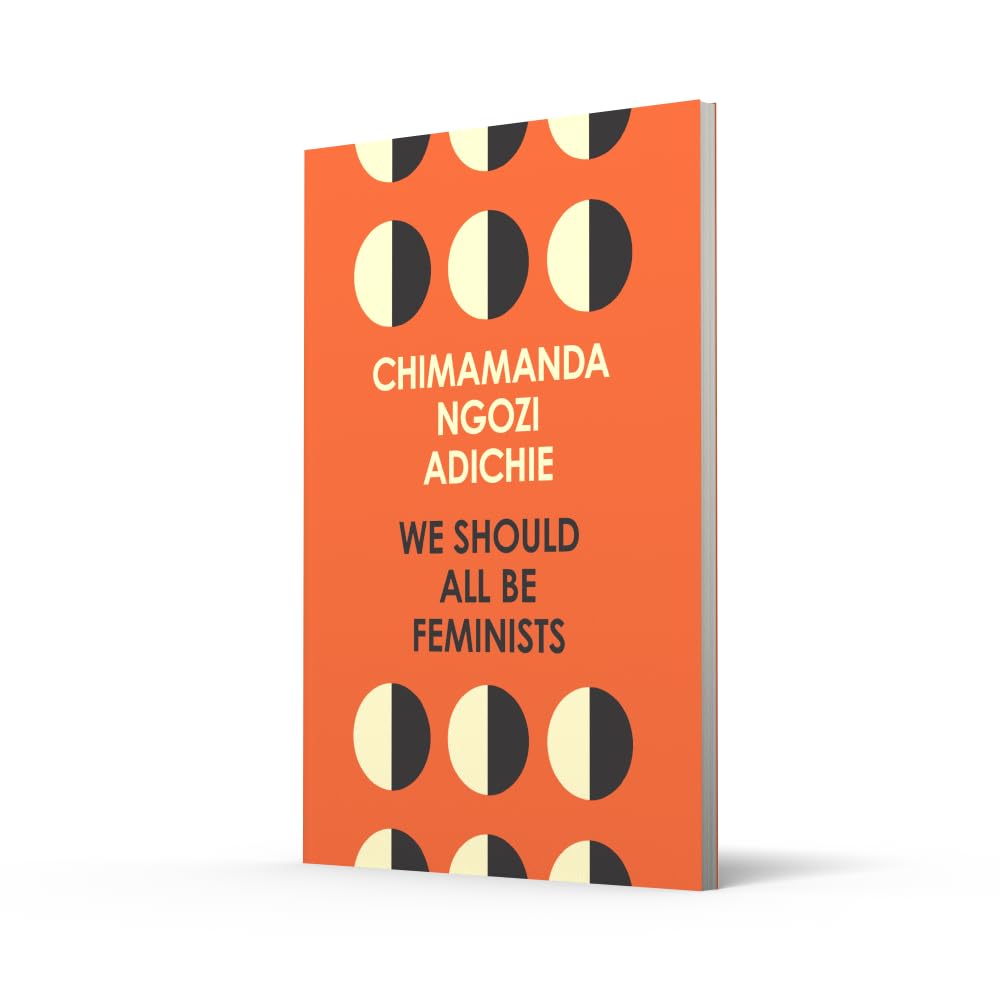


Buy We Should All Be Feminists: A powerful essay on modern feminism and gender equality from the bestselling author of Americanah 1 by Ngozi Adichie, Chimamanda (ISBN: 9780008115272) from desertcart's Book Store. Everyday low prices and free delivery on eligible orders. Review: Everyone should read this essay - I’ll start this review with a personal anecdote. A few weeks ago, my boyfriend and I were discussing what he would like to do for his birthday. He said that he would like to stay in a really fancy hotel that we had been looking into staying in for a while. I thought that this was a great idea and since it is six months until his birthday it gives me time to save up. When I told him this, he became sweetly defensive and told me that he didn’t expect me to pay for it. This was lovely of him to say because I earn substantially less than him. What I earn in a month he can in 3 times that amount in a week. However, it will be his birthday and I told him no, that I will pay for it. We then argued for a bit and I posed the question to him asking if it was my birthday and I wanted to stay somewhere would he let me pay and he became quiet before agreeing that he wouldn’t let me. When I asked him what the difference was his response was….wait for it…. “because I am a man.” Apparently you need to have a penis to pay for hotels these days. Who knew? Now my boyfriend is a good guy, he is respectful and he does believe that everyone (not just women) should have equal rights and I would even say that he is a bit of a male feminist. However, these ideals of men have money, they pay for things, this is how the world works mentality is so ingrained in our minds and societal functionality that even he slipped up and made this faux pas. This whole theme of male power is the concentration of Chimamanda Ngozi Adichie’s essay, We Should All Be Feminists. This essay was only written a few years ago but the same issues are happening everyday in modern society: men get paid more for the same jobs that women do; men still hold the majority of high paid positions; women still take on the bulk of housework whilst holding down a full time job. Now, of course, you could argue that these are massive generalisations and I am homogenising groups for my own pleasure but, come on, even you (dear review reader) have to admit that there is some truth in what I am saying. Please give this short essay a read; it is fascinating in the fact that many things that we take for granted – both women and men (linguistic flip intended) – and gives us a deeper insight into modern society and how much things have changed yet how much there is still yet to achieve. We Should All Be Feminists by Chimamanda Ngozi Adichie is available now. Review: A conversation which we still must have - It is hard to believe that here we are, in 2014, and gender inequality is still so pervasive, and we still need to talk about it. The brilliant Chimamanda Ngozi Adichie makes it clear in her essay (an extended version of her TED talk) that this is the case, and that, as she says, 'Gender matters everywhere in the world'. She has some excellent points and she makes them very well, providing us with an intelligent and often entertaining short read. I am a fan of her novels so it's no surprise that I should like this essay too. But I would say that even if Chimamanda's fiction doesn't appeal to you, you should give this a read. In here, gender inequality, and the deeply ingrained injustice at the crux of it, are presented as many astutely observed and always poignant real-life examples. The real-life examples come from Nigerian and American cultures, but they are all situations which, sadly, anyone in Britain or the rest of Europe (or anywhere else in the world) would surely recognize. The essay explains why we all, women and men, need to be feminists - and that feminism is about living our lives from a position of respect, which then would bring about in a world which would be happier and safer for everybody. It also successfully challenges the absurd claims that feminism is about women hating men etc. (the sort of venomous nonsense which feminism is accused of by the ill-informed and/or ill-intentioned.) By educating ourselves, and by questioning the assumptions we've all grown up with, we can actually help bring about that better, safer world for us and our children. And I'd say that Chimamanda's writing here is an excellent step in that direction.


| Best Sellers Rank | 4,384 in Books ( See Top 100 in Books ) 19 in Women in History 23 in Multicultural Studies 27 in Essays, Journals & Letters |
| Customer reviews | 4.6 4.6 out of 5 stars (23,346) |
| Dimensions | 11.1 x 0.7 x 15.7 cm |
| Edition | 1st |
| ISBN-10 | 0008115273 |
| ISBN-13 | 978-0008115272 |
| Item weight | 294 g |
| Language | English |
| Print length | 64 pages |
| Publication date | 9 Oct. 2014 |
| Publisher | Fourth Estate |
L**Y
Everyone should read this essay
I’ll start this review with a personal anecdote. A few weeks ago, my boyfriend and I were discussing what he would like to do for his birthday. He said that he would like to stay in a really fancy hotel that we had been looking into staying in for a while. I thought that this was a great idea and since it is six months until his birthday it gives me time to save up. When I told him this, he became sweetly defensive and told me that he didn’t expect me to pay for it. This was lovely of him to say because I earn substantially less than him. What I earn in a month he can in 3 times that amount in a week. However, it will be his birthday and I told him no, that I will pay for it. We then argued for a bit and I posed the question to him asking if it was my birthday and I wanted to stay somewhere would he let me pay and he became quiet before agreeing that he wouldn’t let me. When I asked him what the difference was his response was….wait for it…. “because I am a man.” Apparently you need to have a penis to pay for hotels these days. Who knew? Now my boyfriend is a good guy, he is respectful and he does believe that everyone (not just women) should have equal rights and I would even say that he is a bit of a male feminist. However, these ideals of men have money, they pay for things, this is how the world works mentality is so ingrained in our minds and societal functionality that even he slipped up and made this faux pas. This whole theme of male power is the concentration of Chimamanda Ngozi Adichie’s essay, We Should All Be Feminists. This essay was only written a few years ago but the same issues are happening everyday in modern society: men get paid more for the same jobs that women do; men still hold the majority of high paid positions; women still take on the bulk of housework whilst holding down a full time job. Now, of course, you could argue that these are massive generalisations and I am homogenising groups for my own pleasure but, come on, even you (dear review reader) have to admit that there is some truth in what I am saying. Please give this short essay a read; it is fascinating in the fact that many things that we take for granted – both women and men (linguistic flip intended) – and gives us a deeper insight into modern society and how much things have changed yet how much there is still yet to achieve. We Should All Be Feminists by Chimamanda Ngozi Adichie is available now.
W**D
A conversation which we still must have
It is hard to believe that here we are, in 2014, and gender inequality is still so pervasive, and we still need to talk about it. The brilliant Chimamanda Ngozi Adichie makes it clear in her essay (an extended version of her TED talk) that this is the case, and that, as she says, 'Gender matters everywhere in the world'. She has some excellent points and she makes them very well, providing us with an intelligent and often entertaining short read. I am a fan of her novels so it's no surprise that I should like this essay too. But I would say that even if Chimamanda's fiction doesn't appeal to you, you should give this a read. In here, gender inequality, and the deeply ingrained injustice at the crux of it, are presented as many astutely observed and always poignant real-life examples. The real-life examples come from Nigerian and American cultures, but they are all situations which, sadly, anyone in Britain or the rest of Europe (or anywhere else in the world) would surely recognize. The essay explains why we all, women and men, need to be feminists - and that feminism is about living our lives from a position of respect, which then would bring about in a world which would be happier and safer for everybody. It also successfully challenges the absurd claims that feminism is about women hating men etc. (the sort of venomous nonsense which feminism is accused of by the ill-informed and/or ill-intentioned.) By educating ourselves, and by questioning the assumptions we've all grown up with, we can actually help bring about that better, safer world for us and our children. And I'd say that Chimamanda's writing here is an excellent step in that direction.
V**V
Another Feminist February read!
As part of Feminist February, I'm reading some selected texts that focus on feminism, whether that's an obvious feminist text, or fiction depicting women as we are. You can read all about my selections on my blog (search dracarya wordpress). I downloaded a copy of We Should All Be Feminists by Chimamanda Ngozi Adichie, and devoured it within half an hour. It's a short book, with an introduction explaining how it was adapted from a TEDx talk Adichie gave. Earlier that evening, my partner and I had been discussing those social experiments that involve a man living as a woman for a period of time, and vice versa, to see how one another's experiences might differ based on their gender. I said that you would have to "pass", i.e. you would have to really look like a woman if you were going to experience life as a woman. I'm sure many people have thought about what life might be like if they were the opposite gender, but I've never truly wanted to be a man. Sure, it might make peeing a bit easier, and women are oppressed in ways that men aren't, but I still love being a woman. I feel my womanhood strongly. I feel a kinship to other women, that sisterhood that many feminists talk about. Despite the problems we face, I don't want to run away from my gender, I want to embrace it, fiercely, and fight for my rights, passionately. I am a woman, I love (almost) everything about being a woman. Adichie defines a woman as someone who can bear children, which is a problematic definition at best. Not all women can have (or want to have) children, and not all those who are able to have children are women. This cisgender definition rubs me up the wrong way, but I like to give people the benefit of the doubt. I like to think Adichie will have learned better since then, because, as feminists, we are constantly learning, and doing our best to, well, do better. Adichie also mentions being "girly". That word always makes me cringe. As a young child, I was called a "tomboy", because I wore tracksuit bottoms and trainers, and liked to climb trees and go out on my bike. But I still wore dresses on occasion, and, as a teenager, I'd regularly change my style to suit my mood. I wasn't a tomboy, nor was I girly - I was simply a child. And now I'm an adult, I can't say I'm much different. I prefer to wear men's shirts and leggings, but I also own skirts and ballet pumps. I always wear make-up, and I have long hair, and I get my nails and eyebrows done. But that doesn't mean I can't roll my sleeves up and clean the bathroom (fibromyalgia permitting, of course), or break the glass ceiling. I have a degree, I have a good job, I'm a published author. And I also wear mascara and lipstick, and enjoy having my hair done. I know a woman who is super healthy. She's a personal trainer, and she spends a lot of time and energy on being fit, so she doesn't, in her words, have the inclination to be "girly". She still wears make-up (albeit minimal), and she's great at doing hair, a talent I envy. But she still wouldn't describe herself as "girly". So it makes me wonder, what do we mean by the term "girly"? Why are men shamed when they spend time on personal grooming? Why is it "girly" to wear lipstick, or heels, or dresses? Am I only half "girly" because, although I wear make-up and get my nails done, I'm crap at hair and can't walk in heels? Terms like "girly" only serve to remind us that anything remotely feminine is bad. The aim of wearing make-up, for some, is to look as if we haven't made much of an effort. We, like in the movies, woke up looking fresh, with defined brows and sky-high lashes and rosebud lips. A colleague told me a few weeks ago that, upon first meeting me, she never would have guessed that I was a feminist. Why not? I asked. But she couldn't answer. Perhaps she had the idea that all feminists are ugly, bra-burning, hairy-legged man-haters (though I am hairy-legged). So, in essence, I do agree with feminists like Adichie trying to smash this idea. But I do detest the term "girly". There's no right way to be a feminist (in this respect), just like there's no right way to be a woman. Love make-up? Great! Prefer to go bare-faced? Fine! Have short hair? Nice! Have long hair? Awesome! These things are superficial, and yet, women are constantly judged on how we look. You may be the smartest person in your class, you might be super ambitious and want to rise to the top of your profession, but you will still be judged on your looks. And this is something that needs to change. In all, We Should All Be Feminists is a great read. It reaffirms a lot of things that I already knew to be true, and have spoken about before, but it was also interesting to read Adichie's version of feminism, and how her background influences the way she views the world, and how she plans on smashing the patriarchy in her own way. Smash on, Adichie, in your heels and dress and lipgloss. Smash on.
N**I
The thing about her writers voice, especially to a black African Female Read, is her ability to draw you in as though she was sitting right across conversing with you. Her work is so related, and easy to understand. It is not filled with pompous empty big unnecessary words that most feminists use to put across a point. I might be biased because I am a black African woman with similar childhood experiences that she writes about, but that's the fact that helps me relate with her. She tells my story is ways no other feminist can. Because she understands the female point view of what it means to be a female African feminist. Love her truly.
W**U
The author speeds directly about an issue, the solution of which is very simple - we should all be feminists 😌
H**E
O livro é curto pois afinal de contas ele é a adaptação de uma palestra Ted ministrado pela autora e as palestras Ted são conhecidas por serem curtas, mas ao mesmo tempo esclarecedoras. E neste objetivo esse livro não falha. Ele é importante pois podemos entender as bases do feminismo e o porquê ele é importante na construção de a sociedade mais justa. Recomendo a leitura. Quanto ao nível de inglês, acredito que quem está no nível A2/B1 não vá ter muitos problemas.
D**Y
Normalde bu tarz kitaplar okumazdım ama özel birisine hediye etmek için aldım ve okuyup vermek istedim. Oldukça anlamlı hikayelerle desteklenerek kadınların yaşadığı sıkıntıları açık bi şekilde okuyucuya aktarmayı başarmış. Feminizmi daha iyi anlamak adına kesinlikle okunması gereken bir kitap.
K**O
小さく軽いので持ち歩きにピッタリの本です。状態も良かったので満足です。
Trustpilot
Hace 1 mes
Hace 2 días