We remain fully operational. Our teams are working around the clock to ensure your deliveries continue safely.

Descargar la aplicación


Servicios al cliente
Sobre nosotros
Copyright © 2025 Desertcart Holdings Limited
Descargar la aplicación

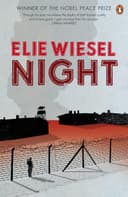
Buy Night 1 by Wiesel, Elie, Wiesel, Marion (ISBN: 9780141038995) from desertcart's Book Store. Everyday low prices and free delivery on eligible orders. Review: a must read book - This is a book everyone should read at least once. Its one man's personal account of his time during the war at concentration camps. It is so well written and descriptive you can immerse yourself within the storyline. Absolutely heart breaking and eyeopening all at once. Review: Terribly poignant - Night - Cruelty beyond anything one can imagine. Terribly poignant. A fabulous writer. An incredible man.
| ASIN | 0141038993 |
| Best Sellers Rank | 12,270 in Books ( See Top 100 in Books ) 6 in Jewish Studies 13 in Jewish History 14 in Holocaust Biographies |
| Book 1 of 3 | Night Trilogy |
| Customer reviews | 4.6 4.6 out of 5 stars (21,742) |
| Dimensions | 13 x 0.9 x 19.8 cm |
| Edition | 1st |
| ISBN-10 | 9780141038995 |
| ISBN-13 | 978-0141038995 |
| Item weight | 108 g |
| Language | English |
| Print length | 144 pages |
| Publication date | 4 Sept. 2008 |
| Publisher | Penguin |
E**A
a must read book
This is a book everyone should read at least once. Its one man's personal account of his time during the war at concentration camps. It is so well written and descriptive you can immerse yourself within the storyline. Absolutely heart breaking and eyeopening all at once.
D**G
Terribly poignant
Night - Cruelty beyond anything one can imagine. Terribly poignant. A fabulous writer. An incredible man.
A**G
Good little book
Good little book - short - interesting lesson re false optimism
J**G
Lest We Forget
Elie Wiesel's death spurred me to read this book which I have put off too long because I had been reluctant to confront the horrors I knew would spring from its pages. Having read it finally, I was hesitant to review it. How do you rate and review a book that not only details an individual’s suffering, but also acts as a historical document of a monstrous atrocity against an entire race of people? Perhaps one can only do that by approaching it as a literary work, because it wouldn’t be fair to put a value on someone else's personal experience. This slim novella wastes not a single word or phrase to convey the horror of the events, and it is all the more gut-wrenching for Wiesel’s refusal to be maudlin about the subject matter even when he is right at the heart of it. 15-year-old Eliezer lives a relatively comfortable life in the town of Sighet in Transylvania. Eliezer studies the Kabbalah under the unofficial tutelage of Moshe the Beadle, so nicknamed for his caretaker role, but who is also not highly regarded in the community. So when he miraculously survives the expulsion of Hungarian Jews who are unable to prove their citizenship, and comes back to warn the townsfolk, they are slow to believe him. That proves to be their demise. The situation quickly deteriorates, and the reader, together with Eliezer and his bewildered family, is swept from one human indignity to another, till it becomes difficult for Eliezer to keep his faith. His relationship with his father is most poignantly conveyed to us, though Wiesel never loses sight of the larger picture in his account, that encompasses all the tens of thousands of Jews who were wrenched out of their homes, then shipped like cattle, and tortured and killed as if their lives were worth less than those of animals. The brevity of the book is one of its major strengths, because it hits hard with its immediacy and one is left reeling from the cruel acts it documented, made all the more unbelievable and difficult to stomach because it had all happened not so long ago. In Wiesel's Nobel Peace Prize Acceptance Speech, which is appended at the end of the book, he recounts what Eliezer had asked his father: “Can this be true? This is the twentieth century, not the Middle Ages. Who would allow such crimes to be committed? How could the world remain silent?” That is a question that has no answer, but the book that was borne out of these events is Wiesel’s recompense to the 15-year-old boy who lived these experiences and he accounts it to him thus: “I have tried to keep memory alive, that I have tried to fight those who would forget. Because if we forget, we are guilty, we are accomplices”. Unforgettable.
M**K
Teenage boy survives atrocities most of us couldn't dream of...
To say that Elie Wiesel's book is moving is an understatement. It left me with all sorts of emotions. First of all, I should be grateful to have my family around me, and stop complaining about trivial things. Secondly, life is a gift and should be lived well. Thirdly, we must never forget the past lest we repeat it. Fourthly, human beings are capable of showing incredible reserves of fortitude and strength, as exhibited by Elie and his father in the concentration camps and arduous journeys they faced together. (By contrast, I often wonder how I'm going to make it through the day after getting out of my comfortable bed at three in the morning to change a nappy.) Books like this can only help to inspire others who themselves are going through genuine anguish and hardship. The book left me with an additional, powerfully emotive thought. As an evangelical Christian who believes that Jesus is the only way to God, the implications of the narrative that I've been taught would consign the vast mass of Jews who perished in the Holocaust to an everlasting hell. In other words, first Hitler's torture chambers; then God's torture chambers - the narrative being that those who don't come to faith in Jesus as Messiah in this life are eternally lost. There's something fundamentally wrong with this narrative. I don't have all the answers, but prefer to think in terms of restitution and reconciliation between the oppressor and the victim, the tormentor and the tormented. If not in this life, certainly in the next. I hope with all my heart that Elie Wiesel sees his family again. The parts where he writes of his little sister, and his relationship with his father, are the most deeply moving in the book.
L**M
one of the greatest books out there really shows the insanity of events that was the holocaust not just what happend at the concentration camp but it showcases also what hapened before and after really showing the effects of dehumanisation on a person
K**S
Great person. Valuable story. Awful history. Might not be the best work on the subject, it is one of the most valuable.
B**B
I had read Eyewitness at Auschwitz by Filip Mueller. It was raw and had very tough content. Here, the book by Élie Wiesel was written in a very different emotional way. The words hit me almost physically and at one stage, I was crying. Both books are pretty fantastic but in less words than Filip Mueller, you feel the tragedy much more. I worked as à proofreader. Words very rarely reached my gut like that. I could not put either books down and ended up reading them both, one after the other. I will.never forget the book by Élie Wiesl. This is powerful stuff.
N**A
Un acogedor relato sobre la estupidez humana y la animalidad que vive en cada uno de nosotros, sin embargo, en cada página se muestra el corazón de la humanidad, lleno de esperanza, de ilusiones que aún lejanas defienden lo más valioso que poseemos: la vida.
C**I
Elie Wiesel’s Night: Shedding Light upon the Darkness Elie Wiesel’s Holocaust memoir, Night (New York, Hill and Wang, 2006, translated by Marion Wiesel), is one of the best-known and most highly acclaimed work about the Holocaust. The New York Times called the 2006 edition “a slim volume of terrifying power,” yet its power wasn’t immediately appreciated. In fact, the book may have never been written had Wiesel not approached his friend, the novelist Francois Mauriac, for an introduction to the French Prime Minister Pierre Mendes-France, whom he wanted to interview. When Mauriac, a devoted Catholic, mentioned that Mendes-France was suffering like Jesus, Elie Wiesel responded, in the heat of the moment, that ten years earlier he had seen hundreds of Jewish children suffer more than Jesus did on the cross, yet nobody spoke about their suffering. Mauriac appeared moved and suggested that Wiesel himself write about it. The young man took his friend’s advice. He began writing in Yiddish an 862-page manuscript about his experiences of the Holocaust. The Central Union of Polish Jews in Argentina published in Yiddish an abbreviated version of this book, under the title And the World Remained Silent. Wiesel later translated the text into French. He called it, more simply and symbolically, Night (La Nuit), and sent it to Mauriac, who helped Wiesel find a publisher (the literary and small publishing house Les Editions de Minuit) and wrote its Preface. The English version, published in 1960 by Arthur Wang of Hill and Wang, received strong critical acclaim despite initially modest sales. Elie Wiesel’s eloquent and informed interviews helped bring the difficult subject of the Holocaust to the center of public attention. By 2006, Oprah Winfrey selected Night for her high-profile book club, further augmenting its exposure. This work is definitely autobiographical—an eloquent memoir documenting Wiesel’s family sufferings during the Holocaust—yet, due to its literary qualities, the text has been also read as a novel or fictionalized autobiography. The brevity, poignant dialogue, almost lyrical descriptions of human degradation and suffering, and historical accuracy of this multifaceted work render Night one of the most powerful Holocaust narratives ever written. Elie (Eliezer) Wiesel was only 15 years old when the Nazis entered Sighet in March of 1944, a small Romanian town in Northern Transylvania which had been annexed to Hungary in 1940. At the directives of Adolf Eichmann, who took it upon himself to “cleanse” Hungary of its Jews, the situation deteriorated very quickly for the Jewish population of Sighet and other provincial towns. Within a few months, between May and July 1944, approximately 440,000 Hungarian Jews, mostly those living outside of Budapest, were deported to Auschwitz aboard 147 trains. Wiesel’s entire family—his father Chlomo, his mother Sarah, and his sisters Tzipora, Hilda and Beatrice—suffered this fate. Among them, only Elie and two of his sisters, Hilda and Beatrice, managed to survive the Holocaust. However, since the women and the men were separated at Auschwitz upon arrival, Elie lost track of what happened to his sisters until they reunited after the war. In the concentration camps, father and son clung to each other. Night recounts their horrific experiences, which included starvation, forced labor, and a death march to Buchenwald. Being older and weaker, Chlomo becomes the target of punishment and humiliation: he’s beaten by SS officers and by other prisoners who want to steal his food. Weakened by starvation and fatigue, he dies after a savage beating in January 1945, sadly, only a few weeks before the Americans liberated the concentration camp. Throughout their tribulations, the son oscillates between a paternal sense of responsibility towards his increasingly debilitated father and regarding his father as a burden that might cost him his own life. Elie doesn’t dare intervene when the SS officer beats Chlomo, fearing that he himself will become the next victim if he tries to help his father. In the darkness and despair of Night, the instinct of self-preservation from moment to moment counteracts a lifetime of familial love. Even when Elie discovers the death of his father in the morning, he experiences through a sense of absence: not only his father’s absence, as his bunk is now occupied by another inmate, but also the lack of his own human response: “I did not weep, and it pained me that I could not weep. But I was out of tears. And deep inside me, if I could have searched the recesses of my feeble conscience, I might have found something like: Free at last!...” (112) Night is offers a stark psychological account the process of human and moral degradation in inhumane conditions. Even the relatively few and fortunate survivors of the Nazi atrocities, such as Elie, became doubly victimized: the victims of everything they suffered at the hands of their oppressors and the victims of everything they witnessed others suffer and were unable or, perhaps more sadly, unwilling to help. Although Night focuses on the loss of humanity in the Nazi concentration camps, the author’s life would become a quest for regaining it again, in far better conditions, if at least one condition is met: caring about the suffering of others. As Wiesel explains to his audience on December 10, 1986 during his acceptance speech of the Nobel Prize in Oslo, his message to his son--and his message to the world at large—is about the empathy required to keep the Holocaust memory alive. He reminds us all, “that I have tried to keep memory alive, that I have tried to fight those who would forget. Because if we forget, we are guilty, we are accomplices. … We must take sides. Neutrality helps the oppressor, never the victim. Silence encourages the tormentor, never the tormented” (118). Claudia Moscovici, Holocaust Memory
Trustpilot
Hace 2 meses
Hace 1 mes