🎥 Elevate your game and binge in breathtaking 4K brilliance — don’t just watch, experience!
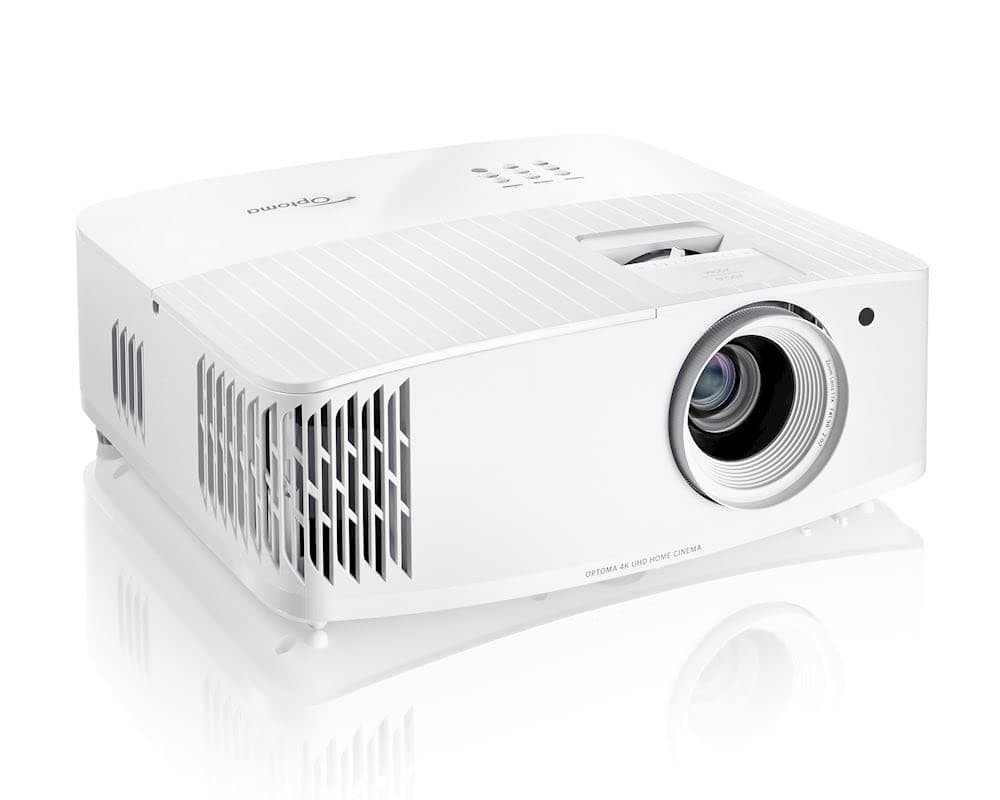
The Optoma UHD38X is a high-performance 4K UHD projector delivering 4,000 lumens brightness and ultra-low 4.2ms input lag, ideal for both immersive home theater viewing and competitive gaming. Compatible with HDR and HLG formats, it supports smooth gameplay at 240Hz refresh rates and native 4K resolution, making it a versatile choice for millennial professionals seeking premium visual quality and seamless console integration.


| ASIN | B0BGVGDB72 |
| Best Sellers Rank | #400 in Video Projectors |
| Customer Reviews | 3.8 3.8 out of 5 stars (352) |
| Date First Available | November 1, 2022 |
| Item Weight | 10.1 pounds |
| Item model number | UHD38X |
| Manufacturer | Optoma Technology Inc |
| Product Dimensions | 10.6 x 12.4 x 4.6 inches |
M**R
Perfect for Dedicated Home Theater But...(Update)
Update: I left my original review below for Optoma fans to read. As for me, I had a problem almost the same day that I wrote the review. The projector started flickering in monochrome colors and did not respond to the remote to turn it off. It turned off on its own after about a minute. Then the blue & red LEDs for status began blinking together to form "purple". I had to disconnect the power cord after letting the lamp cool to get the unit to restart and it did. I looked to see if others had a similar problem on forums. A few people did and one guy suggested blowing out the lamp compartment with compressed air. That did NOT sound like a good idea so I contacted Optoma. The tech was very brief and curt in his reply. He told me to press "sync" if it happened again. I looked that up since I recalled "sync" only helping with 3D issues and this had nothing to do with a 3D Blu-ray disc. This happened again several times and after an additional attempt at getting a reply from Optoma support I finally decided to return the unit. I had been reluctant to switch from LCD to DLP technology originally but reviews seemed enticing. Wish my experience had been better. Maybe this was just a bad unit as noted in at least one other review but the support was so poor I did not want to continue down that path. My previous experience with a SONY and an EPSON projector did not involve service issues of ANY kind for more than 8 years for either unit. Note that this unit is only about one month old as I write this update. Hope someone at Optoma learns from this review. If you need a short throw projector or want to move the projector often keep looking. My review will only cover this projector in a dedicated home theater with no windows and a 120 inch fixed screen with plenty of length and height for projector and screen placement. This is my third projector with the first being a 1999 model Sony 720p unit that cost $6,000. The second was the much-lauded Epson 8350 3-LCD and 1080p projector that cost about $1000. (This unit is about the same price corrected for inflation.) The built-in speaker is about what you would expect but why would someone create a dedicated home theater and not include at least a decent 5.1 surround system? Here is why I bought this projector after considering about 20 from four manufacturers. The picture is sharp, crisp and has much more color saturation than my previous projector. I have native HDR without settling for 1080p resolution units that are "compatible" and able to process HDR input. The HDR is manipulated to make it specifically function with this unit according to reviews and the results seem good as you will see from my sample snapshots taken with a Motorola Moto G Power phone that has a good but not great camera. The picture mode is set to Cinema as recommended in reviews and brightness is Eco and that works well in a dark room. Any additional brightness would cause eye strain in my opinion. Color saturation seems very good in this mode to me and is miles ahead of my previous projector. The images are free of rainbow effect that some people associated with DLP. There are no screen hot spots unlike what I encountered in some bright scenes with the Epson. So far, all action shots seem very smooth but I have not watched football as of yet. Where I always noticed jutter with the Epson when the credits roll there is a slight hint still there but I have to look for it. Credits with small print are much more readable. I did increase brightness and contrast AFTER taking the shots above but only by a couple of points and far from a major increase. This was as a matter of curiosity almost as much as any perceived necessity. The first picture, from TAXI, is from an old 4:3 DVD that is not Blu-ray and it was upscaled dramatically. The DVD player is a SONY UBP-X700 connected over a good HDMI cable 30 feet in length. The rest of the pictures are from Life in Color (4k & HDR) and played through a Roku 4k/HDR 8310X stick since I don't have my 18Gbps cables for input from my DVD yet. My screen, for now, is an off-brand, inexpensive-but-surprisingly-good outdoor unit mounted in front of my $1100 21-year-old Da-Lite fixed screen that has seen better days. It supposedly has a 1:1 gain so consider the image quality with the projector settings + the screen properties. The center of my lens is within 1/2 inch of the 13 ft - 10 in calculation that leaves the lens adjustment centered between left and right adjustments. Also, the lens center should be 3" above the top of your screen's final white edge for ceiling mount and 3 inches below for an upright mount at floor level. I spent less than 10 seconds focusing the lens with text on the screen and I am pleased with the results. Note that the Optoma calculator yields the shortest throw for a given image size and then shows the total amount back from there that will work for the lens. That means you need to divide that max offset by 2 and add the result to the dimension shown to get the ideal location. Don't forget to also add the offset between front of projector and mounting screws for your ceiling mount. I used the back 2 screws and that added another 8.5 inches as I recall to that 13-10 dimension. I took time to calculate all this because the most technical reviews said that using keystone and offset corrections results in small-but-measurable picture distortions. My images seem clear to my eyes over all the way to the corners of the screen. In summary, it took me several days to come up with my choice but once I put my must-haves at the top of the list and checked again in my mind how important those were, I came up with this choice. Btw, I did consider another 1080p projector based upon some discussions but decided this was the way to go and I am very glad I did. Keep in mind that I cannot comment on reliability or Optoma support since I have had this unit less than a week.
C**K
Could be better
Overall, this Optoma projector delivers a pretty good picture, but there are a few things worth noting. The image quality is solid and sharp enough for movies and sports, although I do wish it had a sharper image. The remote feels cheap and doesn’t match the quality you expect at this price point. It works, but the buttons feel flimsy. The menus are also not user-friendly, and simple adjustments take more clicks than they should. Navigating between picture modes or settings is more frustrating than it needs to be. It’s a decent projector overall, just not without some design flaws that take away from the experience.
L**Y
Repeated hardware failure after multiple manufacturer repairs
I purchased the Optoma UHD38x in July 2023. Picture quality was excellent initially, but reliability has been extremely poor. Within the first year, the projector developed a DMD dead pixel issue and was repaired by Optoma under warranty. Roughly a year later, the same dead pixel issue occurred again. Although the warranty had expired, Optoma made a goodwill exception and repaired it a second time. Less than six months after that second factory repair, the projector developed the same DMD pixel failure for a third time, and the issue continues to worsen. Optoma has stated that repeated DMD failures are typically caused by either external laser exposure or poor heat dissipation. This projector has only ever been used in a standard home environment with no external lighting, which strongly suggests an internal thermal or design issue rather than user misuse. At this point, after three identical failures—including two after manufacturer repairs—I can’t consider this model reliable. Optoma has declined further assistance, citing warranty expiration, despite the repeated nature of the defect. This review isn’t about warranty fine print—it’s about long-term reliability. Buyers should be aware that while the image quality is great, the risk of repeated DMD failure appears to be very real with this model.
J**.
Esperaba mucho más ya que ví muchos reviews donde lo recomendaban pero lo tive que devolverl porque proyectaba una mancha verde en un a esquina pero la calidad de imagen queda a deber y la confirmación para intentar calibrar la imagen es es algo complicada
P**T
bon prduit
J**A
Projetor muito top, excelente aquisição!
R**E
Love this projector, everyone who has seen it at our place has been impressed with the quality. We have it set up to project on a 120” fixed frame projector screen. Gaming is unreal, lol! Picture quality is great even with lights on (we do have this set up in our basement though with minimal natural light in the theatre area so I can’t speak for a sunlit room). Just note, you do have to play around with the settings to get the nice rich color, that is not the standard light settings for whatever reason.
J**B
Even a 3500 Lumens projector has a better brightness on the wall , this projector offers 4000 Lumens !
Trustpilot
Hace 1 semana
Hace 3 semanas