We remain fully operational. Our teams are working around the clock to ensure your deliveries continue safely.

Descargar la aplicación


Servicios al cliente
Sobre nosotros
Copyright © 2025 Desertcart Holdings Limited
Descargar la aplicación
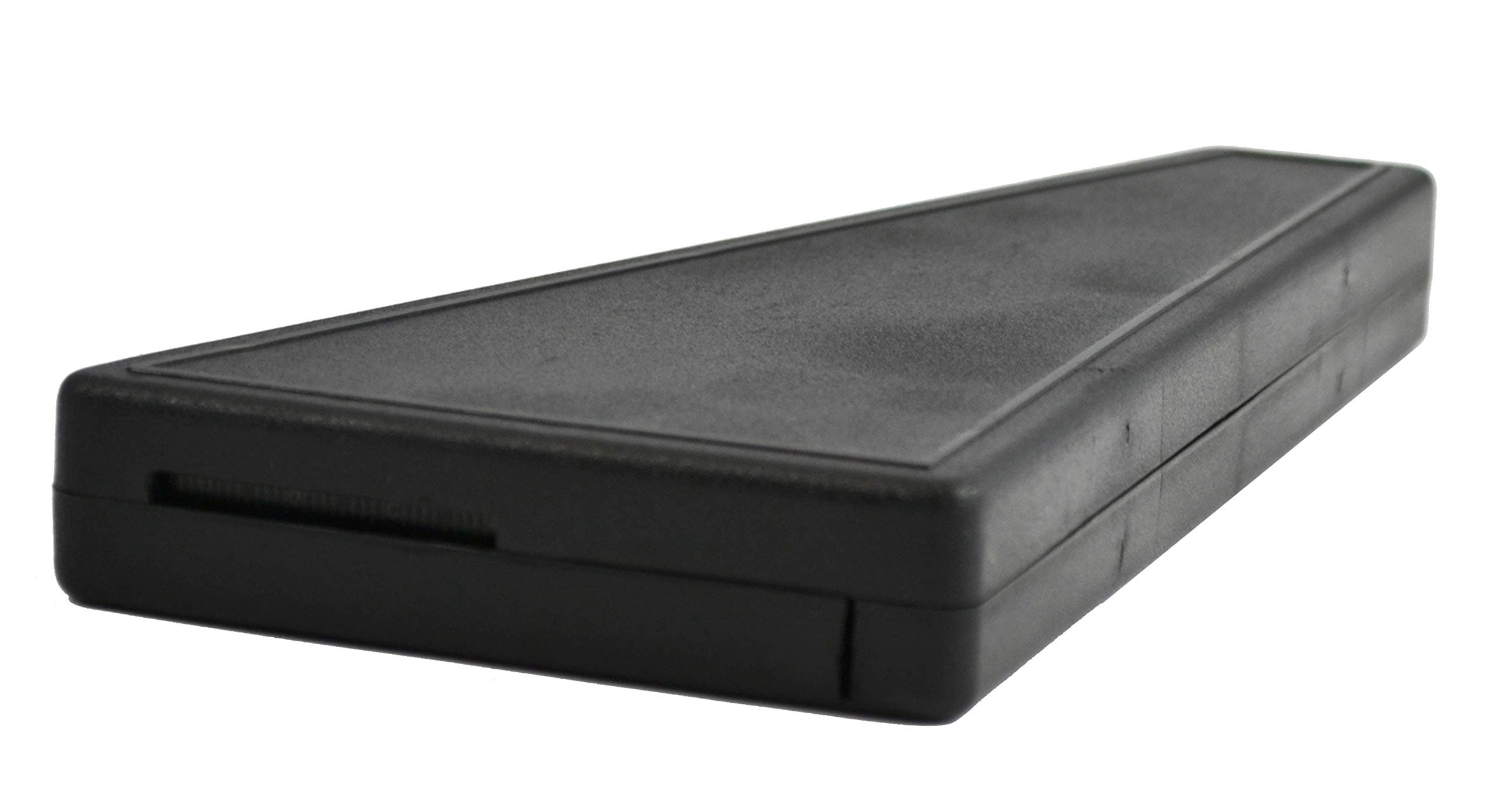
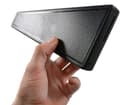

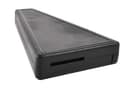
🔍 See the unseen, measure the measurable — own the spectrum!
The Eisco Premium Quantitative Spectroscope delivers precise wavelength measurements from 400 to 700nm with ±5nm accuracy. Designed for clarity and ease, it securely holds diffraction gratings and scales for accurate readings. Perfect for STEM education and scientific exploration, it supports diverse applications including gas tube spectra, flame tests, and basic astronomy, making it an indispensable tool for students and professionals seeking to master the electromagnetic spectrum.


| Manufacturer | Eisco |
| Part number | PH100QA |
| Item Weight | 40.8 g |
| Product Dimensions | 7.62 x 22.86 x 27.94 cm; 40.82 g |
| Item model number | PH100QA |
| Colour | Black |
| Material | PE_(Polyethylene) |
| Power source type | Corded Electric |
| Voltage | 240 Volts |
| Item Package Quantity | 1 |
| Light source | LED |
| Batteries included? | No |
| Batteries Required? | No |
L**N
A useful educational device
There's a knack to using these, no doubt about that, but they work really well and allow you to see the different spectral outputs of different types of lighting, LED, fluorescent, incandescent etc., and even TVs/monitors. Sunlight is an ideal reference, and there's no safety issue here observing sunlight. You'll be able to see the difference between morning and evening sunlight too. It's possible, though tricky, to take photos through it using a phone camera, for example, showing the spectra and wavelength scale. I can even tell whether a white LED uses a 450nm or a 470nm blue chip! A 420nm laser was clearly bang on 420nm, so one end of the scale is accurately calibrated at least. Light from 660nm and 635nm LEDs appeared in the right places on the scale at the other end and were clearly distinct. Yeah, you should get one if you're interested in this sort of thing!
B**E
Interesting tool/toy!
I have to wear fairly strong glasses in order to be able to focus on the scale above the spectrum, though I can get a rough idea of wavelength just by the colours. You need a certain amount of background light to see the scale.
R**Y
Does a good job
It works. Bought for viewing flame test spectra in GCSE chemistry. Simple, lightweight, affordable.
P**G
A fun device that demonstates the principles of spectroscopy.
A fun device that works well enough to demonstrate the principles of spectroscopy. What is not to like at this price?
A**K
Not usable easily if you have long sight
As others have said, there is no focusing lens on the eyepiece so anyone with long sight or aging eyes will find it difficult or impossible to see the scale or the spectrum clearly. Also, as has been mentioned, the slit is rather wide so fine lines are not visible (this could be fixed with a bit of sticky tape, at the expense of making it dimmer). I have returned this, and I'm going back to using my home made spectroscope made out of a cardboard tube and a piece of plastic from some diffraction grating glasses. It doesn't have a scale, but I can estimate wavelengths knowing the wavelengths of standard colours.
P**P
Nice
Works nicely great for the price
D**E
Tricky but useful tool
A little tricky to get the hang of but come with handy instruction book . Good for checking lights in sleeping areas or for camera setups.
B**S
Don't expect much
It's ok but don't expect to see any absorption lines in the spectrum. Also, the viewing aperture has no ability to adjust the focus. But for the price what can one expect? It just shows a beautiful rainbow!
L**T
Für ein paar € weniger bekommt man Selbstbaulösungen aus Pappe. Ich habe keinen Vergleich, außer den Infos aus dem Web, aber die haben anscheinend durchaus auch ihre Meriten. Meine Entscheidung: Basteln wollte ich nicht, und vor allem hat das hier ein Kunststoffgehäuse, und wird daher bei mir länger leben :-). Die Skala ist hier getrennt vom Schlitz. Das hat den Vorteil, dass die Skala getrennt beleuchtet und quasi eingeblendet wird, und daher besser ablesbar ist, wenn man eine schwache Lichtquelle untersuchen möchte. Der Nachteil ist, dass beides werksseitig genau aufeinander justiert werden muss, sonst liegt man daneben. Mit meinem Exemplar habe ich ein grün nachleuchtendes Kunstoffteil á la Lichtschalter untersucht. Das sollte auf 555 nm leuchten, weil für diese Wellenlänge das menschliche Auge am empfindlichsten ist, und genau den Wert habe ich auch abgelesen. Spektral"linien" wird man damit nicht sehen, weil der Spalt dafür zu breit ist. Auch bei meinem 555-nm-Luminophor war die "Linie" daher etwa 10 nm breit. Den Spalt könnte man natürlich auch abkleben, aber darunter leidet die Lichtstärke, und den Mittelwert bei einem Balken statt eines Strichs abzulesen, ist nicht so schwierig. Wenn Sie das nachvollziehen wollen: Vielfach gibt es noch als Straßenbeleuchtung die gelben Natriumdampflampen mit 589 nm. Oder Sie haben einen Laserpointer, dessen (monochromatische) Wellenlänge Sie kennen, steht in der Beschreibung. Bitte nicht direkt in den Spalt leuchten, sondern auf z.B. ein Blatt Papier! Interessant ist, damit auf "Spektraljagd" zu gehen. Ich z.B. dachte bisher immer, dass "weiße" LEDs blaues Licht emittieren, das durch gelbe Luminophore zu Weiß gemischt wird. Gelb ist Rot plus Grün, und mit dem Blau wird das zum Weiß. Ich hätte also zwei oder drei Farben erwartet, aber da war fast der komplette Regenbogen, bei einer billigen LED-Taschenlampe.
V**M
Funciona excelente, lo use para divulgación de la ciencia en una feria científica.
C**4
L'apparecchiatura è semplice ma ingegnosa. Utilissima la scala delle lunghezze d'onda inserita nel fondo. Trovo che questo semplice spettroscopio sia utilissimo per piccole esperienze quotidiane sull'analisi delle luci prodotte in una fiamma da elementi chimici diversi (sodio, potassio, fluoro, mercurio, ecc.).
A**L
No se ven las líneas de absorción del espectro solar.
M**K
Works as intended. Would have liked more or more detailed instructions but I spent some time with it and figured it out.
Trustpilot
Hace 2 días
Hace 2 semanas