We remain fully operational. Our teams are working around the clock to ensure your deliveries continue safely.

Descargar la aplicación


Servicios al cliente
Sobre nosotros
Copyright © 2025 Desertcart Holdings Limited
Descargar la aplicación
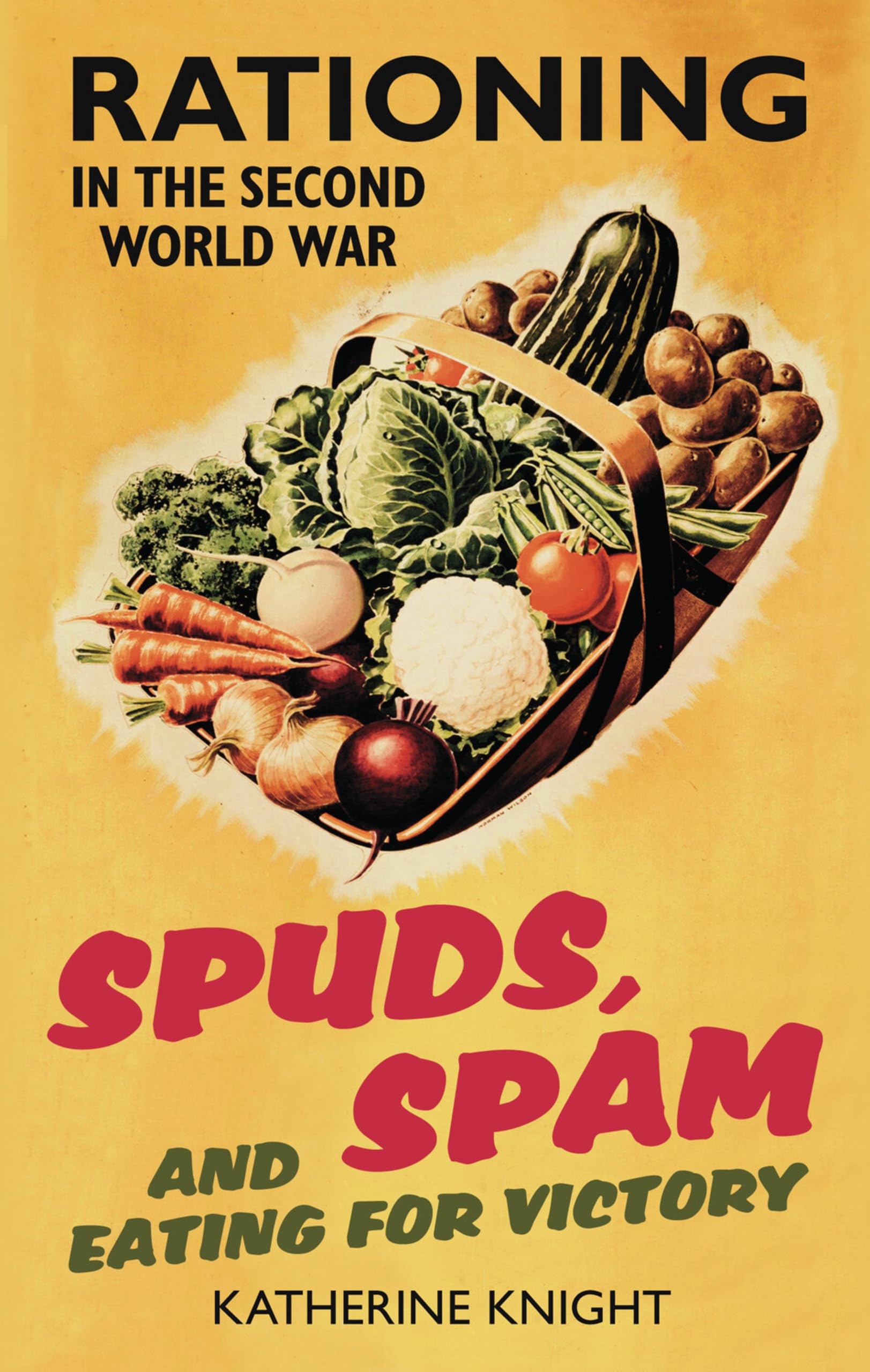
Spuds, Spam and Eating for Victory: Rationing In The Second World War : Knight, Katherine: desertcart.co.uk: Books Review: Unexpectedly fascinating - I picked this book up on a whim in the Imperial War Museum bookshop after a visit to see a poster exhibition. I intended to have a quick browse then give it to my elderly Aunt - but it has turned out to be fascinating, a real glimpse into the minutiae of daily home life during the wartime. Most history focuses on soldiers and the big events, what is great about this book is it lets you get an understanding of what an average day back then must have been like. It is written in a chatty style, mixing facts with recollections, that just really brings it to life. This would be a great quirky present not just for people who are interested in old style cooking or the history of a few generations back, but also for anyone who has an allotment since "dig for victory" and growing your own vegies was a big part of life back then. Review: 💯 - Great historic read
| Best Sellers Rank | 213,273 in Books ( See Top 100 in Books ) 1,894 in Cultural Studies 6,058 in Social & Cultural History |
| Customer reviews | 4.3 4.3 out of 5 stars (219) |
| Dimensions | 12.45 x 1.4 x 19.81 cm |
| Edition | uk ed |
| ISBN-10 | 0752459465 |
| ISBN-13 | 978-0752459462 |
| Item weight | 1.05 kg |
| Language | English |
| Print length | 240 pages |
| Publication date | 1 Mar. 2011 |
| Publisher | The History Press |
L**R
Unexpectedly fascinating
I picked this book up on a whim in the Imperial War Museum bookshop after a visit to see a poster exhibition. I intended to have a quick browse then give it to my elderly Aunt - but it has turned out to be fascinating, a real glimpse into the minutiae of daily home life during the wartime. Most history focuses on soldiers and the big events, what is great about this book is it lets you get an understanding of what an average day back then must have been like. It is written in a chatty style, mixing facts with recollections, that just really brings it to life. This would be a great quirky present not just for people who are interested in old style cooking or the history of a few generations back, but also for anyone who has an allotment since "dig for victory" and growing your own vegies was a big part of life back then.
A**R
💯
Great historic read
D**B
Good for those that love social history and a bit of fun.
This is a good book that is actually excellent for backing up your kids homework when they are learning about the second world war. Lots of interesting facts and some good receipes which we have had fun cooking up.
S**A
Easy read
I'm really enjoying this book
S**J
Full of detailed information about life on rations.
Easy informative read. Amusing anecdotes and good references in the text to original material. Some typesetting errors in kindle conversion but does not detract.
A**T
Well written but you need your reading specs
Having initially given this four stars for potentially interesting content I have downgraded to three. The text is very small and I find it difficult to read (even with specs), there are few illustrations and I am not finding the factual writing style very readable. There are frequent quotations from other publications and text which is in even smaller print and overall it is written rather like a thesis. Factually good, but not an easy read. There is a lot of text in this book, very few illustrations and no colour. If you have just become interested in wartime history, rationing, the concept and mechanics of the scheme and what it meant to the population on a daily basis, then this is an informative book and the reason for three stars. If you already have some knowledge and other books on the topic then you will not need this one as well. I don't want to sound completely negative but guess I just did! I deducted two stars for small print, constant quotations from elsewhere, lack of illustrations and the feeling that I have read all this somewhere else.
R**S
Rationing Spuds,spam and eating for victory
http://www.amazon.co.uk/gp/product/0752441884/ref=cm_cr_rev_prod_title if your looking for plenty of history and a few tips to help you through the credit crunch well this is the book for you. Easy to read and you will find you dont want to put the book down once you start. You'll suddenly find you dont need many modcons to live happily and healthy, well maybe the tv and laptop with internet and the wii console. if you take the tips you will see that shopping bill go done by half with ease and other bills will naturally follow. In all if like me you enjoy hearing about the war years and how granny survived this is one of a few books worth buying but if you are frugal go to oap centre and start talking you may learn more just need a note book.
J**A
Offers interesting insight into wartime rationing
Spuds, Spam and Eating for Victory offers a more in-depth analysis of the rationing system in wartime Britain than the introductory chapters to most recipe books and websites that I have found. Not a recipe book - there are many excellent ones out there if that's what you want. If, however, you want to read about rationing in more detail, this book offers an informative but readable look at the subject. Highly recommended!
C**A
Este libro es una interesante recopilación de las dietas y penurias que hubo en Gran Bretaña durante la 2ª guerra mundial. La autora tenía 12 años, afirma, en el apogeo de los bombardeos alemanes. El libro es prolijo y hay detalles de minucia que interesan menos, pero hay dos hechos muy destacables: Gran Bretaña no pasó hambre durante esa guerra, cosa única, salvo los EEUU. Lo segundo es su civismo y organización. Había escasez, pero en cuanto a dietas equitativas, con cuidado especial de niños y mujeres embarazadas y personal con tareas duras dejando de lado los soldados, no creo los alemanes - reyes de la organización- lo superasen. Había mercado negro, claro, pero era relativamente reducido y la calidad de la comida, mediocre, era no obstante, suficiente para una dieta sin falta de vitaminas, grasas , y lo necesario para subsistir, acortandose hasta cierto punto la calidad de las comidas entre ricos y pobres, excepto en vinos y licores. (Gran Bretaña pagaba asombrosamente, no poca parte de su deuda con EEUU con la exportación de su whisky escocés, así que no había mucho). Le entrada de EEUU en la guerra alivió ésto, pero las cartillas de racionamiento duraron hasta 4-5 años de acabada la guerra. Curiosa la constante afirmación de que los huevos, tan corrientes ahora, eran uno de los alimentos más escasos, casi más que la carne. En fin, una organización y un comportamiento cívico que en España nos es bastante ajeno, me temo.
A**R
This is one of the best books I have found about rationing during World War II. It delves deeply into all aspects of rationing: how the British Ministry of Food (MoF) worked out an equal delivery of food throughout the country (and this in a very class-ridden society); how ordinary people made do and adapted favorite recipes to small amounts of meat, butter, and sugar; and how the country pulled together during the war to make this all work. Fascinating and highly recommended.
R**Y
“Spuds, Spam and Eating for Victory” is a nostalgic and insightful journey into the culinary world of wartime Britain, skillfully chronicled by author Anon. This book offers a unique blend of historical context and practical cooking advice, illustrating how families made the most of limited resources during a time of scarcity. What I found particularly endearing about this book is its connection to my own family history. The strategies and recipes detailed in the book brought back vivid memories of my grandmother, who employed many of these techniques well into the 1970s. Her resourcefulness in the kitchen, a skill honed during those challenging times, was a testament to the ingenuity and resilience of that generation. I also remember my mother talking about the importance of boiling your potatoes before peeling them so as not to loose flavour and nutrients. This is a great read for anyone interested in history, cooking, or simply looking to reconnect with the past. It serves as a reminder of the enduring human spirit and the power of creativity in the face of hardship. For me, it was a poignant reminder of my grandmother’s kitchen and the lasting legacy of her culinary wisdom.
1**S
There ARE recipes in here, but it’s more of a history of what people prepared, and how they secured the foods they needed/wanted during WWII, along with foods they used for substitutions, and how people survived food rationing.
E**E
Reads like someone's dissertation. Rather depressing. Tiny 10 pagerecipe section
Trustpilot
Hace 3 días
Hace 3 semanas