We remain fully operational. Our teams are working around the clock to ensure your deliveries continue safely.

Descargar la aplicación


Servicios al cliente
Sobre nosotros
Copyright © 2025 Desertcart Holdings Limited
Descargar la aplicación

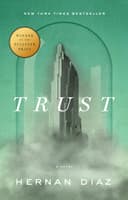
desertcart.com: Trust (Pulitzer Prize Winner): 9780593420324: Diaz, Hernan: Books Review: Storytelling On Wall Street - Herman Diaz's 2023 Pulitzer Prize winning novel "Trust" absorbed me from beginning to end. For several days, I was captivated -- couldn't wait to get to it. This is a rarity for me. "Trust" is largely set in the financial district of New York City in the years surrounding the Great Depression. Here is a bare-bones summary of the story. The main character is a financier and trader, Andrew Bevel, the latest, and last, of a line of traders in his family. The reclusive Bevel amasses a large fortune during the 1920s and also manages to make money during the early stages of the Depression. Bevel's wife, Mildred, is the daughter of another New York State family with wealth and with intellectual interests. While Bevel concentrates on making his fortune, Mildred promotes educational, artistic, and cultural endeavors, particularly the development of 20th Century classical music. When Mildred dies in a Swiss sanatorium, in the 1930s, Bevel carries on but is somewhat less successful than in the days with his wife. After Bevel's death and lengthy wrangling over his estate, his palatial New York City home is turned into a museum. As is pointed out through "Trust", American literature has many works about New York City, the wealthy classes, the financial markets, and the nature of capitalism. This novel brings to it subject a strong sense of perspectivism. Bevel's story is told in four voices by four individuals, each with their own distinct voice and background. Each story has commonalities, but each is also different in terms of what happened and in terms of human relationships. The reader is left to think through the stories to come to an understanding of events and people. Showing and considering different points of view is integral to the humanities, whether history, literature, or philosophy, and to this novel. "Trust" considers city life, capitalism and greed, the arts, marriage, the relationship between imagination and realism, and more within its complex structure. It is challenging and mostly effective. Each of the four storytellers are fascinating both as writers and as themselves. The first, Harold Vanner, was a minor novelist of the day who wrote a heavily fictionalized novella about the Bevels titled "Bonds". It was fascinating to get hints about Vanner through the book and to read his account. The second part, "My Life" was written by Andrew Bevel himself, with help, and tells his story from his perspective and to rebut Vanner's book. The third and longest story is "A Memoir, Remembered" by Ida Partenza. She tells her tale from the standpoint of a 70 year old successful author. Partenza had been raised in poverty in Brooklyn by her father, an anarchist. At the age of 23, Bevel had hired her to help write his Autobiography. Partenza discusses her life with her father, how she came to be hired by Bevel, and how she became fascinated by the writing project and shaped it to her own as well as to Bevel's ends. The final section of the book, "Futures" consists of diary entries by Midred during her time in the Swiss sanatorium just before her death. Midred has a different perspective on the story and on her relationship with Bevel than do the other three storytellers. The reader will be encouraged to think about the world of financial trusts and about whom to trust among the four narrators, with their differing aims and perspectives. In his "Phaedrus", Plato has Socrates say that the written word can be revealing but also narrowing in its fixity. With the many earlier literary antecedents to Diaz's novel, I was reminded most of "Martin Dressler: The Tale of an American Dreamer" by Steven Millhauser which won the 1997 Pulitzer Prize for fiction. Martin Dressler is an American entrepreneur who, unlike Bevel was born to modest means. Dressler reaches the American dream of riches in New York City by founding a series of hotels before his businesses and his personal life come crashing down on his head. The story is a mix of realism and surrealism which captured something of the themes and locations of "Trust" in its own way. Unfortunately "Martin Dressler" has fallen into neglect. It deserves to be read both in it own right and as another voice on the themes of "Trust". "Trust" is a challenging, provocative novel about an aspect of the American dream and the American experience. Robin Friedman Review: A novel that rewards sticking with it - Warning -- there's a bit of a reveal here. This novel, written in 4 parts, requires patience to find out what it's about, and if one sticks with it to the end, the reader realizes that it has been worth it. Written in 4 parts that from the titles of each seemed to be unconnected, when I started, I had no idea just what was going on. Was this single novel in fact going to be a group of 4 different stories? The first part I found difficult going, the writing style stilted and dated, though the story was interesting in an odd way. And then I moved on to part 2 and began to see that there might be a connection, maybe, but it wasn't clear just what -- but the writing style changed dramatically. Part 3 again is different, now a far more accessible writing style, and this is where we learn the tie between parts 1 and 3. The novel finishes with part 4, which in a way is a sort of epilogue, with a major twist on the truth of parts 1-3. Ultimately, when all the parts are integrated by the reader, this is a powerful book about the worlds of wealth in NY in the early 20th century, but more about personal relationships, ego, and self-deception. Well worth reading.


| Best Sellers Rank | #914 in Books ( See Top 100 in Books ) #5 in Biographical Historical Fiction #8 in Biographical & Autofiction #84 in Literary Fiction (Books) |
| Customer Reviews | 4.1 out of 5 stars 39,177 Reviews |
R**N
Storytelling On Wall Street
Herman Diaz's 2023 Pulitzer Prize winning novel "Trust" absorbed me from beginning to end. For several days, I was captivated -- couldn't wait to get to it. This is a rarity for me. "Trust" is largely set in the financial district of New York City in the years surrounding the Great Depression. Here is a bare-bones summary of the story. The main character is a financier and trader, Andrew Bevel, the latest, and last, of a line of traders in his family. The reclusive Bevel amasses a large fortune during the 1920s and also manages to make money during the early stages of the Depression. Bevel's wife, Mildred, is the daughter of another New York State family with wealth and with intellectual interests. While Bevel concentrates on making his fortune, Mildred promotes educational, artistic, and cultural endeavors, particularly the development of 20th Century classical music. When Mildred dies in a Swiss sanatorium, in the 1930s, Bevel carries on but is somewhat less successful than in the days with his wife. After Bevel's death and lengthy wrangling over his estate, his palatial New York City home is turned into a museum. As is pointed out through "Trust", American literature has many works about New York City, the wealthy classes, the financial markets, and the nature of capitalism. This novel brings to it subject a strong sense of perspectivism. Bevel's story is told in four voices by four individuals, each with their own distinct voice and background. Each story has commonalities, but each is also different in terms of what happened and in terms of human relationships. The reader is left to think through the stories to come to an understanding of events and people. Showing and considering different points of view is integral to the humanities, whether history, literature, or philosophy, and to this novel. "Trust" considers city life, capitalism and greed, the arts, marriage, the relationship between imagination and realism, and more within its complex structure. It is challenging and mostly effective. Each of the four storytellers are fascinating both as writers and as themselves. The first, Harold Vanner, was a minor novelist of the day who wrote a heavily fictionalized novella about the Bevels titled "Bonds". It was fascinating to get hints about Vanner through the book and to read his account. The second part, "My Life" was written by Andrew Bevel himself, with help, and tells his story from his perspective and to rebut Vanner's book. The third and longest story is "A Memoir, Remembered" by Ida Partenza. She tells her tale from the standpoint of a 70 year old successful author. Partenza had been raised in poverty in Brooklyn by her father, an anarchist. At the age of 23, Bevel had hired her to help write his Autobiography. Partenza discusses her life with her father, how she came to be hired by Bevel, and how she became fascinated by the writing project and shaped it to her own as well as to Bevel's ends. The final section of the book, "Futures" consists of diary entries by Midred during her time in the Swiss sanatorium just before her death. Midred has a different perspective on the story and on her relationship with Bevel than do the other three storytellers. The reader will be encouraged to think about the world of financial trusts and about whom to trust among the four narrators, with their differing aims and perspectives. In his "Phaedrus", Plato has Socrates say that the written word can be revealing but also narrowing in its fixity. With the many earlier literary antecedents to Diaz's novel, I was reminded most of "Martin Dressler: The Tale of an American Dreamer" by Steven Millhauser which won the 1997 Pulitzer Prize for fiction. Martin Dressler is an American entrepreneur who, unlike Bevel was born to modest means. Dressler reaches the American dream of riches in New York City by founding a series of hotels before his businesses and his personal life come crashing down on his head. The story is a mix of realism and surrealism which captured something of the themes and locations of "Trust" in its own way. Unfortunately "Martin Dressler" has fallen into neglect. It deserves to be read both in it own right and as another voice on the themes of "Trust". "Trust" is a challenging, provocative novel about an aspect of the American dream and the American experience. Robin Friedman
J**.
A novel that rewards sticking with it
Warning -- there's a bit of a reveal here. This novel, written in 4 parts, requires patience to find out what it's about, and if one sticks with it to the end, the reader realizes that it has been worth it. Written in 4 parts that from the titles of each seemed to be unconnected, when I started, I had no idea just what was going on. Was this single novel in fact going to be a group of 4 different stories? The first part I found difficult going, the writing style stilted and dated, though the story was interesting in an odd way. And then I moved on to part 2 and began to see that there might be a connection, maybe, but it wasn't clear just what -- but the writing style changed dramatically. Part 3 again is different, now a far more accessible writing style, and this is where we learn the tie between parts 1 and 3. The novel finishes with part 4, which in a way is a sort of epilogue, with a major twist on the truth of parts 1-3. Ultimately, when all the parts are integrated by the reader, this is a powerful book about the worlds of wealth in NY in the early 20th century, but more about personal relationships, ego, and self-deception. Well worth reading.
A**A
Too Many Cooks Spoil the Broth
'Trust' by Diaz was long listed for the Booker Prize in 2022. It is a serious fictional work about capitalism, money and one of the richest and greatest stock traders/manipulators of all time. The first third of the novel is written by a fictional writer (not the author) in pretty straightforward narrative form and the writing is impeccable and quite inventive. We learn a great deal about the investor- Benjamin Rask, his family, his trades, his peculiar and idiosyncratic detached lifestyle, and his marrying a woman who also shares some of his quirks, if not particular strong feelings for him. Then the 'novel within the novel' ends and a brief autobiography by Mr. Rask (named Brevel in the book) commences. The writing here is rather listless, and little is added to the first part of the work. As this section concludes, a longer- in fact the longest section of the entire novel takes place, written by the young female secretary of Mr. Brevel in his later years. Frankly, I found this long section to be tired and uninspired, and it appears Hernan Diaz created this long section as a counterpoint to the capitalist system as we know it in the U.S. The secretary's father is a staunch communist and so it is ironic that the secretary is working for the biggest 'capitalist pig' on the planet. The secretary becomes the moral force of the work, and her opinions take on greater urgency as the work progresses. Or at least that is the intended hope of the author, as I read it. "Trust" then concludes with some journal entries written by the wife of Mr. Brevel. Honestly, I could have done without the four section vehicle of the work. It did no favors in showing me the 'truth' of who Mr. Brevel/Rask really was. Perhaps Mr. Diaz, who is a fine writer, felt that he could not write this novel in a traditionally narrative form and utilized the technique of multiple forms to showcase his work. As I read the later sections I asked myself the following questions. Why not include the secretary (and bring her in earlier than after Mrs. Brevel's death) in the original chapters of the original work? Perhaps the diaries of Mrs. Brevel could also have been incorporated as well, without resorting to the four separate narratives. I believe the book is important and has much to contribute to the novels about early 20th century capitalism in this country, so it is still a compelling read. Yet, I wonder how much more enjoyable it would have been if it had stuck to one narrative, instead of running on four tracks at once.
T**E
A layered meditation on wealth, division, authorship, power, and erasure of women and working class
During the April matinée, book club members gathered to discuss Trust by Hernan Diaz, the winner of the 2024 Pulitzer Prize for Fiction. What drew the most attention was the novel’s structure. Some oenophiles found the early chapters slow, repetitious, and boring. For me, however, the book truly came alive when the narrative shifted to Ida Partenza’s story. And I found myself entirely captivated once Mildred’s journal began to ramble and resist legibility. In the spirit of Rashomon, Diaz pushes readers into a rabbit hole of ambiguity and encourages them to accept that no single account can capture the full truth. The novel becomes a layered meditation on wealth, division, authorship, power, and the erasure of women and the working class in the official narratives of financial empires. After reading it, the multiplicity of voices lingers, as do the silences surrounding gender, historical truth, moral compromise, and the fading or erasure of the history of immigrant working-class anarchists like Ida's father. His name remained anonymous - a thorough erasure. The novel gains narrative momentum when it turns to the story of Ida Partenza, the young ghostwriter, and her loving father, an aging, anonymous Italian anarchist. Ida’s father embodies a strain of early 20th-century radicalism, evoking real-life revolutionaries such as Errico Malatesta, Luigi Galleani, Carlo Tresca, and Nicola Sacco. His fierce idealism and scorn for compromise sharply contrast with the opulence and cunning of Andrew Bevel’s world—a world of polite robberies cloaked in legitimacy. Readers would not fail to notice the fault line of the ideological divide that Ida must navigate both emotionally and intellectually. Mildred, depicted under the alias Helen Rask (née Helen Brevoort), is rendered with confusion. The only thing we must note is that her private reading list included Transcendentalists like Thoreau, satirists such as Swift, and aphorists like Nietzsche and Karl Kraus—figures who emphasize personal moral clarity over public acclaim. In a world defined by acquisition and spectacle, her alignment with self-esteem and inward freedom marks her both as otherworldly and fatally out of place. Andrew Bevel, the self-styled titan of finance, appears allegedly modeled after Andrew William Mellon - a banker, industrialist, and former U.S. Treasury Secretary. Mellon Bank, a major outlet in transaction processing, provides a plausible historical analogue. Though Diaz offers Andrew a cool indictment of the myth of the financial genius, the story gradually dismantles the machinery that props up Bevel’s legend. It portrays him as both a powerful man and as a curator of his own myth—a myth built on silence, omission, and borrowed insight. The book offers a vivid portrait of the leisure class—their vicarious consumption, conspicuous charity, and their obsessive pursuit of cultural legitimacy. The nouveau riche of the Gilded Age didn’t merely donate books—they built entire libraries. They didn’t attend concerts—they hosted them in their drawing rooms. The creation of the Metropolitan Opera House itself stemmed from exclusion, a riposte to the Academy’s refusal to grant box seats to parvenu, the upstart millionaires, hilariously depicted in the HBO drama series: The Gilded Age. Amidst the backdrop of the Great Depression, while most Americans suffered unimaginable hardship, a few—Jesse Livermore, Floyd Odlum, Joseph Kennedy—turned catastrophe into windfall by shorting the market. These figures serve as silent reminders that Pluto's wealth is rarely innocent. It accumulates not only during booms, but in the wreckage of collapse—when the world burns and opportunists strike. Mildred’s invisible contribution to her husband’s empire is reminiscent of Emily Roebling, who took over the construction of the Brooklyn Bridge after her husband fell ill. Like Roebling, Mildred was the intellectual and strategic force behind the scenes. Yet her influence is effaced, her agency denied. This gendered erasure reflects the broader reality of finance, where women were virtually absent from the upper echelons of investment banking until the 1980s. One can't help but wonder why so many intelligent, beautiful women in literature are doomed to die young. From Millie in Henry James’s The Wings of the Dove to Mildred Bevel in Trust, their deaths feel less like narrative resolution and more like aesthetic sacrifice—tragedies designed to ennoble the male protagonist or deepen the story’s moral tone. While high maternal mortality rates (MMR in short) might offer a partial historical explanation, we must consider other causes such as mental illness, tuberculosis, suicide, and possibly social isolation. We are not far from there. Postscript) The trusts, or investment trusts, in the 19th and early 20th centuries were investment partnerships, essentially like buy-out funds or hedge funds in the post-WWII banking parlance. They were vehicles designed not just to grow capital, but to concentrate influence, deflect scrutiny, and more often than not, rewrite the terms of risk.
M**A
Good read
It was a Good read although a bit confusing
S**S
An exceptional story told four ways, leaving the reader to decide which version to trust.
Sydney M. Williams “Trust,” Hernan Diaz “Chaos is a vortex that spins faster with each thing it swallows.” Hernan Diaz (1973-) Trust, 2022 This is an exceptional story. Because of the way it unfolds, the book is difficult to review without spoiling it for readers. The title is cryptic and ambivalent. Characters are believable, until contradicted. Who is telling the truth? We are left in wonder, but we are pleased. The table of contents alerts us that this is no ordinary story. Four chapters listed, each by a different author. In reality, it is the same story told by different people, and, of course, all by Hernan Diaz. The question: Which version should the reader believe? At its heart is a gifted, but ethically challenged, early 20th Century New York financier, Andrew Bevel and his troubled but brilliant, and now deceased, wife Mildred. The book opens with “Bonds,” a fictional story by Harold Vanner, based on Bevel’s life, but with the names changed to Benjamin and Helen Rask. The story tells of Rask’s background and that of his wife, his financial prowess, and Mildred’s mental health troubles. The second section, “My Life,” is written by Bevel in response to Vanner’s story. In it, he presents his tale of events, emphasizing his financial acumen and his story of his wife’s illness. The third section, “A Memoir, Remembered,” is by Ida Partenza. Ida had been Bevel’s secretary in the late 1930s and helped him compile his book. Looking back from a distance of fifty years, she offers remembrances of that time. At just over 160 pages, this is the longest section. The fourth story, or chapter is the shortest and is comprised of notes written by Mildred when she was in the Swiss sanitarium. In this we learn that Bevel’s fortune may not have been made as have been led to believe. So, whom do we believe: Vanner, Bevel, Partenza, or Mildred? Whom should we trust? Not wanting to give the story away, a few samples of Diaz’s writing might entice a potential reader: “Despite his honest efforts, he could not argue, with any semblance of passion, for the virtue of a lonsdale over a diadema…” “Since they both lived on the outskirts of political reality, they did not immediately understand the grave implications of Archduke Franz Ferdinand’s assassination.” “Whatever the past may have handed us, it is up to each one of us to chisel our present out of the shapeless block of the future.” And one with relevance for my recommendation of this book: “‘Well, sweetheart.’ His diction was muddled by a spoonful of ice cream he rolled around his tongue. ‘You’ll just have to trust me.’” Hernan Diaz was born in Buenos Aires in 1973 and spent his early childhood in Sweden. He currently lives in New York City. This is his second novel. His first, In the Distance, published in 2017, was a finalist for the Pulitzer Prize. This novel won the Booker Prize in 2022. A fascinating novel, it won’t disappoint.
M**R
Wow! What an Incredible Book
Wow. What an incredible book. What a unique approach to telling a story. What a ride! I’m not going to lie. I was confused till about the halfway point of this book. Once I figured out what was going on the story really took off and I was so glad I’d hung in there with it. Trust begins with a biography of a brilliant financier named Benjamin Rask who somehow foresees the stock market crash of 1929, and not only protects his fortune (while all around him are losing theirs) but actually benefits from the crash by short selling at the exactly perfect moment. Soon after this, his wife Helen becomes ill and dies a horrible death. Then 100 odd pages into this 400 page book that story ends and an autobiography begins. Andrew Bevel is the author of this piece and his life story is vaguely similar to Rask’s with a few notable differences, specifically that his wife Mildred, while also passing away too young, is spared the horrific death that Helen endured. When this autobiography ends, we finally get an explanation. The Rask story was written as a fictional account but was close enough to Bevel’s life story to make most people believe it’s about him. Bevel now sets out to retell his story while erasing the fictional one (by buying the publishing house that printed the original book and squashing its future publication). All of this we discover through the words of Ida Portenza, a writer that Bevel hires to help him craft his story. Through Portenza’s investigation, we discover that Bevel was not the prescient investor. It was his wife. Or maybe that was just her retelling of the story because Portenza learns this when she finds Mildred’s journals long after she is gone. And that’s the beauty of Trust. By the end, the reader doesn’t know who to trust. We each tell our own stories, don’t we? And it’s human nature to make ourselves more important, more heroic, in those tales. Where does the truth lie? Whose account can you trust? Diaz’ writing is exquisite and he saves his finest prose for the end, when Mildred is writing from her death bed. She writes things like “I wonder what the cells mutating within my body would turn me into, if they didn’t kill me first” and “The terrifying freedom of knowing that nothing, from now on, will become a memory” and my absolute favorite line: “God is the most uninteresting answer to the most interesting questions.”
C**9
this item was a gift, the recipient enjoyed it
this item was a gift, the recipient enjoyed it
Trustpilot
Hace 2 semanas
Hace 1 semana