We remain fully operational. Our teams are working around the clock to ensure your deliveries continue safely.

Descargar la aplicación


Servicios al cliente
Sobre nosotros
Copyright © 2025 Desertcart Holdings Limited
Descargar la aplicación



Buy anything from 5,000+ international stores. One checkout price. No surprise fees. Join 2M+ shoppers on Desertcart.
Desertcart purchases this item on your behalf and handles shipping, customs, and support to Mexico.
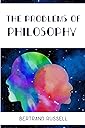
The Problems of Philosophy [Russell, Bertrand] on desertcart.com. *FREE* shipping on qualifying offers. The Problems of Philosophy Review: It's one of the most well-known books in philosophy, so... - I enjoyed reading this book. Some sections are very insightful. The whole book is very well written (well, of course it is). Please keep in mind that I'm neither a philosopher nor a philosophy student. Though I really liked this book, and I was reading it very carefully, and at a slow pace, just to be able to digest it well. Just to give you a hint, this book mostly talks about what an object or a thing is, not quite precisely the problems of philosophy (maybe at that time?). As an example, Russell talks about the table in front of him. He interacts with it by sensing it (touching it, knocking on it, looking at it, describing its colors, etc). But can he really "know" that the table is "there"? Notice the quotes. This leads us to the question: What is knowledge itself? How do we "know" and what can we "know"? Can we really "know" what's "there" for certain? And so on. I'm not Bertrand Russell, so if you think this is boring, don't worry. The book is written in a much more interesting style (a meticulous and elegant style IMO). Though I noticed that Russell loves using little phrases in the middle of his thoughts/sentences that specify some meta-details (Example: "this work by Russell, which I secretly admire, has been, in many numerous occasions, considered to be, not directly so, by many philosophers of the highest caliber, many of which I had not the privilege of meeting, a milestone in metaphysics or whatever lol). It might be difficult to read for some people, but Russell's style is very clear most of the times. If you're genuinely interested in philosophy and want something concrete (to me, at least) and not just a history lesson, then definitely read this book. Review: Clear, fun and engaging - I graduated with a bachelor's degree in philosophy a few years ago. While in college, I studied a lot of continental philosophy. However, after graduating, I discovered that I favor analytic philosophy. Thus, I bought a bunch of Russell's works. This is the second book I have read by Russell, aside from his essays on religion... Russell writes in plain English, and he does not try to sound fancy, like some continental philosophers. This is important to me, because one should approach complicated issues and simplify them, without reducing them to the absurd. I also like that Russell's arguments are tempered. He doesn't try to cover too much or come up with grand conclusions. If you are evidence-based, and if you think philosophy should be conducted in a manner similar to science, then analytic philosophy is definitely for you. Moreover, Russell is someone whom you will grow to appreciate. With that being said, I can't comment too much about whether or not a layman or a laywoman, who has had no formal education in philosophy, will consider his works accessible. Unless you have studied Modern Philosophy, you might not understand how particular thoughts have developed and the historical and social context of Russell's work. Most importantly, however, Russell does explain what the issue is, what his stance is, and how he supports his stance. Even if you do not necessarily agree with his conclusions, most of which are reasonable, you should be able to understand his thoughts.
| ASIN | B08924GDBV |
| Best Sellers Rank | #506,361 in Books ( See Top 100 in Books ) #121 in Philosophy Criticism (Books) #310 in Epistemology Philosophy #539 in Philosophy of Ethics & Morality |
| Customer Reviews | 4.4 4.4 out of 5 stars (1,257) |
| Dimensions | 6 x 0.25 x 9 inches |
| ISBN-13 | 979-8647679437 |
| Item Weight | 7.8 ounces |
| Language | English |
| Part of series | Triskel Philosophy Series |
| Print length | 111 pages |
| Publication date | May 22, 2020 |
| Publisher | Independently published |
Z**G
It's one of the most well-known books in philosophy, so...
I enjoyed reading this book. Some sections are very insightful. The whole book is very well written (well, of course it is). Please keep in mind that I'm neither a philosopher nor a philosophy student. Though I really liked this book, and I was reading it very carefully, and at a slow pace, just to be able to digest it well. Just to give you a hint, this book mostly talks about what an object or a thing is, not quite precisely the problems of philosophy (maybe at that time?). As an example, Russell talks about the table in front of him. He interacts with it by sensing it (touching it, knocking on it, looking at it, describing its colors, etc). But can he really "know" that the table is "there"? Notice the quotes. This leads us to the question: What is knowledge itself? How do we "know" and what can we "know"? Can we really "know" what's "there" for certain? And so on. I'm not Bertrand Russell, so if you think this is boring, don't worry. The book is written in a much more interesting style (a meticulous and elegant style IMO). Though I noticed that Russell loves using little phrases in the middle of his thoughts/sentences that specify some meta-details (Example: "this work by Russell, which I secretly admire, has been, in many numerous occasions, considered to be, not directly so, by many philosophers of the highest caliber, many of which I had not the privilege of meeting, a milestone in metaphysics or whatever lol). It might be difficult to read for some people, but Russell's style is very clear most of the times. If you're genuinely interested in philosophy and want something concrete (to me, at least) and not just a history lesson, then definitely read this book.
L**S
Clear, fun and engaging
I graduated with a bachelor's degree in philosophy a few years ago. While in college, I studied a lot of continental philosophy. However, after graduating, I discovered that I favor analytic philosophy. Thus, I bought a bunch of Russell's works. This is the second book I have read by Russell, aside from his essays on religion... Russell writes in plain English, and he does not try to sound fancy, like some continental philosophers. This is important to me, because one should approach complicated issues and simplify them, without reducing them to the absurd. I also like that Russell's arguments are tempered. He doesn't try to cover too much or come up with grand conclusions. If you are evidence-based, and if you think philosophy should be conducted in a manner similar to science, then analytic philosophy is definitely for you. Moreover, Russell is someone whom you will grow to appreciate. With that being said, I can't comment too much about whether or not a layman or a laywoman, who has had no formal education in philosophy, will consider his works accessible. Unless you have studied Modern Philosophy, you might not understand how particular thoughts have developed and the historical and social context of Russell's work. Most importantly, however, Russell does explain what the issue is, what his stance is, and how he supports his stance. Even if you do not necessarily agree with his conclusions, most of which are reasonable, you should be able to understand his thoughts.
B**N
A Nice, Light Read for an Introductory Text
This short book is a journey through some of philosophy's more famous problems. Naturally a synopsis this short (it is roughly 100 pages) cannot do full justice to much of philosophy, or even to the problems it actually addresses, but it is an entertaining read that nevertheless will find itself illuminating to those unfamiliar with the subject. Uniquely, instead of following the historical chronology of the problems he chooses, Russell travels a path that seems to flow naturally from one subject to the next, as if each problem logically entailed the other. Consequently, Russell jumps decades (and even centuries), forward and backward as his narrative dictates. The experience is like a modern thriller movie whose out-of-sequence path nonetheless has a logic that makes sense. If you aren't already familiar with the subject you might not notice Russell's technique. Russell opens his inquiry by asking what justifies knowledge. Using Descartes' technique of systematic doubt, he explores the problem by examining illusions and fallacious conclusions that can arise when considering knowledge via sensory data to be perfectly reliable. Moving on to the existence of matter, Russell flexes some of his physics muscle with a cursory examination of the current state of thinking (writing as of 1912). The distinction between knowledge by acquaintance and knowledge by description leads to a discussion of induction and the distinction between empirical and a priori knowledge. This leads him to Kant and a long engagement with idealism follows. I won't spoil anymore. Of course Russell is himself a towering figure of 20th century analytic philosophy, and if you allow yourself a little cynicism, by the end it is clear his narrative merely engaged the line of philosophical puzzles that led to his own work. This is not meant as a character slight: this book's lightness bears little resemblance to his serious work and is aimed at a different audience. Rather, it is telling that the narrative he chooses is historically in line with his own work, so his omissions are less surprising when seen in this light. Given that Russell's original work centers on epistemology and logic, it makes sense the book starts at the Enlightenment, concentrating on epistemological questions, and never touches upon anything prior except for his brief foray into the problem of universals. For a book that calls itself the "The Problems of Philosophy," the omissions of major philosophical problems might raise your eyebrows if not for this fact. Russell is not an impartial narrator; he makes his opinions clear on a number of occasions, particularly with issues that have historical significance. I don't consider this a weakness; there is no shortage of general philosophy volumes that treat all ideas in a sympathetic light. It is also salutary to reflect Russell is not a philosophy historian in the normal sense (his huge History notwithstanding); he is an original contributor. Thus I would not expect a thinker of his stature to not proffer his views, as would be expected from any academic professor. My gripe with this book is the tediousness with which Russell begins the discussion. The early pages are somewhat monotonous and not entirely engaging. The rest of the work is quite engaging, so the book as a whole is let down by its beginning. This is unfortunate because many readers might not find themselves committed enough to finish it. Given the target audience (folks who may have no prior exposure to philosophy), missing out on the best parts because of its beginning would be unfortunate.
J**N
I first read this short and lucid introduction to many of the key questions addressed by Western philosophy back in 1968, as a new philosophy undergraduate. It gave me a key insight that helped my next 3 years - that the best way to understand philosophy is usually to read the works of the great philosophers themselves, rather than to read commentaries on them. Russell has a reputation for being hard work, simply I think because of his place as one of the great intellectuals of the 20th century. But this book, written as a young man, is clear and encourages the reader to think further about the ideas it explores. I bought this copy as a basis for discussion with my 10 year old son, who like many young people enjoys playing with philosophical ideas. Much of the vocabulary is naturally beyond him, but this also is an educational opportunity. Thoroughly recommended to anyone with an interest in philosophy.
E**A
Tipo houve engano. Não comprei.
C**W
Great intro to the subject matter. Goes well with his history of Western philosophy.
N**A
i enjoyed this book a lot.
F**A
Short, cheap. The last chapter "the value of philosophy" in his only 5 pages draws an unforgettable outline of the meaning of philosophy.
Trustpilot
Hace 2 meses
Hace 3 días