We remain fully operational. Our teams are working around the clock to ensure your deliveries continue safely.

Descargar la aplicación


Servicios al cliente
Sobre nosotros
Copyright © 2025 Desertcart Holdings Limited
Descargar la aplicación



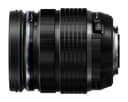
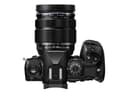
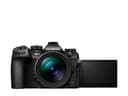
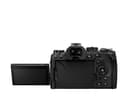
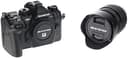
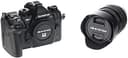

📷 Elevate Your Photography Game!
The OM SYSTEM OM-1 Micro Four Thirds Camera combines a 20MP BSI Stacked Live MOS sensor with advanced features like a high ISO range, five-axis stabilization, and a versatile 12-40mm f2.8 PRO II lens, making it an ideal choice for both amateur and professional photographers seeking exceptional image quality and performance.
| ASIN | B09RQPJJ45 |
| Age Range Description | Adult |
| Aperture modes | F2.8 |
| Are Batteries Included | Yes |
| Aspect Ratio | 4:3 |
| Auto Focus Technology | Hybrid |
| Autofocus | Yes |
| Autofocus Points | 493 |
| Bit Depth | 14 Bit |
| Brand | OM SYSTEM |
| Built-In Media | Battery, Body Cap, Camera Kit, Lens, Shoulder Strap, battery |
| Camera Flash | Hotshoe |
| Camera Lens | 12-40 mm F2.8 |
| Color | blackone |
| Compatible Devices | Micro Four Thirds |
| Compatible Mountings | Micro Four Thirds |
| Connectivity Technology | Bluetooth, Wi-Fi |
| Continuous Shooting | 120 FPS |
| Crop Mode | 4:3 |
| Customer Reviews | 4.4 4.4 out of 5 stars (235) |
| Digital Scene Transition | zoom |
| Digital-Still | Yes |
| Display Fixture Type | Articulating |
| Display Resolution Maximum | 20.4 MP |
| Display Type | LCD |
| Dots Per Screen | 222 |
| Effective Still Resolution | 20 MP |
| Expanded ISO Minimum | 80 |
| Exposure Control | Automatic, Automotive, Manual, Programs |
| File Format | JEPG, RAW |
| Flash Memory Bus Interface Type | UHS-I |
| Flash Memory Speed Class | C10 |
| Flash Memory Supported Size Maximum | 1024 GB |
| Flash Memory Type | Micro SDXC |
| Flash Memory UHS Speed Class | 3 |
| Flash Memory Video Speed Class | V30 |
| Flash Modes | Smart flash, manual flash |
| Flash Sync Speed | 1/250 sec |
| Focal Length Description | 12-40mm F2.8 |
| Focus Features | Hybrid |
| Focus Mode | Automatic AF (AF-A) |
| Focus Type | Auto Focus, Manual Focus |
| Form Factor | Mirrorless |
| Generation | 1 |
| Global Trade Identification Number | 04545350053871 |
| HDMI Type | Type D Micro HDMI |
| Hardware Interface | Bluetooth |
| Has Color Screen | Yes |
| Image Capture Type | Stills & Video |
| Image stabilization | Sensor-shift |
| Item Type Name | System camera |
| Item Weight | 511 Grams |
| JPEG Quality Level | Basic |
| Lens Type | Standard |
| Manufacturer | OM SYSTEM |
| Manufacturer Part Number | V210011BE000 |
| Maximum Aperture | 22 f |
| Maximum Focal Length | 40 Millimeters |
| Maximum Image Size | 20.4 MP |
| Maximum Shutter Speed | 1/32000 Seconds |
| Memory Slots Available | 2 |
| Metering Methods | Average, Centre-Weighted, Spot |
| Minimum Focal Length | 12 Millimeters |
| Minimum Shutter Speed | 1/32000 Seconds |
| Model Name | OM SYSTEM OM-1 |
| Model Number | OM-1 12-40mm F2.8 PRO IIキット |
| Model Series | OM-1 |
| Movie Mode | Yes |
| Night vision | No |
| Number of Diaphragm Blades | 9 |
| Optical Zoom | 3.3 |
| Photo Filter Size | 62 Millimeters |
| Photo Filter Thread Size | 62 Millimeters |
| Photo Sensor Resolution | 20 MP |
| Photo Sensor Size | Micro Four Thirds |
| Real Angle Of View | 75 Degrees |
| Recording Capacity | 5 Minutes |
| Remote Included | No |
| Screen Size | 3 Inches |
| Self Timer | 10, 2, 5 |
| Sensor Type | CMOS |
| Series Number | 1 |
| Shooting Modes | Landscape, Macro |
| Skill Level | Professional |
| Special Feature | Lightweight |
| Supported Image Format | JPEG, RAW |
| Total Still Resolution | 20.4 MP |
| Total USB 2.0 Ports | 1 |
| Total USB 3.0 Ports | 1 |
| Total USB Ports | 1 |
| Total Video Out Ports | 1 |
| Touch Screen Type | Capacitive |
| Video Capture Format | MOV |
| Video Output | HDMI |
| Video Resolution | 1080p, 2160p |
| Viewfinder | Electronic |
| Viewfinder Magnification | 1.66 |
| White Balance Settings | Auto |
| Wireless Technology | Wi-Fi |
| Write Speed | bis zu 104 MB/s |
| Zoom | Optical Zoom |
K**I
A top class flagship camera. An upgrade from em1, ISO 3200 is useable.
J**R
Ich bin sehr von der Bildqualität und der Möglichkeiten der Kamera überrascht. Meine Hauptkamera ist die Canon R5 MI und eigentlich habe ich die OM-1 nur speziell für die Makro Fotografie gekauft und mich aus preislichen Gründen für diesen Vorgänger entschieden. Mittlerweile lerne ich die Vorzüge des Micro Four Third Sensors kennen. Nicht nur bei der Makro Fotografie sondern auch bei der Tele Fotografie macht sich der kleine Sensor bemerkbar. Die geringere Auflösung von etwas mehr als 20 MP, macht sich nicht so stark bemerkbar wie ich anfangs dachte. Ein wichtiger Punkt bei der Beurteilung der Bildqualität ist natürlich auch die Qualität des Objektivs. Ich verwende bis jetzt das OM SYSTEM M. Zuiko Digital ED 12-100mm F4 is Pro und das M.Zuiko Digital ED 90mm F3.5 Makro IS PRO Tele-Makro-Objektiv. Also ich bin rundum begeistert und finde es fast schon schade, dass ich jetzt selten zu meiner Canon R5 greife.
R**H
The OM-1 needs no introduction as there have been enough professional reviewers that have gone through the camera and I am glad to say that they are right, this is a worthy successor to the flagship categorisation. Its computational functions are truly an improvement for a camera its class, and even works with lenses made to conform with the Four Thirds standards. Well done, OM System. Looks like there is nothing to worry about for the future. More importantly, this is the last camera to carry the Olympus name. Something that the Olympus faithfuls will like to add to their cabinet.
E**I
With the OM-1, OM System (the current owners of the former Olympus Imaging Division) has apparently succeeded in doing what Olympus failed to do for quite a few years before selling their camera business. In the years before this sell-off, Olympus released two cameras that should have been flagship models: The E-M1X and the E-M1 Mark III. The former, however, is a large, heavy and expensive "brick" that trades away the size- and weight-advantage of Micro 4/3 in return for relatively modest technical improvements, and the latter is only a minor and disappointing refresh of the E-M1 Mark II. Both cameras keep the same sensor as the Mark II, and much of its capabilities. JIP, the new owners, seem to have little or no experience of camera industry. In this case, it is probably a good thing, in the sense that the former Olympus engineers have been left free to implement the ideas that had been stymied for years by the Olympus leadership. For a price only about 150 € higher than the E-M1X, one gets a far better camera only imperceptibly larger and heavier than the E-M1 II/III, with a new sensor type, a pair of the latest-generation 4-core image processors working in parallel, and several new functions and improved performance in almost every respect (not in sensor pixel-count, but anyone who takes real pictures in the real world can tell you that 20 Mpixel is more than enough for over 95% of commercial image uses). The sensor itself has a group of four pixels under each microlens and Bayer filter. This means that the sensor is not really 80 Mpixel, but neither it is just a plain 20 Mpixel. For one thing, each group of four photodiodes can be used for AF, and still provides image data during the actual exposure (unlike the dedicated AF pixels of all Olympus E-M1 Mark I/II/III and E-M1x models). The stacked sensor architecture also means that, in spite of the four times higher number of photodiodes, each image is read out of the sensor twice as fast as in earlier models. Hopefully, like Olympus used to do before losing its ways, over the years the OM-1 firmware will continue to be gradually upgraded with new functions to take advantage of this sensor architecture and the plentiful reserves of processing power. As for me, I an happy that I did the right thing and, after the E-M1 Mark II, decided not to upgrade to later Olympus models because their improvements were simply too small to be worth the cost. The OM-1, instead, so far has proved to be everything I have been waiting for. I am keeping my E-M1 II and E-M1 "I" because I still have uses for them, and frequently use full-frame Sony Alpha cameras in the lab, but the OM-1 is quickly becoming my favorite camera for outings and field work.
A**H
E' la macchina che mi ha fatto cambiare sistema, dopo anni in Sony e Canon. Evidenziamo i pro e i contro: - costruzione ottima e resistente ad acqua e polvere - ergonomia PRO - stabilizzazione (probabilmente la migliore) - colori bellissimi, con jpeg già pronti - sensore stacked velocissimo, che si può usare solo in elettronico (quasi sempre) - sistema di lenti pro eccellente. Chi lo ignora o lo disprezza è un principiante o un fissato con sfocato e altissimi iso - a proposito di alti iso: se si espone bene la macchina li regge bene - AF molto efficace, ma da domare: non si usa come una sony, ma come una reflex! AFC con punti o zone - riconoscimento uccelli efficace, ma quello dei visi non tanto come su Canon e Sony - caratteristiche video interessanti, ma non adatte a un uso professionale, visto il bitrate basso, nonostante il 4k 60 senza crop, i 10bit e la stabilizzazione eccellente. - Aggiungo il grande pro del m43: guadagno in profondità di campo e iso bassi (200 iso base). Significa che rispetto al FF ho sempre 2 stop di vantaggio in termini di luce rispetto alla profondità di campo desiderata, più uno di iso base. (100 su FF, 200 su Olympus). Purtroppo nel tempo ha presentato il difetto delle ghiere un po' dure. Eccellente Amazon, che mi ha proposto il reso con rimborso. L'assistenza ufficiale l'avrebbe mandata in Portogallo per 6 settimane: completamente fuori da ogni logica.
Trustpilot
Hace 3 semanas
Hace 3 semanas