We remain fully operational. Our teams are working around the clock to ensure your deliveries continue safely.

Descargar la aplicación


Servicios al cliente
Sobre nosotros
Copyright © 2025 Desertcart Holdings Limited
Descargar la aplicación
🍴 Discover the Art of Eating Well!
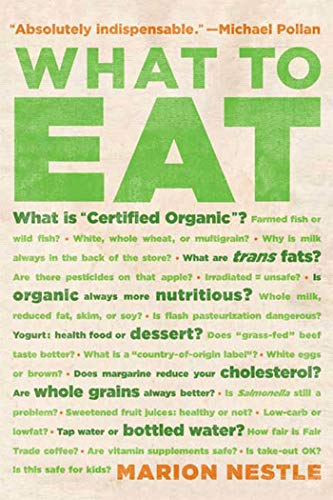
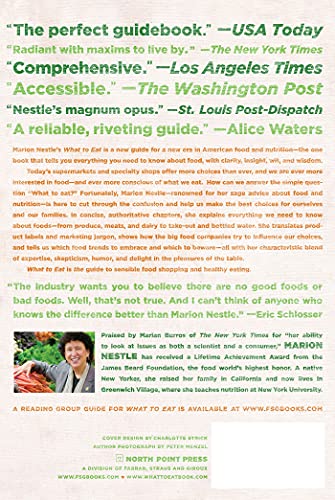
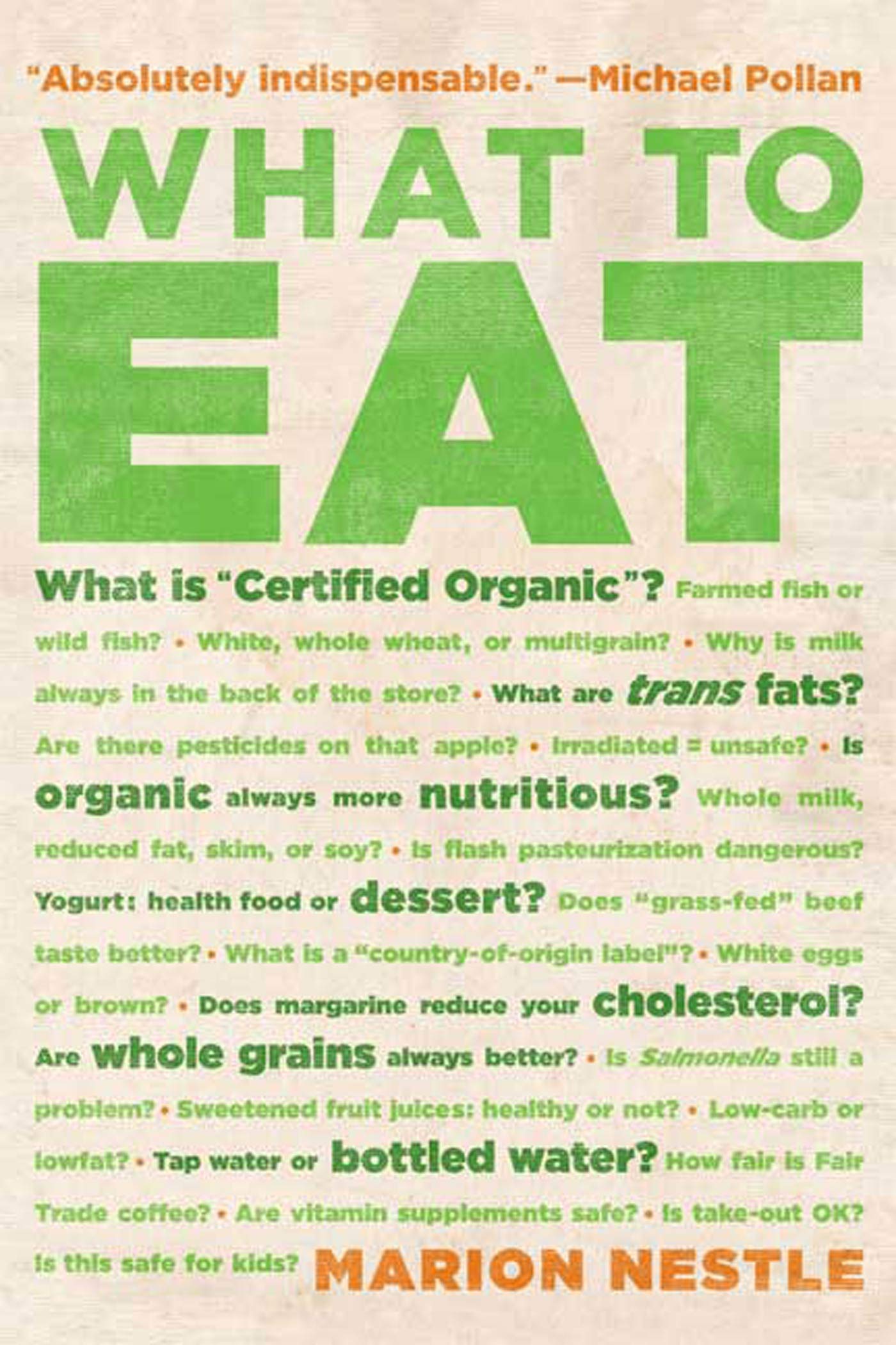
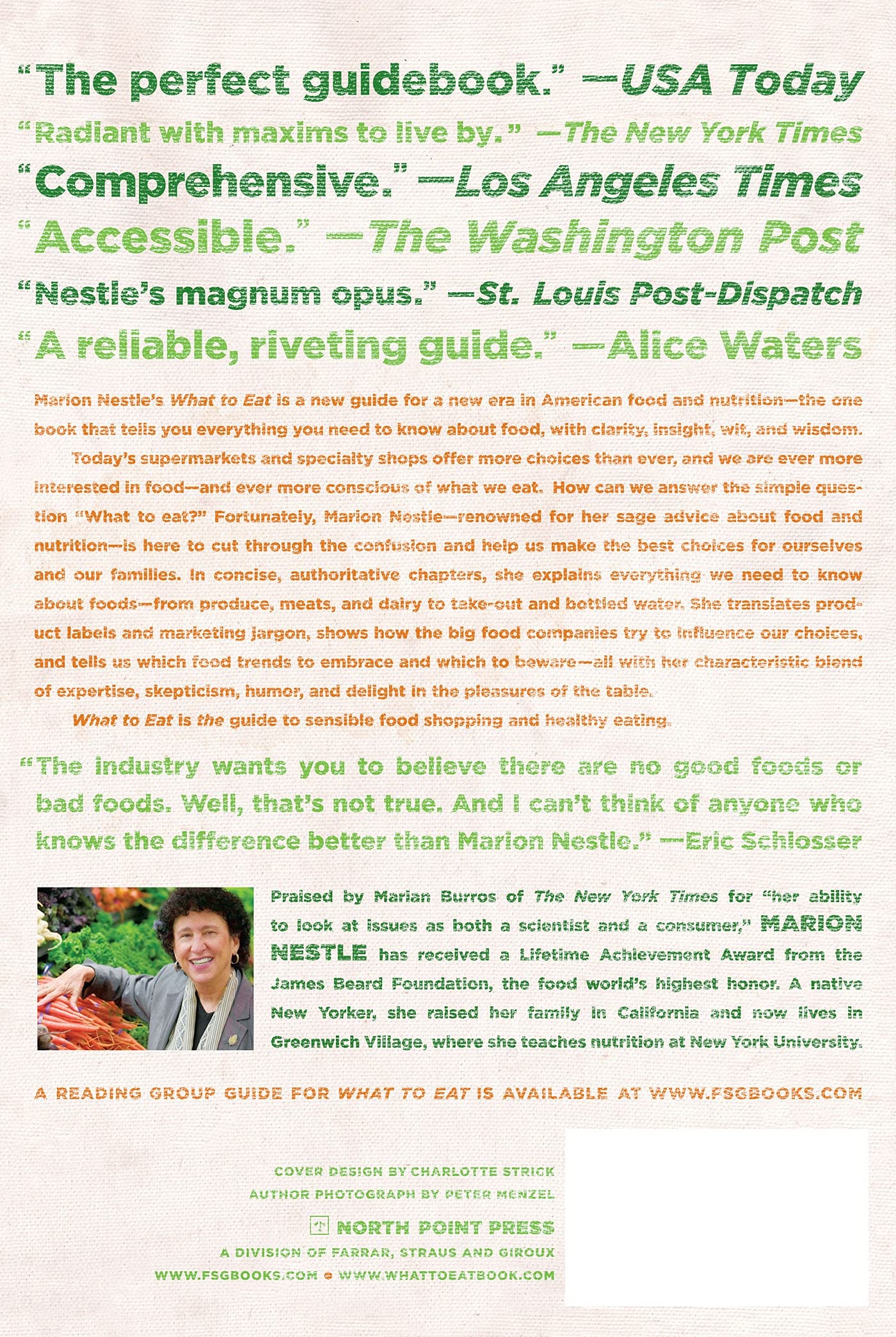
What to Eat by North Point Press is an essential culinary guide that offers a diverse array of recipes and expert advice, empowering readers to make informed dietary choices while enjoying delicious meals.
| ASIN | 0865477388 |
| Best Sellers Rank | #142,665 in Books ( See Top 100 in Books ) #218 in Nutrition (Books) #362 in Other Diet Books |
| Customer Reviews | 4.3 4.3 out of 5 stars (340) |
| Dimensions | 6.07 x 1.08 x 9 inches |
| Edition | First Edition |
| ISBN-10 | 9780865477384 |
| ISBN-13 | 978-0865477384 |
| Item Weight | 1.65 pounds |
| Language | English |
| Print length | 624 pages |
| Publication date | April 17, 2007 |
| Publisher | North Point Press |
K**C
Why 5 Stars?
I give Marion Nestle's WHAT TO EAT the highest rating because it is a necessary reference book -- one that should as much nestle (if you'll forgive the pun) between cookbooks on your kitchen bookshelf as a dictionary does between novels in your den or library's bookshelves. Although you could march through its 600-plus pages chronologically, it is wiser to use the table of contents to choose topics of special interest to you. For instance, I skipped the chapter on margarine because I do not eat it and never have, and thus do not need to know about its questionable ingredients or health hazards. If you, however, have switched from butter for health reasons, you should educate yourself on the fire now that you've leaped out of the frying pan. Fearlessly, Nestle wades into the claims and counterclaims, the health benefits and the health hazards, the truths and the half-truths of fruits and vegetables, dairy products, cereals and breads, meat and seafood, snack food and yes, even bottled water. It gets confusing when you read labels and see such murky terms as "natural" which sound good but mean many things to many packagers. Best of all, the book explains the politics of food -- how powerful lobbying groups ensure that their profits take precedence over your health via their strong control over both politicians and, more disturbingly, the very government organizations (such as the FDA and the USDA) responsible for protecting us, the consumers. Though not as engaging as Michael Pollan's seminal book THE OMNIVORE'S DILEMMA, Nestle's WHAT TO EAT deserves its spot in every foodie's library. If you're worried about what you're putting in your (and your kids') mouth, you should be. Arm yourself with knowledge. Speak the language (often the "doublespeak") of Big Food. Promote healthier practices in the food and agriculture business by voting with your food dollars (chiefly for organic and local foods which, with enough support, will come down in price). Sadly, money is the only language giant food corporations understand. Protests about the dangers of their practices and ingredients -- unless it affects their precious bottom lines -- will forever fall on deaf ears.
C**E
Great resource
Marion Nestle's latest book "What to Eat" gives a comprehensive look at almost every food available in today's supermarkets. She goes aisle by aisle giving you information on how to look past marketing ploys and decide what foods you should really be feeding your family. Here are a few questions answered in this book: - Is organic worth it? - What's the difference between conventional, natural and organic meats? - Is it better to eat farm-raised fish, wild-caught - or any fish at all? - What's the problem with partially hydrogenated oils and transfats? - How can foods with hydrogenated oils have no transfats? She also addresses: - food safety - supplements - additives and preservatives - nutrients added to junk foods - frozen and fresh foods - portion sizes, labeling, and nutrition claims I highly recommend this book as it will give you a lot of insight into how foods are marketed, how food companies make their money, and how to read nutrition labels. I originally checked this out from the library - but after I was about a third of the way through, I bought my own copy. I know I will refer to this often.
J**A
Not so sure about organic food statements, otherwise great read
This book is filled with amazing information for people interested in what to eat, especially the section dealing with oils, which is more in-depth than in any other book I've read. I've read a TON of books about food, the food industry, industrial farming, pastured meat, vegetarianism, animal rights, sustainable agriculture. Marion Nestle is one of the leading experts in the industry and this book is extremely valuable in terms of detailed information about things like hydrogenation, processing, and food politics (though I would recommend for a more in-depth look at politics, read her other book Food Politics). The one problem I had with this book is that it spent all of a paragraph on pastured meat; Nestle chooses organic over pastured and I find that questionable. The book is a few years old so maybe it is simply lacking in information that has only recently been made accessible, but I expect more from her than telling everyone that organic everything is better; countless others have demonstrated that often organically raised animals are hardly better treated than industrially farmed animals, so if you are buying organic chicken, organic pork, organic beef, realize that though the organic certification has merit (especially in terms of fruit and vegetables), you might be surprised to see organic chickens living in the same cramped conditions as Perdue chickens. They are only slightly better some of the time and to me it's not worth the chance. Further, Nestle fails to mention an important point: much of farm stand food is grown organically; but for a farmer, organic certification can be prohibitively expensive. Local food is very often organic, but unlabeled, contributing further to the nebulous conditions under which our food is grown. As I said this is a great book and a must-read but I would suggest supplements: Fast Food Nation, The Omnivore's Dilemma, Peter Singer and Jim Mason's book "The Ethics of What We Eat." Those are probably my top three choices. If you've already been through those and want more detailed information, this is a great book, but there are a lot of perspectives on food and despite Nestle's expertise on the subject, it does not seem that buying food with an organic stamp solves all ethical dilemmas for today's consumer.
T**S
This is an excellent source of down-to-earth information on the realities and deceptions of the US food industry. We have no reason to believe that the European food industry has a different attitude to the conflict of interest that exists between its own profit margins and the welfare of its customers. Where conflict arises, the customer comes a poor second. Read it and eat much less, and much more carefully.
M**E
Livro técnico, descritivo, ultra detalhista, chato para leigos. Excelente autora, confiável. Tema atual, interessantíssimo.
M**E
I really love this book!! It is easy to understand. We should all read this book for our health.
A**Y
Everyone should read this book at least once. After reading it for a class, I bought it as a gift for several family members. I am a much smarter grocery shopper and am eating better because of it.
J**E
I ordered this as it came up I. A Amazon search for lactose free. What to eat. Thought great just what I need. The book appears to have been written by a scientist. It goes in to food the soil condition and all the science behind each item. All I was looking for was a product list for lactose free. Went to return the book for a refund and Amazon said “ no need to return well refund you. “ I would not recommend this book. Unless your a Geek.
Trustpilot
Hace 1 mes
Hace 3 semanas