We remain fully operational. Our teams are working around the clock to ensure your deliveries continue safely.

Descargar la aplicación


Servicios al cliente
Sobre nosotros
Copyright © 2025 Desertcart Holdings Limited
Descargar la aplicación

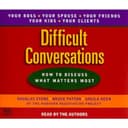
desertcart.com: Difficult Conversations: How to Discuss What Matters Most (Audible Audio Edition): Douglas Stone, Douglas Stone, Sheila Heen, Bruce Patton, Random House Audio: Audible Books & Originals Review: Don't Suffer in Silence to Avoid Confrontation - Do you find yourself stewing silently, letting anger and resentment build, because you're avoiding the discomfort of a difficult conversation? Do you have that one relative or colleague with whom every effort to communicate results in disaster? Before you give up, give this book a try. It provides very specific guidance on how to initiate and the most challenging of conversations and steer them away from disaster. Difficult conversations are a normal part of life - we have them with friends, colleagues, relatives, in a variety of settings. Examples of conversations discussed are breaking up in a relationship, asking for a raise, dealing with an ex on child-related issues, dealing with perceived racism at work, dealing with perceived poor workmanship. This is the stuff of everyday life. The authors contend that each difficult conversation is really three conversations - one involves what happened, one involves feelings, and the third involves self-identity. WHAT HAPPENED? With respect to what happened, we need to be open to and curious about another person's perception of what happened, instead of clinging to our own version of the truth. The authors caution us not to speculate about others' intents, be genuinely curious about the other person's perspective, and embrace the "and stance." You may be right and they may be right. Don't assume that all of they stories are mutually exclusive. We need to focus on contributions to the situation, not blame, and try to understand our own roles in contributing to the conflict. Being unapproachable, avoiding conflict, and allowing a bad situation to remain unchecked are all forms of contribution. FEELINGS. Feelings should be expressed and described carefully, without judging, blaming, or attributing. When we don't share our feelings, we are depriving other persons of an opportunity to learn how their behavior impacts us. Keeping our feelings to ourselves really keeps us out of the relationship and makes problem-solving more difficult. IDENTITY. This discussion was the most enlightening part of the book for me. The authors contend that difficult conversations threaten our own identity, because they may require us to say something that is inconsistent with our own self-image. I can't fire someone, because I am a nice person and a nice person wouldn't cause someone to lose his job. I can't admit I made a mistake because I am a competent professional who doesn't deliver shoddy work. I can't confront my child's teacher because I'm not one of those pain-in-the-rear parents who try to run the school. I can't ask for a raise - what if my boss tells me that I'm not performing as well as my colleagues. Identity issues can cause us to be in denial, and we can allow others' feedback to define us. The trick here is again, to embrace the "and stance." Know that others may perceive us differently that we perceive ourselves; both perceptions are reality. We can be a nice person and at the same time fire someone. The authors also note that the other party to a conversation has an identity, also, and we must be mindful of our comments that shake their identity. APPROACHING THE CONVERSATION. After discussing the "three conversations," the authors outline how to approach the difficult conversation. Is this issue even worth raising? If so, you want to learn the other party's story, express your own feelings, and seek a path forward. The best starting point is from the "third story" - how a neutral mediator might describe the situation. When we begin within our own story, we trigger defensiveness from the start. The authors discuss a number of listening and inquiry skills - nothing new in substance, but the presentation makes lots of sense and is always grounded in real-world examples. There are concrete tips for speaking clearly and remaining in control of our emotions in an imbalanced situation. Throughout the book, there are plenty of examples, nearly all of them common situations. The authors describe a conversation that gets off to a rotten start, and then show how you can reframe and redirect the conversation down a more productive path. It's very subtle and particularly enlightening. Overall, this is a highly readable, very good book, one that I believe will be more valuable after several readings. Review: Excellent tips for dealing with the most difficult conversations - Difficult conversations is a book from the Harvard Negotiation Project (of which "Getting to Yes" is probably best known) and is about the conversations we need to have, but we are afraid of them or they always blow up in our face. How to handle such conversations. The book essentially consists of two parts (plus an intro, plus an end). The first part of about the problem and the different conversations happening when involved in a difficult conversation. The second part is concrete about, what to do. The first part describes three ongoing conversations: - The "What Happened conversation" - The "Feelings conversation" - The "Identity conversation" The "what happened" conversation is about ... what happened. Trying to understand what happened. Not necessary finding "the truth" since with multiple people involved, there will be multiple viewpoints. It's important to accept that and just learn perspectives. The "feelings" conversation relates to the feelings underlying the conversations. Many conversations are not really about the things, more about the feelings underlying the discussion. These feelings are often not discussed, so it's very hard to talk about them. Some insights here, for me, related to the intentions and how other people assume bad intentions and especially how you yourself can talk everything ok by thinking that the intentions were good. The "identity" conversations is the deepest one. We think we are a certain way and thats why we need to act a certain way. This has a strong influence in every conversation. After the first part and diving quite deep in the three different conversations, the authors move on and look at the how to deal with it. It starts with a chapter on finding out the true purpose of the conversation and if you really need to have it. From there it looks at how to begin a conversation. Begin it from the third person so that you can look at both persons perspectives. After this it moves into listening and discusses active listening techniques. A key point here is to be sincere about your wanting to listen, though difficult to change. How to express yourself is the topic of the next chapter and it ends with a discussion on together solving the problem. This is where the influence of the Harvard Negotiation Project becomes very visible. The last chapter is a funny and very smart put together dialog which puts all the ideas together. I really enjoyed reading this. The books is very well written, clear and especially concrete. The authors use many example conversations and analyze them, and explain their concepts using these concrete conversations. This made the book really useful and applicable to real life. If you are ever in difficult conversations (everyone), I'd recommend to have a look at this book. It's been very useful to me.
C**.
Don't Suffer in Silence to Avoid Confrontation
Do you find yourself stewing silently, letting anger and resentment build, because you're avoiding the discomfort of a difficult conversation? Do you have that one relative or colleague with whom every effort to communicate results in disaster? Before you give up, give this book a try. It provides very specific guidance on how to initiate and the most challenging of conversations and steer them away from disaster. Difficult conversations are a normal part of life - we have them with friends, colleagues, relatives, in a variety of settings. Examples of conversations discussed are breaking up in a relationship, asking for a raise, dealing with an ex on child-related issues, dealing with perceived racism at work, dealing with perceived poor workmanship. This is the stuff of everyday life. The authors contend that each difficult conversation is really three conversations - one involves what happened, one involves feelings, and the third involves self-identity. WHAT HAPPENED? With respect to what happened, we need to be open to and curious about another person's perception of what happened, instead of clinging to our own version of the truth. The authors caution us not to speculate about others' intents, be genuinely curious about the other person's perspective, and embrace the "and stance." You may be right and they may be right. Don't assume that all of they stories are mutually exclusive. We need to focus on contributions to the situation, not blame, and try to understand our own roles in contributing to the conflict. Being unapproachable, avoiding conflict, and allowing a bad situation to remain unchecked are all forms of contribution. FEELINGS. Feelings should be expressed and described carefully, without judging, blaming, or attributing. When we don't share our feelings, we are depriving other persons of an opportunity to learn how their behavior impacts us. Keeping our feelings to ourselves really keeps us out of the relationship and makes problem-solving more difficult. IDENTITY. This discussion was the most enlightening part of the book for me. The authors contend that difficult conversations threaten our own identity, because they may require us to say something that is inconsistent with our own self-image. I can't fire someone, because I am a nice person and a nice person wouldn't cause someone to lose his job. I can't admit I made a mistake because I am a competent professional who doesn't deliver shoddy work. I can't confront my child's teacher because I'm not one of those pain-in-the-rear parents who try to run the school. I can't ask for a raise - what if my boss tells me that I'm not performing as well as my colleagues. Identity issues can cause us to be in denial, and we can allow others' feedback to define us. The trick here is again, to embrace the "and stance." Know that others may perceive us differently that we perceive ourselves; both perceptions are reality. We can be a nice person and at the same time fire someone. The authors also note that the other party to a conversation has an identity, also, and we must be mindful of our comments that shake their identity. APPROACHING THE CONVERSATION. After discussing the "three conversations," the authors outline how to approach the difficult conversation. Is this issue even worth raising? If so, you want to learn the other party's story, express your own feelings, and seek a path forward. The best starting point is from the "third story" - how a neutral mediator might describe the situation. When we begin within our own story, we trigger defensiveness from the start. The authors discuss a number of listening and inquiry skills - nothing new in substance, but the presentation makes lots of sense and is always grounded in real-world examples. There are concrete tips for speaking clearly and remaining in control of our emotions in an imbalanced situation. Throughout the book, there are plenty of examples, nearly all of them common situations. The authors describe a conversation that gets off to a rotten start, and then show how you can reframe and redirect the conversation down a more productive path. It's very subtle and particularly enlightening. Overall, this is a highly readable, very good book, one that I believe will be more valuable after several readings.
B**E
Excellent tips for dealing with the most difficult conversations
Difficult conversations is a book from the Harvard Negotiation Project (of which "Getting to Yes" is probably best known) and is about the conversations we need to have, but we are afraid of them or they always blow up in our face. How to handle such conversations. The book essentially consists of two parts (plus an intro, plus an end). The first part of about the problem and the different conversations happening when involved in a difficult conversation. The second part is concrete about, what to do. The first part describes three ongoing conversations: - The "What Happened conversation" - The "Feelings conversation" - The "Identity conversation" The "what happened" conversation is about ... what happened. Trying to understand what happened. Not necessary finding "the truth" since with multiple people involved, there will be multiple viewpoints. It's important to accept that and just learn perspectives. The "feelings" conversation relates to the feelings underlying the conversations. Many conversations are not really about the things, more about the feelings underlying the discussion. These feelings are often not discussed, so it's very hard to talk about them. Some insights here, for me, related to the intentions and how other people assume bad intentions and especially how you yourself can talk everything ok by thinking that the intentions were good. The "identity" conversations is the deepest one. We think we are a certain way and thats why we need to act a certain way. This has a strong influence in every conversation. After the first part and diving quite deep in the three different conversations, the authors move on and look at the how to deal with it. It starts with a chapter on finding out the true purpose of the conversation and if you really need to have it. From there it looks at how to begin a conversation. Begin it from the third person so that you can look at both persons perspectives. After this it moves into listening and discusses active listening techniques. A key point here is to be sincere about your wanting to listen, though difficult to change. How to express yourself is the topic of the next chapter and it ends with a discussion on together solving the problem. This is where the influence of the Harvard Negotiation Project becomes very visible. The last chapter is a funny and very smart put together dialog which puts all the ideas together. I really enjoyed reading this. The books is very well written, clear and especially concrete. The authors use many example conversations and analyze them, and explain their concepts using these concrete conversations. This made the book really useful and applicable to real life. If you are ever in difficult conversations (everyone), I'd recommend to have a look at this book. It's been very useful to me.
A**R
This book is a bible for all relationships - personal, professional, individual. It has covered all aspects of conversations we have with ourselves and others over the course of our lives. I cannot think of a terribly scary conversation which has not been mentioned here. And all the advice is backed up by examples of what to do/ say and what not to do/say. Here's what the book teaches: 1. How to dissect conversations into intentions, impacts, feelings and motivations. 2. Why and how feelings and emotions matter and how to bring them up and know when to bring them up. 3. How to deal with difficult people or argumentative people. 4. How to look at both or all sides of a story. 5. How to validate other people's point of view without sacrificing your own. 6. How to talk about what matters to you clearly and concisely without dismissing what matters to others. 7. How our experiences dictate how we feel about a situation and how to change them. 8. How to listen. 9. How to deal with blaming and accusations from others and how to stop it yourself. 10. How to talk to yourself. 11. How to persuade others and allow yourself to be persuaded. 12. How to be honest without being rude. And the list possibly goes on. I do not know of a situation not mentioned in it - it even explicitly discusses how to quit a job or break up a relationship without feeling guilty. All situations are described in quotes with perfectly polite and empathetic sentences, which I've marked them as they are to quote for myself as and when the situation arises. This book is a great bargain: No amount of money can ever suffice for the value it has provided. I recommend it to everyone unless you are a hermit living alone in a forest. Even then you would benefit from this book- it will teach how to negotiate with your own thoughts. And this book should be a family bible. Wonder how different all relationships would be if everyone read and applied what they learnt. I bought a paperback (by Portfolio Penguin) version of this. The print and page qualities are fine. But the binding is a bit weak. A couple of pages came off as soon as I started reading. The fonts are fine too, though I did get confused with the many titles, subtitles, headings and subheadings. But it did help that at the back of the book, there is a content map which helps you to navigate through the book. It also has some content in the form of a table for the ease of understanding. Great book!
D**.
I just started reading this book but it captivates you from the beginning. Its bery down to earth, very practical and useful. I Would only recommend. Its a must for people who want to build better social relations with others and with self.
K**G
Worth readying
F**O
Iper-consigliato: pratico e interessante
C**R
This is a succinct insight into the type of conversation we potentially have with a difficult family member, the server who gives you a cold coffee or a tricky business situation. The layout is well structured, breaking each of the main points down further and further to create an easy to follow guide to understanding and navigating an aspect of daily life that most of us evidently don't manage very well. I read it from perspective of the dispute resolution work I do and it is highly relevant to anyone who works with the general public in any context. It is also clear that what great books like this with universal truths tend to reveal is that it is applicable to all aspects of life, none more so than our closest relationships when we tend to throw all logic and reason out the window in difficult conversations. Pertinent and varied examples illustrate each point and unlike many of the snake oil 'improve your life in 7 steps' type stuff out there this book is relevant, intelligent and I got to the finish feeling like I'd learned something to use in my daily life.
Trustpilot
Hace 1 mes
Hace 2 semanas