Some deliveries may take a little longer than usual due to regional shipping conditions.

Descargar la aplicación


Servicios al cliente
Sobre nosotros
Copyright © 2025 Desertcart Holdings Limited
Descargar la aplicación
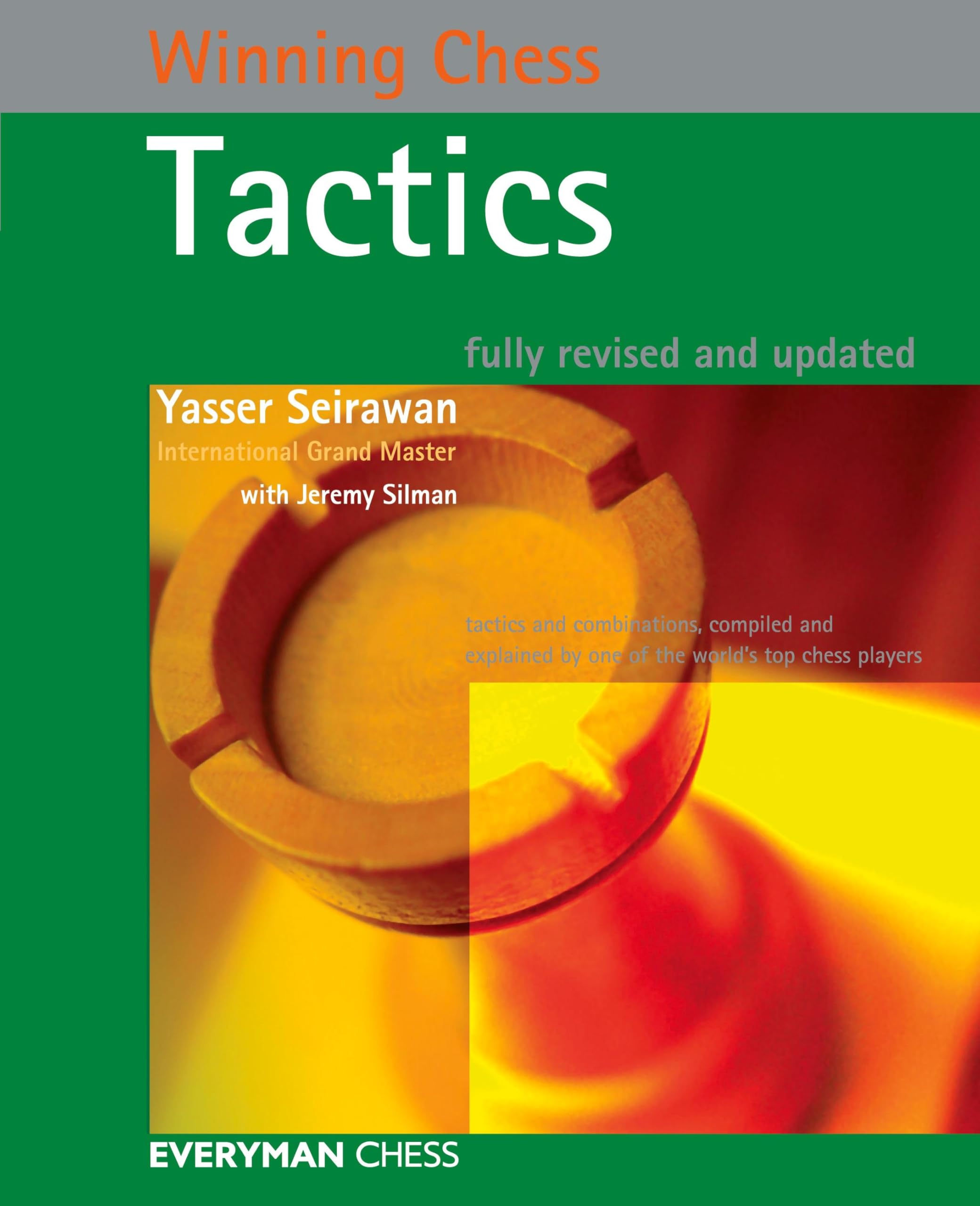
Winning Chess Tactics (Winning Chess - Everyman Chess) [Seirawan, Yasser] on desertcart.com. *FREE* shipping on qualifying offers. Winning Chess Tactics (Winning Chess - Everyman Chess) Review: Excellent Introduction to Tactics - Seirawan's Winning Chess Tactics, part of the Winning Chess series, is essential for anyone who has never had a great introduction to basic tactics. I highly recommend the book to any average club player or relative beginner. Tactics are first defined and specifically what characteristics of the position to look for when determining whether a tactic exists should be carefully noted. Tactics in the book are broken down into sections based on a defining feature, such as double attack, pin, skewer, deflection, and there are plenty of tests along the way with solutions in the back of the book. In total there are over a hundred tests with clearly explained solutions in addition to all the explanation and examples throughout the book. At the end are 45 final tests in ascending difficulty, which should prove challenging for anyone reading the book, and will be of great benefit to anyone who follows the author's advice of sitting down with paper and pen and writing down your solution to the tactic and any relevant variants. In terms of accuracy, the book's analysis is extremely good, but not perfect. Only on some of the more difficult tests at the end of the book did I find any discrepancy between the published analysis and computer analysis, which in fact was relevant to my solutions of the tests. Possible spoiler alerts: On test 102, there is an equally good solution that isn't mentioned (which was my solution, and in my opinion is more obvious). On test 115, Black has a clearly winning position, but the analysis claims it is a solid mate in 4, where in fact the position is clearly winning but complicated, with Houdini claiming only a mate in 9. The problem is that the opponent's best response on his first move is overlooked. The solution I saw as winning reverses the order of the first two key moves in the published analysis, and Houdini agrees that it is a win with a mate in 10, so I gave myself full credit for that response as well. On test 123, the published analysis says mate in 3, when in fact the key first move allows a mate in 4. The main problem is though, is that the published second move ignores the best response, which if played would not allow for any mate in the immediate future (though a clearly winning position). My own solution to the problem has a completely different first key move, and is a confirmed mate in 6. On test 126, my own solution to the problem included a FAR superior second move (confirmed by Houdini, though both positions are winning). It is at first frustrating but then rewarding to think that you got the problem incorrect and then realize a great success! The main reason this is the case is that again the best response to the second move in sequence is overlooked (and subsequently the best response to the third move in sequence as well). These discrepancies may at first seem significant, but they are not. I only mentioned them to put them on record for the curious. They are only minor inconsistencies that don't affect the nature of the positions in the tests, and definitely don't affect the utility of the book as a whole! This book still gets 5 stars from me. Review: This is the book that made me fall in love with chess - First, a disclaimer: I'm not a grandmaster. Far from it. I'd estimate my rating to be somewhere in the 1300's. Without this book, it would probably be about 600 -- scratch that, it would be zero, because I wouldn't be as hooked on chess as I am, and I probably would never get around to playing it. Simply put, Seirawan has THE GIFT. You know -- the very rare ability, among those of world-class skill in any discipline, to actually explain his knowledge clearly to a layman. And to convey not just the knowledge, but also the passion. That is his genius. And this fabulous series of book is the result. If you've got someone on your Christmas list who is getting interested in chess, but -- like most newcomers -- believes that she/he will never be any good at it, give her/him this book! Perhaps give this one and the overview "Play Winning Chess" together. But this the book that will truly change your friend/son/niece/spouse/whomever into a *competent* chess player. One strength of the book is its focus on problems. There are a lot of problems, which appear as the relevant concepts are introduced, and also in the back (so you have to discover for yourself which tactics are involved). The problems are very challenging -- or, they were for me anyway! -- yet completely solvable knowing only what's been taught. This makes them FUN. Yes, I said fun! You might eventually progress far past the level this book is at, but the book will never stop being useful to you. You can still use it as a means to drill yourself -- to see how fast you can spot the solutions, burn the lessons they illustrate into your head, and keep the fundamental patterns fresh in your mind for when you go into battle. Well, I'll stop, but really, this book is beyond excellent and I can't praise it highly enough to match the gratitude I feel toward GM Seirawan for showing me how incredibly awesome this game really is. Thanks, man.
| ASIN | 1857443861 |
| Best Sellers Rank | #179,542 in Books ( See Top 100 in Books ) #51 in Chess (Books) |
| Customer Reviews | 4.7 4.7 out of 5 stars (437) |
| Dimensions | 7.25 x 0.85 x 9 inches |
| Edition | Revised ed. |
| ISBN-10 | 9781857443868 |
| ISBN-13 | 978-1857443868 |
| Item Weight | 2.31 pounds |
| Language | English |
| Print length | 240 pages |
| Publication date | May 1, 2005 |
| Publisher | Everyman Chess |
| Reading age | 1 year and up |
J**R
Excellent Introduction to Tactics
Seirawan's Winning Chess Tactics, part of the Winning Chess series, is essential for anyone who has never had a great introduction to basic tactics. I highly recommend the book to any average club player or relative beginner. Tactics are first defined and specifically what characteristics of the position to look for when determining whether a tactic exists should be carefully noted. Tactics in the book are broken down into sections based on a defining feature, such as double attack, pin, skewer, deflection, and there are plenty of tests along the way with solutions in the back of the book. In total there are over a hundred tests with clearly explained solutions in addition to all the explanation and examples throughout the book. At the end are 45 final tests in ascending difficulty, which should prove challenging for anyone reading the book, and will be of great benefit to anyone who follows the author's advice of sitting down with paper and pen and writing down your solution to the tactic and any relevant variants. In terms of accuracy, the book's analysis is extremely good, but not perfect. Only on some of the more difficult tests at the end of the book did I find any discrepancy between the published analysis and computer analysis, which in fact was relevant to my solutions of the tests. Possible spoiler alerts: On test 102, there is an equally good solution that isn't mentioned (which was my solution, and in my opinion is more obvious). On test 115, Black has a clearly winning position, but the analysis claims it is a solid mate in 4, where in fact the position is clearly winning but complicated, with Houdini claiming only a mate in 9. The problem is that the opponent's best response on his first move is overlooked. The solution I saw as winning reverses the order of the first two key moves in the published analysis, and Houdini agrees that it is a win with a mate in 10, so I gave myself full credit for that response as well. On test 123, the published analysis says mate in 3, when in fact the key first move allows a mate in 4. The main problem is though, is that the published second move ignores the best response, which if played would not allow for any mate in the immediate future (though a clearly winning position). My own solution to the problem has a completely different first key move, and is a confirmed mate in 6. On test 126, my own solution to the problem included a FAR superior second move (confirmed by Houdini, though both positions are winning). It is at first frustrating but then rewarding to think that you got the problem incorrect and then realize a great success! The main reason this is the case is that again the best response to the second move in sequence is overlooked (and subsequently the best response to the third move in sequence as well). These discrepancies may at first seem significant, but they are not. I only mentioned them to put them on record for the curious. They are only minor inconsistencies that don't affect the nature of the positions in the tests, and definitely don't affect the utility of the book as a whole! This book still gets 5 stars from me.
A**R
This is the book that made me fall in love with chess
First, a disclaimer: I'm not a grandmaster. Far from it. I'd estimate my rating to be somewhere in the 1300's. Without this book, it would probably be about 600 -- scratch that, it would be zero, because I wouldn't be as hooked on chess as I am, and I probably would never get around to playing it. Simply put, Seirawan has THE GIFT. You know -- the very rare ability, among those of world-class skill in any discipline, to actually explain his knowledge clearly to a layman. And to convey not just the knowledge, but also the passion. That is his genius. And this fabulous series of book is the result. If you've got someone on your Christmas list who is getting interested in chess, but -- like most newcomers -- believes that she/he will never be any good at it, give her/him this book! Perhaps give this one and the overview "Play Winning Chess" together. But this the book that will truly change your friend/son/niece/spouse/whomever into a *competent* chess player. One strength of the book is its focus on problems. There are a lot of problems, which appear as the relevant concepts are introduced, and also in the back (so you have to discover for yourself which tactics are involved). The problems are very challenging -- or, they were for me anyway! -- yet completely solvable knowing only what's been taught. This makes them FUN. Yes, I said fun! You might eventually progress far past the level this book is at, but the book will never stop being useful to you. You can still use it as a means to drill yourself -- to see how fast you can spot the solutions, burn the lessons they illustrate into your head, and keep the fundamental patterns fresh in your mind for when you go into battle. Well, I'll stop, but really, this book is beyond excellent and I can't praise it highly enough to match the gratitude I feel toward GM Seirawan for showing me how incredibly awesome this game really is. Thanks, man.
R**D
this is a wonderfully laid out book. I like this book and enjoyed reading it immensely. you don't need a chess set to read this book either so you can read it anywhere at any time. Yasser Sierawan imparts a lot of knowledge here in a superbly thought out and structured way. The quality of this book and the way it was written is profound. This book is for you if you understand pins, forks and the basics. But don't know, or would like to truly understand how to go for stalemate, x-rays etc. This book will increase the depth and crispness of your understanding and ability to use pins forks windmills etc. This book is so good!! i especially enjoyed the test section at the end. Thank you Yasser for this beautiful book
S**M
Excellent book for underated to 1700ratings
J**E
LIvro recomendado por um enxadrista e presente para meu neto, que está utilizano bastante as táticas apresentadas
P**.
Ottimo libro! Buoni esercizi di tattica !
W**R
Achtung! Dieses Buch ist in englischer Sprache! 5 Sterne, weil es extrem gut gemacht ist und man ganz nebenbei sein englisch verbessern kann. Gerade für Schüler sehr empfehlenswert. Aus rein schachlicher Sicht ist dieses Buch für den Einstieg in die Schachtaktik hervorzuheben. Allerdings ist es auch für den Fortgeschrittenen sehr hilfreich, da man nicht "standartgemäß" an die "Stellungsmuster" herangeführt wird. Eines der Bücher die ich gern 2–3-mal durcharbeiten kann und es trotzdem Spaß macht!
Trustpilot
Hace 5 días
Hace 2 semanas