
Descargar la aplicación


Servicios al cliente
Sobre nosotros
Copyright © 2025 Desertcart Holdings Limited
Descargar la aplicación

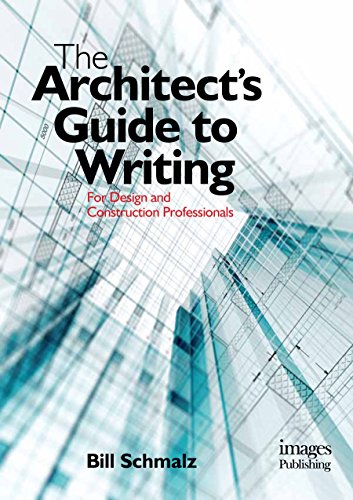



The Architect's Guide to Writing: For Design and Construction Professionals [Schmalz, Bill] on desertcart.com. *FREE* shipping on qualifying offers. The Architect's Guide to Writing: For Design and Construction Professionals Review: Excellent refresher course - This book serves as an excellent refresher course for those of us who haven't taken a writing course in many years. It is absolutely relevant to common communication required by architects. It points out many writing mistakes that I (and my colleagues) have made, and then shows the correct way to handle. The tools in this book will help make me a better communicator and avoid embarrassing mistakes when writing with clients and my teams. Very helpful, to-the-point, and easy to read. Highly recommend. Review: Funny - The book is informative and for a book about technical writing it is very funny
| Best Sellers Rank | #4,872,604 in Books ( See Top 100 in Books ) #1,520 in Business Writing Skills (Books) #4,986 in Architecture Reference (Books) #30,375 in Architecture (Books) |
| Customer Reviews | 3.9 3.9 out of 5 stars (12) |
| Dimensions | 7.54 x 0.5 x 8.92 inches |
| ISBN-10 | 1864705728 |
| ISBN-13 | 978-1864705720 |
| Item Weight | 1.14 pounds |
| Language | English |
| Print length | 160 pages |
| Publication date | September 15, 2014 |
| Publisher | Images Publishing Dist Ac |
A**F
Excellent refresher course
This book serves as an excellent refresher course for those of us who haven't taken a writing course in many years. It is absolutely relevant to common communication required by architects. It points out many writing mistakes that I (and my colleagues) have made, and then shows the correct way to handle. The tools in this book will help make me a better communicator and avoid embarrassing mistakes when writing with clients and my teams. Very helpful, to-the-point, and easy to read. Highly recommend.
R**R
Funny
The book is informative and for a book about technical writing it is very funny
A**N
This book is a general book on writing and writing ...
This a book on writing and writing conventions. There is virtually no content that is specific to the architectural profession. The suggestions are inane. e.g. PIN is an acronym for Personal Identification Number. The author discusses at length the date format whether it should be YYMMDD or DDMMYY or MMDDYY. I didn't realize these were issues specific to architects. Don't be duped by the title. The title is very VERY misleading. Save your money.
A**R
Five Stars
Perfect. very helpful book
S**Z
It's a great book - comes handy for soooo many architects that ...
It's a great book - comes handy for soooo many architects that do not know how to write and put together words on a daily basis - be it submit tala, emails to clients or simple notes !
A**A
Informative and Witty
This book has something for all types of professional writers. It is a quick reference guide with a thorough index. The book includes options and historical references for us grammar geeks. It’s geared toward an audience of designers and contractors with fitting examples, yet still relevant for all writers. Lastly, it’s sprinkled with wit, dropped in equal measures throughout. Grammar reference books can be tedious, but Mr. Schmalz’s humor arrives just when you’re losing focus. I laughed out loud on occasion, returning to the text refreshed and attentive.
R**N
On the positive side the book brings to your attention some fundamental English Grammar and Punctuation tips that will help improve your writing but there’s nothing that you couldn’t find in any Key Stage 3 English literature coursebook. This book is neither funny as the author hopes it to be or a very useful book if your belief is that is has been written specifically for Architects or for design and construction professionals as the title suggests. I would agree with another reviewer in that it is merely a general book on writing. I just finished reading this book after several weeks of picking it up and putting it down out of boredom to discover that the final chapter provides the most valuable insight into improving your writing with George Orwell’s advice, which covers the six rules of writing. In the final chapter the author even states, “despite my best efforts, and the diligent eyes of the editor, there are undoubtedly some mistakes in this book.” I made notes while frustratingly reading along and here are some of those mistakes: Page 39 ‘A brainstorm means a sudden good thing in America. In the UK it means a violent outburst or confusion, a sudden mental disturbance.’ - That is false information, the writer needed to check the facts on this one. Oxford English Dictionary offers more than one explanation but the writer chose to use the informal example and not the commonly used term. Page 44 Alright/ All Right, the writer only refers to Bryan Garner mentioning that Gertrude Stein (who I assume is a writer because I don’t know who that is) is using the shorter form but doesn’t give a workable answer in relation to an Architects writing as compared to some of the other examples. The reader is left unsure exactly how to use the word other than simply British use the shorter form and Americans use the longer form of the word/s. Page 58 ‘Stratum is a Latin word for bed or spread’ - this is another example non factual information and nonsense, because online dictionaries will provide another meaning, leading you to question how this is useful information provided to the reader. The main problem with this book is that it refers to American guide books such as American Heritage, Harper, and Garner’s Modern American Usage, with Bryan Garner’s five stages of acceptability for the hundreds of words available today, and in addition to those sources, the Merriam Webster dictionary and a bunch of other websites such as Wikipedia and Wiktionary. I don’t see how using only American dictionary/word sources will help when comparing American, British, Canadian and Australian writing standards. To conclude, as an architect you are better off just googling the word or phrase you are trying to write when sending emails, writing specifications, minutes or letters to other construction professionals or just plain and simple be careful when you write, as opposed to just sending out a document without checking it twice or if possible get a colleague to check it for you, as a form of office and practice management that would in fact be best practice anyway. I wouldn’t recommend reading this book as I only found it mildly useful.
J**F
Erwartungen: Der Titel "The architect's guide to writing" lässt viel erwarten. Meine Erwartung, dass einem ein Hinweisbuch zum Texten an die Hand gegeben wird, haben sich leider nicht bestätigt. Man erfährt nicht, wie man inhaltlich idealerweise Texte strukturiert und wie man beispielsweise seine Projekte schriftlich gut darstellt. Inhalt: Das Buch besteht fast ausschließlich aus Inhalten, die sich nur für den englischen Sprachraum anwenden lassen. Neben der anscheinend häufigen Falschverwendung von Wörtern, die nicht einmal Fachbegriffe sind, beschäftigt es sich mit Wortkombinationen, Zeichensetzung und zum Beispiel mit dem Einsatz von 'this' und 'that'. Die Beispiele sind alle sehr konkret und lassen sind für den deutschen Muttersprachler wie ein Englischkurs, der sich vom ersten bis zum fünften Lernjahr erstreckt. Qualität des Inhalts: Obwohl die Inhalte nicht oder nur selten auf andere Sprachen übertragen lassen, ist das Buch qualitativ für den US-englisch-sprachigen Leser sicherlich aufschlussreich. Wenn man die Hinweise über den Einsatz des Fragezeichens liest und den Vermerk dazu, dass es häufig falsch platziert wird, erscheint dieser zunächst überflüssig erscheinende Part durchaus sinnvoll. Fazit: Aufgrund der teilweise sehr elementaren Grundkenntnisse der englischen Sprache, die der Durchschnitts-Ingenieur in Deutschland schon mit dem Schulenglisch auf den Weg bekommen hat, stellt sich eine Frage: Lesen diejenigen, denen dieses Buch helfen würde, überhaupt Bücher? Empfehlenswert? Meine Erwartungen anhand des Titels haben sich leider nicht bestätigt, dennoch ist dieses Buch empfehlens- und lesenswert für all diejenigen, die sich mit dem Verfassen von Texten auf Englisch beschäftigen. Der Titel ist meiner Meinung nach irreführend, da dieses Werk sich als Einsteiger-Englischkurs-Unterstützung entpuppt und sich wenig auf die Zielgruppe der Architekten bezieht. Die Begründung des Autors, warum sein Werk für Architekten so wertvoll ist, begnügt sich damit, dass Architekten gutes und fehlerfreies Englisch anstreben sollten. Für mich ein Fehlkauf.
E**W
This book offers a clear and thorough explanation of the details of writing for architects. It answers every question a design writer could have (when to use an em dash? when to write out numbers and when to use numerals?) and is perfect because all of the examples are from the design disciplines. I love this book and have recommended it to all my architecture students.
Trustpilot
Hace 5 días
Hace 2 días