
Descargar la aplicación


Servicios al cliente
Sobre nosotros
Copyright © 2025 Desertcart Holdings Limited
Descargar la aplicación
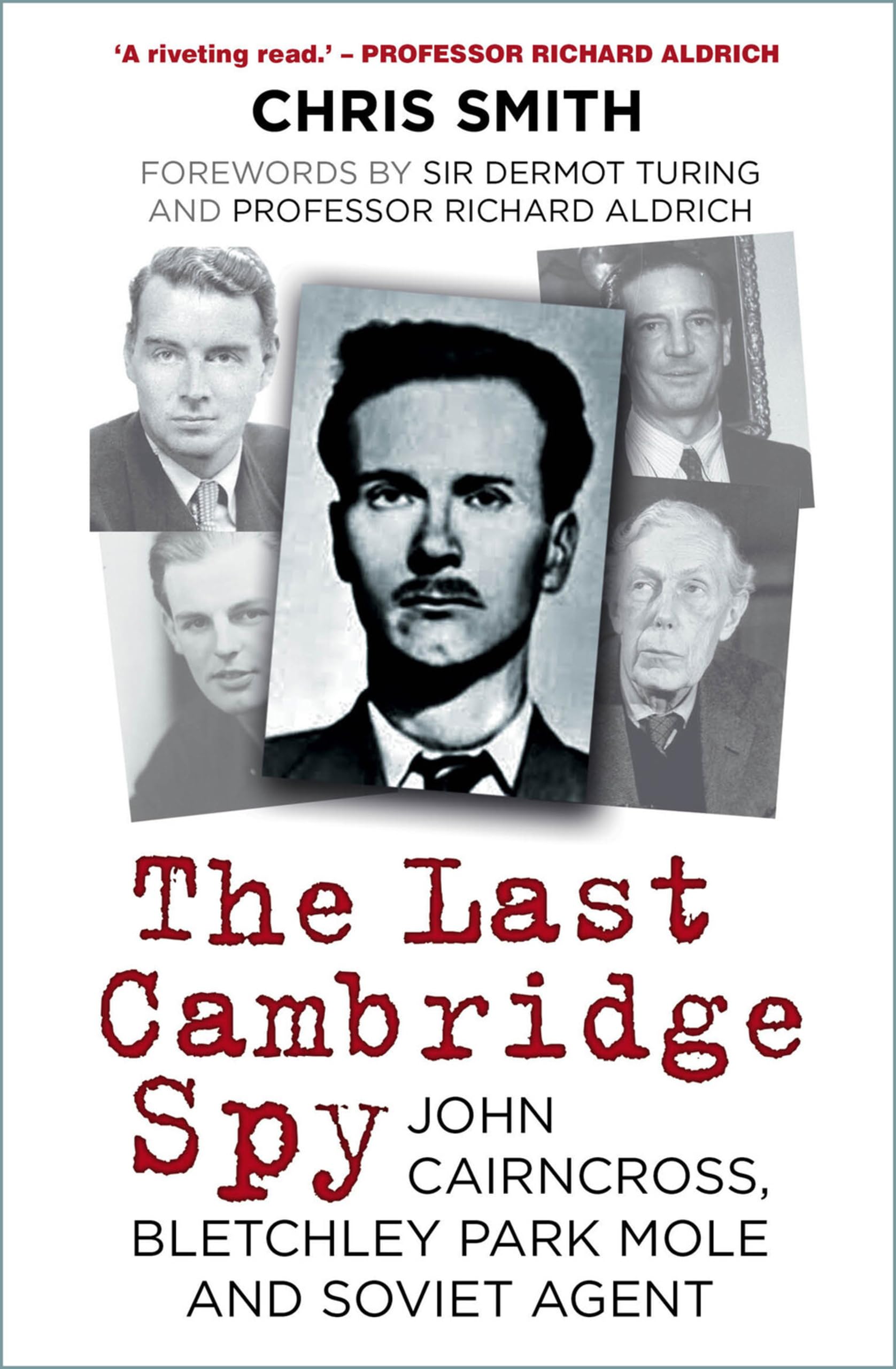
Buy The Last Cambridge Spy: John Cairncross, Bletchley Codebreaker and Soviet Double Agent by Christopher Smith (ISBN: 9780750981477) from desertcart's Book Store. Everyday low prices and free delivery on eligible orders. Review: A great introduction to spy history - Really enjoyed this book! Smith has brought the shadiest of the 'Cambridge spies' into the light for a closer look. Not only focusing on his spy work, but also looking at the formative years of The Spy Who Didn't Quite Fit In, and going on to explore his life after he spied for the Soviet Union, means that this book creates a much more rounded image of quite a complicated man. It's an engaging account of how Cairncross arrived at Cambridge following a fairly lowly upbringing in a Scottish mining area, and his subsequent attempts to manage spying whilst navigating his work in places such as the Foreign Office and Bletchley. Never being accepted by the public school boys he worked with, and never quite getting the hang of spying, meant that his journey as a Soviet mole was bumpy to say the least. Smith tells an entertaining story whilst adhering to sound historical analysis - a must read for anyone looking for a way in to learning more about spy history. Review: A bit dull. - Covers the basics.


| Best Sellers Rank | 412,362 in Books ( See Top 100 in Books ) 149 in Cold War History 380 in British Historical Biographies from 1901 Onwards 564 in Espionage Biographies |
| Customer reviews | 4.0 4.0 out of 5 stars (99) |
| Dimensions | 15.6 x 2.54 x 23.39 cm |
| ISBN-10 | 0750981474 |
| ISBN-13 | 978-0750981477 |
| Item weight | 544 g |
| Language | English |
| Print length | 256 pages |
| Publication date | 13 May 2019 |
| Publisher | The History Press |
E**N
A great introduction to spy history
Really enjoyed this book! Smith has brought the shadiest of the 'Cambridge spies' into the light for a closer look. Not only focusing on his spy work, but also looking at the formative years of The Spy Who Didn't Quite Fit In, and going on to explore his life after he spied for the Soviet Union, means that this book creates a much more rounded image of quite a complicated man. It's an engaging account of how Cairncross arrived at Cambridge following a fairly lowly upbringing in a Scottish mining area, and his subsequent attempts to manage spying whilst navigating his work in places such as the Foreign Office and Bletchley. Never being accepted by the public school boys he worked with, and never quite getting the hang of spying, meant that his journey as a Soviet mole was bumpy to say the least. Smith tells an entertaining story whilst adhering to sound historical analysis - a must read for anyone looking for a way in to learning more about spy history.
S**H
A bit dull.
Covers the basics.
A**R
Interesting
This is a very complex story about a spy that appears to have alluded the authorities for a considerable period of time. The style is very methodical and absorbing, although at times difficult to follow, nevertheless the author presents the details clearly. Whether there is still more to reveal is in my opinion still to be discovered?
A**R
A must read
This is an amazing overlook at the Cambridge Spy John Cairncross. Smith expertly explores the life of Cairncross and creates a balanced and enjoyable book to read. This is not an autobiography and so people should not be expecting this going in. Smith explores more than just the basic details of Cairncross' life but delves into more depths and themes which support this largely ignored part of spy history. A must-read for anyone who is even vaguely interested in the history of espionage!
D**M
The fifth man
Yet again another fantastic spy book with unseen facts and information about the fifth member of the Cambridge spy ring
D**N
Well Researched and Lucid Biography of the Fifth Man
This is a truly excellent, supremely well researched, lucid book describing the life and career of John Carncross, the fifth Cambridge spy. The author, Chris Smith, has gone through the primary sources, newspaper articles and revelations from Russian defectors, to put together what must now be the definitive story of Cairncross. In so doing Smith has revealed the shortcomings and lack of honesty in the autobiography published by Cairncross. Cairncross, from a working class Glasgow background, was a highly gifted person with regard to languages and perhaps this self-knowledge fed his arrogant and cantankerous nature and his loathing of those higher class individuals who, he thought, despised him. Despite Cairncross down-playing his role as a spy and suggesting he only supported the Soviet Union during the war against fascism, in fact his work continued until about 1952 and only stopped after his loss of a job in the Civil Service. The fear of detection following the defection of Burgess and Maclean and subsequent investigations also made him relieved to give up work to which he was not well suited and often incompetent. However, the Russian archives reveal that Cairncross had been very useful to them. As with his fellow spies from Trinity College, Cambridge, there was no attempt to prosecute Cairncross for lack of evidence that could be used in court. The book contains a fascinating friendship with the well-known author Graham Greene. This is a very interesting, very readable, story about an interesting and gifted person whose arrogance lead him to betray his country. It is more than a spy story; it is full well balanced biography.
A**R
Interesting but superficial
This latest addition to the literature on the 'Cambridge Spies' is interesting as far as it goes. However, considerable space in the book is devoted to discussing the activities of the other Cambridge spies rather than Cairncross himself. Even when the book does focus on Cairncross the account of his activities is somewhat superficial, with an over-reliance on secondary sources. The author never seems to get inside the mind of Cairncross, contenting himself with references to his 'awkwardness' and speculation about how he might have resented his treatment by his more upper class colleagues. However, the author's identification of the fear of fascism as a prime motivating factor in Cairncross's decision to spy for the Soviet Union - seen as the primary bulwark against Nazi Germany - certainly rings true. This has perhaps still not been sufficiently recognised as the main reason why Cairncross and the other Cambridge spies did what they did and the author deserves credit for drawing attention to this crucial point. As the author mentions, other Cambridge students at the time decided to fight fascism by going to fight in the Spanish civil war against Franco. The Cambridge spies chose to fight fascism in a more secretive way by assisting the Soviet Union as it prepared for the inevitable showdown with Nazi Germany. They then continued to pass on secret information to the Soviet Union after the war had broken out. Since it is now generally agreed that the Soviet Union was primarily responsible for the defeat of Nazi Germany, can it really be said that the Cambridge spies made the wrong choice?
A**R
Good Service
Arrived promptly and a good read!
M**D
Good
C**T
Very good for those of us with an interest in that narrow episode of espionage known as The Cambridge Five. Dr. Chris Smith does a nice and balanced job of giving the reader the known facts on the life and and dark deeds of John Cairncross, one of the lesser lights in the five man episode. Cairncross was never brought to justice by the British for helping the Soviets during World War II. He afterwards lived a fairly long and active life, mostly on the continent and involving himself in academic writing and literary translations. He did not defect, as others did, to Moscow. And, he was not remorseful.
Trustpilot
Hace 2 días
Hace 3 semanas