We remain fully operational. Our teams are working around the clock to ensure your deliveries continue safely.

Descargar la aplicación


Servicios al cliente
Sobre nosotros
Copyright © 2025 Desertcart Holdings Limited
Descargar la aplicación
![Rebecca [DVD]](/_next/image?url=https%3A%2F%2Fm.media-amazon.com%2Fimages%2FI%2F41eL%2BDd3MfL.jpg&w=3840&q=75)
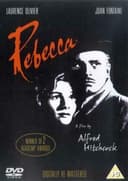
Laurence Olivier, Joan Fontaine Rebecca was named Best Picture in 1940 by the Academy of Motion Picture Arts and Sciences, but chances are it would win in any year. This brilliant adaptation of Daphne du Maurier's celebrated novel won virtually every accolade imaginable thanks to masterful direction by Alfred Hitchcock. An all time classic, this is as chilling and suspenseful today as when it was first released. Whilst on holiday a young timid ladies' companion (Joan Fontaine) meets handsome and wealthy widower Maxim de Winter (Laurence Olivier) whose wife Rebecca has recently died in a boating accident. The two fall in love and marry. However, her joy is short loved when she returns to the de Winter estate and soon discovers that Rebecca still has a strange, unearthly hold over everyone there. Special Features Photo Gallery Star Biographies Review: Rebecca - Criterion edition review - Note - this is a region 1 DVD and will require a multi-region player. If you've looked up this edition it's a pretty safe bet you're already familiar with Rebecca and wondering if the Criterion edition is worth the price, so I won't say too much about the film itself. Alfred Hitchcock's first Hollywood film and the only Hitchcock feature to win the Academy Award for Best Picture, Rebecca is one of those films that holds up wonderfully across repeat viewings. Boasting a superb cast (the then-unproven Joan Fontaine was the big gamble, but her performance now outshines Laurence Olivier's. Judith Anderson and George Sanders are also great), a menacing atmosphere leavened with well-judged wit, and a vision of Manderley steeped in Gothic splendour and gloom, it's a beautiful and still very challenging film in its treatments of class, gender and sexuality. The digitally restored version of the film presented on this two-disc Criterion Collection edition looks and sounds great, but the chances are that if you're considering forking out £30+ for it the extras will be just as important a consideration. It may seem like I'm stating the obvious, but you'll get the greatest value out of this edition if you're really interested in finding out about the film's production and original release. The extras are extremely informative, but many are (necessarily) presented in text form, making this a better purchase for academics and big film buffs than people who simply want a copy of the film (there are much cheaper region 2 editions for sale in the UK). For those who -are- looking for an extensive behind-the-scenes look, though, the DVD represents an extraordinary collection of archival documents, beautifully presented and rich with accessible academic insight. The extras are collected under four headings. (1) 'Dreams' includes material about the following: the rather uncanny influence that several of Daphne Du Maurier's life experiences had on her novel (complete with interesting photographs); the film's differences from the novel; correspondence between producer David O. Selznick, famous for his extensive memos and intensive involvement in productions, and Val Lewton, Hitchcock and various others regarding the casting of the unnamed heroine, the Production Code-baiting plot point that proved a major obstacle in bringing the story to the screen and Selznick's lengthy critique of the original screenplay written under Hitch's supervision. A fair chunk of this material will be familiar to anyone who's read Rudy Behlmer's fascinating tome Memo from David O. Selznick, but the segment also includes location scout and production photos and, best of all, screen tests for five of the actresses who auditioned for the main role (along with wardrobe and make-up tests). (2) 'Fruition' includes more Selznick correspondence; a deleted scene; tests for Rebecca's 'curious, slanting hand'-writing; set stills; and audience responses from one of the original test screenings, which make for quite an interesting read. (3) 'Ballyhoo' includes publicity photos, posters, ad slicks (which basically just trumpet the film's lengthy run in cinemas and are the kind of thing you'd find in Variety) and ads for a perfume released in conjunction with the film. There's also a re-issue trailer and some brief footage from the Oscar ceremony showing some fun interaction between Hitch and Fontaine. You'll also find fascinating 1986 telephone interviews between scholar Leonard J. Leff (author of a very interesting book on Hitchcock and Selznick's four-picture partnership) and Fontaine and Judith Anderson that reveal something of the actresses' working relationship with Hitchcock and their experiences on set. (4) 'Broadcast' includes three radio adaptations from 1938, 1941 and 1950 (conveniently split into chapters), which make for interesting comparison with the film. There is also a booklet that includes a short essay by major Hitchcock scholar Robin Wood and a longer piece giving production background by George Turner (these can also be found on the Criterion website if you want a taster). Overall, it's an impressive collection of info on a fascinating production. The picture and sound on the film is superb, and completists will love this edition, but cash-strapped students may wish to look elsewhere for alternate sources and archives of information before buying. Review: a gothic gem - This is one of Hitchcock's best films, his first for Hollywood. While it has his traditional themes of the murder mystery, there is an additional level of psychological realism that is missing in most of his later films, all in a splendidly atmospheric gothic romance, complete with a dark and ruined aristocratic mansion and the stuffy cruelty of the British upper classes and their servants. I will describe the setup of the plot, but not reveal any spoilers. Fontaine is a young lady down on her luck, working as a companion - a kind of servant and sycophant - for an aging matron on vacation in the Riviera. The old lady is oppressive in her demands and expectation that Fontaine will submit to her whims without question, a cipher to intimidate and humiliate. But Fontaine's youthful radiant beauty gains the attention of a mysterious widower, Maxim, played by Olivier (he too is young, but always looks old). They begin a furtive romance, but there is something extremely dark and almost dead about him, a pull from another life or presence. Once married - and warned with the cruelest condescension by her former employer that she will never be able to handle her new responsibilities - they move into a massive mansion in England. The servants, in particular the head woman, declare a kind of war on the young lady, who accepts her role yet is intimidated by their apparent sophistication and expectations. The terrible presence in the house is the departed Rebecca, whom everyone seems to idolize and love. Fontaine must fight this, feeling her husband compares her unfavorably. With all these pressures, she becomes depressed and ever more fearful, lost amidst characters whose motivations are impossible to understand. What happened to her? Is there any chance she can find peace, if not happiness, with Maxim? These questions plague the girl as she explores the forbidden wing of the mansion. Her life seems to be going nowhere, as stagnant as her marriage begins to feel. Then suddenly, an incident opens Maxim to her, and he confides in her finally. Things are not what they seemed and a difficult imbroglio follows that involves violence and accusations, climaxing in destruction. While romantic, the buildup is both frightening and depressing, an odd combination but completely believable. Though it now appears as a kind of relic, this is a great viewing experience for film buffs and Hitchcock fans, but it should be entertaining for casual viewers as well. Warmly recommended. It is a masterpiece and the acting is first rate.
| ASIN | B00004YN5Y |
| Actors | George Sanders, Joan Fontaine, Judith Anderson, Laurence Olivier, Nigel Bruce |
| Aspect Ratio | 4:3 - 1.33:1 |
| Best Sellers Rank | 17,242 in DVD & Blu-ray ( See Top 100 in DVD & Blu-ray ) 1,616 in Horror (DVD & Blu-ray) 1,665 in Crime (DVD & Blu-ray) 2,223 in Thriller (DVD & Blu-ray) |
| Country of origin | United Kingdom |
| Customer reviews | 4.6 4.6 out of 5 stars (1,860) |
| Director | Alfred Hitchcock |
| Is discontinued by manufacturer | No |
| Language | English |
| Media Format | PAL |
| Number of discs | 1 |
| Package Dimensions | 18.8 x 13.6 x 1.6 cm; 80 g |
| Producers | David O. Selznick |
| Release date | 4 Oct. 2004 |
| Run time | 2 hours and 6 minutes |
| Studio | Prism Leisure Corporation |
| Writers | Joan Harrison, Robert E. Sherwood |
H**R
Rebecca - Criterion edition review
Note - this is a region 1 DVD and will require a multi-region player. If you've looked up this edition it's a pretty safe bet you're already familiar with Rebecca and wondering if the Criterion edition is worth the price, so I won't say too much about the film itself. Alfred Hitchcock's first Hollywood film and the only Hitchcock feature to win the Academy Award for Best Picture, Rebecca is one of those films that holds up wonderfully across repeat viewings. Boasting a superb cast (the then-unproven Joan Fontaine was the big gamble, but her performance now outshines Laurence Olivier's. Judith Anderson and George Sanders are also great), a menacing atmosphere leavened with well-judged wit, and a vision of Manderley steeped in Gothic splendour and gloom, it's a beautiful and still very challenging film in its treatments of class, gender and sexuality. The digitally restored version of the film presented on this two-disc Criterion Collection edition looks and sounds great, but the chances are that if you're considering forking out £30+ for it the extras will be just as important a consideration. It may seem like I'm stating the obvious, but you'll get the greatest value out of this edition if you're really interested in finding out about the film's production and original release. The extras are extremely informative, but many are (necessarily) presented in text form, making this a better purchase for academics and big film buffs than people who simply want a copy of the film (there are much cheaper region 2 editions for sale in the UK). For those who -are- looking for an extensive behind-the-scenes look, though, the DVD represents an extraordinary collection of archival documents, beautifully presented and rich with accessible academic insight. The extras are collected under four headings. (1) 'Dreams' includes material about the following: the rather uncanny influence that several of Daphne Du Maurier's life experiences had on her novel (complete with interesting photographs); the film's differences from the novel; correspondence between producer David O. Selznick, famous for his extensive memos and intensive involvement in productions, and Val Lewton, Hitchcock and various others regarding the casting of the unnamed heroine, the Production Code-baiting plot point that proved a major obstacle in bringing the story to the screen and Selznick's lengthy critique of the original screenplay written under Hitch's supervision. A fair chunk of this material will be familiar to anyone who's read Rudy Behlmer's fascinating tome Memo from David O. Selznick, but the segment also includes location scout and production photos and, best of all, screen tests for five of the actresses who auditioned for the main role (along with wardrobe and make-up tests). (2) 'Fruition' includes more Selznick correspondence; a deleted scene; tests for Rebecca's 'curious, slanting hand'-writing; set stills; and audience responses from one of the original test screenings, which make for quite an interesting read. (3) 'Ballyhoo' includes publicity photos, posters, ad slicks (which basically just trumpet the film's lengthy run in cinemas and are the kind of thing you'd find in Variety) and ads for a perfume released in conjunction with the film. There's also a re-issue trailer and some brief footage from the Oscar ceremony showing some fun interaction between Hitch and Fontaine. You'll also find fascinating 1986 telephone interviews between scholar Leonard J. Leff (author of a very interesting book on Hitchcock and Selznick's four-picture partnership) and Fontaine and Judith Anderson that reveal something of the actresses' working relationship with Hitchcock and their experiences on set. (4) 'Broadcast' includes three radio adaptations from 1938, 1941 and 1950 (conveniently split into chapters), which make for interesting comparison with the film. There is also a booklet that includes a short essay by major Hitchcock scholar Robin Wood and a longer piece giving production background by George Turner (these can also be found on the Criterion website if you want a taster). Overall, it's an impressive collection of info on a fascinating production. The picture and sound on the film is superb, and completists will love this edition, but cash-strapped students may wish to look elsewhere for alternate sources and archives of information before buying.
R**D
a gothic gem
This is one of Hitchcock's best films, his first for Hollywood. While it has his traditional themes of the murder mystery, there is an additional level of psychological realism that is missing in most of his later films, all in a splendidly atmospheric gothic romance, complete with a dark and ruined aristocratic mansion and the stuffy cruelty of the British upper classes and their servants. I will describe the setup of the plot, but not reveal any spoilers. Fontaine is a young lady down on her luck, working as a companion - a kind of servant and sycophant - for an aging matron on vacation in the Riviera. The old lady is oppressive in her demands and expectation that Fontaine will submit to her whims without question, a cipher to intimidate and humiliate. But Fontaine's youthful radiant beauty gains the attention of a mysterious widower, Maxim, played by Olivier (he too is young, but always looks old). They begin a furtive romance, but there is something extremely dark and almost dead about him, a pull from another life or presence. Once married - and warned with the cruelest condescension by her former employer that she will never be able to handle her new responsibilities - they move into a massive mansion in England. The servants, in particular the head woman, declare a kind of war on the young lady, who accepts her role yet is intimidated by their apparent sophistication and expectations. The terrible presence in the house is the departed Rebecca, whom everyone seems to idolize and love. Fontaine must fight this, feeling her husband compares her unfavorably. With all these pressures, she becomes depressed and ever more fearful, lost amidst characters whose motivations are impossible to understand. What happened to her? Is there any chance she can find peace, if not happiness, with Maxim? These questions plague the girl as she explores the forbidden wing of the mansion. Her life seems to be going nowhere, as stagnant as her marriage begins to feel. Then suddenly, an incident opens Maxim to her, and he confides in her finally. Things are not what they seemed and a difficult imbroglio follows that involves violence and accusations, climaxing in destruction. While romantic, the buildup is both frightening and depressing, an odd combination but completely believable. Though it now appears as a kind of relic, this is a great viewing experience for film buffs and Hitchcock fans, but it should be entertaining for casual viewers as well. Warmly recommended. It is a masterpiece and the acting is first rate.
J**A
Lleva un disco bluray con la película y un DVD con los extras. La calidad del film es bastante buena y ambos discos están prensados. Edición muy recomendable.
D**S
A haunting masterpiece by Alfred Hitchcock begins on a cliff over the Mediterranean near Monte Carlo. A man is uncomfortably close to the edge of the cliff and close to falling when a young woman (Joan Fontaine) yells, "No! Stop!". On a later occasion these two cross each others path again and they begin to spend more time together. The young woman is suppose to work for an older lady as a friend for hire; however, she has taken ill and the young lady is presented with more opportunity to spend time with the man whose name is George Fortescu Maximillian de Winter (Laurence Olivier), also known as Max. During the young woman's time in Monte Carlo she finds out from her benefactor that Max has recently lost his wife Rebecca in a drowning accident. On the day when her boss is about to go back the United States the young woman becomes panicky that she will not see Max again. Thus, she seeks him out, finds him, and he proposes to her. She becomes the new Mrs. de Winter. However, as she arrives at Max's estate, Manderley in Cornwall, England, she finds herself still living in the shadow of the departed Rebecca. Everything in Manderley reminds everyone of Rebecca and the new Mrs. de Winter begins to feel the ghost of Rebecca being near her. Rebecca is a brilliant film where Hitchcock triggers thoughts and feelings of suspense and suspicion through breathtaking cinematography, stunning sound, and meticulous detailed mise-en-scène. The film is based on a novel by Daphne Du Maurier, who also grew up in Cornwall. This story is a remarkably well adapted for film, since it can get anyone to feel the anxiety of the new Mrs. de Winter as she lives in Manderley. When the audience exhales, they will have received some two hours of suspense and careful character development that leaves them with a excellent film experience.
S**E
Qualità del B/N favolosa e soprattutto audio originale dell epoca, un pezzo di Storia del Cinema.
A**R
I watched "Rebecca" last night. Joan Fontaine is brilliant as the new Mrs. DeWinter. Mrs. Danverse does everything in her power to destroy the new Mrs. DeWinter. Mandalay is displayed like a manor of that era should. Just a great suspense and is a great movie. I recommend this one.
S**1
Oft habe ich diesen Film schon im Fernsehen gesehen, ebenso auf meiner alten Videocassette, die es nun nicht mehr gibt. Und jedes Mal gefiel mir der Film besser. Am 23.Oktober 13 lief er in arte und mein DVD-Recorder hatte seine Macken und nahm ihn nicht komplett auf. Nun habe ich ihn, dank der Kauf DVD und habe ihn mir schon dreimal angesehen. Joan Fontaine und Laurence Olivier spielen wirklich mehr als glaubwürdig. Der Film hat eine wahnsinns-Atmosphäre und Spannung, besonders als Maxim und seine junge Frau auf Schloß Manderley eintreffen und die Hausdame Mrs. Danvers mit ihrer kalten, düsteren Art und Erscheinung die neue Misses de Winter einschüchtert und schlecht berät um Zwietracht zwischen der jungen Frau und ihrem Mann zu säen, da sie, Mrs. Danvers, seine 1. Frau Rebecca, bei einem Unfall ums Leben gekommene (es stellt sich heraus, das es kein Unfall war) angebetet hatte wie eine Göttin, da sie eine sehr schöne, elegante und" ideale" Herrin von Manderley war, in jeder Art und Weise Dame von Welt darstellte, wie es hieß. Es scheint, als läge Rebeccas Schatten immer noch auf Manderley und seinen Bewohnern. Als wäre sie allgegenwärtig. Auch der Zuschauer wird in diesen Bann gefangen genommen und fühlt, wie die neue Misses de Winter. Als sie sich endlich mal gegen Mrs. Danvers Bevormundung und Erniedrigung wehrte, freute ich mich richtig mit. Passend in schwarzweiß gedreht, von Daphne du Maurier als Roman geschrieben, verfilmt durch Alfred Hitchcock, der auch hier wieder eine herausragende Arbeit ablieferte.
Trustpilot
Hace 2 días
Hace 2 semanas