We remain fully operational. Our teams are working around the clock to ensure your deliveries continue safely.

Descargar la aplicación


Servicios al cliente
Sobre nosotros
Copyright © 2025 Desertcart Holdings Limited
Descargar la aplicación

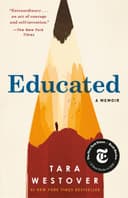
desertcart.com: Educated: A Memoir eBook : Westover, Tara: Books Review: A Harrowing Journey of Triumph and Resentment - Tara Westover's "Educated: A Memoir" is a compelling and at times infuriating account of one woman's remarkable journey from a life of isolation and ignorance to one of education, enlightenment, and self-discovery. This memoir delves deep into the complexities of family, faith, and the pursuit of knowledge, leaving readers with a mix of emotions that range from anger and frustration to admiration. Westover (the author) grew up in rural Idaho with a family that adhered to extreme religious and survivalist beliefs. Her parents' decision to forgo formal education and conventional medical care had profound consequences on Tara's upbringing, and that tends to be a focal point of the story. The book recounts the neglect, abuse, and outright danger she faced growing up, often (or always) at the hands of her own family members. I frequently found myself deeply appalled by the myriad ways in which Tara's family failed her, both emotionally and physically- so it was a bit difficult to read. As Tara strives for self-improvement through education, the book also exposes the challenges she faces when confronting her family's beliefs and her own internalized guilt and doubt. The memoir highlights the inherent tension between Tara's desire for knowledge and her loyalty to her family and upbringing. This internal struggle is a central theme throughout the narrative and adds depth to her story. Again, I found this to be really frustrating because, as the reader, her family's cruelty is blatant and unforgiveable, and I had a hard time sympathizing because they just were the worst. Westover's writing is evocative and brutally honest, which makes it difficult not to feel a deep sense of resentment toward her family, but it's essential to note that "Educated" is not merely a condemnation of her family's choices; it's also a testament to the power of education and the capacity for personal growth and transformation. Review: Very inspirational - I found the memoir very inspirational and also disturbing at times. Tara Westover has had a remarkable life. She writes about her journey from receiving no formal schooling in her formative years to earning a Phd ! She grew up in rural Idaho to a Mormon family and her father was anti government, schools, doctors/ hospitals. Some things sounded absolutely bizarre but it was normal to them. There are many life’s lessons to be learned from this book. Her story is about self discovery, the power of education and the inner conflict of being loyal to family and also challenging their beliefs.


| Best Sellers Rank | #4,480 in Kindle Store ( See Top 100 in Kindle Store ) #1 in Teen & Young Adult Biography eBooks #9 in Women's Biographies #58 in Biographies & Memoirs (Kindle Store) |
D**O
A Harrowing Journey of Triumph and Resentment
Tara Westover's "Educated: A Memoir" is a compelling and at times infuriating account of one woman's remarkable journey from a life of isolation and ignorance to one of education, enlightenment, and self-discovery. This memoir delves deep into the complexities of family, faith, and the pursuit of knowledge, leaving readers with a mix of emotions that range from anger and frustration to admiration. Westover (the author) grew up in rural Idaho with a family that adhered to extreme religious and survivalist beliefs. Her parents' decision to forgo formal education and conventional medical care had profound consequences on Tara's upbringing, and that tends to be a focal point of the story. The book recounts the neglect, abuse, and outright danger she faced growing up, often (or always) at the hands of her own family members. I frequently found myself deeply appalled by the myriad ways in which Tara's family failed her, both emotionally and physically- so it was a bit difficult to read. As Tara strives for self-improvement through education, the book also exposes the challenges she faces when confronting her family's beliefs and her own internalized guilt and doubt. The memoir highlights the inherent tension between Tara's desire for knowledge and her loyalty to her family and upbringing. This internal struggle is a central theme throughout the narrative and adds depth to her story. Again, I found this to be really frustrating because, as the reader, her family's cruelty is blatant and unforgiveable, and I had a hard time sympathizing because they just were the worst. Westover's writing is evocative and brutally honest, which makes it difficult not to feel a deep sense of resentment toward her family, but it's essential to note that "Educated" is not merely a condemnation of her family's choices; it's also a testament to the power of education and the capacity for personal growth and transformation.
N**I
Very inspirational
I found the memoir very inspirational and also disturbing at times. Tara Westover has had a remarkable life. She writes about her journey from receiving no formal schooling in her formative years to earning a Phd ! She grew up in rural Idaho to a Mormon family and her father was anti government, schools, doctors/ hospitals. Some things sounded absolutely bizarre but it was normal to them. There are many life’s lessons to be learned from this book. Her story is about self discovery, the power of education and the inner conflict of being loyal to family and also challenging their beliefs.
L**A
INSPIRATIONAL, HEARTBREAKING; EMOTIONALLY DISTURBINGLY
“In families like mine there is no crime worse than telling the truth.” —Tara Westover What does it mean to be educated? This book will make you think about what it really means to have an education—to be free to form your own opinions—and if the risks and sacrifices one might have to make in pursuit of knowledge, are worth it in the end. It’s message will both inspire and disturb you, and haunt you in your dreams. Educated is the true story about the author, Tara Westover, growing up in an isolated, dysfunctional, survivalist family with radical views, who, in contrast, live on a beautiful mountain in Idaho. As the youngest child in a family of seven—5 boys and 2 girls—Tara’s story is both heartbreaking and inspirational. Due to their father’s extreme political, religious, and moral beliefs, Tara and her siblings were not given access to medical attention or public education, nor did her parents believe in anything government related, believing it to be a system of brainwashing. The book is fairly well written and deeply poignant. It is definitely hard to put down, but it is also extremely disturbing on so many levels. There are plot holes and some timeline inconsistencies, and some horrific parts that are so emotional that they are difficult to imagine, let alone read. Tara’s experiences with her older brother, Shawn—whom she understandably both loved and hated—were not only shocking, they were heartbreaking. Equally appalling is the fact that ultimately most of the family chose to ignore or hide Shawn’s violent, unstable, abusive behavior and death threats, also choosing not to confront their father about it, even though both parents, admittedly the mother, knew what had been going on. They choose to protect it with a blind eye, possibly out of some kind of misguided family loyalty, shame, and more than likely, fear. But like Tara’s brother, Tyler, wrote in a letter to her: “This is a perverted idea of family loyalty. They claim faith, but this is not what the gospel teaches.” Once committed, Tyler never wavered in telling their truth, though it changed his relationship with his father. However, the only true hero of the story is Tara herself. Personally, I feel badly for Tara’s mother who appears to have been trapped and manipulated by her choices in a clouded vision of love, trying to keep peace. I also feel badly for Tara’s father, who was obviously in need of psychological and medical intervention. And I feel badly for each of Tara’s siblings and feel they probably coped in different ways with the only life and family they had known. None of us can really judge Tara or understand her family without having walked in their shoes. However, it is a sad fact that abusers and their enablers distort reality for their victims in order to cover up their crimes, so what Tara was able to accomplish—coming from her unhealthy broken environment—is truly remarkable!! Whether or not we become like our parents, is a choice we can all make. We can love and forgive those who have harmed us, without following in their footsteps. May this book help others in the same situation, to recognize psychological and physical abuse wrapped up in the arms of love, and find their own healing voice to break free! “You are not fool’s gold, shining only under a particular light. Whomever you become, whatever you make yourself into, that is who you always were. It was always in you. … You are gold.” —Tara Westover, Educated: A Memoir NOTE: It should be noted that the so called “Mormon” doctrine Tara was exposed to in her home, is not reflective in any way to the Christ-like loving teachings of the restored Church of Jesus Christ of Latter-day Saints. Tara’s view of religion was experienced through the eyes of her manipulative, controlling father, who was suffering from a bipolar type mental illness, although she didn’t know it at the time. Her father’s skewed view of religion unknowingly created numerous misconceptions in the home in which Tara was raised. All good things, when taken to an extreme, then mixed with the paranoia and darkness of mental illness, can turn good into evil.
M**E
Extraordinary memoir of a family that gives new meaning to the word dysfunctional.
This amazing book, destined to be a classic, kept me up at night and then well into the following day. It should be required reading for courses in psychology , counseling and family therapy. The memoir is of a young girl in a family of 7 children in a survivalist Mormon family. The patriarch was mentally ill, possibly bipolar. He used his extreme interpretation of Mormonism to emotionally abuse, bully and intimidate each member of the family including his long suffering and submissive wife. He was "better" than the rest whom he called gentiles and Illiterati. By claiming a direct line to God, the father achieved a power over his family that defies the imagination. He .had bouts of mania when he took chances with their safety and well being. But God would protect them.. Repeatedly he refused common sense protection of his family. God would protect them. His depressive bouts left him bedridden while requiring the family to take him to see his parents in Arizona to recover. He was catered to and idolized. Defying him was defying God. Women, especially, came in for his scorn. They were little more than indentured servants. As with so many of these male dominated groups, the women were perceived as temptresses and whores. Freud would have had a field day with that perception. The mother appeared to have pseudo insight but was incapable of supporting her children in the face of incomprehensible emotional and physical abuse.; The existence of this family within a Mormon community yet so outside the boundaries of reasonable Mormon tenants begs the question: what responsibility does the broader community have to protect vulnerable children? This is not about Mormonism but a small community and extended family in Idaho that turned away and ignored neglect and abuse when children did not have birth certificates, were not schooled even at home, were not immunized, not taken to doctors, were repeatedly seriously injured, were dressed in filthy rags, and were told the Government and Medical Establishment was the enemy... The enemy was actually within that home. The enemy was this very mentally ill and destructive father. I think of the Turpin family, abusing their children but hidden. This family was neglectful in plain sight. The litany of serious injuries sustained by the children was chilling as was the father's cavalier dismissal of their safety. But willful neglect was one thing, sustained and brutal sibling abuse is quite another. All dysfunctional families have lies they tell themselves, their teachers, authority figures, extended family etc. e;g;, yes, we are home - schooled (not). They have secrets. . But the worst secret and lie that persisted like a rotting cancer was the denial of severe physical abuse inflicted on several of the siblings over the years by one extraordinarily disturbed son. The son would have murderous rages and then the apologies would start...the injured sibling was forced to forgive. Classic spousal abuse but in this case it was a sibling causing the abuse who should have been removed from the family, placed in a treatment program. Instead no one talked about it, the siblings didn't tell each other what had happened until they compared notes as adults and most horrific of all, the parents denied it happened, demanded "proof" and allowed this monster of a son to continue abusing girlfriends, his wife, his dog Diego.(I would have had him locked up for life for just this part of the story). .. In the end, the parents and this sibling bullied the family into staying silent. Only the daughter, with great effort, recognized what was going on. She made many attempts to connect with her parents but they pulled closer into their delusions. This daughter, extraordinarily intelligent and determined escapes, becomes well educated but pays a price, doubting herself up until almost the end, The writing was clear and perceptive. The author has survived but the story is still chilling. Sometimes children from an abusive background only survive with a "parentectomy". I do wonder if the story is finished. The sadistic bully of a son now has a family of his own (wife and two children) that he has shown himself willing to abuse.
C**R
Perceptive, Compelling, Articulate, Harrowing, and Inspiring
Tara Westover is the youngest child of survivalist, fundamentalist, parents. It would be inaccurate to say that she was home-schooled since there was no effort at home to educate the children beyond teaching them to read. There was access to a very limited supply of books and most of the children were self-taught. The education provided by her parents was more an indoctrination into the father’s paranoid view of the world and his condemnation of any actions that did not conform to his rigid interpretation of Mormonism. Her story is harrowing, compelling, redemptive, and believable. It is so compelling and so fluently written that it was impossible to put down. This book was a selection for our book group and it lead to a very interesting discussion. The discussion covered the immediate topics of emotional abuse, physical abuse, mental health, religious extremism, political extremism, education, and families. Our discussion also covered more wide ranging issues such as how we are failing children who are removed from society, school, and view. We want to believe that parents should be able to love and care for their children without interference, but we know that not all parents will keep their children safe or provide what the children will need to fully function in this world. Tara deserved better, those children who were driven off a cliff deserved better, and there are thousands of invisible children who still deserve better. There are also very perceptive aspects of the book dealing with the role of women, and some scholarly discussion of the issue. Tara had to struggle to find her role as a woman after growing up in an environment where women are meant to be obedient and submissive. When she went to Brigham Young, she intended to study music so that she could lead a church choir. It sounded like an acceptable role for a woman to her. When her world opened, not only did she have no idea of her abilities, she began to reconsider her choices. At one point, she spoke with to a male student who was from a more mainstream Mormon family and applying to law school. She asked him if he would study law if he were a woman. He replied, “If I were a woman, I wouldn’t want to study it.” The conversation went downhill from there as he continued to insist that women are made differently and should only aspire to care for their children. Downhill again it went when he concluded that if he were a woman and wanted to study law, “I’d know something was wrong with me.” This thinking is not historic thinking, it was contemporaneous thinking. It was an enormous step for her to leave the mountain for the first time and she faced enormous objective challenges in both school work and personal behaviors. How heartbreaking is it that even after learning to succeed at the university, there were powerful forces at work to make her ”know her place” and stifle her basic right to be an adult in modern society? Fortunately, not everyone at the university shared that view of gender inequality and she received encouragement and sponsorship to go to Cambridge University. Tara Westover’s story is compelling. There are some who will read it and see elements of their lives and feel that they are not alone and perhaps encouraged that things can get better. Many of us will read it and wish that our parents were still alive so that we could call them and tell them thank you one more time for the loving, safe, environment that we took for granted. Her writing skills are extraordinary. She is an exceptionally perceptive person and she is able to express those perceptions in a way that helps the reader fully understand her thought processes. She is not just throwing out conclusions, indictments, or diagnoses. Her thoughts are worth reading, pondering, and remembering.
K**C
Tara overcomes the past that haunts her
Remarkable true story of a woman raised in a family filled with mental illness and abuse. In spite of no formal education in her youth, she receives a bachelor’s degree from BYU, a master’s from Cambridge, a fellowship from Harvard and PhD from Cambridge.
C**L
a celebration of educationa nd how it frees us.
This is one of the best books I have read in a long time and I wish I could give it 6 stars. This is a wonderful celebration of how liberating and empowerign education can be and how it allows us to think for ourselves, but it also shows the cost we pay for those who don't think for themselves if we do break away. This was a wonderful celebration of the mind and I loved every bit of it. I wasn't sure where this book was going because while told at a distance, Wetover keeps her thoughts largely as they existed at the time of the events in question, which shows her mental development, but also led me at first to worry that this was going to be some anti-intellectualism or wacko-conspiracy theorist book. It wasn't and I love that.
M**R
Not about Education
“Educated” by Tara Westover is a story about Tara’s life growing up in a Mormon family in Idaho. Even by Mormon standards, her father especially, is an outsider in his own faith tradition. Eccentric might be another term that one would use. Tara and some of her other younger siblings are never sent to school and their so-called “homeschooling” is basically no schooling. Her father believes school will contaminate his children to the world- a world in which he sees himself as God’s prophet. There are so many psychological and religious issues in this story that I can relate to on so many levels from my own personal experience. Although, I grew up Mennonite and not Mormon and the religious beliefs are different, the cultural dynamics are similar. First, Tara grows up in a family were the father is the ruler and women are seen as needing to always be submissive to men. This is a standard Mormon belief as well as one of many evangelical Christians, but her father uses that belief to control and to manipulate his family into a separate kind of lifestyle ruled by paranoia of everything “out there”, religious superiority, and an expectation of family loyalty. He does this through demanding an adherence to a distorted preaching of his faith as the one and true faith, by shaming his children if they so much as show any interest in how others live and attempt to copy that behavior. I couldn’t help but make that connection to my own father. Though my father was not nearly as off-center as Mr. Westover, I recognized the same behavior from my childhood. The result is the child feels alone and unable to connect with anyone often for life. Tara finds herself alienated from everyone in her world except her family. She sits alone in Sunday School and of course, she has no friends for two reasons. She feels different from everyone else and her father makes sure that she has no time or opportunity to cultivate friendships with others. He stresses that girls she meets are not good enough for her. Her father uses his faith to condemn them as not living the way a person of God should live. She, therefore, feels guilty for even wanting to associate with such “wicked” people. Tara, even after she leaves home and goes to college, finds herself unable to fit in and at odds with pretty much everyone. I don’t think she, for many years, recognizes that this is a result of the socialization or lack thereof from her home life. It is deeply and complexly rooted in the emotional, psychological, religious, and cultural dynamics of her early years. I find it interesting that she titles the book, “Educated,” as if obtaining an education is what moves her to a place in society that she is accepted as “normal” by others. The lack of education is a handicap and with certainty will keep her a captive in her father’s strange world, but it is not what makes her feel alone, strange, and like she doesn’t belong in the new world that she explores. Getting educated will not fix what is broken inside of her from her childhood. It only gives her a better platform from which the self can say, “Now I am somebody.” I did the same thing. I went to school and got a master’s degree and a job that is viewed with respect and awe. And while working in it, I feel strong, accepted, and like I have worth. But outside of it, I still feel friendless and different from everyone else. I watch Tara as the story progresses feeling this total alienation from others and struggling with it. From my own experience, I have learned the feeling never goes away. One simply has to learn to be comfortable with being alone and knowing that this is who I am. A part of her psychic also does the same thing that I did with my family even after leaving. It longs for the love of one’s parents and siblings. Tara, like me, keeps coming back to the family trying to convince them of reality and what is right. Even though on a logical level, one comes to understand that one’s family is mentally unhealthy, there is this deep seated needed to stay connected to them. Afterall, if those who bore you and nurtured you in childhood don’t love you, then why would anyone else especially God. Tara loses herself and becomes mentally unstable for a year after she realizes that her family does not want to know the truth that one son has been viciously abusing other members. Her parents are not interested in addressing the problems in the family and the highest value of loyalty makes everyone choose to accept “the delusion that they are one big happy family” which will allow them to remain part of the family. Tara realizes that the family “truth” and loyalty are more important than loving her. This is devastating to her. What really destroys her is that her mother betrays her in this battle to expose evil. Her mother one minute acknowledges to Tara that she knows about and will speak to her father about Shawn’s unacceptable behavior. But when there is an actual confrontation, her mother turns against her and sides with her father. Her mother tries to destroy Tara’s reputation and character. For the mother to stand against the patriarch of the family requires too high of a price. It reminds me so much of my own mother who swung from seemingly being rational to total denial and perpetrating vicious attacks on my character. It leaves one very confused and in the case of Tara, she cannot concentrate enough to even study. She falls into a deep depression. She had this deep-seated hope that her family would change because of her speaking the truth. But her family, like mine, was incapable of changing. Denial is a powerful substance that keeps the system stable no matter how dysfunctional. Only the individual has the power to change and often doesn’t because of these pressures from different aspects of society to conform, especially the family of origin and one’s religious community. If you enjoy exploring the complex dynamics of families, “Educated” is a compelling read. My books “If You Leave This Farm” and “No Longer a Child of Promise” also explore many of the same dynamics. My third book, “Once An Insider, Now Without a Church Home” explores the same dynamics and pressures within the evangelical church as found within the family. One is only a friend and a member as long as one follows the dictated expected behavior and norms. I appreciate all those who have the courage to write their stories. It helps me to know that I am really not alone and that I don’t need to be ashamed to share my own story.
Trustpilot
Hace 1 mes
Hace 4 días