We remain fully operational. Our teams are working around the clock to ensure your deliveries continue safely.

DOWNLOAD THE APP


Customer Services
Copyright © 2025 Desertcart Holdings Limited
DOWNLOAD THE APP
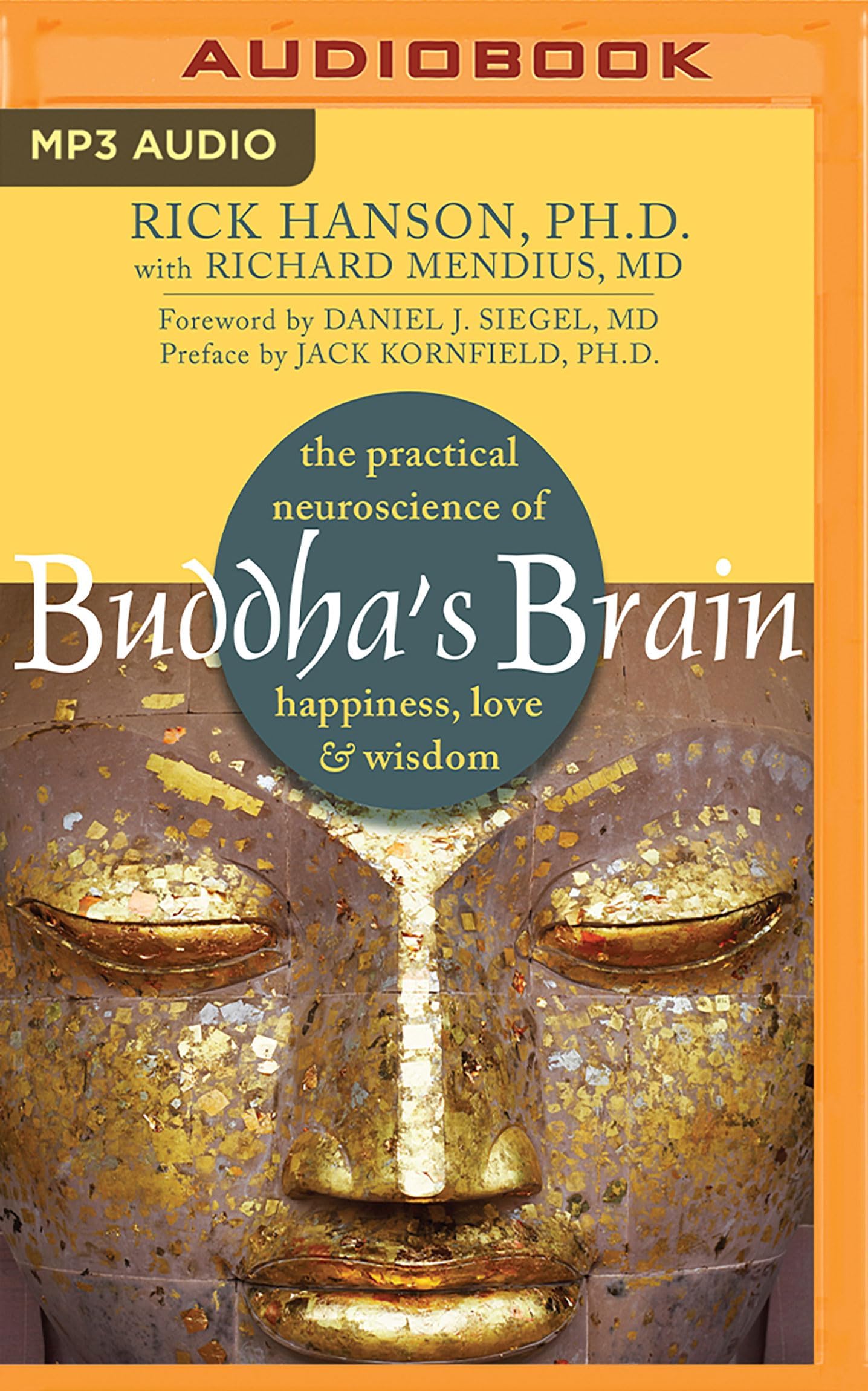
Review: Exceptionally Useful - I almost didn't read this one. I do check out reviews, and there were quite a few negative reviews on this...that was almost a year ago. I reached a point in therapy, and personal growth, where I needed more - and this book is where I found it. The information is presented in a very approachable way for lay people, and well cited for people with more background who may want to explore a given point more deeply. The book is well organized and moves through common understandings of how mindfulness can affect our lives in positive ways, and why/how that correlates to real changes in our brains, too. Yes, there is more to learn about the human brain, the mind, and our experience as beings. Yes, the authors have their own opinions based on their experience and their understanding of the science. Yes, the book is very readable, and not so technical that it becomes difficult to understand. If those are things that stop you from learning, then by all means, pass up the opportunity to read this book. If you're simply a person hoping to learn more about where you are, and how you can get somewhere better within the context of your own experience, maybe give it a shot. What do you have to lose? A few dollars and hours of your time in exchange for a good read, and the potential for growth and progress seems a fair deal to me, personally. I'd also like to observe that many of the less favorable reviews seem to come from the perspective of "What - there's actual effort involved? I can't be bothered." or "I shall dismiss this out of hand because it isn't too scientific to understand." and my favorite "There is a comma out of place, therefore the authors are discredited." Don't be bamboozled by smoke and mirrors - this is worth reading for your own benefit, using your own brain, to gain your own value from the material within. Review: Aha! My/Your brain has a negativity bias! - First third the best the rest a wee bit boring when it come to the various disciplines. However that may be because I'm familiar with many of the suggested processes. The AHA! for me in this book was NEGATIVE TRUMPS POSITIVE "Negative events generally have more impact than positive ones…As you can see, your brain has a built-in “negativity bias” My brain has a negativity bias! In other words and using computer software jargon. My brain's default setting is negativity compounded by the fact that negative feelings linger longer, and positive feelings and even though I have many more of them than negative feelings, the negative feelings have a greater Velcro-like stickiness." As to why negativity trumps positive and to put it in a context I'm very familiar with; playing golf. For literally decades I've attempted understand and work on to solutions to; Why is it negative feelings and images are so much more easily induced compared to positive feelings and images? Now I know what I'm fighting against. An inherent propensity towards negativity and thankfully I now know it's not just me. It was interesting to note the reference to HeartMath and the author's mention of the fact he'd moved more towards working on his heart feelings and not the "head stuff" (My words). Maybe it's because I'm a golfer searching for "the secret" I resonate with Neville Goddard's, "Feeling is the Secret" A great little book which along with working with the HeartMath processes has helped me to understand why the power of positive thinking is OK but it has to be followed up with the power of (heart-felt) feeling.
| Best Sellers Rank | #1,791,444 in Books ( See Top 100 in Books ) #823 in Buddhist Rituals & Practice (Books) #3,529 in Biology (Books) #5,244 in Books on CD |
| Customer Reviews | 4.4 out of 5 stars 1,654 Reviews |
L**H
Exceptionally Useful
I almost didn't read this one. I do check out reviews, and there were quite a few negative reviews on this...that was almost a year ago. I reached a point in therapy, and personal growth, where I needed more - and this book is where I found it. The information is presented in a very approachable way for lay people, and well cited for people with more background who may want to explore a given point more deeply. The book is well organized and moves through common understandings of how mindfulness can affect our lives in positive ways, and why/how that correlates to real changes in our brains, too. Yes, there is more to learn about the human brain, the mind, and our experience as beings. Yes, the authors have their own opinions based on their experience and their understanding of the science. Yes, the book is very readable, and not so technical that it becomes difficult to understand. If those are things that stop you from learning, then by all means, pass up the opportunity to read this book. If you're simply a person hoping to learn more about where you are, and how you can get somewhere better within the context of your own experience, maybe give it a shot. What do you have to lose? A few dollars and hours of your time in exchange for a good read, and the potential for growth and progress seems a fair deal to me, personally. I'd also like to observe that many of the less favorable reviews seem to come from the perspective of "What - there's actual effort involved? I can't be bothered." or "I shall dismiss this out of hand because it isn't too scientific to understand." and my favorite "There is a comma out of place, therefore the authors are discredited." Don't be bamboozled by smoke and mirrors - this is worth reading for your own benefit, using your own brain, to gain your own value from the material within.
S**D
Aha! My/Your brain has a negativity bias!
First third the best the rest a wee bit boring when it come to the various disciplines. However that may be because I'm familiar with many of the suggested processes. The AHA! for me in this book was NEGATIVE TRUMPS POSITIVE "Negative events generally have more impact than positive ones…As you can see, your brain has a built-in “negativity bias” My brain has a negativity bias! In other words and using computer software jargon. My brain's default setting is negativity compounded by the fact that negative feelings linger longer, and positive feelings and even though I have many more of them than negative feelings, the negative feelings have a greater Velcro-like stickiness." As to why negativity trumps positive and to put it in a context I'm very familiar with; playing golf. For literally decades I've attempted understand and work on to solutions to; Why is it negative feelings and images are so much more easily induced compared to positive feelings and images? Now I know what I'm fighting against. An inherent propensity towards negativity and thankfully I now know it's not just me. It was interesting to note the reference to HeartMath and the author's mention of the fact he'd moved more towards working on his heart feelings and not the "head stuff" (My words). Maybe it's because I'm a golfer searching for "the secret" I resonate with Neville Goddard's, "Feeling is the Secret" A great little book which along with working with the HeartMath processes has helped me to understand why the power of positive thinking is OK but it has to be followed up with the power of (heart-felt) feeling.
E**Y
A Manual on How to Change Your Brain
I have re-read this book three times--so far. It is one of the most valuable books that I have come upon in my entire life. Written in a clear conversational manner, it is full of the latest brain/body research, explaining the anatomy of the brain and nervous system and how it interacts with our body reactions and our emotions. In addition to this, using the information from MRIs and various new and old research, it provides practical application of this knowledge on the HOW to take control and change ourselves from the inside out. It also takes the perspective that we can learn to become more like Buddha and/or Jesus--by utilizing this very practical knowledge. Self-awareness, as taught by our greatest teachers, is the antidote to delusion and allows us to be in the driver seats of our lives. The greater the self-awareness, the less likely we are victimized by our past emotional conditioning and unexamined assumptions and prejudices. Among other things, it is a manual on how to manage ourselves, giving us knowledge on how we work as physical beings and how we can use this knowledge for our self-improvement. One of the main paths to change, as alluded to in this book, is changing one's inner dialog. Because of our nervous system predisposition to be alert to any possible danger, we often are unnecessarily alarmed and stressed and distressed, when we don't need to be. And the author provides exercises to recondition ourselves to feel more secure and loved and happy. I would like to put in a word for an organization that has really helped me change that inner-dialog, greatly reducing my anxiety, depression and anger problems that I had suffered with for sixty years. Recovery International, a non-profit organization, founded in 1937, provides the systematic practice in changing one's inner dialog. The point RI stresses, it is wonderful to have valuable knowledge--such as given in this book, but practicing it makes the difference. Yes we can change those synaptic pathways, but they don't change overnight. It's the systematic practice that makes the difference. Hopefully, those interested can find a convenient RI meeting close by. These weekly meetings are free--they do request a donation of $5.00, but it is totally up to you, whether to donate or not. To learn more about RI and to find out if there is a convenient meeting near you, go to [...]. RI also provides phone and online meetings. This information is available on the web site.
D**Z
Great book! & Thanks for the help, Amazon
This book is terrific. I do some counseling and spiritual direction and have recommended it to all of the people I work with. The writing is clear and (as far as I can tell) the science is up to date. There are several things that I have found useful about Buddha's Brain. Among them are: 1: (as noted in the intro) an understanding of the brain states that underlie happiness, love, and wisdom. 2: (also as noted in the intro) an understanding of how most effectively to change, given our neural reality. 3: The "Key Points" at the end of each chapter which quickly summarize the main points of the chapter. Although I am a Christian, I have read extensively in Buddhist literature to my great profit and I was expecting something rather explicitly Buddhist in nature. This is not the case. While Drs Hanson and Mendius use imagery and some terminology from Buddhism they have no proselytizing agenda here other than to help us understand our neuro-chemical reality and how best to use it to change for the good. In my original review I had complained that there was no TOC. A respondent to my review noted that her copy had a linked TOC. Well, I finally got around to asking Amazon if they could "upgrade" me to the newer edition -- they did. So... Great book and truly great service. Thanks Amazon
J**O
Good book, bad ending
Definitely a great book to know about the science behind Buddhist principles. A lot of easy to remember tips to apply on a daily basis. However, near the end has a major flaw and the author doesn't stay coherent. He says that we belong to a complex whole and we interact with other brings, which we must love and express compassion to. However, he never mentions lifestyle changes like veganism, which avoids causing suffering to other brings as much as possible, practised by Buddhist monks hundreds of years ago. The Nutrition part is absolutely disappointing and wrong. First he says that you should eat many vegetables, excellent, but with a hand size portion of protein. Really? You can't classify foods as one micronutrient. Example: meat has protein, but it also has cholesterol,saturated fats, hormones and more. I guess he didn't want to sound like an hypocrite saying that you should eat other animals, when previously he said that you should love and wish the best for them. Finally, he mentions a ton of supplements about vitamins, essential fatty acids, fitonutrients, etc. Again, nutrition works best as whole, not consuming tons of engineered substances and chemicals. I would advise the author to read the book "Whole" written by Colin Campbell.
C**W
The Science of Mindfulness
I have been learning about and practicing mindfulness and meditation for a few years now as a secular Buddhist. Many books and teachers emphasize the same skills, and while I practice them, I've never fully understood how and why they work until now. This book explains why our brains are wired for suffering and how meditation and mindfulness skills can help rewire our neural response systems. It teaches you why those skills work and why neuro-plasticity is so important. The more I understand how my brain functions, the better I've been able to detach from the guilt and resentment of my responses. And I've been able to go deeper with my practice because I understand why and how the skills I practice help change my response patterns. I highly recomend this book for any Buddhist practitioner or anyone wanting to get to the roots of why mindfulness works. It contains easy to understand science, comparisons to Buddhist techniques, and practical excercises to help apply the knowledge presented. This is now one of my top five books to recommend on Buddhism and mindfulness and meditation.
D**L
Book
Purchase as required reading for a yoga teacher class. Informative.
A**.
Life changing book. I recommend this book to any person that wants to know more about why being a go
Life changing book. I recommend this book to any person that wants to know more about why being a good human being brings happiness.
Trustpilot
2 weeks ago
1 day ago