We remain fully operational. Our teams are working around the clock to ensure your deliveries continue safely.

DOWNLOAD THE APP


Customer Services
Copyright © 2025 Desertcart Holdings Limited
DOWNLOAD THE APP
Buy anything from 5,000+ international stores. One checkout price. No surprise fees. Join 2M+ shoppers on Desertcart.
Desertcart purchases this item on your behalf and handles shipping, customs, and support to Mexico.
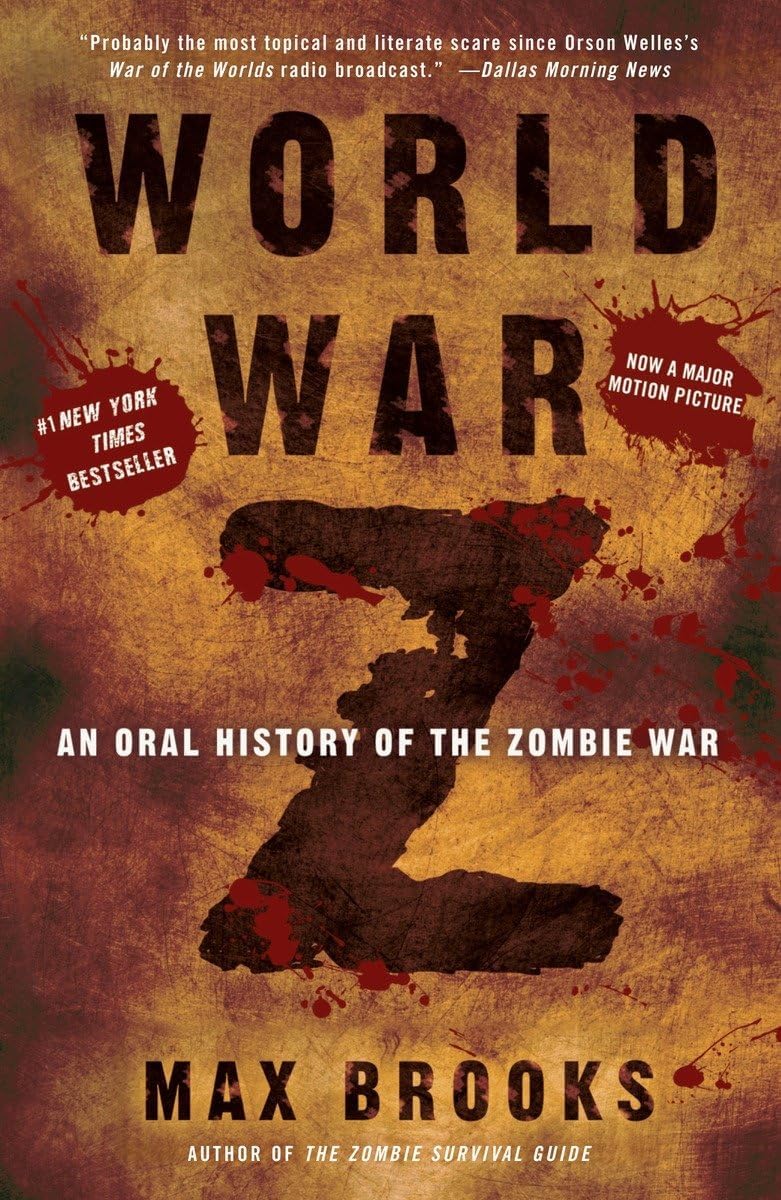
World War Z: An Oral History of the Zombie War [Brooks, Max] on desertcart.com. *FREE* shipping on qualifying offers. World War Z: An Oral History of the Zombie War Review: An Important Statement About Humanity - "World War Z: An Oral History of the Zombie War," by Max Brooks (Crown Publishing, 2006), is the follow-up to his bestseller "The Zombie Survival Guide" (Three Rivers Press, 2003), but in "World War Z," Brooks uses the zombie motif in a much more important way than is traditionally accomplished in other zombie fiction. He credits George Romero (director of "Night of the Living Dead," "Day of the Dead," "Dawn of the Dead," et al) as an inspiration for his work. Yet Brooks, in my opinion, reaches further into this subgenre and creates a greater work of fiction by using the zombie to make an important statement about the human condition. The novel purports to be a record of interviews conducted by a journalist following an apocalyptic war with the zombies. These are the recorded memories of people who survived those times and what they experienced. Hundreds of millions of zombies were formed by hundreds of millions of other zombies attacking human beings anywhere and everywhere and causing the near-extermination of the human race. Countries were evacuated, governments collapsed and reformed, and a whole new way of waging war had to be learned. There are many individual stories in the book and many of them could be considered short stories by themselves, but taken together they remind one of "American Psycho" or the movie "Starship Troopers." The stories are gory, exciting, and interesting, yet their real purpose is to provide a social commentary. Horror is the vehicle, but social change is the purpose. If "American Psycho" was all about the narcissism of the 1980's, and "Starship Troopers" was all about the propaganda that supports unnecessary wars, then "World War Z" is all about how we eat each other alive on a daily basis and think nothing of it. The theme of the novel is fictional zombies, but Brooks' zombies become a symbol for the dog-eat-dog mentality that is a very real and prevalent in our society today. Key to the symbol of the zombie is the fact that their brains must be destroyed in order to kill them. It's no wonder, really, because the zombie disease--the dog-eat-dog mentality--resides in the minds of people. And it proves to be a contagious mentality inasmuch as the more people treat each other badly, the more they want to treat each other badly. Toward the end of the book, Brooks' character, Jessica Hendricks, is a good example of the underlying occult motivations of a zombie mentality, and our reaction to her shows that the zombie virus is alive and well in all of us. In a thinly veiled reference to the existence of the radio personality, Howard Stern, she says: "He was doing his usual thing--fart jokes and insults and adolescent sexuality--and I remember thinking, "This man survived and my parents didn't." No, I try not to be bitter." Of course we can sympathize with her, but it's that very sympathy any of us would have that reveals the zombie contagion. For what she's really showing us is a thought process whereby it's perfectly okay to loathe another person simply because they exist. He should be dead and her mother should be alive--but this bitterness, in my opinion, ultimately becomes the zombie mentality, because justifiable as it may be, it is mindless and cruel in its implications. After all, those who love that radio show host wouldn't want to lose him either. One imagines Max Brooks might have found inspiration from The Cranberries in their 1994 song, "Zombie." The lyrics thereof describe almost the exact mentality he describes in WWZ. Of course, instead of a fictional zombie war, Dolores O'riordan sings about the real decades long war between the British and Northern Ireland. In her song, and in his book, the bottom line is created: The human race is infected with the very contagious disease of inhumanity. One walks away from this novel understanding the seeds of ultimate apocalypse live within the brains of each and every one of us--and that must be eradicated at all costs. That kind of brain must be destroyed. Inhumanity is inherent to the mind of man, but ultimately human beings have the ability to change their minds. And when we pull away from the fictional aspect of this theme and moral, we realize that the best way to destroy a zombie brain is simply to change our own minds. "World War Z" is a story rich in symbolism, irony, humor, horror, gore, excitement, and tragedy. It's a no-miss book for any lover of horror, and certainly any zombie aficionado. It pushes the boundaries of what even the godfather of zombies, George Romero, has established, and serves not only to entertain us but also to enlighten us. It's one of those books that put the "great" in great fiction. "World War Z" is soon to be a major motion picture by Plan B. Entertainment and comes out in 2012. It stars Brad Pit and is directed by Marc Forster. It will be quite something to see what they make of this story. I hope they retain its depth as well as its action and ghastly horror. Review: An Insightful Read for the Zombie Enthusiast - This was actually a really cool read that I would recommend to any zombie genre enthusiast looking for some insightful information on how a zombie apocalypse could possibly wipe out the human population. One of the biggest criticisms that the zombie genre comes into is that the United States military would easily be able to combat the zombie hordes, but this book gives some insight as to why that line of thinking is ridiculous. One example is that one of the "survivors" is detailing an account of his first interaction fighting the zombies and how he had been trained since boot camp to aim center mass of the target and not right between the eyes. This line of training made it difficult for the grunts to get accustomed to aiming for head shots. This book also really makes you think about other things such as how people have become so accustomed to modern day living that when the zombies attack and more or less send the Earth back into the Stone Age, many people simply are not ready for this type of living. A really good example of this is from a Wisconsin family who didn't know how to survive in the wild and a Japanese twenty-something who had been accustomed to simply sitting in front of a computer for most of his life. Many of these stories will really have you on the edge of your seat turning page after page wondering what's going to happen next. One of these stories is in the beginning of the book when a little girl and her family take refuge in a church and what happens when that church got overrun by zombies. There are multiple stories in this book that take you all over the globe and seeing how different nationals of different countries handled the outbreak and how the different militaries responded to the outbreak. For the most part, I loved this book. My only bone of contention with this book is the way it is written. Some people may disagree with me on this and that's fine, but I was not crazy about the fact that the book jumps around the world talking to different survivors at different times. In other words, the book is a collection of stories from around the world. I think it would have been better written if it was a continuous story focusing on either one person or a small group of people so that the book's not jumping all over the place. Then again, it probably was more of a diverse collection of tales by jumping all over the world telling the different stories. Many of the stories do reference one another, though, which is pretty cool. Also, this book does talk about where the outbreak started, but like most other movies or books in the zombie genre, this book does not point out exactly how the outbreak started. It makes references to human rabies, but nothing is confirmed. In summary, this is a cool book with some insightful views into a zombie outbreak/apocalypse. Most of the stories are typically no more than a dozen pages, so it makes for an easier read as you can pick up and leave off from a new story rather than leave off in the middle of a story (at least that was my case as I was only able to read at 30 minute clips on the train). Rather you're simply a fan of the zombie genre or you believe something like this could actually happen, it's a pretty good book that will make you think about survival preparation in a new way. I hope this helps!


| ASIN | 0307346617 |
| Best Sellers Rank | #8,850 in Books ( See Top 100 in Books ) #12 in Post-Apocalyptic Science Fiction (Books) #51 in War Fiction (Books) #64 in Science Fiction Adventures |
| Customer Reviews | 4.5 4.5 out of 5 stars (26,473) |
| Dimensions | 7.9 x 5.1 x 1 inches |
| Edition | First Edition |
| ISBN-10 | 9780307346612 |
| ISBN-13 | 978-0307346612 |
| Item Weight | 2.31 pounds |
| Language | English |
| Print length | 342 pages |
| Publication date | October 16, 2007 |
| Publisher | Three Rivers Press |
| Reading age | 13 - 17 years |
E**N
An Important Statement About Humanity
"World War Z: An Oral History of the Zombie War," by Max Brooks (Crown Publishing, 2006), is the follow-up to his bestseller "The Zombie Survival Guide" (Three Rivers Press, 2003), but in "World War Z," Brooks uses the zombie motif in a much more important way than is traditionally accomplished in other zombie fiction. He credits George Romero (director of "Night of the Living Dead," "Day of the Dead," "Dawn of the Dead," et al) as an inspiration for his work. Yet Brooks, in my opinion, reaches further into this subgenre and creates a greater work of fiction by using the zombie to make an important statement about the human condition. The novel purports to be a record of interviews conducted by a journalist following an apocalyptic war with the zombies. These are the recorded memories of people who survived those times and what they experienced. Hundreds of millions of zombies were formed by hundreds of millions of other zombies attacking human beings anywhere and everywhere and causing the near-extermination of the human race. Countries were evacuated, governments collapsed and reformed, and a whole new way of waging war had to be learned. There are many individual stories in the book and many of them could be considered short stories by themselves, but taken together they remind one of "American Psycho" or the movie "Starship Troopers." The stories are gory, exciting, and interesting, yet their real purpose is to provide a social commentary. Horror is the vehicle, but social change is the purpose. If "American Psycho" was all about the narcissism of the 1980's, and "Starship Troopers" was all about the propaganda that supports unnecessary wars, then "World War Z" is all about how we eat each other alive on a daily basis and think nothing of it. The theme of the novel is fictional zombies, but Brooks' zombies become a symbol for the dog-eat-dog mentality that is a very real and prevalent in our society today. Key to the symbol of the zombie is the fact that their brains must be destroyed in order to kill them. It's no wonder, really, because the zombie disease--the dog-eat-dog mentality--resides in the minds of people. And it proves to be a contagious mentality inasmuch as the more people treat each other badly, the more they want to treat each other badly. Toward the end of the book, Brooks' character, Jessica Hendricks, is a good example of the underlying occult motivations of a zombie mentality, and our reaction to her shows that the zombie virus is alive and well in all of us. In a thinly veiled reference to the existence of the radio personality, Howard Stern, she says: "He was doing his usual thing--fart jokes and insults and adolescent sexuality--and I remember thinking, "This man survived and my parents didn't." No, I try not to be bitter." Of course we can sympathize with her, but it's that very sympathy any of us would have that reveals the zombie contagion. For what she's really showing us is a thought process whereby it's perfectly okay to loathe another person simply because they exist. He should be dead and her mother should be alive--but this bitterness, in my opinion, ultimately becomes the zombie mentality, because justifiable as it may be, it is mindless and cruel in its implications. After all, those who love that radio show host wouldn't want to lose him either. One imagines Max Brooks might have found inspiration from The Cranberries in their 1994 song, "Zombie." The lyrics thereof describe almost the exact mentality he describes in WWZ. Of course, instead of a fictional zombie war, Dolores O'riordan sings about the real decades long war between the British and Northern Ireland. In her song, and in his book, the bottom line is created: The human race is infected with the very contagious disease of inhumanity. One walks away from this novel understanding the seeds of ultimate apocalypse live within the brains of each and every one of us--and that must be eradicated at all costs. That kind of brain must be destroyed. Inhumanity is inherent to the mind of man, but ultimately human beings have the ability to change their minds. And when we pull away from the fictional aspect of this theme and moral, we realize that the best way to destroy a zombie brain is simply to change our own minds. "World War Z" is a story rich in symbolism, irony, humor, horror, gore, excitement, and tragedy. It's a no-miss book for any lover of horror, and certainly any zombie aficionado. It pushes the boundaries of what even the godfather of zombies, George Romero, has established, and serves not only to entertain us but also to enlighten us. It's one of those books that put the "great" in great fiction. "World War Z" is soon to be a major motion picture by Plan B. Entertainment and comes out in 2012. It stars Brad Pit and is directed by Marc Forster. It will be quite something to see what they make of this story. I hope they retain its depth as well as its action and ghastly horror.
S**X
An Insightful Read for the Zombie Enthusiast
This was actually a really cool read that I would recommend to any zombie genre enthusiast looking for some insightful information on how a zombie apocalypse could possibly wipe out the human population. One of the biggest criticisms that the zombie genre comes into is that the United States military would easily be able to combat the zombie hordes, but this book gives some insight as to why that line of thinking is ridiculous. One example is that one of the "survivors" is detailing an account of his first interaction fighting the zombies and how he had been trained since boot camp to aim center mass of the target and not right between the eyes. This line of training made it difficult for the grunts to get accustomed to aiming for head shots. This book also really makes you think about other things such as how people have become so accustomed to modern day living that when the zombies attack and more or less send the Earth back into the Stone Age, many people simply are not ready for this type of living. A really good example of this is from a Wisconsin family who didn't know how to survive in the wild and a Japanese twenty-something who had been accustomed to simply sitting in front of a computer for most of his life. Many of these stories will really have you on the edge of your seat turning page after page wondering what's going to happen next. One of these stories is in the beginning of the book when a little girl and her family take refuge in a church and what happens when that church got overrun by zombies. There are multiple stories in this book that take you all over the globe and seeing how different nationals of different countries handled the outbreak and how the different militaries responded to the outbreak. For the most part, I loved this book. My only bone of contention with this book is the way it is written. Some people may disagree with me on this and that's fine, but I was not crazy about the fact that the book jumps around the world talking to different survivors at different times. In other words, the book is a collection of stories from around the world. I think it would have been better written if it was a continuous story focusing on either one person or a small group of people so that the book's not jumping all over the place. Then again, it probably was more of a diverse collection of tales by jumping all over the world telling the different stories. Many of the stories do reference one another, though, which is pretty cool. Also, this book does talk about where the outbreak started, but like most other movies or books in the zombie genre, this book does not point out exactly how the outbreak started. It makes references to human rabies, but nothing is confirmed. In summary, this is a cool book with some insightful views into a zombie outbreak/apocalypse. Most of the stories are typically no more than a dozen pages, so it makes for an easier read as you can pick up and leave off from a new story rather than leave off in the middle of a story (at least that was my case as I was only able to read at 30 minute clips on the train). Rather you're simply a fan of the zombie genre or you believe something like this could actually happen, it's a pretty good book that will make you think about survival preparation in a new way. I hope this helps!
R**2
Great read, shame about the crappy movie though :(
C**S
An intelligent, thoughtful book. The best kind of science fiction: realistic and sociologically relevant. Really exploring the "what if". I especially love that it takes place around the world, not just the US, that so many perspectives are covered and how the story progresses through the different accounts (without ever there the need for an actual 1-man storyline). If you've seen the movie, don't hesitate and read the book. The movie has the same name but has NOTHING in common with the book. Literally nothing.
V**Y
World War Z is an absolutely amazing read! It builds the story in a slow and methodical fashion, but also highlights the struggles and issues one might face in the event of a zombie outbreak! Max Brooks basically predicted the future with his stunningly detailed and informative book, while also not skimping out on the story itself! 11/10! Must read!
N**R
World War Z by Max Brooks Its very rare to find a peice of creative writing that goes beyond just being a clever use of words, structures and gimmicks that is worthy of commercial and literary success; and yet World War Z is just such a work. A great many people will be put off by the oral history (interview) format used by Max Brooks, but personally I found it quite interesting and absorbing. Max Brooks casts himself as the interviewer travelling the world on behalf of the UN in the aftermath of the zombie apocalypse to chronicle the international experiences of the before, during and after of WWZ. The book is structured in this temporal format, with eye witness accounts telling the human side to each country's experiences. This allows for objectivity on behalf of the author, whilst telling very subjective stories. It could almost be read as a series of short-stories, or mini episodes. What makes this a difficult read for some people will be the lack of dates to give people a better sense of how much time has passed and the sequence of world events. Also, the lack of any real main protagonist, including the interviewer himself may leave a vacuum for some readers to fully empathize with the characters. I would have personally liked to have read about the experiences of the Muslim world too which were limited to an Iranian and an American Pakistani. However, what this book does really well is tell a wider story, capturing the consequences of a huge global event and reinforcing the idea of inter-connectivity and idiocy of sectarian and political differences in light of the big issues that effect us as a species. Max Brooks successfully delivers a nightmarish vision of the challenges that lie ahead of humanity in the case of a major global upheaval and how unprepared we are for the harsh realities that we will have to face, one day, as a species. I am certain that this book will become a bible for all future zombie stories in the same way that George Romero's Night of the Living Dead has served to inspire past writers and film-makers. For this reason alone, World War Z deserves a full set of stars
M**O
Sin duda uno de los mejores libros de zombis que he leído, engancha desde el primer momento y la visión global de todo el conflicto lo hace único. Importante: No tiene absolutamente nada que ver con la película, sólo el título.
Trustpilot
3 days ago
2 months ago