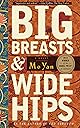
Big Breasts and Wide Hips: A Novel (Arcade Classics)
Product ID: 13669105
Desertcart purchases this item on your behalf and handles shipping, customs, and support to Mexico.
In his latest novel, Mo Yan—arguably China’s most important contemporary literary voice—recreates the historical sweep and earthy exuberance of his much acclaimed novel Red Sorghum . In a country where patriarchal favoritism and the primacy of sons survived multiple revolutions and an ideological earthquake, this epic novel is first and foremost about women, with the female body serving as the book’s central metaphor. The protagonist, Mother, is born in 1900 and married at seventeen into the Shangguan family. She has nine children, only one of whom is a boy—the narrator of the book. A spoiled and ineffectual child, he stands in stark contrast to his eight strong and forceful female siblings. Mother, a survivor, is the quintessential strong woman who risks her life to save several of her children and grandchildren. The writing is picturesque, bawdy, shocking, and imaginative. The structure draws on the essentials of classical Chinese formalism and injects them with extraordinarily raw and surprising prose. Each of the seven chapters represents a different time period, from the end of the Qing dynasty up through the Japanese invasion in the 1930s, the civil war, the Cultural Revolution, and the post-Mao years. Now in a beautifully bound collectors edition, this stunning novel is Mo Yan’s searing vision of twentieth-century China. Review: important - Out there in media discussion writers about Mo Yan get their feet entangled about why he can't get himself struck off by Chinese authorities, there must therefore be something wrong with him. Writers of three star reviews say honestly that the book is difficult and grim. I have to say I am very sorry I did not find this book and read it sooner. Thank you Nobel committee for bringing me to it. I am lesser for having not read it sooner. I was taken aback when I first read Gabriel Garcia Marquez's Hundred Years of Solitude. The comparison between the two books is valid, there is much in the style of the book to link it to the way Latin American writers (read also Isabel Allende, watch Like Water for Chocolate) tell history, or the life of people in history, by weaving between the mystical and the earthy, the literal and the imagined, the actual and the exaggerated. We are confronted by the mind of the writer, the mind-processes of the protagonists, and most especially by our own mind processes. And Mo Yan leaves GGM wallowing in his wake. If you really want 'difficult and grim', please read more literal offerings such as Ningkun Wu's personal story, 'A Single Tear': http://www.desertcart.com/Single-Tear-Persecution-Endurance-Communist/dp/0316956392/ For a vivid account of an earlier period, read Han Suyin: http://www.desertcart.com/The-Crippled-Tree-China-Autobiography/dp/0586038361/ Mo Yan succeeds in welding a story together by having so many strands of China's revolutionary history melded into one family; indeed into the oral fixations of one child growing into the breast obsessions of one adult. A tale of generally flawed protagonists who nevertheless become family around us too. There is in that notion perhaps a definition of family for most of us, if we can think that kindly of our families. We are also entangled with the absolute importance of family in traditional life. The book is at the one time deeply compassionate, passionate, merciless, merciful, humorous and satirical... and real, not as plodding history, but in creating a sense of the atmosphere of times and circumstances. I arrived, for example, after weathering the battles and conflicts (and breasts and hips) at a point way down in the book where there is a meeting over land reform in this small village and, armed as Mo Yan had made me with an intimate sense of who these people in the story are, the meeting became perhaps the most extraordinary account of a meeting I have read, at which I have ever been present as I felt I was in the story. If you have ever attended a contentious community meeting you will (I hope) be impressed by Mo Yan's force upon you of empathy for those participating as the upwelling of bitterness and old sores has its savage effects. I have in the past said to people that to begin to come to terms with China, we need to note of ourselves that only perhaps 10% of our brains are conscious and in those conscious brain bits in turn maybe we overlap 10% with the conscious brains of urbane internationalist Chinese. This is changing in some ways in the modern free-shifting world, but it's still a good start point. Think about it: I think people in my Australia have a fantastic notion that their brains work the same way as Unitedstatesensian brains - but they do not. If you wonder at that, consider disparities between brains of Teapartistas and readers of the New York Review of Books. This is not meant as frivolous yak. I suggest the book be read as a wondrous opportunity to explore elements of Chinese history-through-psyche. You are not asked to believe, you are invited to be swept along. To understand, to empathise... and to be entertained miraculously. The truly confronting quality of the book is that you cannot, as does the tourist, see oneself in some mirror, and one cannot, as even with the best history, see it as disconnected from one's own self. It is the drawing-in that gets you. Don't run away from its occupation. A long time ago, I travelled the short distance by road from Jinan, capital of Shandong province to the Yellow River, somewhat into the country where the story is located. It is astonishing when the car rises up a small hill and you arrive on the levee of the river, perched as it is high above the plain and growing higher with silt load every day. Read the story with that sense of the precariousness of life alongside this river, as powerful to life as the Nile to Egypt but also a huge threat to life. Mo Yan stays away from dangerous literal history, but to understand literal fear of the river (and 'difficult and grim') research how in 1938 Chiang Kai-shek deliberately breeched the Yellow River levee hoping to slow Japanese forces, inundating three provinces, drowning perhaps a million people. === Finally, I do have to comment on the wonderfully clearly printed cover. If you read it on the train, you do attract attention and some who see you in your overcoat may not know the high grade of the literature into which your nose is wedged :-) Review: Mo Yan's view of China - This book seems a description of life in Rural China. Yet rural China is really only a fantasy in this book. Big Breasts and Wide Hips is really a kind of fable. Here and there we read bits and pieces that seem to show us the truth, but it's difficult to take this book seriously. Mo Yan, true to his name (Mo Yan means do not speak) does not speak of the real China. One would say this is a wise move on his part, since truth is often punished, especially in China. So what then is Mo Yan telling us with this strange book? Is he giving us a picture of the nature of Humanity? Again, I think not. The scope of the book and its characters is too narrow to be a true reflection of Humanity. Perhaps it is more like a fairy tale. Or an exploration of the Feminine in Chinese culture. Over and over we are shown women who exhibit feminine strength and power. Perhaps Mo Yan is showing us how China, in spite of its patriarchal leaders, is really a Matriarchy. Over and over we see women setting the course of the land from their position of changing strength and weakness. Mo Yan would perhaps have us believe that Big Breasts and Wide Hips are the true source of power in this world.
| Best Sellers Rank | #1,332,067 in Books ( See Top 100 in Books ) #2,458 in Cultural Heritage Fiction #7,757 in Family Saga Fiction #35,534 in Literary Fiction (Books) |
| Customer Reviews | 3.7 out of 5 stars 169 Reviews |
D**L
important
Out there in media discussion writers about Mo Yan get their feet entangled about why he can't get himself struck off by Chinese authorities, there must therefore be something wrong with him. Writers of three star reviews say honestly that the book is difficult and grim. I have to say I am very sorry I did not find this book and read it sooner. Thank you Nobel committee for bringing me to it. I am lesser for having not read it sooner. I was taken aback when I first read Gabriel Garcia Marquez's Hundred Years of Solitude. The comparison between the two books is valid, there is much in the style of the book to link it to the way Latin American writers (read also Isabel Allende, watch Like Water for Chocolate) tell history, or the life of people in history, by weaving between the mystical and the earthy, the literal and the imagined, the actual and the exaggerated. We are confronted by the mind of the writer, the mind-processes of the protagonists, and most especially by our own mind processes. And Mo Yan leaves GGM wallowing in his wake. If you really want 'difficult and grim', please read more literal offerings such as Ningkun Wu's personal story, 'A Single Tear': http://www.amazon.com/Single-Tear-Persecution-Endurance-Communist/dp/0316956392/ For a vivid account of an earlier period, read Han Suyin: http://www.amazon.com/The-Crippled-Tree-China-Autobiography/dp/0586038361/ Mo Yan succeeds in welding a story together by having so many strands of China's revolutionary history melded into one family; indeed into the oral fixations of one child growing into the breast obsessions of one adult. A tale of generally flawed protagonists who nevertheless become family around us too. There is in that notion perhaps a definition of family for most of us, if we can think that kindly of our families. We are also entangled with the absolute importance of family in traditional life. The book is at the one time deeply compassionate, passionate, merciless, merciful, humorous and satirical... and real, not as plodding history, but in creating a sense of the atmosphere of times and circumstances. I arrived, for example, after weathering the battles and conflicts (and breasts and hips) at a point way down in the book where there is a meeting over land reform in this small village and, armed as Mo Yan had made me with an intimate sense of who these people in the story are, the meeting became perhaps the most extraordinary account of a meeting I have read, at which I have ever been present as I felt I was in the story. If you have ever attended a contentious community meeting you will (I hope) be impressed by Mo Yan's force upon you of empathy for those participating as the upwelling of bitterness and old sores has its savage effects. I have in the past said to people that to begin to come to terms with China, we need to note of ourselves that only perhaps 10% of our brains are conscious and in those conscious brain bits in turn maybe we overlap 10% with the conscious brains of urbane internationalist Chinese. This is changing in some ways in the modern free-shifting world, but it's still a good start point. Think about it: I think people in my Australia have a fantastic notion that their brains work the same way as Unitedstatesensian brains - but they do not. If you wonder at that, consider disparities between brains of Teapartistas and readers of the New York Review of Books. This is not meant as frivolous yak. I suggest the book be read as a wondrous opportunity to explore elements of Chinese history-through-psyche. You are not asked to believe, you are invited to be swept along. To understand, to empathise... and to be entertained miraculously. The truly confronting quality of the book is that you cannot, as does the tourist, see oneself in some mirror, and one cannot, as even with the best history, see it as disconnected from one's own self. It is the drawing-in that gets you. Don't run away from its occupation. A long time ago, I travelled the short distance by road from Jinan, capital of Shandong province to the Yellow River, somewhat into the country where the story is located. It is astonishing when the car rises up a small hill and you arrive on the levee of the river, perched as it is high above the plain and growing higher with silt load every day. Read the story with that sense of the precariousness of life alongside this river, as powerful to life as the Nile to Egypt but also a huge threat to life. Mo Yan stays away from dangerous literal history, but to understand literal fear of the river (and 'difficult and grim') research how in 1938 Chiang Kai-shek deliberately breeched the Yellow River levee hoping to slow Japanese forces, inundating three provinces, drowning perhaps a million people. === Finally, I do have to comment on the wonderfully clearly printed cover. If you read it on the train, you do attract attention and some who see you in your overcoat may not know the high grade of the literature into which your nose is wedged :-)
C**S
Mo Yan's view of China
This book seems a description of life in Rural China. Yet rural China is really only a fantasy in this book. Big Breasts and Wide Hips is really a kind of fable. Here and there we read bits and pieces that seem to show us the truth, but it's difficult to take this book seriously. Mo Yan, true to his name (Mo Yan means do not speak) does not speak of the real China. One would say this is a wise move on his part, since truth is often punished, especially in China. So what then is Mo Yan telling us with this strange book? Is he giving us a picture of the nature of Humanity? Again, I think not. The scope of the book and its characters is too narrow to be a true reflection of Humanity. Perhaps it is more like a fairy tale. Or an exploration of the Feminine in Chinese culture. Over and over we are shown women who exhibit feminine strength and power. Perhaps Mo Yan is showing us how China, in spite of its patriarchal leaders, is really a Matriarchy. Over and over we see women setting the course of the land from their position of changing strength and weakness. Mo Yan would perhaps have us believe that Big Breasts and Wide Hips are the true source of power in this world.
P**D
There is greatness here,and not so much wide hips as big buts
Bottom Line First: Mo Yan attempts much in this sprawling novel. There are some threads about survival, the impact of modern history on peasants and Chinese peasants and Communism and War and...trust me a huge bucha stuff. There are flashes of brilliants and tiny ants of problems. One gets a real sense of the arbitrary and violent nature of life in last half of the 20th Century in remote North East China. The use of magic realism can be lyrical and unsettling. Jumps in time and space are confusing, as can be the jumps from first to third person. It has been suggested that this may not be the best translation, but this one has not left me with much interest in re-reading a better translation of Big Breast Wide Hips. %%%%%%%%%%%%%%%% The novel begins with Mother (Shangguan Lu') giving birth to her only son and her eighth daughter. All conceived outside of her marriage to an impotent and generally weak husband. Meantime the family donkey is struggling to give birth to a mule-(technically a hinney). The matriarch of the family is mother in law to the woman in labor is far more concerned about the threat to the family livestock than to her daughter in law who has so often failed to produce a male. We will get flash backs explaining something of Shangguan Lu' treatment in her husbands We will get some idea of poor farming life in the edges of North East China, village politics, the status or lack of same for women, ties of family, hints about who and why Shangguan Lu has so often mated with different men and also the invading Japanese army is about ot arrive. And some people are about to die. Our central character Shangguan Jintong is born and we are not yet to page 50. With more than 90% of the book to go it suddenly become 1900, or about 35 years earlier and we get detailed flash backs with the details of Mother's life before the opening chapters. We learn she had undergone foot binding (in some detail) in an effort to assure her a rich marriage. This ancient style was about to be over taken by the changes that are only beginning to be the norm in China. And we learn about how her mother-in-law will push her into seeking fathers to get her with male child. Then we are back at the scene of the birthing and history resumes. Between sisters, their husbands, and various cousins, the cast become both large and unwieldy. Death will arrive in many froms, sometimes suddenly and often graphically. Survivors become scattered and many characters will disappear only to return often more than once and you can never be sure which ones ae to be favored by fate. At some point an American, named Babbitt arrives. Likely he is an OSS /Army operative tasked with channeling support to the Nationalists effort to fight the Janpaese. He will marry into the family, and disappear and this is only one of many sub-plots that fizzle into nothing. And there are still over 300 plus to go. I wanted to like Big Breasts Wide Hips. I took it up on the recommendation of someone who knew I was looking for some non-western literature. The arbitrary nature of village life feels real and the slow increase in the status of women, the possibilities of modern and sophisticated life are left for you to track and evaluate. Long passages have the power to draw you in and give you the sense of living this life on the edge. Then comes the jarring changes in time, space and person. And then the scenes with no connection to the rest of the story Jintong, the center of the story is not a likely character as a Chinese Everyman. His lifelong fixation on nursing at the breast does more to de-sexualize the breast since the anatomical drawing in Gray's Anatomy. His encounters with sex, especially his first do very nearly the same to the eroticism of sex. We have reason to believe that Jintong has talents, and that he never gets to use them because of his uneven luck. He is a good observer, and a good choice to be the center of the narrative, but he can also be aggravating and inconsistent. And so it goes. Sometimes powerful writing, sometime the narrative is as simple as the people described. China lurches into modernity but not so much the peasants. Ancient superstitions and village prejudice defy sophistication. And at irregular intervals the narrative jumps and continuity is lost. By the end I was grateful to be done with Big Breasts Wide Hips. Glad to have read it and leery of trying to ever read it again, I do want to read more Mo Yan.
B**E
Wild, Energetic, and Miserable - A Chinese Family's 20th Century
Mo Yan, the 2012 winner of the Nobel Prize for Literature, writes in "Big Breasts and Wide Hips" about the journey of one Chinese family from 1900 to the 1990's. Along the way there is plenty of death, suffering, and breastfeeding. Like most great novels, this is the story of one family, and through this family Mo Yan tells the story of the resiliency of the Chinese woman. The matriarch of the family is born in 1900 and narrowly escapes death from Westerners attempting to put down the Boxer Rebellion. Indestructible Mother sees the fall of the last Chinese dynasty, the rise of the Communists, and has eight daughters before finally siring an infantile and spoiled first son (the narrator of the story). Along the way she endures foot-binding, rape, domestic abuse, overwork, and the deaths of so many around her that they start to lack meaning. In that respect, it is reminiscent of "The Kindly Ones" by Jonathan Littell; there is so much blood on these pages that you might start to get used to it. Mo Yan's writing is lyrical, energetic, and the metaphors are inventive and at times hilarious. His powerful voice is what will keep you entranced as the mind-numbing waves of misery wash over the family. And we've got a lot of misery - there's suicide, murder, famine, and the unending struggle of Chinese peasants teetering on the edge of life and death. In the end, it is strength and sacrifice of the maligned and "powerless" women of the story, especially Mother, that resonated with me as the force that drives China forward. So, if you're picking this book up because you heard about Mo Yan, be prepared for gruesome, endless violence and repeated descriptions of breasts and breastfeeding - the narrator is a more spoiled and unlikable version of Buster from "Arrested Development." This is the story of the Chinese woman told through a powerful poetic voice, and the cruelty and stupidity of the Chinese man. A captivating read, worth buying, along with "Life and Death Are Wearing Me Out," a deeper dive by Mo Yan into magical realism and the insanity of Communist policies in the middle of the century. Plus - planning ahead for pretentious holiday cocktail parties...don't you want to be that party goer with the intelligent witticism about this year's Nobel Prize winner? Yes, of course you do.
L**E
Finish if you can.
I enjoyed this book, but found it very wordy and somewhat hard to follow. The storyline was interesting and kept me reading, though it was a little difficult to finish.
J**R
An amazing family journey through turbulent times
Sad and funny and fantastical. This book certainly kept me entertained. It was sometimes hard to keep all the characters straight, but the stories of anguish joy and horror force you to remain fascinated as to what happens next. This truly a family saga!
S**N
Not a piece of cake, but a tremendous literary experience, a rewarding voyage.
An incredibly interesting story from one of China's greatest contemporary writers. Mo Yan's texts do not correspond to his name's meaning: far from staying silent, he excels as a prolific, and creative writer with a critical perspective on China's history. As in other of his creations, fiction and reality, violence and tenderness, traditions and abrupt changes, individual and family lives are creatively intertwined from local rural vantage points during long and challenging historical periods. In this book, big breasts & wide hips are metaphors for the most vital characters, women, and particularly the narrator's strong, valiant, resilient, demanding, and loving mother. It is a long narrative, encompassing several generations of a rural family, living under changing, challenging historical conditions though the 20th century, from the fall of imperial China at the beginning of the century to the shifting alliances and betrayals between the Nationalists and the Communists during and after the Japanese invasion, and then through several drastic changes in the People's Republic of China. Same as in some of his other novels, and in texts by other contemporary Chinese, rural dwellers are heterogeneously swept away, supported or put down, praised or vilified by changes among then, but always in relation to far-reaching historical changes. So the intimate and the social aspects of life are inseparable. Tradition, fate, loyalty, and love are persistently challenged by what most of the characters see as unpredictable and dangerous changes. Nevertheless, characters do not live, understand, or are able to resist, accommodate, challenge or take advantage of those changes in the same way. This are some of the reasons this novel is so rich, complex, harsh, and long. Not a piece of cake, but a tremendous literary experience, a rewarding voyage.
M**H
A big disappointment
Mo Yan may generally be considered an important author by many critics, but this book is a farce; perhaps only published because of Mo Yan's previous reputation. It does, in fact, offer an interesting perspective of 20th century China from a peasant's perspective, however that element is vastly overshadowed by this sordid telling of a perverted man's uncontrolled obsession with female breasts and the improbable saga of his family. If the book were even slightly plausible and/or titillating, it might be understandable, however it is not, and the narrative is absurd. It reminds me of "The Emperor's New Clothes" in that it is ludicrous, but people (the critics) are intimidated enough to refrain from saying so.
G**W
not what it sounds like
this book is quite impressive and tells a lot about the woes and tortures of modern china. the author has succeeded in describing the harsh conditions of women during the birth of the present day nation. dont buy this book for titillation though
K**N
Just needed to have a copy of this great novel,
Read this some years back, and needed a copy for myself. It is a great read to revisit, very imaginative with outlandish situations, fantastic imagery but oh so telling of the the times it was set in. A good near satirical account of life in China, before and during the cultural revolution.
倉**カ
商品の品質がよい
商品の品質がよい。入手難しい本であるにもかかわらず、お届け期間は短くて、すぐに入手できた。
F**O
Maravillosa muestra del costumbrismo chino.
Wow. Es un viaje de inmersión absoluta a la cultura china en un duro momento de transición entre la tradición y la modernidad de inicios del siglo 20. Es una obra de costumbrismo oriental que nos acerca de forma única a la gente de ese país.
D**N
One of the finest books
Big Breasts & Wide Hips-Mo Yan Shangguan Lu married Shangguan Shouxi, who was sterile and hails from the blacksmith family. Her rough and tough mother-in-law always curse her for not giving offspring, especially a boy. Initially, she became pregnant with her uncle. She delivered seven daughters in a row, all illegitimate, with different partners. Lastly, during her romantic fling with a Swedish missionary, she gave birth to a twin, a male, Jitong, the commentator of this story and his eighth sister, who was born blind. The book revolves around the confident, dynamic, aggressive, and risk-taking female leads, whether his grandmother, mother or all seven sisters except the youngest because she was born blind. The grandfather, father and son were portrayed as spineless, timid and unassertive. Mo Yan has superbly described China's evolution from the fall of the Qing dynasty to the Japanese invasion, the Communist revolutionary movement, the emergence and expiration of the Landlord Restitution Corps, and, in the end, the advent of a modern and industrialised country. The author has marvellously shown the abuse of power, corruption, bribery, torture, and constant and unexpected changes in the fortunes of the families during Leftist rule. The book reveals an in-depth struggle of the commoner during the famine, flood, war with the Japanese, revolutionary war, Landlord restitution corps, and torture of the rightist population in the reform camps, jails, or mental asylums. I would say the Communist reform camps were worse than the Nazis’ concentration camps. The hero, Jitong, has been spiritless and soft since birth and always depends on his female leads, mainly his mother and sisters and even his sisters' daughters. Despite more than five hundred pages and being the size of a brick(according to the author), I could finish it in less than a week. The language is exceptionally forceful but lucid, and the content and deep research are palpable throughout. Regardless of the large number of characters spanning almost seven decades, nearly everyone had a self-identity, and you can visualise each. Masterstroke. Five stars. Dr Brij Mohan Author -Second Innings
Trustpilot
1 month ago
3 weeks ago