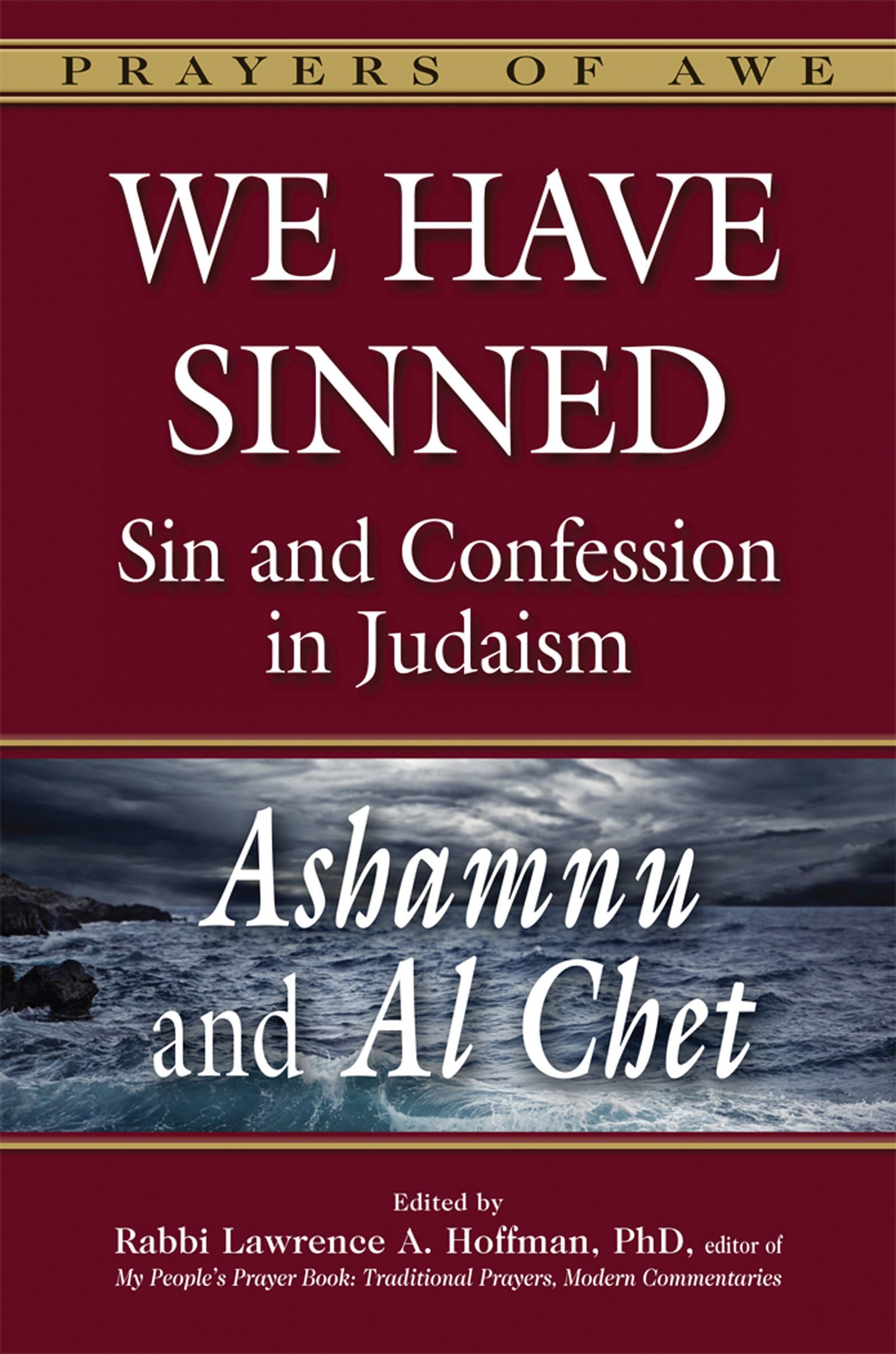
We Have Sinned: Sin and Confession in Judaism - Ashamnu and Al Chet
Product ID: 1693184
Buy anything from 5,000+ international stores. One checkout price. No surprise fees. Join 2M+ shoppers on Desertcart.
Desertcart purchases this item on your behalf and handles shipping, customs, and support to Mexico.
We Have Sinned: Sin and Confession in Judaism - Ashamnu and Al Chet [Lawrence A. Hoffman] on desertcart.com. *FREE* shipping on qualifying offers. We Have Sinned: Sin and Confession in Judaism - Ashamnu and Al Chet Review: Getting ready - For those who contemplate and consider a connection to something beyond just our own selves, this series of essays gives a good understanding of Judaism's views on sin and confession. A good way to start getting into an insightful mindset for the high holidays. Review: thoughtful preparation for holidays - helpful background on construction of the confessional prayers and a thoughtful preparation for the holidays.. enjoyed unasana tokef a bit more
| Best Sellers Rank | #1,861,364 in Books ( See Top 100 in Books ) #104 in Jewish Holidays (Books) #486 in Jewish Life (Books) |
| Customer Reviews | 4.5 4.5 out of 5 stars (11) |
| Dimensions | 6 x 1.11 x 9 inches |
| Edition | 1st |
| ISBN-10 | 158023612X |
| ISBN-13 | 978-1580236126 |
| Item Weight | 1.15 pounds |
| Language | English |
| Part of series | Prayers of Awe |
| Print length | 304 pages |
| Publication date | August 1, 2012 |
| Publisher | Jewish Lights |
M**N
Getting ready
For those who contemplate and consider a connection to something beyond just our own selves, this series of essays gives a good understanding of Judaism's views on sin and confession. A good way to start getting into an insightful mindset for the high holidays.
F**K
thoughtful preparation for holidays
helpful background on construction of the confessional prayers and a thoughtful preparation for the holidays.. enjoyed unasana tokef a bit more
I**N
Interesting approaches to "sin" and "confession"
Do religious confessions for sins magically erase bad behavior - steal and say words, commit adultery and admit it, and "puff" nothing was stolen and no marriage contract was violated! If not, why confess? Eradicating sins is a significant part of most religions. But people don't know the meaning of "sin" or how to purge it. Misled by overzealous and misguided clergy, they are burdened, at least subconsciously, by feelings of guilt. This book contains essays by over three dozen religious thinkers who analyze "sin" and focuses on two Jewish "confessions," one short and one long. Both are recited over ten times during Yom Kippur holiday services, as if constant repetition is more effective. The shorter is Ashamnu, "We have been guilty." The longer is Al Chet, "For the chet." Both list possible misdeeds that could have been committed, warning against these behaviors even if they were not done. Both are arranged alphabetically, as if the misdeeds are covered from the first aleph of the Hebrew twenty-two letters to its last letter tov. Actually, while the Hebrew Bible discusses misdeeds and encouraged Israelites to bring offerings when they do wrongs, the word "sin" is not in the Hebrew Bible. Many people then and now see sacrifices as a pseudo-magical means of cleansing the stains of misdeeds; although post-biblical rationalists and some mystics argue that the sacrifices were meant to encourage people to realize their mistakes and repair the wrongs: "You could suffer death as these animals unless you act properly!" The Bible speaks of three categories of wrongs that are not synonyms. There is chet, the misstep, literally missing the mark, as if one were shooting an arrow and hitting the outer rims of the target and missing its center. The Bible mentions it 34 times. The second pesha, occurring 93 times, is a conscious rebellious act such as taking revenge, stealing, murder. The third avon, cited in 233 instances, is an error, an unintentional act that nevertheless has harmful consequences. Understood in this way, it should be clear that the misdeed is something that shouldn't provoke passive feelings of guilt and recitations; individuals should recognize what they did wrong, think why they did it, and take actions that remedy the consequences and assure no repetition. Significantly, the concept of teshuvah as "repentance" is post-biblical. Most people understand repentance and confessions, as they do sacrifices, as pseudo-magical recitations that remove misdeeds, as if words recited during a synagogue service could somehow change the past, erase the slap a husband gave his wife and restore a loving relationship. "I don't understand why you are still angry," the husband wails, "I did teshuvah in the synagogue!" This isn't the way life works. So why say these two confessions. They are also post-biblical and different Jewish communities have different versions of it. Some communities don't use an alphabetical acrostic. The confessions are not even mentioned in the Talmud of the fifth and sixth century. The rational response is, as stated, that the words are designed to prompt congregant to think what they did wrong, why, and how to correct the mistakes so that they don't reoccur. One should leave services determined to repair the damage, not satisfied that guilt is erased. There are other approaches than the rational that are discussed in this book. The book also examines the details of the confessions. Many questions are addressed and answers given. Is "sin" a Jewish concept or have Jews adopted something invented by the Christian Paul? Is focusing on "sin" counter-productive? Do Jews believe in "original sin"? Are people born with an evil inclination that induces them to do wrong? Are there practical, psychological, and metaphysical "sins"? What is the power of words? Why are misdeeds mentioned so frequently in the post-biblical prayer books? The Bible speaks of a sacrifice called chatat. Is the usual translation "sin offering" correct? Was the biblical Yom HaKippurim, which focused on sacrifices, the same as modern-day Yom Kippur, which is a service of words, and was the former meant to wipe out individual's sins as the latter is? Why is the biblical name plural and the current one singular? Why do many Jews hit their chests over their hearts when they recite the confessions? Is this like hitting oneself on the forehead when we've done something egregiously stupid, or is it something more? Mourners are known to beat their chests; is it related to this practice?
S**Y
Nice book 👍🏻
Trustpilot
1 month ago
5 days ago