
Buy anything from 5,000+ international stores. One checkout price. No surprise fees. Join 2M+ shoppers on Desertcart.
Desertcart purchases this item on your behalf and handles shipping, customs, and support to Mexico.
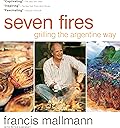
James Beard Award Winner A trailblazing chef reinvents the art of cooking over fire. Gloriously inspired recipes push the boundaries of live-fired cuisine in this primal yet sophisticated cookbook introducing the incendiary dishes of South America's biggest culinary star. Chef Francis Mallmann—born in Patagonia and trained in France's top restaurants—abandoned the fussy fine dining scene for the more elemental experience of cooking with fire. But his fans followed, including the world's top food journalists and celebrities, such as Francis Ford Coppola, Madonna, and Ralph Lauren, traveling to Argentina and Uruguay to experience the dashing chef's astonishing—and delicious—wood-fired feats. The seven fires of the title refer to a series of grilling techniques that have been singularly adapted for the home cook. So you can cook Signature Mallmann dishes—like Whole Boneless Ribeye with Chimichuri; Salt-Crusted Striped Bass; Whole Roasted Andean Pumpkin with Mint and Goat Cheese Salad; and desserts such as Dulce de Leche Pancakes—indoors or out in any season. Evocative photographs showcase both the recipes and the exquisite beauty of Mallmann's home turf in Patagonia, Buenos Aires, and rural Uruguay. Seven Fires is a must for any griller ready to explore food's next frontier. Review: Simply the best book about Argentine cooking available in English - "Seven Fires" has to be the best Argentine cookbook available in the English language. For one thing, it's written by a native Argentine, Francis Mallmann, who also happens to be one of the world's greatest chefs. Mallmann has three restaurants of his own, two in Argentina and one in Uruguay. "The Times of London" and "USA Today" have called his restaurants among the ten best places to eat in the world. More than just a simple cookbook, the first ten pages of "Seven Fires" include brief chapters about Mallman's background growing up in the beautiful Patagonian lake district of Bariloche, and some general material about Argentina. There is extensive and detailed information to get you off to the right start, including a chapter on "The Ways of Fire", including how to build and light a fire, the life cycle of a fire, how hot is "hot", and things you should be aware of whether dealing with wood or charcoal. Space is given to the parrilla, which is the grill itself (yours may be a hibachi or a Weber kettle, but principles are the same); the chapa, a flat piece of cast iron set over the coals; the infiernillo technique that involves two fires and which the author poetically refers to as "a little hell"; the horno de barro (outdoor oven); the rescoldo, which is cooking in the embers, and the asador method of cooking whole animals. Separate chapters deal with making Appetizers; Beef; Lamb, Pork & Chicken, Fish & Shellfish, Vegetables, Light Meals & Salads, Deserts, Breads, and Basics (things like sauces and tapenades). There is plenty of variety among the recipes. Sure, the author addresses cooking an entire cow - which the average reader probably won't be doing at home - but don't worry he also talks about making the perfect steak, and many other recipes for beef. He also presents dishes as wide ranging as empanadas, caramelized endive in vinegar, salt crusted chicken, brook trout in crunchy potato crust, and dulce de leche flan or crepes soufflés with raspberry preserves, and hundreds more. The recipes are generally simple and easy to follow. The photography is gorgeous. Not every finished dish is pictured, but the book is lavishly illustrated with beautiful pictures of food preparation, food presentation, and breathtaking views of the Argentine landscape. Written with the US audience in mind, the measurements are non-metric. This is a beautiful book. It goes far beyond a mere collection of recipes and becomes more of a cultural exploration. Highly recommended! Review: Inspirational - During family camping trips we adore the campfire. My kids wanted me to cook our meals over the campfire, but inevitably I would ruin many of the things I would try to cook not knowing how to control the heat. I happened upon Seven Fires looking for a wood fire cookbook to remedy that. I had never seen a book so enthusiastically reviewed that I knew I had to get it. The reviews are true, it is an amazing book. It is so inspiring and exciting that we have started to build a backyard asado area. I have a makeshift parrilla and chapa already and plan to build a cob oven. The pictures in the book are beautiful and really spark ideas of how you can make your own yard a great place for entertaining your family and friends. There is a simplicity to the recipes that I really love. For example the Burnt Oranges with Rosemary was very simple, yet so complex and gourmet tasting my family loved and devoured them. The Burnt tomatoes are simple and delicious as well. I tried some onions and peppers cooked resoldo (cooked in embers and ashes ) and they were full of flavors so much more than if I had cooked them any other way. I learned to butterfly a chicken to cook on the parrilla for Chicken Chimehuin. I have to admit it looked pretty magnificent cooking on the grill and everyone was very impressed at its presentation and it tasted great. The lemon confit took it over the top. I can see that there will be lots of fun to be had experimenting and learning from this book.


| Best Sellers Rank | #25,328 in Books ( See Top 100 in Books ) #4 in Latin American Cooking, Food & Wine #30 in Barbecuing & Grilling #153 in Celebrity & TV Show Cookbooks |
| Customer Reviews | 4.8 out of 5 stars 815 Reviews |
P**A
Simply the best book about Argentine cooking available in English
"Seven Fires" has to be the best Argentine cookbook available in the English language. For one thing, it's written by a native Argentine, Francis Mallmann, who also happens to be one of the world's greatest chefs. Mallmann has three restaurants of his own, two in Argentina and one in Uruguay. "The Times of London" and "USA Today" have called his restaurants among the ten best places to eat in the world. More than just a simple cookbook, the first ten pages of "Seven Fires" include brief chapters about Mallman's background growing up in the beautiful Patagonian lake district of Bariloche, and some general material about Argentina. There is extensive and detailed information to get you off to the right start, including a chapter on "The Ways of Fire", including how to build and light a fire, the life cycle of a fire, how hot is "hot", and things you should be aware of whether dealing with wood or charcoal. Space is given to the parrilla, which is the grill itself (yours may be a hibachi or a Weber kettle, but principles are the same); the chapa, a flat piece of cast iron set over the coals; the infiernillo technique that involves two fires and which the author poetically refers to as "a little hell"; the horno de barro (outdoor oven); the rescoldo, which is cooking in the embers, and the asador method of cooking whole animals. Separate chapters deal with making Appetizers; Beef; Lamb, Pork & Chicken, Fish & Shellfish, Vegetables, Light Meals & Salads, Deserts, Breads, and Basics (things like sauces and tapenades). There is plenty of variety among the recipes. Sure, the author addresses cooking an entire cow - which the average reader probably won't be doing at home - but don't worry he also talks about making the perfect steak, and many other recipes for beef. He also presents dishes as wide ranging as empanadas, caramelized endive in vinegar, salt crusted chicken, brook trout in crunchy potato crust, and dulce de leche flan or crepes soufflés with raspberry preserves, and hundreds more. The recipes are generally simple and easy to follow. The photography is gorgeous. Not every finished dish is pictured, but the book is lavishly illustrated with beautiful pictures of food preparation, food presentation, and breathtaking views of the Argentine landscape. Written with the US audience in mind, the measurements are non-metric. This is a beautiful book. It goes far beyond a mere collection of recipes and becomes more of a cultural exploration. Highly recommended!
D**N
Inspirational
During family camping trips we adore the campfire. My kids wanted me to cook our meals over the campfire, but inevitably I would ruin many of the things I would try to cook not knowing how to control the heat. I happened upon Seven Fires looking for a wood fire cookbook to remedy that. I had never seen a book so enthusiastically reviewed that I knew I had to get it. The reviews are true, it is an amazing book. It is so inspiring and exciting that we have started to build a backyard asado area. I have a makeshift parrilla and chapa already and plan to build a cob oven. The pictures in the book are beautiful and really spark ideas of how you can make your own yard a great place for entertaining your family and friends. There is a simplicity to the recipes that I really love. For example the Burnt Oranges with Rosemary was very simple, yet so complex and gourmet tasting my family loved and devoured them. The Burnt tomatoes are simple and delicious as well. I tried some onions and peppers cooked resoldo (cooked in embers and ashes ) and they were full of flavors so much more than if I had cooked them any other way. I learned to butterfly a chicken to cook on the parrilla for Chicken Chimehuin. I have to admit it looked pretty magnificent cooking on the grill and everyone was very impressed at its presentation and it tasted great. The lemon confit took it over the top. I can see that there will be lots of fun to be had experimenting and learning from this book.
B**D
Perfection and Inspiration!
I am not a newcomer to cooking over wood. I camp enough and cook over wood to know that it is a method with its own idiosyncrasies and rewards. I have also cooked whole pig successfully, though not often. I came across this book while looking for help cooking whole butterflied lamb, a search that turned up lots of Greek lamb cooked on a spit but little else. The book is outstanding for a number of reasons. First, the constant availability of context and the recognition that cooking has uncertainty central to its nature trusts the reader to have skills to add to the process. Second, it is clearly about having people cook, not about the author giving directions to lesser mortals -- something Francis Mallmann is perfectly qualified to have done but did not. Third the book's beautiful photography is an invitation to get out and do it. Lastly, my wife and I are a little like Jack Spratt. I am a meat and potatoes guy with decent but narrow skills. She is a meat, vegetable and salad person with well developed skills and a penchant for complex meals. We buy and discard cookbooks at an extraordinary rate. However, my wife has accumulated quite a library and I have a couple of keepers. This is the first time that we have both been thrilled by the same book and inspired to dive into using it. This is about meat, but with an approach to non-meat dishes that is outstanding in its own right. We now have enough experience with the recipes and approaches to say that this book is one of the best ever. I bought several for friends and family and the reaction has been universally ecstatic. So, if you are a vegetarian and interested in a fresh approach to vegies, this book is for you. If you are going to eat whole ox for the rest of your life, this is for you. If, like us, you just like to eat well, this is a window into a whole new culinary adventure. Our thanks to Francis Mallmann for inspiration and direction and to Peter Kaminsky for his beautiful and articulate delivery.
T**1
Everything I've cooked has been good to excellent
Yes, the pictures and description of cooking "Una Vaca Entera" (a whole cow) are awesome. (Ingredients: 1 medium cow, about 1400 pounds...). But you won't do that - a small asador of rabbit or lamb is more likely. Chimichurri with a small roast has been a big hit. Potato Galette has been a HUGE hit. When your book includes a recipe for "Burnt Tomato Halves", it better be good, and it is (high heat is the key). Smashed Potatos with Tapenade - mmm, gimme more. The Salt Crust Chicken was good but didn't knock me out - as he states, it won't be crispy on the outside. I still prefer to brine and roast my birds. On page 224 with the images of the Granny Smith Pancakes, that looks a lot more like a spackling knife than a spatula - another testament to the unpretentious approach. Some recipes are a bit complicated, but most aren't, and there are plenty of simple ones to choose from. Speaking of Patagonia, it's beautiful. If you ever get the chance, go, but be prepared for high wind, rain, cold, some warm temperatures, and beautiful scenery (mountains, clouds, forests, glaciers, glacial lakes...). Get out and hike. I need to try some of the fish recipes, and I'm looking forward to the Peached Pork... 2015 update - tying off a fish, chicken, rabbit, or lamb to some stakes and cooking it over coals isn't easy due to the uneven heat, but it's worth trying. But just sitting outside for a few hours and cooking your own food without a phone, radio, or any other distraction is a great way to lower your blood pressure. Take your time. Simplify. I still haven't made the Peached Pork, but I have made the peaches as a dessert several times, and they're always a hit. Simple to make, too. Cast iron skillet, medium high heat, butter, and ripe peaches. THE PEACHES MUST BE RIPE!!! If not they won't taste good in general, and won't have as much sugar to caramelize with the butter and heat.
I**T
Before you buy this, think about your backyard and your lifestyle
This cookbook is exciting to read. If you like fire and like to grill outdoors, it really gets your brain thinking creatively. I bought it many, many months ago, and while I've not been able to use a single recipe from it, the book still has me thinking....thinking about how I can get this method of cooking to work in my yard! Positive: The author's view on "the taste of burnt" alone will have you rethinking your grilling philosophy and tweaking your techniques. (Think of "burnt" as another positive facet of the food's taste and appearance.) Just thinking about the "Life of a Fire"--flames, coals, embers, ashes and cinders--will open your eyes to the possible ways that these stages can be utilized in the cooking process. Positive/Negative: Indoor alternatives are provided to grilling the Argentine Way outdoors. You will need a WELL-ventilated kitchen. And the indoor alternatives are really not that exciting....(like cooking in a cast iron pan on the stove). Negative: Unless you have a large untended yard, or live in a rural area on the edge of a forest or large field, the relatively simple techniques described will require a fairly elaborate set-up. The chapter "The Ways of Fire" threw up roadblocks for me, and I bet, will do so for most of you who live in established neighborhoods. For me, reading those few pages was like dosing a beautiful roaring fire with buckets of cold water. The book instructs you to: Use hardwood--chip-size up to 6"-9" in diameter and not less than 16" long; keep the fire away from buildings, fences and overhangs; avoid paved areas, lawns and underground piping; build a ring of large stones or have made a customized metal fire ring; find a solid, large solid piece of metal to use as a grill top; find a large grill grate, and build a structure to get your cooktops off the ground, and, hey, watch the wind direction, too. I've estimated that I need at least 8 square feet in which to set up my fire pit--if I want to do this correctly. And I can't find a place in our very large yard to put this whole scenario together: I've got to have a place to store the wood and then get it to the fire pit without too much effort; the fire pit can't be located under a tree; it can't be on top of underground pipe; I'm going to have to give up some grass, and then, when the fire is out, I've got to get rid of a big pile of ash. So if you have a small manicured lawn, or no yard at all, or a poorly ventilated kitchen you may end up very frustrated if you buy this book! But if you do a lot of camping or picnicing out in the wild, or can find even a small place to burn on the ground in your yard, I bet you will be able to realize some value from this cookbook.
T**R
This is a quantum leap book
You should consider this book as a quantum leap experience - not your 26.th version of the East Tuscan New Flavor Cooking Experience, etc., but something which gives you totally new insights in food preparing. After studying the book and preparing some of the presented dishes, it is for me not so much the "fire" cooking approach, which is for most people who don't have a 20 acre country property at hand (beware of the neighbors) anyway out of reach. Rather, the insightful knowledge transmitted by Francis Mallmann is his methodic approach to "burnt" food, that is, generating taste by controlled burning of food. The interesting take is here, that Mallmann uses burning techniques mainly (or only) with vegetables, but not with meat. In this respect, he advocates (correctly) meat grilling at comparably low temperatures, contrary to the typical (US) American steak house approach (huge cuts, burnt outside and left rare inside, served with mushy vegetables). Almost every aspect of the book documents that this write up entails a compilation of decades of professional experience and tinkering with food, and the recipes are very well adapted for home cooking (some upgrading in Lodge cast ironware required, although, and anybody with a professional grade exhaust system is at an advantage). I am, however, not of the opinion that the recipes are "easily" to be followed. In spite (or even because) of the simplicity of the arrangements, the home chef must have excellent execution skills to deliver. All in all, a fantastic book. Thank you, Francis Mallmann, for passing your collected wisdom on to us.
M**K
A Great Buy!!!!
"A recipe is the start of a three-way conversation between the cook, the ingredients, and the cooking tools..."p. 257 Finding this book was like digging through the embers of the mass of cookbooks available and drawing out the "rescoldo" sweetness of a roasted butternut squash. Or, like finding a buried, intimate, personal diary from a long lost near of kin. The pages unfold with the excitement of new discoveries, years of accumulated wisdom and the bright blazes of early love along with the slow but steady high-temperature coals of a lifetime of love. The love affair is of course with food; but doesn't food always speak to life, culture, experiences and moments that can never be completely recreated? The food is so earthy and and innately primal that it takes a conscience effort not to require the cuisine to ascend to the unrealistic aspirations of the chef. Instead, the chef must condescend to the humble origins of the food which result in sublime glee. (Like an over-starched socialite, who bends down to talk with the bight-eyes piggy-tailed girl about her doll, he finds happiness.) When one casts aside what he thinks food "ought" to do but allows it to "be" in all it's natural goodness, the eater is surprised to know that that is what a good piece of meat or vegetable should taste like and say, "Oh, that's what balance of flavor, texture, and colors is all about! What a revelation!" The book is filled with gorgeous pictures and pastoral scenes that mix rustic elegance with tranquil nostalgia. Please don't misunderstand me, Francis Mallmann's cooking is anything but juvenile. He is one of the world's most famous chefs. My point is to say that this book will rekindle any old, stuffy, stuck-in-a-rut, chef to remember and revisit the very reason we cook...Because it is Good! After you buy this James Beard endorsed book, you will want to turn any open space into blazing cooking inferno. I hope you enjoy it as much as this reviewer has!!
P**N
BOOK OF REVELATIONS!!!
This is the first book I've read that includes a recipe for roasting an entire steer. I mean the complete beast in one piece! Whole-ee Cow! When it comes to open fire cooking, be that grilling, barbecuing, roasting, broiling, whatever, no one beats the Argentines (Uruguayans and Chileans share the podium one step below). No meatlover can brag about his experience until he's traveled to the South Cone. Steaks down there have no comparison to anything you've ever enjoyed before. Peter Luger's, Wolfgang's, Morton's, Sparks, Smith & Wollenski, The Palm, you name it, all those beef Nirvanas are no match to what you can expect in the humblest porteño steakjoint; these people's entire national culture revolves around the fire pit! About the author, it seems Mr. Mallmann is a celebrated chef in Buenos Aires, having made his bones as sous-chef in Paris' Grand Vefour, so were not talking about some vaunted backyard grill aficionado trying to sell you the Brooklyn Bridge; this guy really knows everything there is to cooking, anywhere. But as he tells it, he's gone back to his Andean cuisine roots for good, and from what you learn in his book, the man is a beef sensei. His technique is simple, yet masterful. Me, I'm throwing away my Barbecue Bibles, Steaklovers Primers and lots of other published junk I've purchased over the years searching for the perfect steak. I've found it! I've seen the light! Moreover, I've tasted the beef! Join the flock and rejoice! Amen!
M**E
Maravilhoso!!
O livro além de ser lindíssimo, com fotos incríveis, é também um manual de consulta permanente. Conteúdo muito completo.
J**N
Terrific book
A great read and beautiful recipes
T**A
seven fires
interessantissimi
G**A
Must have for meat lovers.
If you're into meat, you seriously HAVE to grab the cookbook "Seven Fires: Grilling the Argentine Way"! This isn't just a recipe book; it's an absolute must-have if you want to step up your grilling game and cook meat like a pro. Everything about it—from the techniques to the sheer deliciousness of the recipes—makes it perfect for any meat lover. It's totally essential!
S**O
Fantastic inspirational book
recommended 100%
Trustpilot
2 days ago
3 weeks ago