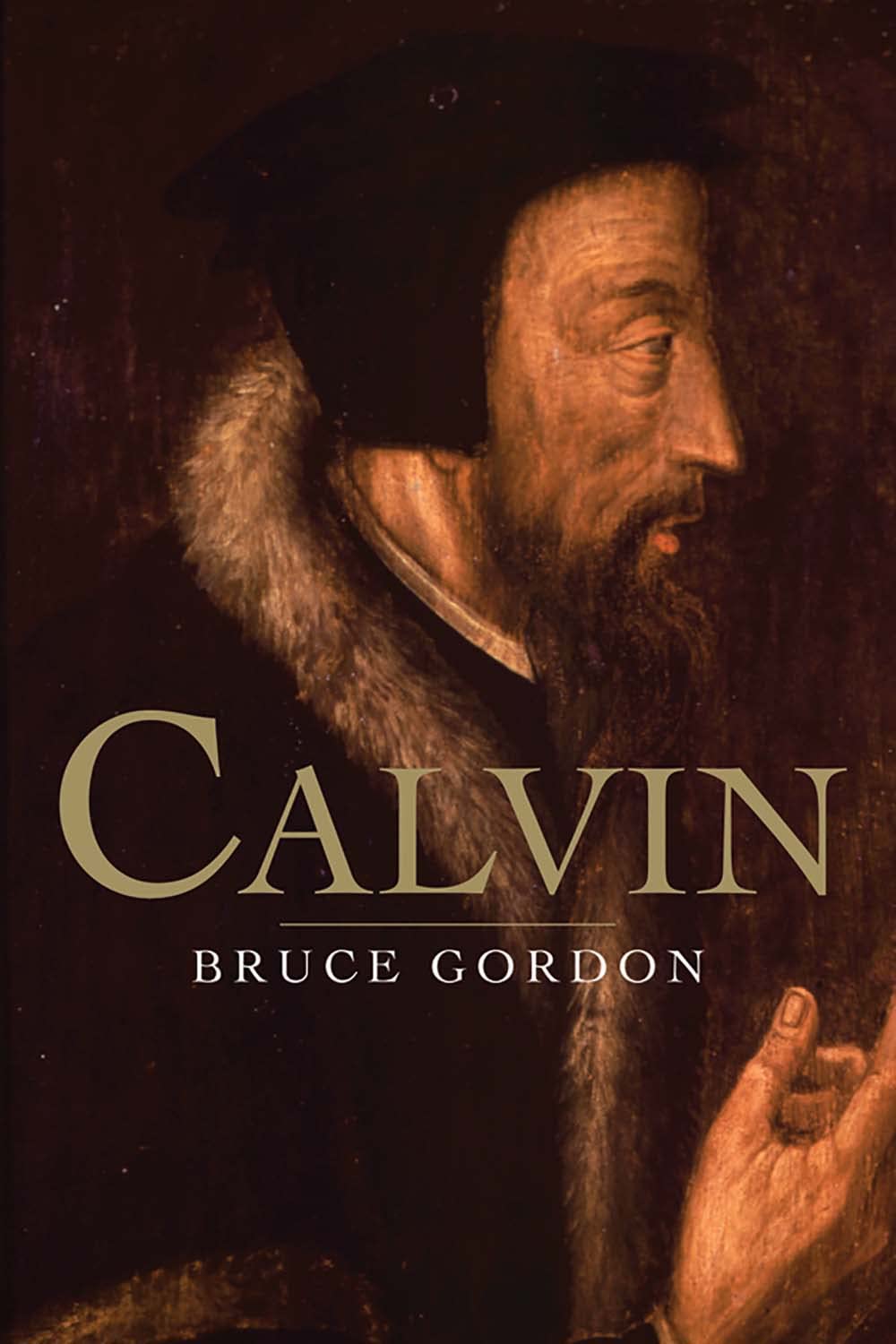
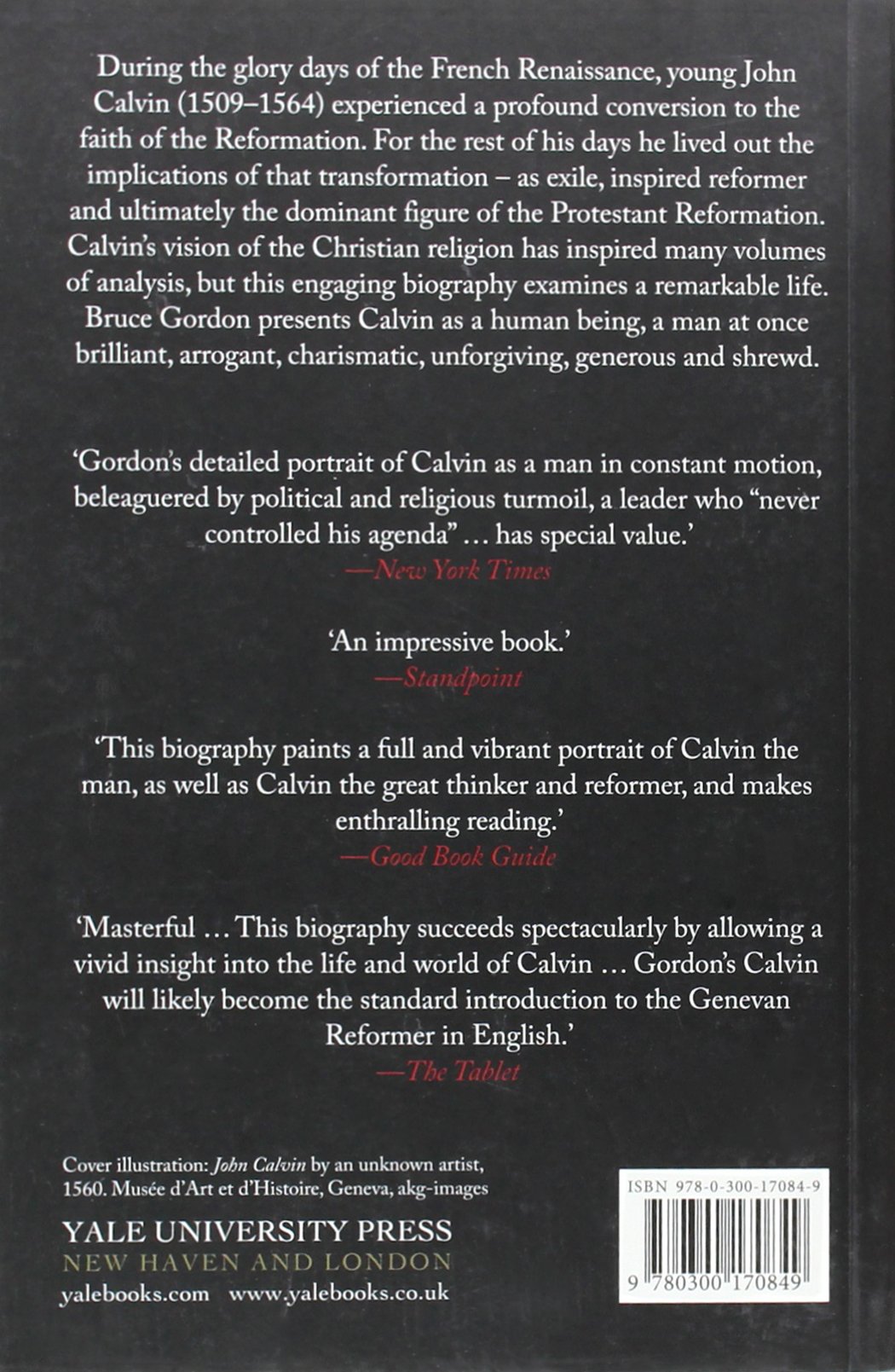
Calvin
T**S
Reformed Bishop
A biography of John Calvin is of necessity a history of his time. The religious landscape of Europe during Calvin's lifetime [1509-1564] was most complex in terms of grassroots pastoral piety, theological exploration, and international relations. And then there is Calvin: his own religious journey, from French Catholic reformer to Protestant patriarch. There is the corpus of Calvin's theological thought and writing, enduring and controversial to this day. And finally, there is the matter of Calvin's ecclesiology: what structural and communal body of belief and practice did he leave his followers. Bruce Gordon has produced an eminently readable and highly manageable general study of these questions in producing a remarkable introduction to John Calvin for the informed reader with at least a basic grasp of Reformation dynamics.As Robert Bireley has narrated in his fine work, "The Refashioning of Catholicism 1450-1700," [1999] the spirit of church reform was not the exclusive provenance of Luther. Grassroots outcroppings of lay spirituality emerged side-by-side with wholesale reform of many existing Catholic religious orders to improve the tenor of church life by 1500. It is not surprising, then, that the young Catholic Calvin would by his early adulthood identify himself as an apostle of reform. but as Gordon observes, reformist Catholics in France had nowhere to lay their heads in the face the crown's opposition to Luther and seminal Protestant uprisings of independence on the continent.Calvin began his studies in theology but turned instead to law. A true humanist of the time, he immersed himself in the Roman philosopher Seneca. At some point in 1533 the Protestant conviction that the papacy was beyond repair was embraced by Calvin, though at this early time such French converts did not as yet have ecclesiastical bodies to align with. Like many of his mindset, Calvin remained a vocal and prolific voice of change within Catholicism until his writings and other agitations made his life in Catholic France intolerable. In 1534 he moved to a more affable setting in Switzerland.Switzerland's Protestant reform was rich in zeal but poor in unity. Each of its major cities hosted major proponents of Protestant reformed theology. The major overarching conflict upon Calvin's arrival was the significant tension between Martin Luther and Huldrych Zwingli, with the latter advocating a much more radical abandoning of traditional church life than Luther. Gordon pays close attention to the various points of contestation elaborated by such theological masters as Bucer, Oecolampadius, Melancthon, Erasmus, and others, and he rightly distinguishes Calvin as a theologian with a long view of the future, and the realization that if Protestant reform was to survive, it must be united.As Gordon chronicles Calvin's life, it becomes clear that Calvin cannot pull together the Christian church. But it is not for lack of trying. As is often the case with great thinkers of all disciplines, Calvin's most lasting contribution to Christianity was written in his relative youth, his "Institutes of Christian Religion." In this work, revised several times during his lifetime, Calvin outlines what might be called reformist ecclesiology for the first time. He weaves together doctrinal foundations, church structure, and personal piety. It is in this work that we come across his controversial definition of "predestination." Gordon's handling of the question is eminently clear and lucid. Calvin believed in what one might term "a double call." The Institutes sites Old Testament metaphor, noting that while Esau and Jacob are both of the chosen people, Jacob had been chosen before birth for special election. On its face Calvin's theory did not convince me, but it may have made more sense at the time of his writing when all warring Christian parties could claim the blessing of baptism but not all, at least in Calvin's eyes, were worthy of eternal election.Calvin, of course, is historically identified with the city of Geneva. As a young man with zeal and perhaps restless disregard, he took the pulpit as a layman in the company of close and equally outspoken fellow warriors. Theological and personal conflicts led to his discharge from ministerial duties, but he would be invited back by the city magistrates a few years later. Gordon notes that upon his return Calvin was charged with creating a church order that would satisfy divergent expectations in Geneva. Calvin never "mellowed" strictly speaking, but age brought him a greater sense of his personal charism in the pulpit and his organizational role as leader.Thus, Calvin's ministerial persona was centered on preaching. While he defended a modified sacramental system, it is very clear that the preaching of the Bible and its moral implications for personal and civil life was the fulcrum of ecclesiology and ministerial identity. Gordon describes Calvin as a highly respected preacher, whose sermons did not hesitate to address matters of public conduct and controversy. One gets the impression that he was greatly revered if not greatly loved in Geneva.It is equally clear from the text that Calvin, whatever he might say about Catholic orders, functioned as a bishop. He fully embraced a magisterial role for the reformed church throughout Europe. This is evident in his recruitment and support of reform missionaries for work in Catholic France, for example, where many of his missionaries came to ultimate cruel martyrdom. Calvin was criticized for not joining them in France, but he defended himself on the grounds that his life was too important for the life of the church as a whole. ["Strike the shepherd, and the sheep scatter."] Clearly, Calvin was neither a Congregationalist nor a mystic. Gordon repeatedly underscores Calvin's identification with St. Paul--theologian and definitely churchman.Gordon is not sentimental about Calvin, but the thought occurs that the reformed church's first true shepherd resembles in many aspects the Catholic Ignatius of Loyola. By his straightforward rendering of the story, Gordon has made the case for the tragedy and cost of disunion.
T**S
The Best Biography of Calvin to Date
It is here at last. For years now I have been waiting for a great biography of Calvin--the kind of biography which I would recommend without hesitation for those who would want to learn about the life of the great Reformer. In a year that has seen the arrival of at least half a dozen biographies of Calvin, this one, I believe, stands as the best. Written by Bruce Gordon, professor of Reformation History at Yale University, it is titled simply and properly, Calvin.Biographies of figures as controversial as John Calvin tend to be written by unabashed fans or ardent enemies. There is a lot of biography that reads like hagiography and a lot that reads like pure slander. This was the case with Calvin himself and his earliest biographers--either they were his closest confidants, singing his highest praises or they were men who feared and despised him, fabricating outrageous charges against him (such as Jerome Bolsec who, ten years after Calvin's death, wrote an account of the Reformer's life in which he accused him of sodomy and suggested that he had died from crab lice). Even today, many of the biographies seem to focus undue attention on Calvin's great accomplishments without wrestling with his notable faults and foibles. This new biography is an exception as Gordon writes from a position of notable objectivity. He seems a little bit detached from his subject, almost as if he has had to become a somewhat-grudging admirer of Calvin through immersing himself in the man's life. Throughout the book he is willing to credit Calvin for what he did so well but he is also willing to call a spade a spade, whether that means pointing out pride or temper or youthful arrogance.The greatest strength of Calvin may be the author's deep knowledge of the time in which his subject lived. He sets Calvin firmly in his political, religious and cultural context, expending great effort in showing how Calvin was, in so many ways, a product of his time. This allows Gordon, a student of the Reformation even more than he is a Calvin scholar, to draw the reader into the time and the life of his subject in a way that none of the other biographies have been able to do. He also draws widely from Calvin's writing, introducing lesser-known works and drawing often on his voluminous correspondence. In this way it is a more well-rounded account of Calvin than others and one that is also deeper.I tend to measure successful biographies in one of two ways: either they teach me a lot about the subject and the context of his life or they make me feel as if I've met the subject himself (with the very occasional sublime biography doing both). Gordon's Calvin falls firmly in the former camp. I did not feel like I knew Calvin himself at the end of this book, but I certainly did understand the man better, especially as I came to understand the religious and political climate he was born into and the even more complex climate he helped create.In my opinion, this is the best biography of John Calvin to date. If you haven't ever read a life of Calvin, this will be the place to start. And even if you've read each of the other biographies available, I am convinced that by reading this one you will gain a richer understanding of the man and the complex times in which he lived. I highly recommend it.
Trustpilot
4 days ago
3 days ago