Buy anything from 5,000+ international stores. One checkout price. No surprise fees. Join 2M+ shoppers on Desertcart.
Desertcart purchases this item on your behalf and handles shipping, customs, and support to Mexico.
๐ช Edge sharper than your hustle โ sharpen like a pro, every time.
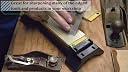
The DMT 8-in. DuoSharp Plus Bench Stone features a patented micronized monocrystalline diamond surface with dual grit sides (extra-fine 1200 mesh and fine 600 mesh) for fast, precise sharpening without oils. Designed with a stable base and a large surface area, it accommodates knives, scissors, and small tools, delivering professional-grade edges while preserving blade life. Made in the USA, this durable sharpening stone is favored by chefs, woodworkers, and installers for consistent, effortless performance.


| ASIN | B000H6L6FA |
| Best Sellers Rank | #117,124 in Tools & Home Improvement ( See Top 100 in Tools & Home Improvement ) #188 in Sharpening Stones |
| Brand | DMT (Diamond Machining Technology) |
| Brand Name | DMT (Diamond Machining Technology) |
| Customer Reviews | 4.6 out of 5 stars 759 Reviews |
| Global Trade Identification Number | 00017042003708 |
| Grit Type | Extra Fine, Fine |
| Included Components | Duo Sharp Plus |
| Item Dimensions L x W x H | 13.25"L x 13.25"W x 11.5"H |
| Item Type Name | fixed blade,hunting knife,outdoor,camping |
| Item Weight | 516 Grams |
| Manufacturer | DMT |
| Manufacturer Warranty Description | Manufacturer Warranty |
| Material | Micronized Monocrystalline Diamond |
| Material Type | Micronized Monocrystalline Diamond |
| Number of Items | 1 |
| Product Dimensions | 13.25"L x 13.25"W x 11.5"H |
| UPC | 733353672869 971498023102 017042003708 |
| Unit Count | 1.0 Count |
C**R
Excellent 600-/1200-grit sharpener, great for large knives!
The DMT WM8EF-WB 8-Inch DuoSharp Plus Bench Stone (Extra Fine/Fine With Base) is an outstanding value at $55. While some might find that price to be high, keep in mind that you're getting a large 3" x 8" double-sided diamond sharpener (one side is fine 600-grit for all around sharpening, the other is extra fine 1200-grit for getting your blades to a razor sharp edge). Unlike natural stones, the polymer base also won't deform. It stays perfectly flat over time. And the sharpening goes MUCH faster. 10 swipes on this stone is roughly equivalent to about 50 swipes on an Arkansas stone. Not only do you save time and energy, but it's much easier to maintain a very consistent blade angle (crucial to effective sharpening) for 10 strokes than it is for 50. This model includes the robust plastic base as well. The stone snaps into the base very snugly (no looseness) and the wide feet provide for a very stable platform while sharpening. For added security, you can fasten the base to a workbench or other large surface. However, I found the base stable enough on its own to be perfectly serviceable on a kitchen countertop. It would be nice if the base had grippy rubberized feet to reduce slippage on smooth surfaces for those like me who don't want to permanently affix it to a workbench, but if you brace one end of the base against something (such as the edge of the sink or the stove) and draw the knife in that direction, it works fine and won't slip. I've used this stone to sharpen everything from my smallest Swiss Army blade (2" stainless) up to my Ka-Bar/Becker BK7 blade (7" 1095 cro-van steel). Sharpening a large 7" knife on this stone is very easy. The general rule of thumb is that your stone should be at least as long as your blade, so if you have knife blades longer than 8", you may want to spend more for the 10-inch version of this stone (which at the time of this review, is inexplicably listed at nearly three times the price!?). For my needs, the 8 inch stone is plenty long. There's nothing to complain about with regard to the quality and functionality of this product. It's first rate and will do a very good job sharpening your knives, assuming you take time to learn the proper technique. Throw in an old belt with sharpening compound for stropping, and you will have the tools to put a scary sharp edge on most any knife. The only shortcoming I notice with this product is the ambiguity of the stone in determining which side is fine (600-grit) and which extra fine (1200-grit). As it turns out, it is color coded by a small circle at one end of the stone, which then can be cross-compared with a list on the packaging to determine the grit. But it's strange to me that they didn't just stamp "600-grit" and "1200-grit" on the respective sides instead of the color-coding--which would be clearer and more convenient. I simply wrote the proper grit (with an appropriately pointed arrow) on either side of the stone in permanent black ink. Technically, you can tell by feel as well. Regardless, some people are sure to be inexperienced and inadvertently use the extra fine side to initially sharpen a very dull blade, and then will get dismayed by the slowness. The fine (600-grit) side will restore a fairly dull blade very quickly, however, and is probably the best "general purpose" grit for knives. For quick blade touch ups, you could skip using the extra fine side altogether unless you really need to get your blades shaving sharp or just enjoy bringing the edge up to a more polished look. All in all, this is a great product and well worth the price. Sure, natural stone sets with comparable grits can be had for half as much money, but they require more effort and care, and thus, introduce more room for error. This is your best bet for faster, superb sharpening results. If idiot-proof convenience is your priority, you may prefer a pull-through sharpener. However, keep in mind that those kind will not put nearly as nice or as long-lasting of an edge on your knives. They are convenient thought. In my opinion, a diamond stone like this one is the best way to do it right. [UPDATE 4-1-2014: I've been using this sharpener a lot for a month and a half now and it is the best diamond sharpener I've ever owned. It works very quickly on every blade and steel I've tried, and can take a blade from very dull to very sharp in only a few dozen strokes. The trick is to keep the sharpening angle consistent for each stroke (I sharpen at 21 degrees for wilderness knives, and about 17 degrees for kitchen knives), and apply the right amount of pressure as you stroke. Once you get a feel for it, this sharpener works superbly.]
K**M
Diamond Bench Sharpener - Highly recommended
I own a lot of expensive knives: Kitchen and hunting. Knives that were razor sharp when new and over time they were anything but. I have tried Arkansas stones, ceramic rods, and many other sharpening systems and tools. Nothing is a good as the DMT bench. One side is red and one is green. The red takes a not sharp (but not abused) blade and hones it first. Maybe 5 to 6 passes per side. Then you move to the green to take the sharpening to a new level with 3-5 passes per side. Almost like new. A dull knife takes maybe 3 minutes to sharpen. An "almost" sharp refresh, using only the green side, takes about a minute. I can do the whole kitchen rack of 15 knives (refresh only) in 30 minutes. Success for me relied on two things: the correct angle and the correct pressure per pass. I used the recommended "lay two quarters on top of one another" in the manual to get the feel of the angle. Once I got the feel I don't use them anymore. Initially I was putting about the amount of force I used to use with sharpening stones. It was too much. Now I used just enough pressure to keep the knife on the surface (either red or green). And by that I mean almost no pressure. If you have a kitchen scale I find about 1-2 oz of pressure works best for me. Any more than that and I just hone off good steel. It seems I use less pressure each time and the diamond surface works perfectly. I expect to get even better and the knives even sharper. This sharpening system is definitely worth the price. Highly recommended. Use it for two weeks and relegate your old systems to your favorite charitable donation site. Note: I also use the DMT 12" Diamond Steel between sharpenings. (see my separate review). I use it while paring and carving AND to sharpen my serated bread knife. I can now slice warm bread again. Update 2/3/13 Tried the fine/extra fine stones on three no longer used knives. I suspect we stopped using them because they were so dull. The fine/extra fine really couldn't set a new edge (they were too far gone). So I picked up up a second stone (Extra Course (black) / Course (blue)to use with my original base. I went to work on the knives starting with the extra coarse to see if I could resurrect my lost causes. Six passes on each side first with the black and then six passes per side with the blue and a new edge was set (1 knife needed 4 more each side with the black). Now all three are in the every-other-week rotation for fine tuning edges. Maybe I could have worked at using the fine/extra fine (aka red and green) but I decided to do it right. Plus I intend to begin working on my shop tools (planes, chisels, etc) and these will get work there. Granted these are not inexpensive tools. But, both bench stones and the base set me back roughly the cost of just one of my knives: a 10" Global chef.
J**D
Best sharpening system for the effort and cost
After buying several expensive Japanese Kitchen knives, for their maintenance I purchased this unit, plus a Coarse grit plate from DMT and an 2*Extra Fine finishing plate. It takes a bit of practice to use these properly, but once you get a system down, they are probably the least expensive or messy, most reliable system for sharpening high quality blades. There are generally four types of commercially available systems to sharpen your kitchen knives (a job that you will be doing once a week). Here is my (very) subjective comparison of systems: 1. Diamond Systems (e.g., DMT): Mess & Effort (Low), Sharpening Quality (Very High), Skill required (Moderate) 2. Arkansas stones: Mess & Effort (Moderate), Sharpening Quality (High, not good for steels >60HRC), Skill required (Moderate) 3. Japanese Waterstones: Mess & Effort (Very High), Sharpening Quality (The Best), Skill required (High) 4. Ceramic sharpening systems: Mess & Effort (Low), Sharpening Quality (High, touch up only), Skill required (Low) I use dish detergent and water on the DMT plates to sharpen, having found that better than other solutions. It keeps everything clean as well. The DMT plates sharpen aggressively, so compared to the other systems, you will sharpen faster and with less effort. I have seen several complaints about DMT plates not being perfectly flat, but I think these are bogus. I have considerable experience inspecting optical flats (these usually need to be flatter than 1/4 wave, which is quite flat) and used the same techniques to eyeball my plates. The extra fine plate is easy to inspect, since rainbow refractions from the diamonds show off any ripples; additionally, the regular pattern of pits on the plates highlights any unevenness. My plates are very flat. But interestingly enough, not one of my knives (not even my brand new Miyabi) is perfectly flat; certainly not as flat as the plate. Even if there were ripples, I couldn't see them being more significant than you would get on a worn waterstone or Arkansas stone. Maybe there is the occasional bad plate; just send it back and get a new one. The DMT system is in my opinion a much less error prone approach to sharpening than other options. Overall the cost is low for all the DMT plates you need: perhaps ~ $200. Add a ceramic steel, and/or strop pad for the final edge, and you will have a very effective system for sharpening your knives better than you received them from the factory.
B**.
Makes quick work of all my kitchen and camping knives.
This is the best sharpening system that I own-- others include the Smith's PP1 Pocket Pal Multifunction Sharpener and Smith's DFPK Diamond Precision...
J**S
Great starting setup for aspiring freehand sharpeners of modern steels, but
..man have I grown to hate the holes! Experience level: I'm a pocket knife hobbyist, with currently 4 years use on my first set of DMT duos, probably 200+ knives. I have the extra course, course, fine, extra fine (Black/Blue, Red/Green duo plates). I've sharpened everything from friends cheap mystery steel kitchen knives to exotic super steels across all rockwell hardness including most recently VANAX Super Clean. I wanted to learn freehand after using a V shaped triangle rod setup from a popular knife company. I didn't want to deal with messy water stones. I'm glad i didn't waste money on those. I wish i didn't waste money on the V system. I'm ready to start replacing these 4 year old plates now, and i'm moving to the continuous surface style without the holes. Quick impressions: Honestly a great value for the effectiveness and ease of sharpening very hard steels. I'm satisfied with the set and that they have lasted this long, with the amount of use i've gotten from them. The extra course (black) and fine (red) grits are my favorite. Profiling on the extra course is a joy after it's been broken in. The fine stone is where i stop on most users before switching to a 6" polishing wheel with green compound to remove the burr. Then i'll use the extra fine (green stone) and normal leather strop to maintain the edge. What you need to know: These plates absolutely require a break-in period. The surface of the plate will feel uneven when new. You'll experience your blade feeling like its rocking or wobbling around during passes, and it'll take a good while for it to naturally calibrate to your sharpening style (swipes vs swirls). My advice is to use water when starting out. It'll help lubricate your motion. You'll also observe some funky scratch patterns on your edge bevel being produced by the holes during this time (and then again years later when the surfaces have begun wearing away). The holes, in my opinion, are a gimmick to keep the prices down by using less diamonds. They interfere with producing a crisp/even edge during break-in period, and then again when worn. Your blade tips and sharpening choils will snag on them. They are harder to wipe out and keep clean than a continual surface is. The small part of continuous area is another gimmick but it does come in handy for the blade tip. It's not a large enough area to use for much else. The edges of the plates are more proud than the surface, which means they will wear out first (why i'm starting to replace mine now). There are Pros and Cons to them being proud around the edge. The biggest pro is being able to use the edge of the plate for sharpening slight recurved bevels. The con is the more you do that the quicker it'll wear away. when its gone, it's gone, and that makes sharpening the entire length of the edge to the ricasso or choil challenging. I'm also noticing the surface wearing away around the holes edges. So i'm probably running thin across the entire surface now. Qualitative results: I have no scientific data for any of this, but I found the most enjoyable steel to sharpen has been a good heat treated 1095. These plates can produce some amazingly crisp edges on that steel, all the way down to the extra fine plate and a quick strop. If you're into GEC or carbon steel fixed blades this is a great setup for some amazing results. For the modern market S35VN and M390 are easy to profile and refine an edge with these plates. All the other Stainless steels are no problem, included VANAX. BUT I've always struggled with D2 and found it to be problematic on the fine and extra fine, so i stop on the course (blue) and strop away the burr for a toothy edge. Final thoughts: If you're considering learning freehand sharpening, i highly recommend you do whether or not you choose these diamond plates or not. It's very meditative when you get comfortable with it. You'll want to get or make a set of angle guides and watch some instructional videos for tips and tricks. Once learned, it's a skill you'll never forget. These diamond plates, in my honest opinion, are way better option than most other sharpening methods because of the versatility of freehand sharpening and the convenience of them over water stones. However, if you can afford them, consider the continuous surface variety instead.
O**!
Great product!
This is great for kitchen knives as it quickly reshapes nicked edges and leaves a nice toothy edges whether off the fine or extra fine side. Diamonds (and ceramic hone like the Spyderco's) will spoil you with their ease of use( none of the silly flattening and mess) and consistent reliable results. If I want truly hair whittling refined polished edges I will continue after the DMT extra fine on my Spyderco fine ceramic bench hone then the ultra fine, then sometimes a 1 micron boron carbide loaded balsa strop if I want to do sharpness tricks with my pocket knife like shave my face etc. The other great thing about this rig is setting other stones right on top of it and continue sharpening. The spydercos sit nicely on top and the feet get very good traction on the table.
H**T
fast flat and easy
Hello, I have used this combined bench stone very much the last month on chisels, knives and bench plane irons and it performed really well on all. The stand is functional and it's easy to flip the stone from one side to the other. 8 inch is a generous size... as far as you don't use it for huge axes. I already knew that the diamond surfaces feel like they perform better at the very beginning but it's just an impression. The harsh sound isn't there any more, it works silently now, but it definitely works! I think the speed and the "ever lasting" flatness are the big advantages of diamond stones and the DMT appears to be one of the best ones of that kind. It's nice, too, not to have to mess around with water or oil. I just put a small amount of water on it. That's enough. But you could easily work with the dry stone. Fine and Extrafine is good for sharpening but you need a finer stone for honing and a course one for the initial setup of bench plane irons. Bye, Herb.
G**Y
Still feel the warterstone is better
I was making my choice between the water stones and this diamond stones. I bought this DuoSharp first. The DMT Diamond whetstone cut aggressively at the beginning, it leaves some bigger scratches. But eventually it calms down, and cuts more evenly. I wonder is that because the diamonds breaks into smaller ones, or they sit down into the steel plate more. It still leaves some scratches, thought not that much deep. Interestingly, I find I can't tell which side is extra fine and which one is the fine side, the green side and red side seems gives me no obvious difference. The stone is convenient to use, just put on some water, and it is good to go. It also stays flat. And the base is pretty useful to me too, like it. Somehow disappointing with the result, I then tried the 1000, 4000 and 8000 grit waterstones, they cut fast, and leaves much better surface for me. I store the water stones in water bath, so no big in convenience on use them. The only thing is water stone need to be lapped. Now, I think the best thing to do is use water stone for the sharpening work, and use a diamond stone just to lap the water stones.
Trustpilot
1 month ago
4 days ago