🎧 Elevate your audio game—portable power meets pro-grade precision!
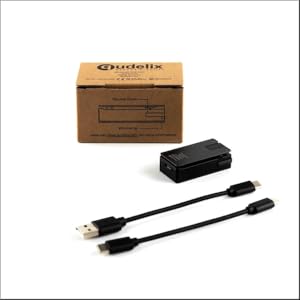
The Qudelix-5K is a compact, battery-powered Bluetooth USB DAC amplifier featuring dual ES9219 DACs for balanced and unbalanced outputs, Qualcomm QCC5124 chipset supporting LDAC and aptX HD codecs, and a customizable parametric equalizer. Designed for audiophiles and professionals seeking high-resolution wireless and wired audio with up to 20 hours of streaming, it combines portability, durable build, and advanced sound customization in a sleek, lightweight form factor.


| ASIN | B088F7C976 |
| Amplifier Type | Solid State |
| Best Sellers Rank | #4,958 in Electronics ( See Top 100 in Electronics ) #3 in Headphone Amps |
| Brand | QUDELIX |
| Color | Black |
| Compatible Devices | Phones |
| Connector Type | USB |
| Customer Reviews | 4.6 out of 5 stars 2,406 Reviews |
| Item Dimensions D x W x H | 1.05"D x 2.08"W x 0.61"H |
| Item Type Name | DAC AMP |
| Item Weight | 26 Grams |
| Manufacturer | Qudelix,Inc. |
| Model Name | Qudelix-5K |
| Number of Bands | 10 |
| Output Channel Quantity | 4 |
| Output Wattage | 5 Watts |
| Power Source | Battery Powered |
| Product Dimensions | 1.05"D x 2.08"W x 0.61"H |
| Speaker Size | 2 Inches |
| UPC | 860003628812 |
| Unit Count | 1 Count |
| Warranty Description | 1 year manufacturer |
A**R
Great PEQ OVERALL AMAZING
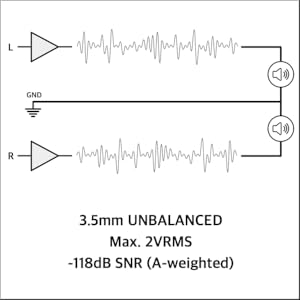
I really enjoy the Qudelix 5K both on the go and at home when plugged in. I use it with my Punch Audio Martilo IEMs on a Tripowin 2.5mm balanced cable, and my Hifiman Ananda Stealth V3 using a Meze Audio 2.5mm to 3.5 mono silver-plated copper cable. Both pairings work beautifully in wireless mode at 2 VRMS. I don’t really take the Anandas outside, but around the house the Qudelix makes them surprisingly versatile and easy to use without being tied to a desk setup. The Martilos are my travel set — great for store runs and general out-and-about use. Wired mode is where things really step up. Listening to lossless audio through USB with both headphones sounds wonderful. Some people say you can’t really hear the difference between lossless and Bluetooth, but in my experience you can — especially in clarity and separation. Bluetooth still sounds very good, but wired lossless has that extra clean edge. When it comes to PEQ, this is where the Qudelix 5K really shines. The parametric EQ system is one of the best features. You can build your own custom PEQ profiles or load presets from well-known audiophile sources. It makes it easy to fine-tune both the Martilos and the Anandas exactly how you want them. Battery life has been excellent in my use. With the IEMs I get over 10 hours consistently. With the Anandas it’s shorter — usually around 5–8 hours — but I solve that by using a low-charge battery pack (important — low charge mode). With that setup I can stretch runtime to around 14 hours with the Anandas and close to 24 hours with the Martilos. For anyone who needs something portable but still powerful and flexible, the Qudelix 5K delivers. The fact that all of this comes in such a small device makes it absolutely worth it.
S**S
Excellent Portable DAC/Amp if You Want Control and Options
This is my first DAC/amp. I bought it mostly based on the hype and positive reviews, and because I wanted something portable with a lot of flexibility. Overall this is an excellent DAC/amp for the price with a really strong feature set. Bluetooth supports most of the important codecs, and the balanced 2.5mm output is a big plus for something this small. In 2025 I do kind of wish it used 4.4mm instead, but it’s not a deal breaker. Sound quality is clean and has more than enough power for the headphones and IEMs I’ve tried. It also has battery passthrough and lets you set safe charging limits, which is a nice touch if you care about battery longevity. The app is one of the best parts. There are a ton of options, it’s actively updated, and it feels like the developers actually care about supporting the product. Build quality seems fine for daily use, but it’s basically a chunk of plastic with a clip, nothing fancy. The buttons take some getting used to, and there’s a lot I still haven’t messed with yet. This probably isn’t the device for someone who just wants super simple plug-and-play. But if you want flexibility and control in a small portable DAC/amp, it’s hard to beat for the price.
M**S
EXCELLENT, worth the price (I think?)
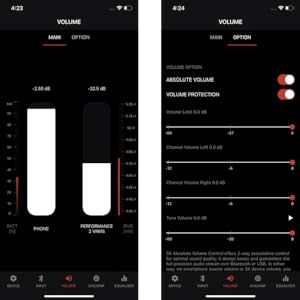
The Qudelix 5K truly is an awesome product. Don't know if it's exactly worth the price but it certainly is excellent. I've been using it paired with Truthear Hexa IEMs and with an iPhone/Mac/Windows PC over Bluetooth and USB (for each device). It's a great product effectively delivering a GREAT sound quality. I can't hear any difference with my IEMs used directly with the cable. It's awesome for this. With such IEMs, power will never be a problem as you'll completely annihilate your ears before you reach half the full volume of this thing. The volume automatically syncs with your device's so that it always delivers the best audio quality no matter the volume set on the source device (you don't have to worry about absolute volume on Bluetooth). The app is incredibly full of options. There's settings for EVERYTHING. I never had any lag when changing the settings, they're well saved, it's responding lightning fast, you can set an EQ with up to 20 bands... I can't say much about durability yet, but it's very small. I could fit two of these products inside a single hand. The clip is really good so I can attach it to my jeans, vest, or anything really. It's light enough that if it ever falls, the cable of the IEMs will retain it from falling. Oh and also, you can connect (simultaneously) up to 2 devices over Bluetooth as well as an additional device over USB (all 3 at the same time). It switches very intelligently and quickly over these 3 devices. The integrated microphone isn't very good, but I'm pretty sure no one will buy this product for that. If needed, you can plug in an external mic to use with it. It works flawlessly and is also available to set up within the app. If you're wondering whether you should buy this product, just buy it. It's EXCELLENT.
H**.
Qudelix 5k: A must have for any IEM user
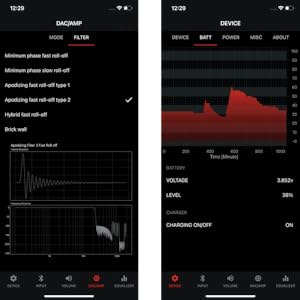
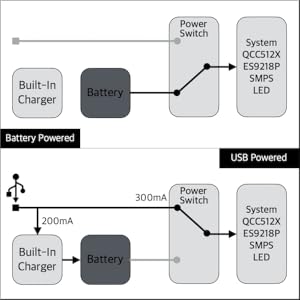
I was looking for a portable DAC/amp for my IEMs, and I found the Qudelix 5k in stock at Amazon. It is a killer Bluetooth DAC/amp, and I cannot recommend it enough. Build Quality and design: The build itself is decent, but the buttons feel cheap. Also, the button placement took me a while to memorize. On one side is the volume up/down button, and on the other side is the power, play/pause, and track skip/rewind button. The latter button has a bump so you can feel it by hand, but it took me a long while to feel the buttons and use the 5k without looking. Power and sound quality: The 5k is rated at 80mw single ended, and 240mw balanced (at 32 ohms.) Yeah, it doesn’t seem like a ton of power, but the 5k can easily power all my headphones and IEMs, ranging from Focal Elear, Moondrop Blessing 2, Moondrop S8, and even the Hifiman Sundara (though out of the 2.5mm balanced output.) As for sound quality, I can’t tell the difference between the Qudelix 5k and my JDS Labs Atom+ stack. App: This is the main reason to buy the Qudelix 5k. It has an app for Android and iOS, as well as a Chrome extension for PC and Mac users. The app has tons of functionality. The eq section of the app is its main selling point. You get a 10-band parametric eq along with all of the AutoEq presets by Jaakkopasanen. It includes all presets from Oratory1990, Crinacle, and others. This is perfect for iOS users who want the AutoEq function. For example, I bought the OG Moondrop Blessing 2, and I wanted to try the Dusk eq profile. I can easily do this via the Qudelix app on my iPhone. Another feature of the app I really like, and one I don’t see people mentioning, is the battery section. It shows you at what rate the battery life is decreasing/increasing, and it also lets you set the battery limit to 80% to prolong battery health. Also, when the Qudelix 5k is plugged in to PC/Mac, it bypasses the battery when in use. Conclusion: I highly recommend buying the Qudelix 5k for portable use. My main gripe is the odd button placement, and that’s it. The app functionality is amazing, the battery life is very good, and it has enough power for all my IEMs.
B**N
Pretty capable little device
I have playing with this little dac/amp for about a day. I've connected it to both my home PC (windows 10) and my iPad. I've been streaming from Amazon music HD and Pandora. Here's some initial impressions. The device itself is really small and the buttons are very small and awkward. It's tricky to not misfire because of their placement. It would be great if there were clear labels for each button. Curiously there ARE labels on the box it came in. Almost all of the adjustments are made using the Quedlix app. I've installed it on my iPad as well as the plug-in for Windows chrome. The app has a LOT of settings and the instructions are pretty sparse. I was able to get more information searching around on the web however. Although I was able to establish a bluetooth connection with each device, I've been mostly using a USB cable on both my PC and iPad. On bluetooth the quality is not quite as good 16bit/44.1k according to Amazon music. Hardwired I get 24bit/96k. The shining light on this device is the equalization options. There are many! You can switch between multiple configurations, 10 or 20 graphic equalizer, PEQ or use pre-sets. I have been fine tuning for multiple headphones. My go-to headphones are Beyerdynamic 990's. The amp drives these with ease. Once equalized the sound is quite pleasing with a decent soundstage. It is great to finally have an option to have a full-fledged equalizations for iOS devices. For a little over $100 I'm impressed with value and functionality. A few things I would appreciate: A discrete on/off switch and a discrete, well labeled volume control. This is definitely a device that requires some serious configuration to get the best out of it. I will update if I run into any issues. So far, so good. One additional note. There's a case available from the manufacturer's website but not Amazon. It's $2.00 with a $10.00 shipping fee to my areas. It would be swell for either Amazon to carry the product or for the manufacturer to include in the purchase.
F**Y
Fantastic modern alternative to the ES100 MkII just with worse battery life in my case
I had a bad cable on my IEMs which ended up damaging one of the amplifier chips in my EarStudio ES100 MkII (some crackling in the left channel on both 2.5mm balanced and 3.5mm unbalanced). When looking for a suitable replacement, I wanted something that was at least the same level of functionality and configurability as the ES100 but with USB-C. The decision came down to the Fiio BRT5 and the Qudelix-5K as both had USB-C and a 2.5mm balanced output (BRT15 was out since it did not have 2.5mm balanced). After seeing how configurable the 5K was through the app, it was a no brainer for me. SOUND QUALITY: In terms of sound quality, I cannot tell a difference between the ES100 MkII and the 5K. Granted, I have only used one set of IEMs for daily listening (Etymotic ER2XR) and cannot do A-B testing since my ES100 is damaged, so far from a scientific comparison. There is no hissing at all that I can tell when things are quiet or music paused. The volume goes higher than I would ever want to go. I have absolutely no complaints about the sound quality. It is honestly incredible how much value you get from something so small and portable! Definitely in the top of this price bracket! ANDROID APP: In terms of the app, it is a function over form sort of affair. It isn't the most intuitive layout with each section or page having multiple tabs. Sometimes it takes a bit of hunting around to find the setting you want to mess with. Also, there is a lot of plain text with little styling to distinguish between a simple status or reading and a configurable option. It is a simple black background with white, grey, and red text. The functionality is all there and I have no complaints about what it is capable of, just that it could use the touch of someone who specializes in user interfaces to take it to the next level. 5/5 on functionality, 3/5 on ease of use. BATTERY: As for battery life, this is really where I wish things could be better. Compared to my 2.5 year old ES100 MkII, I get significantly less battery life out of the 2.5mm balanced output on the 5K. I'm using the 5K in much the same way I did with the ES100: LDAC from my phone (44.1KHz sample rate, 24-bit, adaptive bitrate that often sits at 909/990), 2.5mm balanced output, ER2XR IEMs, similar listening volumes, no DSP/EQ enabled, no oversampling, battery charging limited to ~80%. With the ES100 MkII I could get 10-12 hours of listening on the balanced output. With the 5K, I'm only getting around 7-8 hours. I am charging every day or two which is too frequent for me (battery capacity will degrade to 80% of nominal in only a few years at this rate). That pushed me to create an adapter to turn my 2.5mm balanced cable into a 3.5mm unbalanced cable to see if I could notice a difference in audio quality and battery life. Using 3.5mm unbalanced with normal gain (1V RMS) and performance mode at the exact same listening volumes on the same IEMs, I get 10-11 hours of listening from an 80% charge (3-4 hours more than before). The audio quality is slightly worse as far as I can discern with everything being slightly more muddy and less refined, but I can only tell when looking for a difference, not during casual listening. Considering the gain in battery life is significant and I cannot make the 2.5mm balanced output battery life any better, I think I will continue to use my custom adapter cable that way I can choose between balanced and unbalanced at any time. I may also resort to simply plugging the 5K into a charger while sitting at my desk and disable charging so the battery doesn't experience any unnecessary wear. That is one thing I do really like about the 5K, the behavior when plugged into USB is very configurable and does not disconnect or interrupt the bluetooth connection unlike the ES100. I can plug into or disconnect from USB, change most settings, enable or disable charging, etc. all at will without interrupting my listening session. OVERALL: For me, the Qudelix-5k is a no-brainer for IEMs! The price is spot on for the features, sound quality, portability, and and flexibility you get out of this device. The battery life is less than I would like but I would consider myself a heavy user with 4-8 hours of listening most days of the week. Either way, this is certainly a device I can recommend!
B**S
Worth the money, works seamlessly
I purchased the Qudelix-5K to use with the IASUS High Def XSound 4 Helmet speakers. This combination is exactly what I was looking for. I wanted good quality audio in my snowmobile helmet. The Qudelix-5K powers the helmet speakers perfectly. They get plenty loud. I run the Qudelix-5K at about 60% volume level most of the time and I can hear my music clearly while riding at 60-70mph with my balaclava on. It automatically connects to my phone and with the settings in the app, you can configure it to your personal preference. My complete set up includes: Qudelix-5K (BT), IASUS High Def XSound 4 Helmet speakers (speakers), 3.5mm 4 Pole TRRS Audio Splitter Cable (connect my speakers and a mic to the Qudelix-5K), Headphone Extension Cable 4 Pole TRRS 3.5mm Extension. I run the cable extender from my helmet into my coat where I have the Qudelix-5K. Overall, this product works perfectly for my setup.
T**S
Amazing BT Receiver
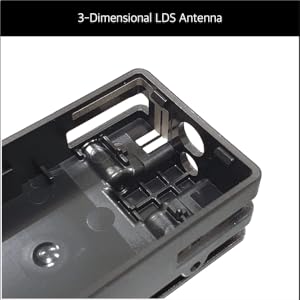
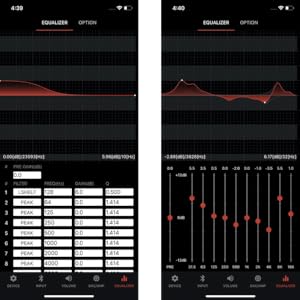
Hi.. I'd like give my view on Qudelix 5K after using it for almost 3 months. Hopefully what I share below could help others to understand better about this device. Qudelix 5K is a very sophisticated audio device. I notice it captures firstly/mostly the 'serious' audio lovers/enthusiasts. I myself like it so much and really amazed by its sound quality that I feel it necessary to introduce it to greater audience than just the audio enthusiasts. For this reason, I'm going to try explain it in a more simple than technical approach. In simplest term, device like Qudelix 5K can do two things: 1. As Bluetooth receiver (receive BT audio and send out analog audio) 2. As USB to analog audio dongle (USB-C to analog audio out) The USB-C port on 5K is dual function port. We could use it to charge the battery on 5K, or use it as interface for USB-to-analog audio dongle, or both. Qudelix 5K send out analog audio via the 3.5mm or 2.5mm jack on top of the unit. On either of this port we could connect earphones/headphones or send the output across to the external audio amplifier (i.e. home audio or car audio). (Note: the 2.5mm port is intended to operate in 'balanced' audio mode. If you have no idea what it is all about, please avoid to use it. Don't try to put in just any 2.5mm plug/cable, without proper 'balanced' wiring. 5K could be damaged by the wrong 2.5mm connector/cable.) Depend on how we like to use 5K, how deep we want to dig 5K capabilities and tinker with their accompanying mobile app, we could turn this device from sounding great to amazing. We could use Qudelix 5K just as simple BT receiver/audio dongle. The device have been pre-set up by manufacturer with optimum default settings. IMHO, the default settings on 5K is more than enough to make average/most listener to be happy with it. Enough to open them up to the world of improved audio reproduction and that while having the freedom of detached (i.e. wireless) earphone/headphone from their mobile phones. Please don't feel degraded/depreciate when I mention 'average'. By 'average' is I mean for people enjoying music more than concerning with how their audio equipment perform (that's why there's the term 'audiophile for this kind of love :) ). I myself is more of a music lover (80% of time) than audiophile, though I really love to hear my music sounding their best. Qudelix provide 5K with an accompanying mobile app (available for iOS on AppStore and Android on PlayStore). The app is intended to do many things such as: - to regularly upgrade the 'software' inside Qudelix 5K; to improve its performance and stability - to formally start the warranty of the 5K with the manufacturer - to adjust behavior when it is connected as USB dongle - to enable/disable certain Bluetooth audio codecs (note: by default all codecs are enabled) - to adjust the buttons behavior/actions - to adjust the power/battery management - to adjust it to get the maximum sound quality (remember: this one is not mandatory to get good sound out of 5K, as I mentioned above) - to set the built-in equalizer in 5K to adjust it to sound more to our flavor (note: human hearing and ear profiles are never the same person to person), or to 'correct' the imperfect characters of earphone/headphone, or compensate the room response of home/car audio system. - and few more The interesting part with the app is, the Qudelix app is actually just a user interface to set these settings on 5K. All the settings we do on the app are not saved on the app but directly on 5K and the app is no longer needed for 5K to perform. Settings on 5K will follow it everywhere regardless of the mobile phone or computer using 5K as BT receiver or USB audio dongle. So if in one occasion I used 5K with my friend's mobile phone or I used to test a mobile phone in the store, all the settings (including the sound profile) will just follow with 5K. With such capabilities of Qudelix 5K, the app then is a little bit complex to use. You'll need time to really understand and to use all the features. I myself confused on my first time using it. But don't feel too overwhelmed but the app, if you found it is too complex to understand it, just leave it. Qudelix 5K sounded already good with its all default settings. I don't want to cover all the settings and Qudelix capabilities here. Those could be found on their user guide. I'm going to list the things that I found amazing on Qudelix 5K. 1. Amazing Sound. I've repeated this many times above. It simply sound amazing. Be it used with just basic AAC/Apt-X codec, or very advanced codec like LDAC, or using as USB-audio dongle. It sounded many, many times better then my other BT receiver Maceton WM4U. It sounded two or three levels above my LG V20 phone; a phone that is highly respected for the sound quality: better resolution, better music layers, better power, more finesse. 2. Long battery life. This depend whether we want to maximize it for longer battery life or set it for best audio performance, we can get between 10 hours to 20 hours of play. 3. Powerful Driving Power Device like Qudelix 5K is technically referred to as DAC (Digital Analog Converter). DAC will receive audio in digital format and convert it into analog audio. Analog audio is then converted by the interaction of amplifier and transducer (i.e. speaker, headphones, earphones, etc.) to become audio wave so that we human can listen to it. Normally analog audio output from DAC alone is quite low and need external amplifier to sound louder. In Qudelix 5K case, it has built-in little amplifier that is powerful enough to drive various headphones/earphones load. The 3.5mm port is powerful enough to drive many headphones. But the 2.5mm balanced port would deliver double of power. In balanced, it's quite powerful to drive my very demanding Hifiman HE5LE planar magnetic headphone to sound quite loud. 4. Amazing Bluetooth range. Qudelix hype about the 5K unique BT antenna design, and they are not just hyping it up. I could get 5K play 8 meters away from my LG V20 phones, across 3 layers of brickwall (of about 6 inch each) at my home and that while I use LDAC as codec, and that streaming from my LG V20 that can only do BT4.2. 5. Amazing Equalizer Qudelix 5K come with two flavors of 10 bands equalizer; Graphic Equalizer (GEQ) and Parametric Equalizer (PEQ). Equalizer is done on digital domain with 64 bits precision calculation, which mean the EQ could adjust the level of frequency and amplitude of the sound without degrading the quality of the modified sound. GEQ is something that most people familiar with. But PEQ is a beast of equalization tool. It provides a much more flexibility for us to shape the frequency of the sound to affect the response of our earphone/headphone or room response of external audio system. Note that PEQ is usually considered as professional tool. But not necessarily professional audio equipment would have PEQ in it. Some lower/mid end even only have 3 to 5 bands PEQ. Amazingly 5K come with 10 bands very high precision PEQ in such a small package. By now, you should be able to see why I mentioned that Qudelix 5K is such a sophisticated audio device. Inside its understated appearance, Qudelix 5K is really an amazing, highly customizable and state of the art audio device. Below is the list of audio device I used with 5K this far. Earphone: Sony MH755, Blon BL-03, Fiio FH1 Headphone: Drop E-MU Purpleheart, Audeze Sine (in balanced), Hifiman HE-5LE (in balanced) Source (BT transmitter): LG V20 Music/songs: I don't limit myself with certain genre of music. I listen everything: classical/romantic/baroque/renaissance, rock (progressive, rock'n'roll, hard rock etc.), jazz (all derivatives), metal, pop, folk/country, vocal, etc. PS. Qudelix 5K has built-in microphone, which is very sensitive, but don't have noise cancellation. The voice coming out from the microphone is actually very good, but if we clipped Q5K to clothes it could easily pickup the noise of 5K rubbing the clothes and send across the sound to the other end. If we don't like this, and our earphone has built-in microphone, we can turn the 5K microphone off and instead using the external microphone on our earphone/headphone. In the other way around of usage, if our headphone/earphone don't have microphone (or we send audio output to amplifier for example) we could use the built-in microphone on Q5K for making a call. PPS. Comparing Graphic Equalizer (GEQ) and Parametric (PEQ). In GEQ, frequency range of human hearing (20Hz to 20KHz) are divided into about factor of two frequency scale (31.5, 63, 125, 250, 500, 1K, 2K, 4K, 8K, 16K) with fixed width of frequency range 'impact' for boost or cut as peak/valley. PEQ is a much more sophisticated equalizer in that this frequency scale can be adjusted freely by us, for how wide the impact would be, and whether the impact is affecting as peak/valley or as shelfing filter. Don't be confused and overwhelmed by this PEQ. It seems complicated at first but is really not that difficult to use. What makes it complicated is to effectively use PEQ to shape a headphone for example, we would need to have the frequency response measurement of the headphone. With that we will know on which part of response the phones are the lacking or having too much of volume. Then we rectify these with the PEQ. Luckily some sites readily share their measurements such on this list: https://www.reddit.com/r/oratory1990/wiki/index/list_of_presets The PEQ sample I attach as one of picture, show my way to correct the response of my Fiio FH1 IEM. I don't follow any 'Harman' Curve but use other excellent sounding IEM for reference. Without the EQ, it sounded smooth but flat and unexciting. PEQ turn it into a lively sounding IEM I could never imagine before.
Trustpilot
2 weeks ago
2 months ago