⚔️ Conquer, Decline, Repeat — Own the Small World of Strategy!
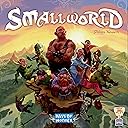
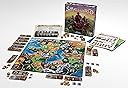
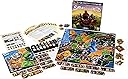
Small World is a dynamic fantasy area control board game for 2-5 players aged 8 and up, featuring 14 unique races and 20 special powers. Designed by Philippe Keyaerts, it offers fast-paced, strategic gameplay in 40-80 minutes, combining easy-to-learn mechanics with deep tactical choices. With premium components and endless replayability, it’s the perfect game for family nights or competitive sessions with friends.


| Number of Items | 1 |
| Item Weight | 4.2 Pounds |
| Item Dimensions L x W | 11.62"L x 2.88"W |
| CPSIA Cautionary Statement | Choking Hazard - Small Parts, No Warning Applicable |
| Color | Multicolor |
| Theme | Fantasy |
| Are Batteries Required | No |
| Material Type | Plastic |
C**T
One of the best competitive Euro-strategy/war games I've played yet!
Just adding another positive review here. We play a LOT of Euro (mainly German) board games, and this is a fantastic addition to our gaming library. Smallworld seems a little silly looking, judging by the box, but I assure you, this is a smart and fun game for fans of Euro board games. I wouldn't recommend this as the first Euro game to try (Carcassonne and Samurai are worthy starter games in the Euro realm), but it's a great game that has multiple layers of complexity and strategy. Most of all, it's fun! And HIGHLY competitive. 2-5 players 30-80 minutes (not sure what the box says, but my partner and I can play a round in 1/2 hour) Ages 10+ ** I know the Amazon description says 10-14, but that is not what the manufacturer states on the box (which is 10+) ** Some folks compare this to Risk, but I would say this is to Risk as a bicycle is to a Ducati. In a nutshell, you and your friends take turns conquering territory and reassigning your units. So it DOES sound like Risk! But wait! You don't have a singe army or race, instead you shuffle several races, and bonuses and place 5 on the board. Players pick from these 5, paying Victory points to select further down the five (first one is free). Once the player chooses, another is drawn and placed while the others move up to fill the gap. What this means is that each time playing, players will have different races with different stats, and different bonuses. So you might end up with Elves with the Berserk bonus, or Ghouls with Seafaring bonus (seafaring ghouls lol!). There are tons of combinations, and each has ups and downs. There are four maps on two sided heavy cardboard fold outs: one each for 2, 3, 4, and 5 player games. This makes it easier to get competitive and combative instead of trying to have two players duke it out on a huge 5 player board! Setting up the map is easy once players get the hang of it. On the first turn players start by invading the land from the edge of the board, unless they are seafaring, then they can invade water to start. Once you start invading, you end your turn (with an option to roll the reinforcement die on your last attack) and then redistribute your armies. You have to leave at least ONE unit on a territory during your attack phase or you can't redistribute on it. Each territory you have gives you Victory points. So you REALLY want to control more territory at the end of your turn. This also means you REALLY want your opponent to control less. The other twist comes from balancing your civilizations. You can elect to allow a civilization to go into decline, thereby gaining the chance to start a new civilization on your next turn. You gain points for your declining civilization, but unless stated otherwise (such as ghouls), these declining civs have no more actions and can only hold a spot on a territory until beaten off. Since you only have a finite number of units to use, once you start losing units (from being attacked), you find you are spread too thin and MUST start a new civilization to keep gaining VPs. So a KEY part of strategy is deciding when to lose a turn to allow your current civilization to go into decline. Each player keeps their VPs hidden, so at the end everyone tallies and it's always a bit of a surprise. I've found a few times I thought I was surely losing and that I won handily. Other times the opposite has been true. Regardless, this is a fantastic, fun, and innovative game. Highly recommended!!!!
R**N
There's Something About Conquering a Map...
Conquering a map is so satisfying. I don't know why, but it is. Small World is a great game, as long as you know what you are getting. It's a low-to-mid-weight Euro-style strategy game, easy enough for kids to learn, but with enough strategy in it to appease adult strategists. It is not, however, a deep strategy game that will excite people looking for another version of Twilight Struggle, Puerto Rico, Agricola, etc. PREMISE The idea of Small World is to take a group (elves, trolls, humans, etc.) and randomly pair them with a special ability (flying, seafaring, commando, etc.) to get a unique combination of special powers, and then dominate your way across the map. Naturally, you will suffer from the "spread too thin" phenomenon of Risk, and your opponents will eventually plow through your pieces like an NFL player on a Pop Warner team. BUT, better than Risk, you don't have to stick with that group. You can give them up, selecting a NEW combination from the table, and start re-plowing through the opponent that just plowed you. (Or, you can conquer a different part of the map.) This keeps the game feeling fresh. REPLAYABILITY As I mentioned in the premise, the various combinations of groups, combined with a blank group card and a blank special power card, give this game a high amount of replay factor. It's also a GREAT game for 2 players. You can even control two different groups each and play on the four-player board, as I've done, for a different, more challenging, and zanier experience. STRATEGY LEVEL This is a low-to-medium-weight game. It has strategy along the lines of games like Settlers of Catan and Ticket to Ride. Those looking for a good family game with more strategy than average (almost no dice-rolling!) will love Small World. If you're looking for map conquering, this has got it. If you're looking for a long-term strategic, deeply contemplative game with lots of planning, seeing a visionary strategy through to completion, this is not your game. However, I am a lover of the Puerto Rico-type deep strategy game, and I absolutely love Small World to play as a "break" game in between long strategic sessions. It has enough strategy to appease my appetite for that kind of game, but is fun and lighthearted enough that I don't have to think too hard about what I'm doing. TIME COMMITMENT You can vary the amount of rounds that you play, using house rules, if you want. If you play the full game, it will take 45-60 minutes for a 2-player game. The first game takes a bit of getting used to, what with the rules and the specific special abilities of every type of group, but the mechanics are easy enough to pick up, and after one tutorial game, you should feel confident. Setup takes a few minutes, and there are many small pieces, so make sure you account for that. OVERALL I play it 2-player with my girlfriend all the time, and we love making up various house rules as well as playing it according to the rulebook. I've also played it multi-player, and it's even more zany and fun. A good addition to any game shelf.
A**A
A Multi-Game Comparison
Plenty of people have done an admirable job of explaining the games in their reviews, so this is instead an attempt at a comparison between a number of games, the pros and cons of each and which may suit different people best. The games in question are: Carcassonne, Settlers of Catan, Castle Panic, Smallworld, and Forbidden Island. We have had Settlers of Catan and Carcassonne (with a number of expansion packs) for quite a few years now, and only recently added the other games above. We usually either play just as two adults, or with our two older children (age 9 and 8), and so our conclusions are based on how these games work in those settings. So here's what we've found: Settlers of Catan We got this around the same time as Carcassonne and initially just didn't latch onto it. Partly it's that it's supposed to be 3 players or more, and we often play as just two of us. Once we found online some instructions for playing as 2 players it came out more often, and as time's gone by it's become fairly 50-50 whether we play Settlers or Carcassonne on a quiet night in. The choice will usually depend on how much we want to think. With Settlers, you're always planning and calculating; with Carcassonne, you're taking it a card at a time. Who should get it: Settlers is well-known as one of the great modern games. I'm not as sold on it as some people, and it takes quite a while to learn and feel comfortable with, but once you get the hang of it, it is an entertaining and enjoyable addition to a games collection. There are several 2-player rule variations out there if you need them and they work well (we found one that worked for us and we've stuck to it). But this isn't a game for kids; I would suspect not until they're 16 or so. Amongst other things, I think they'll find it too dull. Carcassonne This has been a favorite for years now, and everyone we've played it with has gone off to get it themselves. We usually play without farms because it then becomes less directly competitive and more sociable. Kids can play it, adults can play it, it's relaxed, it's fun and it's simple to learn. Here's one nice thing about it: you don't have to be constantly thinking and planning ahead. You don't know what card you're going to draw next time, so you just play one card at a time. You're encouraged to discuss where to put a card, and since you don't know what piece you're getting next, your comments to another player are usually pretty unbiased. Who should get it: In my experience, pretty much anyone, except those who want ultra-competitive games. The first few expansion packs are also well worth getting, but don't bother with anything from Mayor onward. Castle Panic The kids love this one, again it's simple to learn and it has the added bonus of allowing them to get out their aggressive instincts and go postal on monsters! They don't like the `master slayer' option, but prefer just straight cooperative play. After the first few plays, I've found the basic game is too easy, and so we're experimenting with making it more challenging, such as starting with no walls, or drawing 3 monster cards at a time instead of 2. I think Castle Panic will become a game that we get out pretty regularly to play. Who should get it: People with kids, who want to play cooperative games. Could be fun as a party game too! Smallworld While the kids have enjoyed playing this, I think their interest is starting to wane already. I suspect it will work better as a game with a group of adults, or when the kids are older. It has a lot going for it, especially the creative cards and board, but as others have noted - what's with the box for the tokens? Very poorly designed and adds unnecessary annoyance. Most of the time when playing we've found it's not too directly competitive, it's easier to attack lost tribes or declining races, so generally it doesn't get too personal! Who should get it: I think this would make a fun addition to a games collection, but I don't think it would be a go-to game, especially with kids. The rules are more complicated to learn and explain than the other games, and this makes it hard to just sit down with new players and get on with a game. Having said that, we've enjoyed playing it , and I think it'll get pulled out every now and then over the years. Forbidden Island Although the kids would prefer Castle Panic, when we've played Forbidden Island (at my insistence!) they've thoroughly enjoyed it. As the island starts to collapse in a heap toward the end of the game, the tension levels rise and people are on the edge of their seats! The game always ends with voices rising in pitch and tension as cards get turned over - it's fun! It's a pure cooperative game, and that works well for us as a family - no one feels bad, we're all in it together. We're still using the `Normal' level of play, maybe we'll notch up a level soon! Who should get it: If you like cooperative games, I think this is excellent to have. I love how easy it is to set different difficulty levels, and it's definitely the game that's had the most excited tension - Castle Panic has this at times, but not sustained (at least as the basic game). It doesn't have the whole monster thing going for it that Castle Panic does, and I think that's why the kids haven't latched onto it so quickly (kill trolls or wander round an island getting treasure - which is your average kid going to choose?) but I suspect that long-term it'll have more staying power.
M**L
Awesome.
If you have done any research on this game before purchasing you know that it plays similar to Risk. The only similarity is that you have a faction that is conquering territory, but the actual battle mechanics are different, to the point where you don't even use a dice except in isolated incidents. You might also have discovered that some board game geeks complain that there isn't enough strategy or too much diplomacy. Ignore them. Pro: You don't "die." You as a player stay in the game for the entire time. The varied races are awesome. Artwork is gorgeous VERY EASY TO LEARN Enough strategy for it to be fun. Con: Game is more diplomatic Simply put: there is enough strategy for the game to be interesting: imagine a diceless risk. The outcome isn't as determined by the throw of the dice, but by your good strategy. However, as others have complained, winning or losing does indeed get swayed by diplomacy a little too much; often in one turn horrible things can happen to your newly acquired race all because someone decided to stomp you instead of another guy. When I first purchased this game, I didn't know about that and since I don't like games with a lot of diplomacy involved I was nervous upon discovering that complaint before I actually played it. But the group I play with are a bunch of swell players so in the end that little "flaw" didn't make much of a difference. Forget its supposed faults; just PLAYING it is fun, whether you win or loose! So if you looked at places like boardgamegeek.com and saw the complaints about not enough strategy or too much diplomacy, remember that the people writing those review are BOARD GAME GEEKS; they love strategy and a LOT of it. Small World rocks because it appeals to every one else. And besides, it's a world of slaughter, after all :)
S**E
Excellent game for experienced players and newbies
Small World is like a better Risk. Depending on your number of players, there are four different maps to use and you'll play 8-10 rounds. While it's a similar concept to Risk, this game is very much strategy and your ability to win is based more on the choices you make during your turns. You start with a race that's been randomly paired with an ability. Certain abilities give advantages around the board, but inevitably the race you start with becomes overextended and it's time to put them into decline. You'll pick up a new race with a new ability in order to continue conquering the board against your opponents. You'll have to decide the best time to go into decline, the best race/ability combos to grab, and the best moves to make to successfully rule Small World. In the end, the person with the most victory coins is the winner, so even if someone has most of the board in the last round, there's always the possibility someone else comes out ahead. The first time we played, we played with the max of 5 players which honestly may have been too many. 3 or 4 is probably more ideal, but the great thing is that this game also works with only two players. It was easy for a group of adults to learn, but would be difficult for younger kids. An 8 year old would probably have difficulty understanding it all without adult assistance. There are also a lot of pieces, which can be cumbersome. Overall, this is a great game to add to game night with a lot of replay value.
A**R
Small World is a very good transitional game
Small World is a very good transitional game. New board gamer will find similarities to risk and seasoned players will find enough variation and strategy to keep them occupied. OVERVIEW: Small World is played on a series of maps (depending on how many players) that players will compete to take over territories and defend from other players. Players choose from available races and power ups to play as and will end up most likely having 2-3 over the course of the game. Players enter the map from one of the locations on the board and expand by placing two of their race tiles plus whatever defenses are on that territory and score on coin (VP) for each. Between the races and power ups often certain territories will cost less to take over or pay out more. The power ups are randomly assigned to the races and players bid on which race they want when it's their turn to choose. When you've done all you can (or wish) to do with your race, you put them into decline and start over with a new one. Games are 8-10 rounds depending on how many players and should take about an hour - hour and a half. PROS: Because the concept of expanding and defending territories is similar to Risk inexperienced board game players seem to be more apt to try this game out. The experience board gamer will find a lot of fun in trying to maximize synergies and out maneuver the other players. It has a limited number of rounds which keeps the game at a great length. This is at it's core a fun light hearted game that even if you are getting creamed you never really feel like you are losing. The game is never boring even if certain races or power ups may be. The boards are designed for how many players and are just small enough that you constantly are tripping over other races so no one can just hang back and stay out of the battles. CONS: Without expansions the initial race and power combinations is limited. Many of the special abilities are just bonus points for owning particular types of land which is kind of boring. There are a ton of expansions so this is easily remedied.
H**3
Beautiful Game with Years of Play-ability
My husband and I were introduced to this game via Geek & Sundry's weekly table top gaming show called TableTop, hosted by Wil Wheaton. I'm not sure if I can link to a YouTube video here or not, but if you're on the fence about this game and would like more information about how to play it and what it's like, I'd highly recommend you watch TableTop Episode 1 where Wil Wheaton, Grant Imahara (yes, from Mythbusters) and friends play Small World: www youtube com/watch?v=X9QtdiRJYro I first fell in love with this game because the artwork is just gorgeous, and my husband loves it because it's a "Risk"-style board game that I can get into because instead of little colored blocks, I get to play elves, wizards, amazon women, dwarfs, etc. SmallWorld is a highly imaginative, strategic world domination type of game, but because of the interchangeable characters/abilities cards, you will be able to play for years without playing the "same" game twice. It's a perfect introduction to strategy games for children and is still clever enough to be hours of fun for adults. And, one of the things I love best about this game is it has a 2-player board so my hubby and I don't have to have people over to play it like we do some of our other games like Settlers of Catan (which is also a fabulous game, in case you were wondering). If you are looking to add a new strategy game to your table top gaming rotation, my husband and I give this one two thumbs up and would suggest it to anyone. And, I promise it's definitely worth the price--not only is this game beautiful and exciting, it's very well-made, with durable pieces, four different sturdy boards containing various map sizes, and individual playing rules "placemats" so everyone has the rules right in front of them the whole time (which I think is absolutely brilliant).
W**M
Great Risk-esque Strategy Game
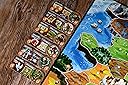
This has become a new favorite in our household. It is a lot of fun, with complex strategy decisions and infinite replayability. It's probably not for completely casual gamers, however, because it does come with a *lot* of pieces and can be pretty overwhelming the first time or two it's played. The game employs a lot of simple mechanics, but there are so many different ones that it takes a while to wrap your head around them. Luckily, the game comes with several cheat-sheets to pass out that makes everything a lot more manageable for new players. If you take them just one at a time and play a few games, it all starts coming together pretty quickly. Small World is a Risk-style territory conquer and control game with a few twists. First, you don't win simply by controlling all the territories (in fact, I'm not sure that it's even possible). Based on the territories you control and any modifiers you have at the end of your turn, you get gold pieces, and whoever has the most gold pieces at the end of the game wins. The interesting part comes with *how* you conquer those territories. There are a certain number of races and modifiers that get shuffled and stacked together at the beginning of each game. Each race has it's own special ability and each modifier adds something new and different to that race (more gold each turn, easier to conquer certain types of territory, better defence, etc.). There are only ever 6 of these random combinations available throughout the entire game, so the odds of you being able to play one game exactly the same as another are very slim. You're forced to play every game differently from the last and adjust your strategy and reactions accordingly. It's great for anyone who loves to play strategy games! If you're a big fan of board games but not a hardcore strategist, don't be discouraged because there are several ways to win. We've had several games be won by the mild-mannered player in the corner who's avoiding everyone but racking up steady gold while the rest of us are fighting amongst one another. For 2-5 players, it's a great addition to anyone's collection.
Trustpilot
1 week ago
5 days ago