We remain fully operational. Our teams are working around the clock to ensure your deliveries continue safely.

DOWNLOAD THE APP


Customer Services
Copyright © 2025 Desertcart Holdings Limited
DOWNLOAD THE APP
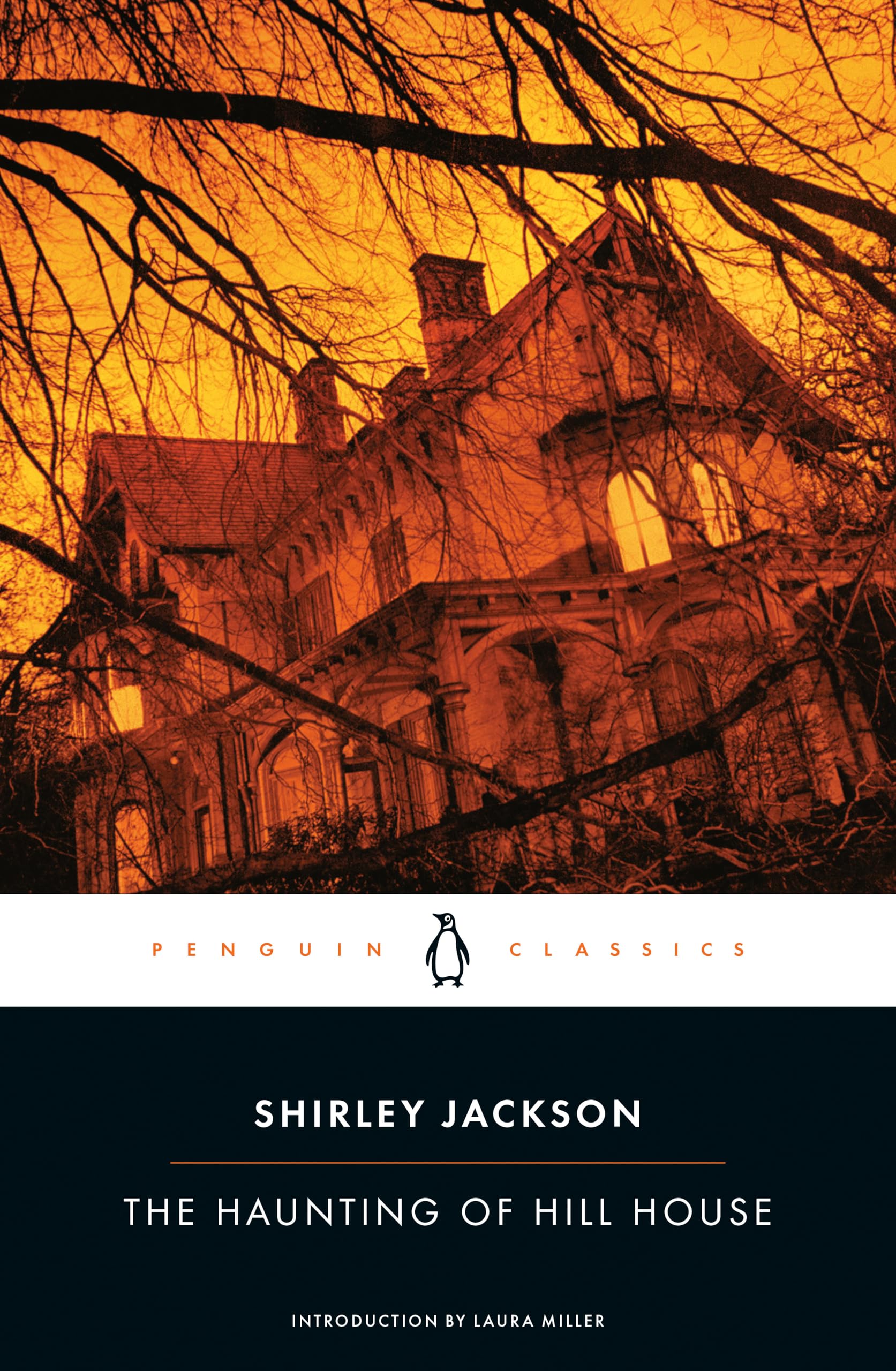
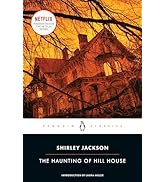
The Haunting of Hill House (Penguin Classics) [Jackson, Shirley, Miller, Laura] on desertcart.com. *FREE* shipping on qualifying offers. The Haunting of Hill House (Penguin Classics) Review: Slow start, but fast ending - From molasses to an uncharacteristic ending, The Haunting of Hill House brings the reader many emotions that sets itself aside as an uneasy classic horror novel, which leaves the reader in awe from start to finish. Although myriads of clues pop up in and out of the book that the reader would infer comes up later in the book, Shirley Jackson takes everyone for a twist and defies the modern plot structure that so many horror novels follow. I found this book special because The Haunting of Hill House engulfs the reader with an intense plot twist through keeping the reader confused through a slow beginning and hitting the reader with intense action in the second half of the book. Hill House keeps you in the beginning of the book for possibly a century, but at the end, the slow start exposes itself as almost being needed for the development of the end. The grounds are laid out for the plot, literally with chapters upon chapters analyzing characters, the house layout, and the infamous builder, Hugh Crain. The opening eerily states that the house “had stood so for eighty years and might stand for eighty more”, describing it as standing “against its hills, holding darkness within it” (Jackson 1). I could never appreciate this line until now because it comes so clearly to fruition, and takes the reader back to ponder on the entire basis of the plot itself: why Dr. Montague invited the guests to this abandoned, tarnished property. The second half of Hill House goes by in a flash and keeps you trying to hold on to the final scene for as long as possible. Shirley Jackson writes more than likely one of the best endings to a horror novel ever, taking the reader back to the opening parts of the book when they narrowly plow through the gates of Hill House. Only this time, the reader exits the gate and leaves with many questions unanswered, and many questions completely torn by the scenes the reader never anticipated. Each chapter brings something more terrifying to the table, and serves as not only an attachment piece to the reader, but as a mile marker to see the closeness of the shocking conclusion. The scenes that digressed reminded the reader that “whatever walked there, walked alone” (Jackson 182). I had some very bad feelings towards the book in the beginning for good reason, because I could not fully comprehend why the book started as so elongated, but now looking back, appreciate these descriptions far more in order to understand what happens in the final chapter. I would definitely recommend reading this book with patience and a very open mind to what can possibly happen. The language does not distract the reader, rather it invites the reader into something more sinister than what they could imagine. The language invites oneself into Hill House, and then the paranormal takes it from there. -D.F. Review: A short book artificially inflated by an opening essay - The story itself is quite short and relies almost entirely on psychological horror. The page counted is padded with an opening essay, perhaps in an effort to justify the $11 the publisher wants for this book. Ah well, the story was very good. Our main character is Eleanor, who's called to Hill House (along with a few others) by Doctor Montague. Montague is looking to record ghostly phenomenon. He needs something solid, because as an academic, he's under ridicule. Nobody believes in the paranormal, of course. Hill House is creepy and oppressive--and said to be haunted due to the tragedies that happened there. It actually imitates the life Eleanor is coming from (she even has to steal a car in order to break free from that life). Immediately, we can see that, while Eleanor is enjoying her freedom, there's something not right about her. It's the unreliable way she narrates, how she attaches herself to a favorite person, the way she talks. The hours roll by in Hill House and it soon becomes apparent that it may not be the house that's haunted. The Haunting of Hill House book is way better than the Netflix adaptation. In fact, I almost passed up on the book because the adaptation was so bad. Very glad I didn't. It's a short, quick, tense read with an ending that makes you go, "oh heck". One star lopped off for the opening essay. Written in the 1950s, The Haunting of Hill House isn't old or foreign enough to *really* require an opening essay to get you familiarized with the time and place.


| Best Sellers Rank | #4,174 in Books ( See Top 100 in Books ) #79 in Gothic Fiction #121 in Psychological Fiction (Books) #453 in Psychological Thrillers (Books) |
| Customer Reviews | 4.1 4.1 out of 5 stars (27,686) |
| Dimensions | 5.09 x 0.53 x 7.74 inches |
| Edition | 1st |
| ISBN-10 | 0143039989 |
| ISBN-13 | 978-0143039983 |
| Item Weight | 5.6 ounces |
| Language | English |
| Print length | 208 pages |
| Publication date | November 28, 2006 |
| Publisher | Penguin Classics |
A**R
Slow start, but fast ending
From molasses to an uncharacteristic ending, The Haunting of Hill House brings the reader many emotions that sets itself aside as an uneasy classic horror novel, which leaves the reader in awe from start to finish. Although myriads of clues pop up in and out of the book that the reader would infer comes up later in the book, Shirley Jackson takes everyone for a twist and defies the modern plot structure that so many horror novels follow. I found this book special because The Haunting of Hill House engulfs the reader with an intense plot twist through keeping the reader confused through a slow beginning and hitting the reader with intense action in the second half of the book. Hill House keeps you in the beginning of the book for possibly a century, but at the end, the slow start exposes itself as almost being needed for the development of the end. The grounds are laid out for the plot, literally with chapters upon chapters analyzing characters, the house layout, and the infamous builder, Hugh Crain. The opening eerily states that the house “had stood so for eighty years and might stand for eighty more”, describing it as standing “against its hills, holding darkness within it” (Jackson 1). I could never appreciate this line until now because it comes so clearly to fruition, and takes the reader back to ponder on the entire basis of the plot itself: why Dr. Montague invited the guests to this abandoned, tarnished property. The second half of Hill House goes by in a flash and keeps you trying to hold on to the final scene for as long as possible. Shirley Jackson writes more than likely one of the best endings to a horror novel ever, taking the reader back to the opening parts of the book when they narrowly plow through the gates of Hill House. Only this time, the reader exits the gate and leaves with many questions unanswered, and many questions completely torn by the scenes the reader never anticipated. Each chapter brings something more terrifying to the table, and serves as not only an attachment piece to the reader, but as a mile marker to see the closeness of the shocking conclusion. The scenes that digressed reminded the reader that “whatever walked there, walked alone” (Jackson 182). I had some very bad feelings towards the book in the beginning for good reason, because I could not fully comprehend why the book started as so elongated, but now looking back, appreciate these descriptions far more in order to understand what happens in the final chapter. I would definitely recommend reading this book with patience and a very open mind to what can possibly happen. The language does not distract the reader, rather it invites the reader into something more sinister than what they could imagine. The language invites oneself into Hill House, and then the paranormal takes it from there. -D.F.
M**N
A short book artificially inflated by an opening essay
The story itself is quite short and relies almost entirely on psychological horror. The page counted is padded with an opening essay, perhaps in an effort to justify the $11 the publisher wants for this book. Ah well, the story was very good. Our main character is Eleanor, who's called to Hill House (along with a few others) by Doctor Montague. Montague is looking to record ghostly phenomenon. He needs something solid, because as an academic, he's under ridicule. Nobody believes in the paranormal, of course. Hill House is creepy and oppressive--and said to be haunted due to the tragedies that happened there. It actually imitates the life Eleanor is coming from (she even has to steal a car in order to break free from that life). Immediately, we can see that, while Eleanor is enjoying her freedom, there's something not right about her. It's the unreliable way she narrates, how she attaches herself to a favorite person, the way she talks. The hours roll by in Hill House and it soon becomes apparent that it may not be the house that's haunted. The Haunting of Hill House book is way better than the Netflix adaptation. In fact, I almost passed up on the book because the adaptation was so bad. Very glad I didn't. It's a short, quick, tense read with an ending that makes you go, "oh heck". One star lopped off for the opening essay. Written in the 1950s, The Haunting of Hill House isn't old or foreign enough to *really* require an opening essay to get you familiarized with the time and place.
A**R
Not as good as I expected
While there is no denying that Shirley Jackson's The Haunting of Hill House is a horror classic, I was surprised by just how dated the novel actually is. Jackson's characters sound so inauthentic that it is hard to find them believable. The novel was made into a movie in 1963, and Jackson's dialogue sounds a lot like bad film dialogue from that era--fast, corny, and artificial. It takes Jackson well over half the book before anything "supernatural" occurs, and while that does give her a lot of time to develop the psychological aspects of her protagonist, Eleanor, I found it frustrating. Personally, I didn't like Eleanor much; she seems to be as "inadequate" as she fears she is. I found that her incessant self-doubt and her half-hearted attempts to convince herself that Theo, Luke, and Dr. Montague actually like her eventually wore very thin. Some other problems I had with the novel were that I felt Jackson's explanation of Hugh Crain's behavior in life more bizarre than frightening, and the late introduction of Dr. Montague's annoying wife and her "man-friend" Arthur really taxed my patience. However, I did find Theo's thinly-veiled, aggressive "lesbianism" very daring for its time, providing a very rich contrast to Eleanor's passive milquetoast personality. While their relationship never blossoms into anything erotic, there are plenty of scenes with the two of them cuddling in bed and wearing each others' clothes. Theo wears pants (very daring in 1959 when the novel first appeared)and shares an apartment with another woman. Eleanor eventually asks if she can move in with Theo after the summer at Hill House, but by that time, even Theo has grown tired of Eleanor's neediness and rejects the suggestion. The last quarter of the novel really devolves into a surreal portrait of Eleanor's inability to cope with the others' rejection of her. Having failed to further her relationship with Luke, and also having been rejected by Theo, she seems to waver back and forth between being alive and being a ghost, something that may offer commentary on our need "to belong," but ultimately left me more confused than intrigued. Overall, The Haunting of Hill House is a book that most horror fans should read. At only 180 pages, it is a fast read and is far superior to the 1999 movie adaptation. While there is enough in the book to warrant investing one's time in reading it, it does not really stand the test of time as much as I had hoped.
P**L
I have read plenty of horror novels but Haunting of Hill House was the best up till date. It was so different from others. An experiment gone wrong, a scientist playing with the minds of others to the extent of losing their sanity. This book haunted me long after I had finished it. Five stars for me.
E**K
Sayfanin bir tarafi yazilar net canli siyah yazili. AMA diger tarafi soluk renkli yazi var. Bazi kelimeler silinik. Okunmuyor.
M**A
La parte de terror tarda un poco en ponerse en marcha pero la espera vale la pena! Buenos personajes y grandes escenas de miedo.
B**T
“No live organism can continue for long to exist under conditions of absolute reality; even larks and katydids are supposed, by some, to dream.” I’m obsessed, you don’t understand, that line IS SEARED into my brain, how am I supposed to be normal about this?? you write an opening sentence like that, and I would follow you to the ends of the earth!!! The second I’d read that sentence I felt it in my bones that this novel would bag one of my rare 5-star ratings. It reads like poetry, it reads like magic, it reads like beauty on the outside, with danger lurking on the inside. Long have I known about Shirley Jackson and the cult-like status she (rightly!) enjoys not only among horror fans, but in the English literary world in general. As such, the fact that this edition is blurbed by Stephen King – king of horror for obvious reasons – is a bit misleading, and unfair. Misleading because I expected the same kind of horror I’d expect from It or Pet Cemetary; unfair because Shirley Jackson did everything King does now, only decades earlier. If still alive, SHE should be blurbing his books. And no, Shirley Jackson does not write horror like King, and if you hear “horror” and all you can think of is “clown” and “undead animals” and if you then go into a horror novel expecting exactly those things from it only to end up being disappointed and letting that disappointment influence your rating, then I’m sorry because it means the term has become so uniquely specific, it excludes almost everything else that makes horror horror. It also means you should read something that is NOT what you think horror is. No, Shirley doesn’t do King’s horror; instead, she writes about a supposedly haunted house, a doctor curious enough to move there and investigate it, and two women and a man who are just bored, adventurous, and lonely enough to move in there with him. Taking course over just a week or two, the experiment of trying to find and explain the reason for the haunting of Hill House, the house and its characters are slowly coming undone, pulling readers into unknown depths of disbelief, deceit, and despair. Mainly told from the first-person perspective of Eleanor Vance, who arrives at the house with a car stolen from her sister (it’s half hers!) and her mother freshly six feet under, we are thrust into a setting in which “the haunted house” becomes a character in its own terms, more substantial than any of the novel’s human characters and granted far more attention than any of them except Eleanor. This short story packs such a punch, it’s almost unbelievable, given how little is neither confirmed nor denied and how much is left up to our imagination. And yet… and yet, Jackson knows exactly where to drop that little word, that sentence that is sure to let your thoughts run wild. It’s almost impossible to consume this story sitting still. Shuffling, walking, changing sitting positions, breathless laughter over a clever pun, it’ll all happen, guaranteed. The switch between Eleanor arriving at the house, afraid and small but simultaneously hopeful and excited for her life to start turning into a ferocious, jealousy-ridden, giggling, angry woman happens both so quickly and slowly that when you blink, the entire character has changed within the span of a second, and you blink again, and you think it must have all been a figment of your imagination. Is this genuine horror? Is the house really alive or filled with ghostly entities? Or is this a psychological terror of the mind that has Eleanor’s (in Freudian terms) Id and Superego fighting a battle of wills? The juicy and uncomfortable truth: it is up to the reader to determine what is “really” going on, and if we believe that wherever these characters came from before they arrived at Hill House is indeed the real world. This book is so clever, and the language is so smart and timeless, at times I could not believe Shirley wrote dialogues this sharply modern. I read what the characters were saying and what Eleanor was thinking, and there wasn’t a doubt in my mind that some of those lines are exact replicas of what some of us would say were we in the same situation. It’s cutting, and it’s absurd, and it’s EXACTLY RIGHT. This novel will be re-read and re-read and re-read because it’s great, it’s smarter than me. Because I need to underline sentences and scribble in between the lines next time I read it because reading it is like staring at a rotten brain carefully preserved in formalin, because it’s disgustingly good and haunted and crooked. 🎬 If you enjoyed this you should watch that: The Haunting of Hill House (2018)
R**B
I really like Shirley Jackson’s novels, this one is my favorite!
Trustpilot
1 month ago
1 day ago