
DOWNLOAD THE APP


Customer Services
Copyright © 2025 Desertcart Holdings Limited
DOWNLOAD THE APP
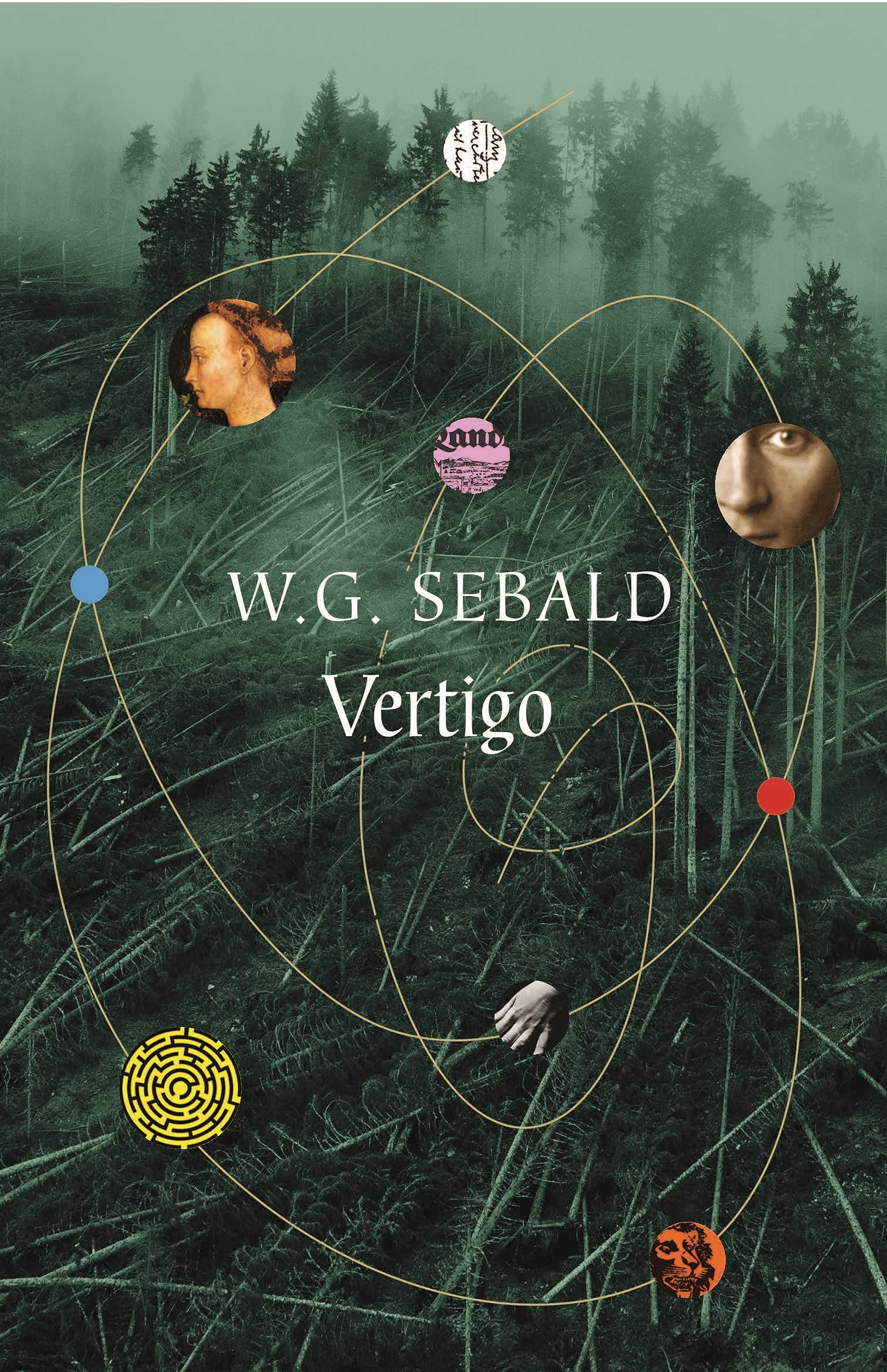
📖 Dive into the dizzying depths of memory and history — don’t miss the literary masterpiece redefining narrative!
Vertigo by W.G. Sebald is a critically acclaimed print book featuring four chapters that blend memoir, history, and fiction. Spanning from 1800 to 1987, it explores themes of memory, loss, and human frailty through mesmerizing prose and evocative images. Translated by Michael Hulse, it holds top ranks in Cultural Heritage Fiction and Philosophy categories, boasting a 4.3-star rating from nearly 300 readers.
| Best Sellers Rank | 259,879 in Books ( See Top 100 in Books ) 511 in Cultural Heritage Fiction 1,856 in Philosophy (Books) 2,252 in Travel Reference & Tips |
| Customer Reviews | 4.3 out of 5 stars 293 Reviews |
D**R
Simply amazing
I read this book immediately upon finishing 'Rings of Saturn', and the slight doubt I might have had if 'Vertigo' would be of the same (dizzyingly high) level was immediately dispelled. As with 'Rings of Saturn', this is yet another unique book from an author with a unique voice. 'Vertigo' is subdivided into 4 chapters: - 'Beyle, or Love is a Madness Most Discreet' traces the (inner) life, in bits and pieces, of Marie-Henri Beyle - whom we all know better as Stendhal - from 1800, when he crosses the Alps into Italy in Napoleon's army, until his death in 1842; - 'All 'estero' (which could loosely be translated as 'going abroad' or 'being abroad') is an account of two of Sebald's own journeys: travelling in 1980 from England through Vienna to Venice and Verona, and a journey in 1987 in which he also visit the Lago di Garda-region; - 'Dr. K Takes the Waters at Riva' is a fictionalised account of Kafka's stay there in 1913 where he gets acquainted with the illusive Undine; - in the final chapter, 'Il ritorno in patria', which is set in 1987, Sebald visits - for the first time since his childhood - the tiny village of Wertach in Germany where he was born What makes this book so unique then? Well, somehow it's hard to say! But in random order: the prose is quite simply mesmerizing (praise is due to Michael Hulse for a brilliant translation), and Sebald has a way with words describing the most everyday events in a quite astonishing vocabulary, making you look afresh at those 'ordinary' places, people, events... What to all of us would simply be waiters at a station buffet in an Italian town treating their customers with proverbial disdain, in Sebald's account are turned into 'some strange company of higher beings sitting in judgement (...) on the endemic greed of a corrupted species'. Which brings me to me next point: I was bowled over, literally stunned, by the incredible thoughts and associations Sebald scatters liberally throughout this book. His mind ranges across space and time as if it is mere child's play to him. From Casanova's imprisonment in Venice to King Ludwig II of Bavaria, paintings by Tiepolo and Pisanello, dreams Sebald had himself, childhood memories, meetings with real and imaginary people, it's all in there and incredible though it may seem: there's no sense whatsoever of everything being thrown together haphazardly in a great jumble, on the contrary, you cannot help but read on and on and on feeling that everything is truly interconnected. In a way I guess, what Sebald succeeds in doing is making you follow his own thoughts and make it feel as natural as if they were your own (which they are not of course). As in 'Rings of Saturn', what Sebald writes about is not really the funny side of life (though there are passages where he demonstrates a fine sense of dark humour): loss, suffering, the impossibility of love, the slow but steady decay of all humans strive for, the shortcomings of memory. In that sense, the book's title is aptly chosen: never explicitly upfront but always there in the background is the feeling that humankind is on the edge of the abyss. Lastly I should perhaps add that here too, as in 'Rings of Saturn', the text is interspersed with pictures of all sorts of things: details of paintings, notebook entries by Sebald, the people he talks about,... What are they there for? To prove what Sebald writes has some kind of veracity and is grounded in factual history (which it often is)? Perhaps so, but even then they contribute, in an odd way, to the dreamlike atmosphere in this book. When I re-read it now, I'm aware that the above is really a rather chaotic review which barely does the book justice. But, if you find my judgement anything to go by, I can only summarize by saying that this is one of the very best books I've ever read, which I'm sure has layers upon layers of meaning (of which I've barely scratched the surface), and which I'll surely read again at some future time.
S**T
Strange and Intoxicating
Sebald is the master of disorientation, no more so than here. The dizzying mix of memory, memoir, past and present is at its most potent in his descriptions of Verona, Kafka and the years proceeding the conflagration of 1914-18. Curiously for this reader the aspects relating to the authors own childhood lost some of 5he earlier magic. Still, Sebald at his best.
T**E
A masterpiece by Sebald
W.G. Sebald's weirdest book. Wow! It starts some time in the early 19th century and follows the exploits of a Napoleonic campaign through the alps to end up in the 1950's alpine terrain of Austria and finally in 1980's Italy searching through newspaper cuttings for obscure and eccentric advertisements. This is awonderfully playful, inventive, and strange book. Part collage and parallel universe, it takes a grip on the reader's attention and trawls you through many peculiar incidents and crams each page with a mixture of real and invented biographical details. The micro-universe described in the book is Sebald's own mischeivious tinkering with his alter ego or imagined/dreamed other self. He wants you to think it is partly a journal and a travelogue when in fact we know it is all made up - or is it?! It is a skillful work of factish fiction, perhaps peppered with funny and bizarre anecdotes and sub-stories to amaze and bewilder you. I read it whilst on vacation in Rome and found it oozed more metaphysical putty! As much of it takes places in Italy it is deeply evocative and compellingly descriptive in a way that makes you hungry for more detail and information. With all of Sebald's fictions you are immersed in a topsy turvy world of alternative realities prompted or suggested by a bus ticket, an old found photo, an overheard snippet of information. Sebald is the master of collectors, pouring his flair for the humdrum banalities of everyday life into a funnel of mystery and melancholic brooding. His dramas are small yet all of them are memorable because of their weirdness and the reader's knowledge that it is Sebald himself that he is essentially describing: warts and all. Its a deeply rewarding and magical book. He should have got the Nobel prize for literature but he didn't because he died aged 57 from a brain haemorrhage. He was one of the all time greats and he knew it, that's why he wrote just a handful of quirky books and we read them over and over again to get back into his world.
H**O
A best Sebald work; he is one of my favorite writers
I like W G Sebald and this is one of the best novels of him; I join it with pleasure into my library; well delivered as it is, too ....Y.-P. H.
L**L
Wander through time and place
This book took me on a journey which seemed to hang between place and time by evocative descriptions of stops on a journey interspersed with stories and memories from the past.The vivid pictures remain with me.
K**L
vertigo
I didn't find it nearly absorbing as others that the author has written.
C**T
Excellent
I have only recently discovered W G Sebald. This is a fascinating book - highly recommended. A travel book of the mind.
A**A
Fell asleep too many times
I have no idea what I just read. Part 1 sounds like those old-style classics that I used to have patience for in secondary school but have since given up on reading. Then Part 2 gets kind of traveloguey and is about some guy who wants to follow the travels of some other famous guy, but I think gets diverted? Or distracted? Or something? (I think there were two attempts at this trip). Part 3 tells the travels of that said other guy which was something something mental, which may or may not be correct because I fell asleep a few times. Part 4 goes back to a simpler narration type thing, (I think it's the same guy from Part 2) mostly about how home has changed since the narrator/protagonist has been away. More crazy people appear. I keep telling myself I probably need to read this again, or at least skim through before class, but... I don't really want to.
Trustpilot
2 months ago
2 days ago