![Midway (1976) - Collector's Edition [DVD]](https://m.media-amazon.com/images/I/710ROmZ-pfL._AC_SL3840_.jpg)
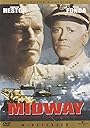
Midway (1976) - Collector's Edition [DVD]
Product ID: 3852536
Details
- FormatAnamorphic
- GenreAction & Drama
- Initial release date2003-09-02
- LanguageEnglish
Desertcart purchases this item on your behalf and handles shipping, customs, and support to Mexico.
The battle of Midway sounded its furious thunder in June 1942, just six months after the attack on Pearl Harbor. Midway interweaves the dramatic personal stories of the men who fought the courageous battle that was to be the Pacific turning point for the United States. The all-star cast and breakthrough war footage convey the Battle of Midway with powerful reality and epic sweep. Review: Great Cast! - A true classic and story. The best movie rendition of the Midway battle and true to historical facts. Highly recommend watching it. Review: AWESOME!! - I am a die-hard WWII fan and I LOOVE this movie! It is definately one of the most accurate WWII movies that Holywood ever created. As far as history goes; it's pretty much "to the letter." The Battle of Midway (Japanese: ¥ß¥Ã¥É¥¦¥§©`º£`é) is widely regarded as the most important naval battle of the Pacific Campaign of World War II.[5][6][7] Between 4 and 7 June 1942, approximately one month after the Battle of the Coral Sea and six months after Japan's attack on Pearl Harbor, the United States Navy decisively defeated an Imperial Japanese Navy (IJN) attack against Midway Atoll, inflicting irreparable damage on the Japanese fleet.[8] Military historian John Keegan has called it "the most stunning and decisive blow in the history of naval warfare."[9] The Japanese operation, like the earlier attack on Pearl Harbor, sought to eliminate the United States as a strategic power in the Pacific, thereby giving Japan a free hand in establishing its Greater East Asia Co-Prosperity Sphere. The Japanese hoped that another demoralizing defeat would force the U.S. to capitulate in the Pacific War.[10] The Japanese plan was to lure the United States' aircraft carriers into a trap.[11] The Japanese also intended to occupy Midway Atoll as part of an overall plan to extend their defensive perimeter in response to the Doolittle Raid. This operation was also considered preparatory for further attacks against Fiji and Samoa. The plan was handicapped by faulty Japanese assumptions of the American reaction and poor initial dispositions.[12] Most significantly, American codebreakers were able to determine the date and location of the attack, enabling the forewarned U.S. Navy to set up an ambush of its own. Four Japanese aircraft carriers and a heavy cruiser were sunk for a cost of one American aircraft carrier and a destroyer. After Midway, and the exhausting attrition of the Solomon Islands campaign, Japan's shipbuilding and pilot training programs were unable to keep pace in replacing their losses while the U.S. steadily increased its output in both areas.[13] Japan had attained its initial strategic goals quickly, taking the Philippines, Malaya, Singapore, and the Dutch East Indies (now Indonesia); the latter, with its vital resources, was particularly important to Japan. Because of this preliminary planning for a second phase of operations commenced as early as January 1942. However, there were strategic disagreements between the Imperial Army and Imperial Navy, and infighting between the Navy's GHQ and Admiral Isoroku Yamamoto's Combined Fleet, such that a follow-up strategy was not formulated until April 1942.[14] Admiral Yamamoto finally succeeded in winning the bureaucratic struggle by using a thinly veiled threat to resign, after which his operational concept of further operations in the Central Pacific was accepted ahead of other competing plans. Yamamoto's primary strategic goal was the elimination of America's carrier forces, which he perceived as the principal threat to the overall Pacific campaign.[nb 1] This concern was acutely heightened by the Doolittle Raid (18 April 1942) in which USAAF B-25 Mitchells launched from USS Hornet bombed targets in Tokyo and several other Japanese cities. The raid, while militarily insignificant, was a severe psychological shock to the Japanese and showed the existence of a gap in the defenses around the Japanese home islands.[16][nb 2] This and other successful "hit and run" raids by American carriers, showed that they were still a threat although, seemingly, reluctant to be drawn into an all-out battle.[17] Yamamoto reasoned that another attack on the main U.S base at Pearl Harbor would induce all of the American fleet out to fight, including the carriers; however, given the strength of American land-based air power on Hawaii, he judged that Pearl Harbor could no longer be attacked directly.[18] Instead, he selected Midway, at the extreme northwest end of the Hawaiian Island chain, some 1,300 mi (1,100 nmi; 2,100 km) from Oahu. Midway was not especially important in the larger scheme of Japan's intentions, but the Japanese felt the Americans would consider Midway a vital outpost of Pearl Harbor and would therefore strongly defend it.[19] The U.S. did consider Midway vital; after the battle, establishment of a U.S. submarine base on Midway allowed submarines operating from Pearl Harbor to refuel and reprovision, extending their radius of operations by 1,200 mi (1,900 km). An airstrip on Midway served as a forward staging point for bomber attacks on Wake Island. Typical of Japanese naval planning during World War II, Yamamoto's battle plan was exceedingly complex.[21] Additionally, his design was predicated on optimistic intelligence suggesting USS Enterprise and USS Hornet, forming Task Force 16, were the only carriers available to the U.S. Pacific Fleet at the time. At the Battle of the Coral Sea just a month earlier, USS Lexington had been sunk and USS Yorktown damaged severely enough that the Japanese believed it also to have been sunk. The Japanese were also aware that USS Saratoga was undergoing repairs on the West Coast after suffering torpedo damage from a submarine. However, more important was Yamamoto's belief the Americans had been demoralized by their frequent defeats during the preceding six months. Yamamoto felt deception would be required to lure the U.S. fleet into a fatally compromised situation. To this end, he dispersed his forces so that their full extent (particularly his battleships) would be unlikely to be discovered by the Americans prior to battle. Critically, Yamamoto's supporting battleships and cruisers would trail Vice-Admiral Nagumo Ch¨±ichi's carrier striking force by several hundred miles. Japan's heavy surface forces were intended to destroy whatever part of the U.S. fleet might come to Midway's relief, once Nagumo's carriers had weakened them sufficiently for a daylight gun duel;[23] this was typical of the battle doctrine of most major navies.[24] Yamamoto did not know that the U.S. had broken the main Japanese naval code (dubbed JN-25 by the Americans). Yamamoto's emphasis on dispersal also meant that none of his formations could support each other. For instance, the only significant warships larger than destroyers that screened Nagumo's fleet were two battleships and three cruisers, despite his carriers being expected to carry out the strikes and bear the brunt of American counterattacks. By contrast, the flotillas of Yamamoto and Kondo had between them two light carriers, five battleships, and six cruisers, none of which would see any action at Midway. Their distance from Nagumo's carriers would also have grave implications during the battle, since the larger warships in Yamamoto and Kondo's forces carried scout planes, an invaluable reconnaissance capability denied to Nagumo
| Contributor | Charlton Heston, Cliff Robertson, Edward Albert, Glenn Ford, Hal Holbrook, Henry Fonda, Jack Smight, James Coburn, Robert Mitchum, Robert Wagner, Toshiro Mifune, Walter Mirisch Contributor Charlton Heston, Cliff Robertson, Edward Albert, Glenn Ford, Hal Holbrook, Henry Fonda, Jack Smight, James Coburn, Robert Mitchum, Robert Wagner, Toshiro Mifune, Walter Mirisch See more |
| Customer Reviews | 4.8 out of 5 stars 10,410 Reviews |
| Format | Anamorphic, Collector's Edition, Color, Multiple Formats, NTSC, Widescreen |
| Genre | Action & Adventure, Drama, Military & War |
| Initial release date | 2003-09-02 |
| Language | English |
A**Y
Great Cast!
A true classic and story. The best movie rendition of the Midway battle and true to historical facts. Highly recommend watching it.
J**Y
AWESOME!!
I am a die-hard WWII fan and I LOOVE this movie! It is definately one of the most accurate WWII movies that Holywood ever created. As far as history goes; it's pretty much "to the letter." The Battle of Midway (Japanese: ¥ß¥Ã¥É¥¦¥§©`º£`é) is widely regarded as the most important naval battle of the Pacific Campaign of World War II.[5][6][7] Between 4 and 7 June 1942, approximately one month after the Battle of the Coral Sea and six months after Japan's attack on Pearl Harbor, the United States Navy decisively defeated an Imperial Japanese Navy (IJN) attack against Midway Atoll, inflicting irreparable damage on the Japanese fleet.[8] Military historian John Keegan has called it "the most stunning and decisive blow in the history of naval warfare."[9] The Japanese operation, like the earlier attack on Pearl Harbor, sought to eliminate the United States as a strategic power in the Pacific, thereby giving Japan a free hand in establishing its Greater East Asia Co-Prosperity Sphere. The Japanese hoped that another demoralizing defeat would force the U.S. to capitulate in the Pacific War.[10] The Japanese plan was to lure the United States' aircraft carriers into a trap.[11] The Japanese also intended to occupy Midway Atoll as part of an overall plan to extend their defensive perimeter in response to the Doolittle Raid. This operation was also considered preparatory for further attacks against Fiji and Samoa. The plan was handicapped by faulty Japanese assumptions of the American reaction and poor initial dispositions.[12] Most significantly, American codebreakers were able to determine the date and location of the attack, enabling the forewarned U.S. Navy to set up an ambush of its own. Four Japanese aircraft carriers and a heavy cruiser were sunk for a cost of one American aircraft carrier and a destroyer. After Midway, and the exhausting attrition of the Solomon Islands campaign, Japan's shipbuilding and pilot training programs were unable to keep pace in replacing their losses while the U.S. steadily increased its output in both areas.[13] Japan had attained its initial strategic goals quickly, taking the Philippines, Malaya, Singapore, and the Dutch East Indies (now Indonesia); the latter, with its vital resources, was particularly important to Japan. Because of this preliminary planning for a second phase of operations commenced as early as January 1942. However, there were strategic disagreements between the Imperial Army and Imperial Navy, and infighting between the Navy's GHQ and Admiral Isoroku Yamamoto's Combined Fleet, such that a follow-up strategy was not formulated until April 1942.[14] Admiral Yamamoto finally succeeded in winning the bureaucratic struggle by using a thinly veiled threat to resign, after which his operational concept of further operations in the Central Pacific was accepted ahead of other competing plans. Yamamoto's primary strategic goal was the elimination of America's carrier forces, which he perceived as the principal threat to the overall Pacific campaign.[nb 1] This concern was acutely heightened by the Doolittle Raid (18 April 1942) in which USAAF B-25 Mitchells launched from USS Hornet bombed targets in Tokyo and several other Japanese cities. The raid, while militarily insignificant, was a severe psychological shock to the Japanese and showed the existence of a gap in the defenses around the Japanese home islands.[16][nb 2] This and other successful "hit and run" raids by American carriers, showed that they were still a threat although, seemingly, reluctant to be drawn into an all-out battle.[17] Yamamoto reasoned that another attack on the main U.S base at Pearl Harbor would induce all of the American fleet out to fight, including the carriers; however, given the strength of American land-based air power on Hawaii, he judged that Pearl Harbor could no longer be attacked directly.[18] Instead, he selected Midway, at the extreme northwest end of the Hawaiian Island chain, some 1,300 mi (1,100 nmi; 2,100 km) from Oahu. Midway was not especially important in the larger scheme of Japan's intentions, but the Japanese felt the Americans would consider Midway a vital outpost of Pearl Harbor and would therefore strongly defend it.[19] The U.S. did consider Midway vital; after the battle, establishment of a U.S. submarine base on Midway allowed submarines operating from Pearl Harbor to refuel and reprovision, extending their radius of operations by 1,200 mi (1,900 km). An airstrip on Midway served as a forward staging point for bomber attacks on Wake Island. Typical of Japanese naval planning during World War II, Yamamoto's battle plan was exceedingly complex.[21] Additionally, his design was predicated on optimistic intelligence suggesting USS Enterprise and USS Hornet, forming Task Force 16, were the only carriers available to the U.S. Pacific Fleet at the time. At the Battle of the Coral Sea just a month earlier, USS Lexington had been sunk and USS Yorktown damaged severely enough that the Japanese believed it also to have been sunk. The Japanese were also aware that USS Saratoga was undergoing repairs on the West Coast after suffering torpedo damage from a submarine. However, more important was Yamamoto's belief the Americans had been demoralized by their frequent defeats during the preceding six months. Yamamoto felt deception would be required to lure the U.S. fleet into a fatally compromised situation. To this end, he dispersed his forces so that their full extent (particularly his battleships) would be unlikely to be discovered by the Americans prior to battle. Critically, Yamamoto's supporting battleships and cruisers would trail Vice-Admiral Nagumo Ch¨±ichi's carrier striking force by several hundred miles. Japan's heavy surface forces were intended to destroy whatever part of the U.S. fleet might come to Midway's relief, once Nagumo's carriers had weakened them sufficiently for a daylight gun duel;[23] this was typical of the battle doctrine of most major navies.[24] Yamamoto did not know that the U.S. had broken the main Japanese naval code (dubbed JN-25 by the Americans). Yamamoto's emphasis on dispersal also meant that none of his formations could support each other. For instance, the only significant warships larger than destroyers that screened Nagumo's fleet were two battleships and three cruisers, despite his carriers being expected to carry out the strikes and bear the brunt of American counterattacks. By contrast, the flotillas of Yamamoto and Kondo had between them two light carriers, five battleships, and six cruisers, none of which would see any action at Midway. Their distance from Nagumo's carriers would also have grave implications during the battle, since the larger warships in Yamamoto and Kondo's forces carried scout planes, an invaluable reconnaissance capability denied to Nagumo
L**A
Great Story, Well Done
Midway is a fascinating look into one of the key battles of World War II. Pearl Harbor has already been hit, and the US fleet has some problems. The movie goes back and forth between both sides, showing how insights are gained, mistakes are made, as the two forces move towards each other for the decisive battle on Midway Island. They use a lot of real footage from the war to help to add authenticity to this movie. What really makes it soar, though, is the AMAZING cast that you've got all in one movie. You very rarely get this many named actors all pulling together as an ensemble. Henry Fonda. James Colburn. Glenn Ford, Charlton Heston. Toshiro Mifune!! Robert Wagner. Robert Mitchum. Pat Morita. Tom Selleck. Heck, even Erik Estrada is in there. There is a small amount of "love interest" in there, but mostly that is used to show the issues with Japanese-Americans and their treatment. It is by no means a soap opera, as other movies have done. Instead, it's a nicely done touch - to show that in addition to the attacking Japanese and defending Americans that there was a third group caught in the middle. You really get a sense here on how key the planning and second-guessing of the generals was. You might say some things were "luck" - but as the saying goes, luck always favors the well prepared. All of the generals think they are making the best decision, based on the circumstances, but sometimes it's that extra bit of planning or research that gives the edge. It really is amazing - and poetically beautiful in a way - to see the squadrons of aircraft sailing across the sky. It turns into brutal chaos as the gunfire opens up, bombs dropping and machine guns blaring. Midway does a great job of showing all sides of the war. Some of the stunts are a little cheezy, but this is 1976 after all. They didn't have great CGI effects back then. The movie doesn't skimp on the story. It's over two hours long, which gives time to show the hesitations, the discussions, and the small changes of mind that often had huge ramifications. Interestingly, there are two versions of the Midway movie that can be found. The original movie had a Battle of Coral Sea sequence. However, this made the movie really long, and when the movie was shown for TV, they edited that out. Then, for some reason, they began using that same truncated footage to create new DVDs to sell. It's a shame, because this is an important part of the story. Watching the movie is a fascinating way to learn more about this important battle. Yes, sometimes they have the wrong planes in the air, but it's not like there are hundreds of these planes lying around for filmmakers to use. They use what they have, and the footage they have, and I feel they put together a nice story. Note: The film was actually filmed in California and Hawaii, although historic footage does of course show Hawaii.
G**K
AWESOME Movie worth it's Purchase Price and a 5 Star Rating
Great Acting from all the Actors in this Historic Real Life Movie depicting a REAL WWII Sea Battle. Top Notch Movie that I give 5 Stars for it's rating! One DVD Movie that will belong in my Personal 330 DVD Movie Collection.
M**S
An Excellent BluRay Transfer
Coming so soon after the visually disappointing Fox BD release of "The Great Escape," Universal's "Midway" arrives like a breath of fresh air, and as a BD that is really done right. The PQ is excellent, and presented in 2:35:1 widescreen. No digital artifacts here. Grain is intact for a 1976 release, and close-ups reveal a tremendous amount of detail. Colors (Technicolor) are true and generally vibrant - the registration seems dead on, without the kind of bluing one gets in some BD re-releases. The biggest visual gain, though, may be in the stock footage used for the battle scenes, which now registers a bit closer to the movie footage. It's been cleaned up and steadied quite a bit. Sure, there's still a noticeable difference, but the gap between stock and movie footage has been closed some. The DTS-HD Master 2.1 (stereo) soundtrack "Includes Original Sensurround Audio," a gimmicky bass-boost that was used when the film was first released, and which doesn't provide the immersive experience one gets in the best modern surround features. The workman-like musical score by John Williams serves its purpose, but it's not a score that sticks out on its own. Dialogue comes through crisply and cleanly, though there are points where the sound verges on slipping into distortion. There are also a few spots where the sync is off between picture and dialogue. Specs listed on the BD label are DTS-HD Master Audio; DTS Digital Surround; and, Dolby Digital. Overall, the sound could be a little better, IMO. One wishes the producers had followed the example of movies like "Tora! Tora! Tora!" and had the Japanese actors speak in Japanese with subtitles, rather than speaking in English, a decision that led to veteran voice-over actor Paul Frees speaking for actor Toshiro Mifume, who plays Admiral Yamamoto. The movie does present the Japanese as competent and dedicated military officers, with their ultimate defeat at Midway a product of chance as much is it was of miscalculation. Anyone who knows the aforementioned "Tora! Tora! Tora!" will recognize footage from that movie being reused in "Midway." The love story between Edward Albert (Tom) and the Japanese-American girl Haruko (played by Christina Kokubo, who is the only female with a speaking role in the movie!) adds little or nothing to the plot or the human interest side of the story. As a bonus extra, the BD includes 4:3 aspect footage shot for the (TBS?) TV broadcast of the movie, which boils down to a few scenes between Charlton Heston and Susan Sullivan, who provided a love interest (and a SECOND female speaking part) for Heston in the TV version in scenes that are no more memorable than are the other love interest scenes. A slightly amusing aspect of the movie concerns the mild expletives that are tossed about by many of the characters (there are a lot of "damns" and "hells" and "Christs!" and "Jesus Christs!" to be heard). There's daring 1970s realism for ya! Most of those expletives still get scrubbed when the film is shown on broadcast TV. It's neat to see a number of then-unknown actors in bit roles - Erik Estrada is easy to spot, but can you identify Tom Selleck (hint: he's sans mustache)? Seems like everybody earned a paycheck on this one, from less-than-two-minutes-screen-time cameos by Robert Mitchum and James Coburn, to the blink-and-you'll-miss-him appearance by ex-footballer Larry Csonka. Let's be honest: "Midway" isn't on the same level as WWII films like "Tora!," "The Longest Day" or "The Great Escape." Most of the action here is handled through the use of stock war footage and movie footage reused from earlier films, and 80% of the movie could have been shot on 4-5 sound stages made up to look like tactical offices. The entire American defensive positions on Midway Island itself in this movie appear to consist of a single guard tower, a few redoubts and foxholes and a lone jeep that everyone who has to drive anywhere ends up driving. No, it's the chess game going on between the opposing sides that keeps the movie interesting and - ultimately - satisfying. Still, everything considered, the movie is worth seeing and hearing in this excellent transfer. One wishes that Fox had done as good a job on the BD of "The Great Escape." Bonus features on the disc are: * The Making of "Midway" * The Score of "Midway" * Sensurround: The Sounds of "Midway" * They Were There: Hosted By Charlton Heston * Scenes shot for the TV version * Photograph Montage * Theatrical Trailer 4 stars, then, with one star knocked off for the slow parts of the film and the just-better-than-average presentation of the soundtrack.
F**Z
The storyline follow the real events of history
Dam Good WWII movie with a cast of old hollywood actor who are great actors. this movie been made over and over with many actors in different decades but alway entertaining but this was the first and the best from my stand point. the sound quality is very good specially for a old guy who has hearing problems
B**V
Great Movie!
Great Movie!
L**Y
Great movie!
A movie with a superb cast and storyline.
D**K
One of the best war films ever made, although harmed by the bad use of war footage
Although fully aware of its weak spots, I give "Midway" full five stars, because I believe this is one of the best reconstructions of major battles in history of cinema, the others being "Tora, Tora, Tora", "The longest day" and "Waterloo". I agree with most of the negative comments on the war footage used in this film, with the presence of at least one jet plane from Korea War in one scene being possibly the most damning. Wildcats magically transforming into Hellcats and SBDs turning into Avengers in the blink of an eye are also quite annoying! Many of the fighting sequences could and should have been much better done and the use of some footage from "Tora, Tora, Tora" should have been avoided. However, except if you are really good at recognizing WWII warbirds, those points are finally not so important, as the focus of the film is to show all the major (and sometimes minor) decisions which affected the outcome of this fight and which made Midway such a unique and dramatic battle. And as far as this aspect is concerned, the film is a great success! It begins already with the enormous error committed by Yamamoto when planning the whole operation; we realize it in the scene in which admiral Hosogaya says "This time the god of battles conceived a monster". This criticism is officially adressed to the junior officer who presents the plan - but in fact it is (by Japanese standards) an extremely direct attack against Yamamoto himself. But with admirals Nagumo and Yamaguchi remaining silent during the discussion, the plan remains unchanged; and for that reason, out of SEVEN carriers available, Nagumo will have only four with him at Midway to fight against three American ships... The absence of "Junyo", "Ryujo" and "Zuiho", send stupidly after secondary targets or affected to escort the transports, will cost the Japanese dearly... The scene continues with Admiral Yamaguchi raising another, even more important objection - what if Japanese carriers are forced to fight in the same time land based planes from Midway and carrier based planes of US Navy? This possibility is not given as much attention as it should - and the result is that this is exactly what will happen! I will not of course describe here all the twists and turns, but one thing is clear - this film shows almost perfectly how the whole situation evolved and how finally the side which committed less mistakes (and which was also just a tiny little bit more lucky) carried the day. And it also pictures ADMIRABLY the proverbial "fog of war", when both sides are like boxers fighting blindfolded - with the first who manages to locate the enemy obtaining a great advantage... The second reason why I give to this film five stars, is the casting. It is simply a constellation of great stars of world cinema, and they all do a hell of a job! Let's just enumerate some: - Henry Fonda, as Admiral Nimitz - Robert Mitchum, as Admiral Halsey - Glenn Ford, as Admiral Spruance - Toshiro Mifune, as Admiral Yamamoto - Charlton Heston, as Captain Matt Garth (one of the very few fictional characters in the film) And then there are also James Coburn, Robert Wagner, Joseph Shigeta (remember him from "Die Hard"?) as Admiral Nagumo, Cliff Robertson, Hal Holbrook and Erik Estrada in lesser roles. And let's not forget Tom Selleck in one of his first appearances on the screen... I was particularly impressed by Henry Fonda's performance as Nimitz - his olympic calm and dignity and also a deep wisdom permit to understand why this admiral was such a great leader of men. James Shigeta is even better in his role of Admiral Chuichi Nagumo, a man send to fight a battle much tougher than his superiors (and himself) expected and who is under an incredible, regularly increasing pressure... As for the inaccuracies, most of them are rather imperceptible except for people who really know the details of this battle - like for example the planes from USS "Yorktown" attacking "Kaga", when in the real battle they attacked "Soryu"... But there is also ONE very very big blunder concerning Lieutenant Joichi Tomonaga, Japanese leader in two out of three attacks launched during this battle. Although taking off to the second attack with a damaged plane which couldn't make it back home (and thus knowing that he would die or be captured), Tomonaga absolutely did NOT launch his plane against USS "Yorktown"! Also, he was 30 years old in June 1942, but in this film, he is played by an actor who looks easily like pushing 45... It is also true, that there was a TV version of this film, which was longer, with the battle of Coral Sea briefly covered and an extra love story added. But frankly, I believe that the cinema version, with the wonderfully filmed Doolittle's Raid as the beginning and with only limited time devoted to private life, is actually better. I regret however that in the film there is no mention of the ultimate fate of USS "Yorktown" (a short conversation of 30 seconds would be enough) and of the final (and in my opinion very stupid) decision made by Admiral Tamon Yamaguchi towards the end of the battle. Last but not least - in the film it is stressed, that at Midway Americans were outnumbered. Well, that is FALSE! Certainly, the Japanese had four carriers ("Kaga", "Akagi", "Hiryu" and "Soryu") against three for Americans (USS "Enterprise", USS "Hornet", USS "Yorktown") but counting the planes, Americans had the numbers for them: 233 carrier based planes + 127 planes from Midway = 360 planes as opposed to Japanese 248 carrier based planes. In fact, Midway was decided at least partly because in planes Americans OUTNUMBERED the Japanese 3:2. But, bottom line, weaker points notwithstanding I still consider "Midway" as one of the greatest war films ever made, because of an excellent, very dramatic, very clear and very complete description of all the key moments of this unique and incredible battle. I watched it many times and I never got bored - even for one minute! Enjoy!
A**N
Todo bien!!
Gran película bélica , de mis favoritas. Todo correcto en el bluray. Audio e imagen perfecta. buena sección de extras
N**N
Excellent
Liked the movie
M**S
Livraison rapide
Un super bon film merci
ワ**ダ
タイトル通り
タイトルに興味のある人には良い映画と思います。
Trustpilot
2 weeks ago
2 months ago