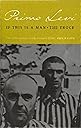
If This Is a Man and The Truce
Product ID: 43310195
Desertcart purchases this item on your behalf and handles shipping, customs, and support to Mexico.
With the moral stamina and intellectual pose of a twentieth-century Titan, this slightly built, duitful, unassuming chemist set out systematically to remember the German hell on earth, steadfastly to think it through, and then to render it comprehensible in lucid, unpretentious prose. He was profoundly in touch with the minutest workings of the most endearing human events and with the most contempible. What has survived in Levi's writing isn't just his memory of the unbearable, but also, in THE PERIODIC TABLE and THE WRENCH, his delight in what made the world exquisite to him. He was himself a "magically endearing man, the most delicately forceful enchanter I've ever known" - PHILIP ROTH Review: Survival and Liberation - IF THIS IS A MAN is the British title of what was curiously published in the US as SURVIVING AUSCHWITZ. This edition is divided between Levi’s story of survival in the camp and, in THE TRUCE, his circuitous journey from Auschwitz back to his home in Turin. I’m dividing my review into corresponding halves. IF THIS IS A MAN - With spare but lively prose, Levi recounts his deportation, confinement, and improbable survival within Auschwitz. No matter how dispiriting his situation, Levi never stoops to outright hopelessness. There’s something between the words that glows. He creates a tableau of barbarism and humanity enmeshed within each other. The characters he draws are intensely vivid and precisely rendered. This book deserves its place in the canon. In Levi, humanity found someone to record our darkest chapter, someone who can transport a reader with descriptions such as “[T]he Buna is desperately and essentially opaque and grey. The huge entanglement of iron, concrete, mud, and smoke is the negation of beauty…Within its bounds, not a blade of grass grows, and the soil is impregnated with the poisonous saps of coal and petroleum, and the only things alive are the machines and slaves - and the former more alive than the latter.” Has anything so dark been illuminated with such delicate, flawless language? IF THIS IS A MAN will endure, and outlive all of us. It’s a book that brings out the spirit of what it means to be alive amid so much death. It explores the fundamental truths that will always (eventually) triumph over our darker inner natures. This is a book you’ll return to again and again. THE TRUCE - The companion piece in this volume reveals Levi’s slow, tortuous journey back to freedom. It’s a fascinating read. We think of history in connected blocks - e.g. WWII ended when Germany capitulated, end of story - but there’s much more to it, as Levi reveals. Just because the Russians had chased the SS from the death camps didn’t mean the survivors’ ordeal was over. Europe smoldered, and confusion had settled atop the ruins. Levi still has to form alliances and find food. This book doesn’t have as many breathtaking moments as IF THIS IS A MAN, but it’s still an important work. It’s easy to forget that history is actually countless small, individual stories that cohere into something larger. THE TRUCE brings out those small moments among people who were at the mercy of history, but, thanks to Primo Levi, have been memorialized and rendered immortal. Their stories survive. Review: 174517 - That was the number tattooed on Primo Levi's left arm when he was processed into Auschwitz in February 1944. The numbers were assigned in sequence, so by the time Levi arrived in Auschwitz there were few with tattoos of only five digits. In that sense - the sense of being a relatively late arrival - Levi was fortunate. And because Levi, through chance and no doubt through a certain spunk, was able to survive the next year (one of only three who eventually returned home out of 650 in his consignment of Italian Jews), the world is fortunate. Because his memoir of his year at Auschwitz is probably the most significant first-person account of that vile episode of human history. As many have noted, what distinguishes Levi's account is his restraint, his near superhuman effort to confine his memoir to the perspective of a witness. Although he lapses occasionally, Levi tried to avoid "the lamenting tones of the victim [as well as] the irate voice of someone who seeks revenge." Thus, his memoir has a documentary objectivity that makes it even more chilling. This particular edition actually contains two of Levi's memoirs. The first, IF THIS IS A MAN, is the memoir described above - the account of his year at Auschwitz, the most harrowing period (ironically) being the post-apocalyptic ten days between the flight of the Nazis and the arrival of the Red Army. (The only prisoners the Nazis left in the camp were those too sick to be marched westwards, towards Germany. Levi, suffering from an attack of scarlet fever, was among the ill left behind. During those ten days, the percentage of corpses on the bunks inside some of the huts rose to fifty percent. Outside the huts, "the number of ravens had increased considerably and everybody knew why.") The second memoir, THE TRUCE, is Levi's account of the nine months between liberation by the Red Army and his arrival home, at last, in Turin, Italy. It is a fascinating and instructive kaleidoscopic picture of the displaced peoples throughout Eastern Europe in the months immediately following the collapse of Nazi Germany. Although not quite the essential document that IF THIS IS A MAN is, it too is well worth reading. This edition also contains, as an afterword, fifteen pages in which Levi addresses some of the questions frequently asked him, such as "Have you forgiven them [the Germans?]?" and "How can the Nazis' fanatical hatred of the Jews be explained?". For those who don't know, the title of the first memoir, the classic one, comes from a poem Levi wrote, also entitled "If This Is a Man". It includes these lines: Consider if this is a man Who works in the mud Who does not know peace Who fights for a scrap of bread Who dies because of a yes or no. Those five lines sum up this remarkable book, one that should be read by everyone who considers himself civilized.
| Best Sellers Rank | #81,547 in Books ( See Top 100 in Books ) #138 in Jewish Holocaust History #310 in WWII Biographies #639 in World War II History (Books) |
| Customer Reviews | 4.7 out of 5 stars 2,742 Reviews |
M**.
Survival and Liberation
IF THIS IS A MAN is the British title of what was curiously published in the US as SURVIVING AUSCHWITZ. This edition is divided between Levi’s story of survival in the camp and, in THE TRUCE, his circuitous journey from Auschwitz back to his home in Turin. I’m dividing my review into corresponding halves. IF THIS IS A MAN - With spare but lively prose, Levi recounts his deportation, confinement, and improbable survival within Auschwitz. No matter how dispiriting his situation, Levi never stoops to outright hopelessness. There’s something between the words that glows. He creates a tableau of barbarism and humanity enmeshed within each other. The characters he draws are intensely vivid and precisely rendered. This book deserves its place in the canon. In Levi, humanity found someone to record our darkest chapter, someone who can transport a reader with descriptions such as “[T]he Buna is desperately and essentially opaque and grey. The huge entanglement of iron, concrete, mud, and smoke is the negation of beauty…Within its bounds, not a blade of grass grows, and the soil is impregnated with the poisonous saps of coal and petroleum, and the only things alive are the machines and slaves - and the former more alive than the latter.” Has anything so dark been illuminated with such delicate, flawless language? IF THIS IS A MAN will endure, and outlive all of us. It’s a book that brings out the spirit of what it means to be alive amid so much death. It explores the fundamental truths that will always (eventually) triumph over our darker inner natures. This is a book you’ll return to again and again. THE TRUCE - The companion piece in this volume reveals Levi’s slow, tortuous journey back to freedom. It’s a fascinating read. We think of history in connected blocks - e.g. WWII ended when Germany capitulated, end of story - but there’s much more to it, as Levi reveals. Just because the Russians had chased the SS from the death camps didn’t mean the survivors’ ordeal was over. Europe smoldered, and confusion had settled atop the ruins. Levi still has to form alliances and find food. This book doesn’t have as many breathtaking moments as IF THIS IS A MAN, but it’s still an important work. It’s easy to forget that history is actually countless small, individual stories that cohere into something larger. THE TRUCE brings out those small moments among people who were at the mercy of history, but, thanks to Primo Levi, have been memorialized and rendered immortal. Their stories survive.
R**N
174517
That was the number tattooed on Primo Levi's left arm when he was processed into Auschwitz in February 1944. The numbers were assigned in sequence, so by the time Levi arrived in Auschwitz there were few with tattoos of only five digits. In that sense - the sense of being a relatively late arrival - Levi was fortunate. And because Levi, through chance and no doubt through a certain spunk, was able to survive the next year (one of only three who eventually returned home out of 650 in his consignment of Italian Jews), the world is fortunate. Because his memoir of his year at Auschwitz is probably the most significant first-person account of that vile episode of human history. As many have noted, what distinguishes Levi's account is his restraint, his near superhuman effort to confine his memoir to the perspective of a witness. Although he lapses occasionally, Levi tried to avoid "the lamenting tones of the victim [as well as] the irate voice of someone who seeks revenge." Thus, his memoir has a documentary objectivity that makes it even more chilling. This particular edition actually contains two of Levi's memoirs. The first, IF THIS IS A MAN, is the memoir described above - the account of his year at Auschwitz, the most harrowing period (ironically) being the post-apocalyptic ten days between the flight of the Nazis and the arrival of the Red Army. (The only prisoners the Nazis left in the camp were those too sick to be marched westwards, towards Germany. Levi, suffering from an attack of scarlet fever, was among the ill left behind. During those ten days, the percentage of corpses on the bunks inside some of the huts rose to fifty percent. Outside the huts, "the number of ravens had increased considerably and everybody knew why.") The second memoir, THE TRUCE, is Levi's account of the nine months between liberation by the Red Army and his arrival home, at last, in Turin, Italy. It is a fascinating and instructive kaleidoscopic picture of the displaced peoples throughout Eastern Europe in the months immediately following the collapse of Nazi Germany. Although not quite the essential document that IF THIS IS A MAN is, it too is well worth reading. This edition also contains, as an afterword, fifteen pages in which Levi addresses some of the questions frequently asked him, such as "Have you forgiven them [the Germans?]?" and "How can the Nazis' fanatical hatred of the Jews be explained?". For those who don't know, the title of the first memoir, the classic one, comes from a poem Levi wrote, also entitled "If This Is a Man". It includes these lines: Consider if this is a man Who works in the mud Who does not know peace Who fights for a scrap of bread Who dies because of a yes or no. Those five lines sum up this remarkable book, one that should be read by everyone who considers himself civilized.
J**E
A Really Great and Important Book
A truly wonderful book by a great author. In this volume you get Levi's If This Is a Man, his story of his trials in one of the satellite camps of Auschwitz, and The Truce, the story of his long journey from Auschwitz back home to Turin. In the "Afterword" included with this edition (Abacus edition of 1987) you also have Levi's answers to the questions his readers had posed to him over the years. These are also revealing. I've read many books about the Holocaust and WWII. I could not put this one down. I picked this up after reading Levi's The Periodic Table (also excellent). Here, Levi bears witness to the horrors of the Lager system of Nazi Germany. He is very specific about bearing witness. This is not a history or a commentary, though he does give his opinions. You can't call this a memoir really: it is testimony. In The Truce, he describes the long, strange journey he took back to Italy, through Poland, Russia, Bjelorus, Ukraine, Rumania, Hungary, Austria, and Germany, in the care of, mostly, the Russians. This is also a fascinating tale and follows on naturally: If This Is a Man ends with the arrival of the Russians to liberate the Auschwitz Lager and you want to know how he gets home and gets on with his life. Levi was a master story teller. You just want to keep reading and hear what will happen next. He was obviously a very intelligent man. These books are very restrained and humane, towards all the people in them, even the evil-doing Germans. Levi states that he does not want revenge and doesn't hate the Germans. His concern was that civilized people everywhere do not allow this to happen again. (We've let him down there: Cambodia, Myanmar, Rwanda, The Balkans, Darfur, ...) I've read numerous books on the Holocaust, and I find some of them just too tough (emotionally) to read (especially after my kids came along), for example The Nazi Doctors. Levi tells you the bad stuff but somehow makes it bearable and a thoroughly wonderful read. When I finished this book, I was very moved by my admiration for the humanity of Levi (not to mention the wonderful writing.) I kept repeating to myself, "that was a real man ..." Too bad we lost him at such a young age.
J**.
An absolute obligation fulfilled.
I have long heard references to this work and am pleased to have finally engaged with it. I learnt a lot despite already knowing much from other extensive reading and study of the Holocaust. The immediacy and impact of the images and experiences were quite different and added dramatically to that of which I was aware It was incomparable. Jenny D.
A**�
Read. Then give to a friend to read. Then have them give to a friend. And so on.
{This copy is two books in one. They mirror each other perfectly.} I have never read anything like Primo Levi’s writing; so it is hard for me to describe for you. He writes almost poetic - but not. His words flow beautifully together - yet he is describing one of the most horrific events that occurred in our world. He starts with his capture. Then the deportation. Then his arrival. Then the slave labor. His sickness. His means to survive. Losing friends he made in the camp. Then the emptying of the camp and the Nazi’s departing to save themselves. The second book starts right where the first one ends. How him and a few survive the empty camp. They were not liberated and then given foods and meds the day after the Nazi soldiers took all able prisoners on the Death Marches. This part is not something I have learned much in - so it was new to me (and I have read many books from Survivors’ accounts). Imagine surviving the Nazi’s and their gas chambers; to then be deserted (while deathly sick & starved) in a camp; freezing temperatures; no food or water; no medicines; only the clothes on your back...& never knowing who is coming to the camp at any given time........ Mr. Levi then goes on to write about the numerous stops/camps the Soviets have Survivors stay - never knowing when they will reach what they have been yearning for, for all these years = home. Knowing this was originally all written in Italian - I cannot imagine how it would read/sound even better; as some things are always lost in translation. I am thankful for Mr. Levi for choosing to share this with us - to educate the future generations. I encourage you ALL to read; and to speak of it so someone else will read. This should be required reading in all of our high schools.
W**J
Integrity in a man
Primo Levi who writes his experiences of the camp, and of the journey back to Turin, in a voice of a calm, scientific, logical witness with a great caution to avoid vengeance or emotionality, however with a keen conscience and intellect. (The Afterward is a great guide to understand the author's mindset in writing this book and what happened to some of the men in the book.) Not only does the book record the realities of day to day lives of the camp, but also presents interesting studies on human behaviors under extreme environments such as the camp in the face of imminent and random death, raises the philosophical question about what makes us bestial or human regardless. He lives through the demolition of a man and what remains of the man, and he takes the reader to the point of new understanding of the imperfect unhappiness beyond the familiar and banal concept of imperfect happiness. ""The obstacles preventing the realization of both these extreme states are of the same nature: they derive from our human condition which is opposed to everything infinite......they poison every lasting happiness, they equally assiduously distract us from our misfortunes and make our consciousness of them intermittent and hence supportable." "We are slaves, deprived of every right, exposed to every insult, condemned to certain death, but we still possess one power, and we must defend it with all our strength for it is the last---the power to refuse our consent......we must walk erect....to remain alive, not to begin to die." In the Afterward, he states his determination to recognize in men, not in things helped him to endure, as he describes a kind Italian civilian, Lorenzo, "for his having constantly reminded me by his presence, by his natural and plain manner of being good, that there still existed a just world outside our own, something and someone still pure and whole, not corrupt, not savage, extraneous to hatred and terror; something difficult to define, a remote possibility of good, but for which it was worth surviving...Lorenzo was a man; his humanity was pure and uncontaminated, he was outside this world of negation. Thanks to Lorenzo, I managed not to forget that I myself was a man." In The Truce, Levi describes the difficult journey home and to coming to terms with the guilt and shame as well as the complex emotions that come with the hope to return home--disappointment, expectancy, uncertainty, discomfort, nostalgia and boredom. The part where he passes through Munich is deeply thought provoking, searching for someone who knows, remembers and can reply to the sufferings of the people at the camp. He talks about how important it is to "know" if not 'understand" what happened because "conscience can be seduced and obscured " as evidenced by Khmer Rouge in Cambodia.
M**P
Highly Recommended to Everyone
Lately I joined a book exchange and we were asked to buy our favorite book and send it to a stranger. I chose Primo Levi's "If This Is Man." This book has been one of my favorite books for well over a decade now. The material is very heavy but completely worth every second, even the ones that make you cry. There are few books in life the legitimately change the way you look at the world or yourself but this is one of them. I have a background in WWII history so a great deal of the details were already known to me. What impacted me more was how the author wrote with true humanity and an absolute lack of apology. He presented what happened to him and others without trying to dramatize it and without holding back which is a difficult balance to achieve and maintain. An aspect that he addresses a lot is how the basics of what it is that makes us human continue to manifest even under the most inhumane circumstances. If I were to recommend only one book to people, it would be this one. Even if you are not interested in in WWII history or are uncomfortable with the subject matter I suggest giving it a try anyway. The lessons this book has to offer stretch far beyond knowledge of one of the most atrocious acts in human history. As important as it is to learn about the devastation and cruelty of what happened during the Holocaust, and it is truly important in this day and age not to forget the depth humans can sink, this book also offers lessons into what unites us all and makes us human.
י**י
Excellent Publication
Inspiring and Insightful
K**F
Se questo è un uomo
J'ai lu ce livre pour la première fois dans ma langue maternelle, l'italien, à l'age de 16 ans. J'en ai été bouleversée. Je l'ai été encore plus lors du suicide de son auteur, acte totalement en désaccord avec ce qu'il avait écrit. J'ai acheté ce livre en anglais pour en faire cadeau à un ami ashkénaze qui n'en connaissait pas l'existence, pour qu'il comprenne qu'il y avait dans les camps une réalité encore plus terrible que peu de rescapés racontent ....
S**W
Objectively heartbreaking
All of his books should be put on the list for required reading before leaving school - the most important lesson to be learnt!
M**L
Un must
Dovrebbe venire letto da tutti
G**!
THINK. QUESTION. RESOLVE.
It goes without saying that books and articles about the Holocaust need to be treated very carefully and with tremendous respect. IF THIS IS A MAN by Primo Levi is like this. This literary experience opens in a truly remarkable manner. It is at once incredibly moving, and immediately horrifying. You canâ(tm)t read more than a handful of pages (or paragraphs, or lines of text even) without feeling overwhelmed and helpless and offended in the most extreme way possible. Conversely, phrases of note are come across early in the book, and the reader may well find themselves thinking how well that sentence was penned and how nicely it sits in the readerâ(tm)s mind. And in the next heartbeat, you may well admonish yourself for finding joy and discovering anything of note or pleasure in the words that describe such a terrible, terrible place. Chapter one is given the title, â(tm)THE JOURNEYâ(tm) and chapter two is called, â(tm)ON THE BOTTOMâ(tm). The opening salvo leaves the reader with a feeling of impending doom (bordering on terror) but chapter two has a much greater emotional impact. Chapter three shows that some prisoners held on to hope longer than others; indeed, the bookâ(tm)s narrator appears to have lost all hope by the start of chapter four. He meets up with a friend from BEFORE who blesses the reader with this delightful quote (taken from location 635 of the kindle version) in answer to the question of why waste time and effort keeping yourself clean with soap when all signs of personal and soulful hygiene are lost within a few seconds of stepping beyond the washroom? âae... We are slaves, deprived of every right, exposed to every insult, condemned to certain death, but we still possess one power, and we must defend it with all our strength for it is the last â" the power to refuse our consent...â ITIAM is an extraordinary reading experience; and it is a hideous reading experience. You donâ(tm)t really know what to think, and you donâ(tm)t really know where to look. Truth has the peculiar habit of sneaking up on you and staring you right in the face. All you can do is stare back. Think. Question. Resolve. ----------------- April 25, 2015 and the book is finished. As I approach its finale, and as Levi returns home, I come across quotes of text that approach literary highlights and significant moments of the tome itself. I won't quote them here, but I have no doubt you will discover them yourself. For example look at kindle locations 5492 to 5495, and also 5506. What a book. What an experience. What a nightmare. ---------------------
C**S
Holocaust memoir
A moving first-hand account of the Auschwitz survivor. Primo Levi, the chemist from Turin was one of the three from group of 650 who survived. This is actually two books- The first (If this is a man) describes his experiences while at Auschwitz while the second (The Truce) is his journey back home after being liberated. As a reader you will be numbed reading his hellish experience and the systematic degradation human beings were subjected to. Through a Q&A section in the end he tries to address some of the question’s readers may have after having read the book. The book will disturb you and force you to question- How could this really happen?
Trustpilot
1 month ago
4 days ago