

Desert Online General Trading LLC
Warehouse # 7, 4th Street, Umm Ramool, Dubai, 30183, Dubai
Desert Online General Trading LLC
Warehouse # 7, 4th Street, Umm Ramool, Dubai, 30183, Dubai

Full description not available
A**D
Reassuring, inspiring, challenging read on tackling climate change
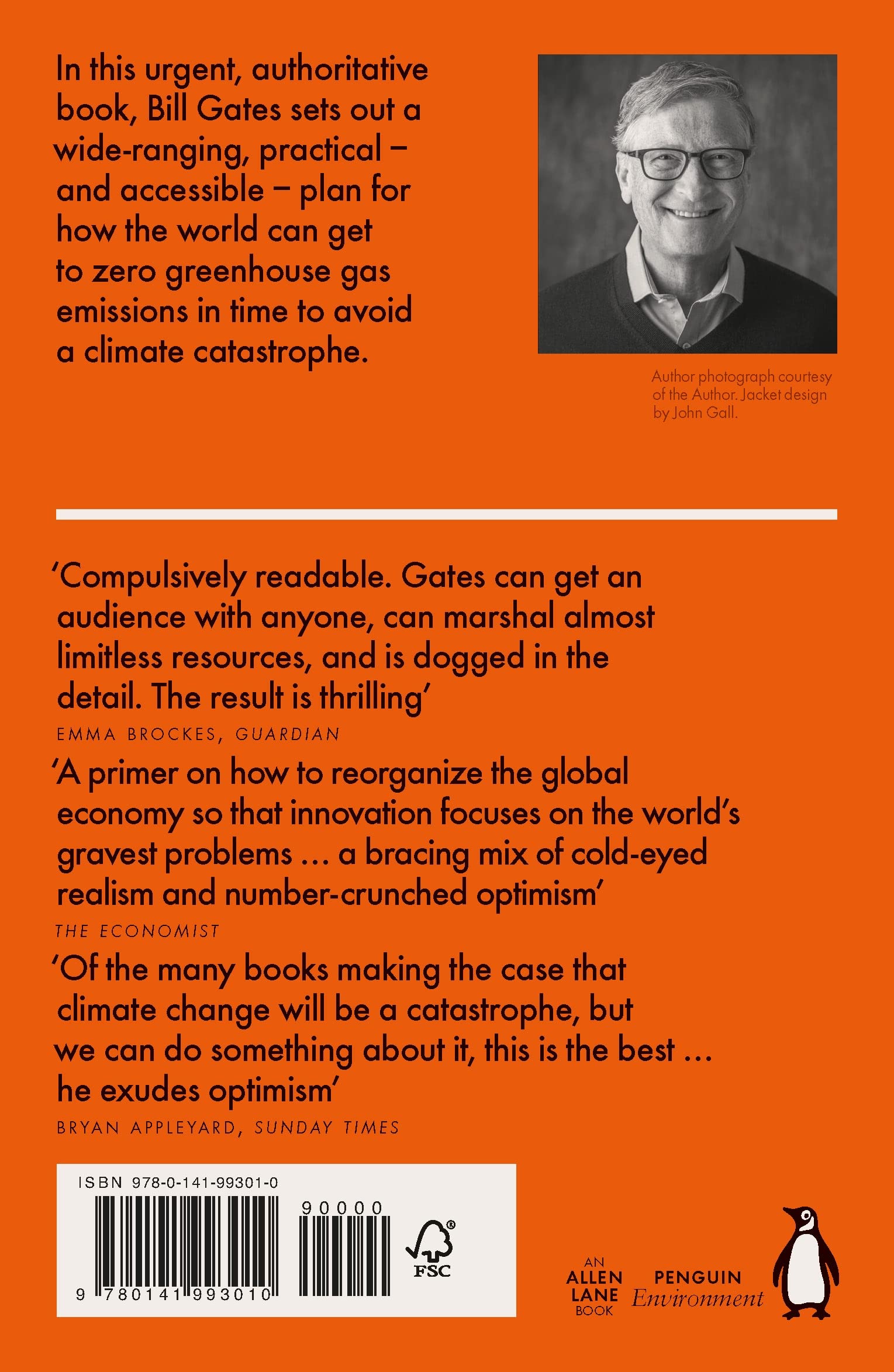
Midway through, Bill Gates captions a picture of himself, grinning from ear to ear in a fertiliser factory in Tanzania. He says "I'm having even more fun than it looks."This simple joy at knowledge is why I've always liked him, and makes this book such a delight.Gates does what you'd expect; he maps out the different challenges we face due to climate change (across five categories - how we plug in, make things, grow things, get around, keep cool and stay warm), and looks to the innovations we have and need to overcome them.This in itself was worth documenting, but what he does around this is even better; he talks about adapting to the realities of climate change, the role of policy, the practical steps on the road to zero and the opportunities for personal engagement in tackling the problem.Hayekian economists will hate Bill Gates for this - he articulates what to me is a fairly obvious premise - that policy and economic intervention is required to eliminate the 'green premium' (through subsidy on break through emissions-reducing tech and tax on carbon). As well as large scale R&D, job creation, guarantees for support for long term climate reducing technologies and much more. Basically, a green "New deal".I started reading this book concerned that it would contain rather a lot of rose tinted optimism from a technophile, and whilst it does some of that... it's tempered with a heavy dose of pragmatism and understanding as to how the world works. Gates has no illusions about how tough this is.But again, the toughness proves no barrier to his keen intellect and amazing access. He has spoken to global experts in economic and political theory around energy transition (as well as technology) and makes really compelling arguments for what needs to happen, why, and when.What's really interesting to me is how holistic and considered the book is. He talks about some of the early promises to reduce carbon in specific contexts by 2030. And warns that they might be missteps, if they aren't part of a map to get us to zero by 2050.The complete consideration of the carbon ecosystem beyond power generation is really compelling too. He's researched low carbon cement, steel, talks with insight about low-carbon agriculture and a post-meat world. And what's even more fun, he's clearly put his money in already.He references investments to dozens of companies trying to address aspects of these problems.The world needs more billionaires like Bill Gates, and fewer like Donald Trump.And everyone should read this book, for inspiration, for hope, and for guidance.Because, after all, don't we all want to know 'How to avoid a climate disaster..."?Really good, relatively quick read.
N**N
Super accessible
Bill Gates being one of the most well-known men in the world as a result has his fair share of conspiracy theorists who target him. I mention this as it's important to have context of some of the negative reviews this book has gotten. Looking through some of them you see many haven't really elucidated why they dislike it, suggesting that they haven't really read the book.With that out of the way, I would like to talk about the positives. This is a book for laymen about Climate Change, I work in the energy industry and have to say I still learned quite a bit from this book. Climate change is a complex topic and there isn't one panacea for climate change, what the book attempts in a successful manner is to give an overview in a easy to read manner. This book isn't for subject matter experts. It highlights the various technologies available, explains how switching completely to renewables isn't as easy as it sounds, and makes suggestions of what we can do across the various aspects of life (how we eat, travel et al).I really liked that it was written in simple manner, it means that it is really accessible to lots of different people and doesn't result in you being frustrated because it is a dry read. I also like that he doesn't take a doomsday approach but instead focuses on creating hope that we can meet this challenge head on. I would hope that people who are subject matter experts take that into consideration when reviewing this book, it isn't intended for them. Instead they should consider, does this book help galvanise people to action? If so, it requires our support and hope that it encourages people to delve deeper as as a result.
R**D
Excellent, essential – and flawed
Bill Gates has a proven record of how to change the world. He has spent much of the last decade or so trying to address global health issues and his experience of trying to improve conditions for the global poor are at the heart of this book. He also has the ear of many powerful people. And he completely gets the threat of climate change and the real challenges of doing something about it. For all these reasons, this book is worth reading.It deserves high praise for its clarity and brisk style, and the comprehensiveness of its cover. You may not agree with him on every point, may not even like his prognosis, but here’s the hard reality – his plan has more chance of working than anything else I’ve read, and if you don’t think a response on this scale is necessary, then I’m afraid you’re living in a dream world.By focusing on innovation, policy and markets, Gates lays out a top-down approach for getting change done. It’s an effective plan because it mobilises power, but it does expose a flaw, which is that it ignores culture – bottom-up changes in the mindsets of individuals. Changes in attitudes to consumption can make a major difference to emissions and Gates has overlooked the importance of this contribution.But this doesn’t make him wrong to say that individuals who want to make a difference should make more effort to engage constructively in politics and markets and less time punishing themselves and others for being human. Most importantly, Gates acknowledges that lots of people will disagree with all or some of his plan, but urges anyone who wants to make a difference to spend more time doing things they support than attacking things they don’t. You can’t put it more clearly, fairly and constructively than that.This is a really important book and it’s really easy to read. It is absolutely grounded in fact, is pragmatic and hopeful. If you think Bill Gates is going to write a book about how to tear down capitalism and consumerism, you’re also in a dream world. Given that neither of these are going away any time soon, a book that lays down a realistic path to net zero without requiring the risks inherent in political revolution has to deserve attention.
Trustpilot
1 week ago
3 weeks ago