We remain fully operational. Our teams are working around the clock to ensure your deliveries continue safely.

DOWNLOAD THE APP


Copyright © 2025 Desertcart Holdings Limited
DOWNLOAD THE APP






Buy anything from 5,000+ international stores. One checkout price. No surprise fees. Join 2M+ shoppers on Desertcart.
Desertcart purchases this item on your behalf and handles shipping, customs, and support to Mexico.
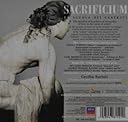
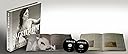
Product Description "The age of the castratos was one of the most dazzling and remarkable in European music history. Seldom has there ever been such a complete fusion of sensuousness and splendor, form and content, poetry and music, and, above all, such a perfection of vocal virtuosity, as was achieved in the glory days of the Baroque era. The legendary art of the castratos continues to exert its fascination even today, and despite the great human sacrifice it exacted, a new assessment of this extraordinary period is surely justified." - Cecilia Bartoli Cecilia Bartoli uncovers the extraordinary and cruel world of the `Castrati' and sings the glorious music they inspired. The all-new album consists almost entirely of world-premiere recordings of some of the most virtuosic music ever written for the human voice. The arias on the album are drawn from the works of Nicola Porpora (1686-1768), Antonio Caldara (c. 1670-1736), Francesco Araia (1709-1770), Carl Heinrich Graun (c. 1703-1759), Leonardo Leo (1694-1744), Leonardo Vinci (1696-1730), Riccardo Brosc hi (c. 1658-1756) and Geminiano Giacomello (c. 1692- 1740). After extensive research Bartoli has produced not only a new recording, but also a comprehensive study of the castrati and their time period through two lavishly produced and illustrated articles included in the deluxe package. Sacrificium marks the first collaboration of Il Giardino Armonico, Giovanni Antonini, and Bartoli since their Grammy® Award-winning The Vivaldi Album ten years ago. This deluxe package is a hardback book (12 x 14 cm) including 2 CDs of music including 11 world-premiere recordings. The extensive booklet includes two essays on the castrati: "Evviva il coltellino!" ("Long live the the little knife") & "Castrato Compendium" (a 108-page "A-Z" of the castrati). The entire project features lavish illustrations and photos throughout along with an additional 44-page libretto. About the Artist For more than two decades, Cecilia Bartoli has undeniably been one of the leading artists in the field of classical music. All over the world, her new operatic roles, her concert programs and recording projects - in exclusivity with Decca - are expected with great eagerness and curiosity. The exceptional amount of 6 million CDs sold, more than 200 weeks ranking in the international pop charts, numerous Golden Discs, 4 Grammys (USA), 7 Echos and a Bambi (Germany), two Classical Brit Awards (UK), the Victoire de la Musique (France) and many other prestigious awards reflect the immense success of her solo albums "Vivaldi", "Gluck", "Salieri" and "Opera proibita" and that she is firmly established as today's "best selling classical artist". Thus, Cecilia Bartoli brings Classical Music close to the hearts of millions of people throughout the world. Apart from that, she is proud that through their popularity, her projects have caused a wide-spread re-evaluation and rediscovery of the neglected composers and forgotten repertoire which she puts up for discussion. It is not surprising that Herbert von Karajan, Daniel Barenboim and Nikolaus Harnoncourt were among the first conductors Cecilia Bartoli worked with. They noticed her talent at a very early stage when she had barely completed her vocal studies with her parents in her home-town Rome. Since then, many further conductors, pianists and orchestras of highest renown have been her regular partners. In recent years, her work has begun to focus on collaborations with the most significant period instrument orchestras (Akademie für Alte Musik, Les Arts Florissants, Concentus Musicus Wien, Freiburger Barockorchester, Il Giardino Armonico, Kammerorchester Basel, Les Musiciens du Louvre, Orchestra of the Age of Enlightenment, Orchestra La Scintilla). Projects with orchestras where Cecilia Bartoli assumes the overall artistic responsibility have become increasingly important to her and were crowned by the jointly developed and performed programmes with the Vienna Philharmonic Orchestra. Cecilia Bartoli regularly sings in the most important concert halls in Europe, the United States and Japan. Her stage appearances include prestigious opera houses and festivals such as the Metropolitan Opera in New York, the Royal Opera House Covent Garden in London, La Scala in Milan, the Bavarian State Opera in Munich, the Salzburg Festival and the Zürich Opera House, where she has presented many of her operatic roles for the first time. Most recently, her roles have included Rossini's Fiorilla in "Il Turco in Italia" at Covent Garden and two Handelian heroines, Cleopatra (in "Giulio Cesare" with Marc Minkowski) and Semele (with William Christie) in Zurich. In 2007/08 Cecilia Bartoli devotes her time to the early 19th century - the era of Italian Romanticism and Belcanto - and especially the legendary singer Maria Malibran. Her 200th birthday on 24th March 2008 was marked by a historical day in Malibran's birthplace Paris: Cecilia Bartoli sang 3 concerts in one day as the centre-piece of a Malibran-Marathon at Salle Pleyel - collaborating with Lang Lang, Vadim Repin, Adam Fischer and Myung-Whun Chung - while the City of Paris showed her Barcelona Concert on a big screen outside the Hôtel de Ville, where Cecilia Bartoli's mobile Malibran Museum was stationed to honour that special day. Further bicentenary events were the CD "Maria", the DVD "The Barcelona Concert/Malibran Rediscovered", extensive concert tours as well as operatic appearances as Cenerentola, Sonnambula and Halevy's Clari - in a Malibran-opera which had not been performed since 1829. Cecilia Bartoli has been endowed with the Italian Knighthood and is an "Accademico effettivo" of Santa Cecilia, Rome, a French "Chevalier des Arts et des Lettres" and an "Honorary Member" of the Royal Academy of Music, London. Review: PREMIERE RECORDINGS WITH A FOCUS ON FARINELLI AND CAFARELLI - If you are a Bartoli devotee, and/or a lover of music written for the castrato voice, this album is for you. Me... I'm not a great lover of the sound of Cecilia Bartoli nor of Il Giardino Armonico on `every' track, BUT the CD is still a MUST HAVE. On a couple of tracks the playing seems too `full-blown'... and if I could find one word to express what I least like about Bartoli's singing it is her 'earnestness'... a tendency for the frenetic, overdone, and as another reviewer wrote "her trademarked enthusiasm (sometimes too much of a good thing)"... but this is personal, since I concede Bartoli has great range and coloratura skill etc etc. Much of the music on this disc was originally sung by the castrati stars Farinelli (7 arias) and Cafarelli (3 Porpora arias... Porpora was his teacher): there are two arias composed by Carl Heinrich Graun (from "Demofoonte" 1746, and "Adriano in Siria" 1746) performed by Porpora's pupils Salimbeni and Porporino. The arias are wonderful, ranging from `rage' and `heroic' arias with plenty of fireworks and vocal leaps, `simile' arias mimicking butterflies and nightingales, to reflective, introspective laments or prayers. There are many highlights on the album, include the beautifully expressive farewell aria "Parto, ti lascio, o cara" from Porpora's "Germanico in Germania." Exceptionally, all but one of the 12 arias on the disc are world premiere recordings. That exception is "Nobil onda" from Nicola Porpora's "Adelaide" 1723. Bartoli was pipped at the post by Karina Gauvin's recent album "Porpora Arias". Incidentally, this is another valuable album (A MUST HAVE) as it too has many premiere recordings. It also helps to express my earlier point about the sound of Il Giardino Armonico... a sound I think is occasionally too harsh, full, and heavily instrumental. Il Complesso Barocco's introduction in "Nobil onda" with harpsichord seems to rest more easily with these ears of mine!!! These world premieres, and the focus on different composers but largely two singers, makes it a tight, well thought out and well-researched album. The `book' and `sleeve' (rather than jewel case) format house the CDs, so it's a nice presentation, and the information and index/dictionary included are a useful though not academic read. As others note, there are 2 CDs. The second CD includes 3 `exemplary' arias by Riccardo Broschi, Haendel, and Giacomelli, originally sung by Farinelli and Cafarelli. In the case of Haendel's "Ombra mai fu," this aria has been covered by almost everyone! Why not make it a proper double album with more premiere arias?... it would have been a magnificent opportunity! P.S. For those interested in Farinelli, don't look past Vivica Genaux's "Arias for Farinelli." She has an amazing, unique mezzo soprano sound. For music sung by Farinelli at the end of his career, also have a listen to Max Emanuel Cencic's "Domenico Scarlatti: Cantate d'amour" and "Domenico Scarlatti: Cantatas," both put out by Capriccio. The music by D. Scarlatti was written at the end of his career, 1740s. Farinelli sung these at the Spanish court, having arrived there in 1737. It is thought that many of the texts in these cantatas were penned by Metastasio, and written especially for Farinelli. Cencic is a countertenor, though he considers himself a mezzo-soprano. He has a wonderful voice with much depth, and though not full of pyrotechnics (Farinelli was then in his 40s) the cantatas on both albums are very rich and expressive. Total different sound to Bartoli's album of course, just thought it was worth mentioning if you are exploring other albums! Review: You'll love it if you love this sort of thing - I resisted buying Cecilia Bartoli's recording entitled Sacrificium but gave in after reading the raves on this and other review sites. I'm glad I did. Sacrificium is a compilation of highly ornamented baroque arias composed by lesser known lights of the 17th and 18th centuries. Bartoli is an amazing singer and there is no gainsaying her spectacular vocal technique, musical taste and intelligence. A trait of her singing that I never liked was that machine-gun popping she often makes in fast passages, a trait that is not in evidence here. The florid stuff is spectacularly performed, the more gentle and lyrical arias are quite beautifully phrased and vocalized. Initially I resisted this cd because I found the cover art to be in execrably bad taste, reminding me of some of Michael Jackson's more androgynous glossies. This album was released not too long after Michael Jackson had died. The combination of the two events was disturbing and I vowed not to succumb to this musical circus act, as it then seemed to me. The graphic and morbid display of the instruments of castration and the paintings from the day in the huge booklet (this is the limited edition) are a bit much, especially as they are clothed in the light of pitying regret on the part of the commentators in the album notes. We can't possibly imagine why people did what they did hundreds of years ago, any more than we can fathom why people do what they do right now. I have often wandered in society and wondered if castration might be a viable solution to most of our social problems. But that's an argument for another place. These album notes are still some of the most concise and interesting reading I've ever run across in a recording. Why don't Decca and the other major labels take the time and trouble to do this with all their products? They should limit the ceaseless flow of mediocre audio and filmed performances and turn out top quality products like Sacrificium. If you are like me, not a die-hard Ceci fan but appreciate truly great and masterful singing of never-before-heard or recorded music, then I highly recommend this album. It is Bartoli at her very pinnacle and is tremendously enjoyable.
| ASIN | B002GYGSXG |
| Best Sellers Rank | #95,263 in CDs & Vinyl ( See Top 100 in CDs & Vinyl ) #2,620 in Opera & Vocal (CDs & Vinyl) #8,444 in Classical (CDs & Vinyl) |
| Customer Reviews | 4.7 4.7 out of 5 stars (210) |
| Date First Available | July 30, 2009 |
| Is Discontinued By Manufacturer | No |
| Label | Decca |
| Manufacturer | Decca |
| Number of discs | 2 |
| Product Dimensions | 5.5 x 4.9 x 0.9 inches; 0.01 ounces |
K**S
PREMIERE RECORDINGS WITH A FOCUS ON FARINELLI AND CAFARELLI
If you are a Bartoli devotee, and/or a lover of music written for the castrato voice, this album is for you. Me... I'm not a great lover of the sound of Cecilia Bartoli nor of Il Giardino Armonico on `every' track, BUT the CD is still a MUST HAVE. On a couple of tracks the playing seems too `full-blown'... and if I could find one word to express what I least like about Bartoli's singing it is her 'earnestness'... a tendency for the frenetic, overdone, and as another reviewer wrote "her trademarked enthusiasm (sometimes too much of a good thing)"... but this is personal, since I concede Bartoli has great range and coloratura skill etc etc. Much of the music on this disc was originally sung by the castrati stars Farinelli (7 arias) and Cafarelli (3 Porpora arias... Porpora was his teacher): there are two arias composed by Carl Heinrich Graun (from "Demofoonte" 1746, and "Adriano in Siria" 1746) performed by Porpora's pupils Salimbeni and Porporino. The arias are wonderful, ranging from `rage' and `heroic' arias with plenty of fireworks and vocal leaps, `simile' arias mimicking butterflies and nightingales, to reflective, introspective laments or prayers. There are many highlights on the album, include the beautifully expressive farewell aria "Parto, ti lascio, o cara" from Porpora's "Germanico in Germania." Exceptionally, all but one of the 12 arias on the disc are world premiere recordings. That exception is "Nobil onda" from Nicola Porpora's "Adelaide" 1723. Bartoli was pipped at the post by Karina Gauvin's recent album "Porpora Arias". Incidentally, this is another valuable album (A MUST HAVE) as it too has many premiere recordings. It also helps to express my earlier point about the sound of Il Giardino Armonico... a sound I think is occasionally too harsh, full, and heavily instrumental. Il Complesso Barocco's introduction in "Nobil onda" with harpsichord seems to rest more easily with these ears of mine!!! These world premieres, and the focus on different composers but largely two singers, makes it a tight, well thought out and well-researched album. The `book' and `sleeve' (rather than jewel case) format house the CDs, so it's a nice presentation, and the information and index/dictionary included are a useful though not academic read. As others note, there are 2 CDs. The second CD includes 3 `exemplary' arias by Riccardo Broschi, Haendel, and Giacomelli, originally sung by Farinelli and Cafarelli. In the case of Haendel's "Ombra mai fu," this aria has been covered by almost everyone! Why not make it a proper double album with more premiere arias?... it would have been a magnificent opportunity! P.S. For those interested in Farinelli, don't look past Vivica Genaux's "Arias for Farinelli." She has an amazing, unique mezzo soprano sound. For music sung by Farinelli at the end of his career, also have a listen to Max Emanuel Cencic's "Domenico Scarlatti: Cantate d'amour" and "Domenico Scarlatti: Cantatas," both put out by Capriccio. The music by D. Scarlatti was written at the end of his career, 1740s. Farinelli sung these at the Spanish court, having arrived there in 1737. It is thought that many of the texts in these cantatas were penned by Metastasio, and written especially for Farinelli. Cencic is a countertenor, though he considers himself a mezzo-soprano. He has a wonderful voice with much depth, and though not full of pyrotechnics (Farinelli was then in his 40s) the cantatas on both albums are very rich and expressive. Total different sound to Bartoli's album of course, just thought it was worth mentioning if you are exploring other albums!
P**N
You'll love it if you love this sort of thing
I resisted buying Cecilia Bartoli's recording entitled Sacrificium but gave in after reading the raves on this and other review sites. I'm glad I did. Sacrificium is a compilation of highly ornamented baroque arias composed by lesser known lights of the 17th and 18th centuries. Bartoli is an amazing singer and there is no gainsaying her spectacular vocal technique, musical taste and intelligence. A trait of her singing that I never liked was that machine-gun popping she often makes in fast passages, a trait that is not in evidence here. The florid stuff is spectacularly performed, the more gentle and lyrical arias are quite beautifully phrased and vocalized. Initially I resisted this cd because I found the cover art to be in execrably bad taste, reminding me of some of Michael Jackson's more androgynous glossies. This album was released not too long after Michael Jackson had died. The combination of the two events was disturbing and I vowed not to succumb to this musical circus act, as it then seemed to me. The graphic and morbid display of the instruments of castration and the paintings from the day in the huge booklet (this is the limited edition) are a bit much, especially as they are clothed in the light of pitying regret on the part of the commentators in the album notes. We can't possibly imagine why people did what they did hundreds of years ago, any more than we can fathom why people do what they do right now. I have often wandered in society and wondered if castration might be a viable solution to most of our social problems. But that's an argument for another place. These album notes are still some of the most concise and interesting reading I've ever run across in a recording. Why don't Decca and the other major labels take the time and trouble to do this with all their products? They should limit the ceaseless flow of mediocre audio and filmed performances and turn out top quality products like Sacrificium. If you are like me, not a die-hard Ceci fan but appreciate truly great and masterful singing of never-before-heard or recorded music, then I highly recommend this album. It is Bartoli at her very pinnacle and is tremendously enjoyable.
E**N
Baroque
I'm a fan of Cecilia's work in general, but I can't bring myself to compare this to the several other CD's of hers in my collection. It's an ambitious undertaking on her part and she performs over the top as usual. That said, soprano vocal is an acquired taste which can really grate the nerves of the faint hearted. If you appreciate the styles of composers such as Mendelssohn, Handel, and Vivaldi, this is probably going to appeal to you. I don't wish to say too much. It's an unusual selection from a tumultuous historical period.
J**J
I heard Bartoli interviewed on Radio 4's Woman's Hour and was so interested I bought 3 of her CDs at random. She is truly stunning. I read , when purchasing from Amazon, some snooty, intellectual reviews and I couldn't disagree more! To have such a wonderful God given talent she can sing what she likes for me. Let's educate the populace to heavenly sounds-even if some of the words are a bit naughty-I don't know Italian anyway; but it sure sounds good.Jane
L**O
Ottimo venditore, prodotto conforme alla descrizione.+++
T**R
Bewunderung genießt Cecilia Bartoli eh zu Recht, als Sängerin, die mit ganz eigenem stimmlichen Reiz immer außerordentlich fasziniert, als begnadete Interpretin, deren Repertoire-Entdeckungs- und Wiedererweckungslust zu längst vergessenen, verschollenen, verblüffenden, alten/neuen Hörgenüssen führt ..., Cecilia Bartoli, die in ihrer eigenen gesanglichen Art auf unnachahmliche Weise stets tief berührt, als Mensch mit vitaler Ausstrahlung, natürlichem Charme und großem Charisma beeindruckt. Nun gebührt ihr zu alldem neuerlich größter Respekt und größte Anerkennung, in die Rolle diffiziler Kastraten-Gesangskunst geschlüpft zu sein, mit ihrem neuen Album 'Sacrificium' ein sowohl stimmlich, interpretatorisch, orchestral (Orchester: Il Giardino Armonico, Dirigent: Giovanni Antonini) wie gesamtkünstlerisch einzigartiges Denkmal geschaffen zu haben, zur Erinnerung an faszinierende Kompositionen, außergewöhnliche Stimmen, menschlich bewegende Schicksale gleichermaßen, so durchaus auch als Imperativ zu verstehen ('Denk mal ...!'). Ganz außerordentliche Kunst! Disk 1: 01. Come nave in mezzo all'onde [Siface] from Act II of Siface 02. Profezie, di me diceste [Sedecia] from Sedecia 03. Cadrò, ma qual si mira [Demetrio] from Berenice 04. Parto, ti lascio, o cara [Arminio] from Act II of Germanico in Germania 05. Usignolo sventurato [Siface] from Act II of Siface 06. Misero pargoletto [Timante] from Act III of Demofoonte 07. In braccio a mille furie [Mirteo] from Act III of Semiramide riconosciuta 08. Qual farfalla [Decio] from Act II of Zenobia in Palmira 09. Nobil onda [Adelaide] from Adelaide 10. Deh, tu bel Dio d'amore ... Ov`è il mio bene? [Farnaspe] from Act II of Adriano in Siria 11. Chi temea Giove regnante [Berenice] from Farnac 12. Quel buon pastor son io [Abel] from Act I of La Morte d'Abel Disk 2: 01. Son qual nave [Arbace] from Act III of Artaserse (Pasticcio) 02. Ombra mai fu [Serse] from Act I of Serse 03. Sposa, non mi conosci [Epitide] from Act III of Merope Cecilia Bartoli dokumentiert mit stimmlicher Variabilität ohnegleichen einfühlsamst die so genannte »Kastratenkunst« mit diesem neuen Album, das erstmals umfassend das Phänomen dokumentiert. Seit der Spätantike gab es den Verstümmelungswahn zu Gunsten des 'ewigen (Knaben)Soprans'; im 18. Jahrhundert galt der Ausruf »Es lebe das Messerchen!« in Italiens Opernhäusern als höchstes Lob für die auf der Bühne ihre Vokalkunst dem vergnügungssüchtigen, amoralischen Publikum zur Schau stellenden Kastraten. Bis zum 19. Jahrhundert gab es (obwohl verboten) diese Barbarei; der letzte (bekannte) Kastrat 'Alessandro Moreschi' starb 1922. In der Musik betonte man bislang die artistische, wohlklanggesättigte Seite dieses musikalischen Phänomens. Cecilia Bartoli lässt bei diesem spektakulären Phänomen auch die Schattenseite nicht vergessen: Unsägliches Leid, Demütigungen und unmenschliche Profitsucht, die mit dem Begriff »Kastrat« verbunden sind. So ist das Album »Sacrificium« auch eine Verbeugung vor zigtausend Knaben, die alljährlich dem obskuren Kunstgenuss einiger weniger geopfert wurden. Fazit: Faszinierend, bewegend interpretiert, sehr hörenswert! Und ein ganz wichtiges 'Denk mal ...!', das nicht nur in die Sammlung der Bartoli-Fangemeinde gehört. Danke Cecilia.
M**U
Merci Icare 69 Je n'ai encore jamais voté "pour" un "commentaire utile" mais là ce ne serait pas honnete de ne pas le faire pour toi. D'une part ,j'ai tout de suite été écouter les extraits et ,je crois que je vais acheter l'album rapidement . Je connais C.Bartoli, et avec ma compagne nous sommes assez fans. Mais depuis quelques temps j'ai fait une pause ,pour ne pas me lasser. Là ,avec cet album c'est une sorte de maturité en plus et bien inspiré par rapport à ce qu'elle fait de mieux ! ?...c'est nul ce que je viens de dire! Plus simplement : elle a fait un tres bon choix , et mon intuition me dit que c'est un album de 1 er choix ,où la générosité est palpable, tandis que le talent d'artistes artisan, de la musique à la technique en revenant à la voix, se met humblement au service de l'art, pour le plus grand plaisir de l'auditeur. Je crois que cet album est une fête et une offrande, avec une belle qualité à la hauteur de la personnalité de Cecilia Bartoli . Na ! ^^
C**2
The title comes from the sacrifice of young men for the greater art, but the extraordinary voice and talent of Cecilia Bartoli in this remarkable record makes you wonder if the sacrifice was really justifiable!
Trustpilot
1 month ago
1 week ago