
DOWNLOAD THE APP


Customer Services
Copyright © 2025 Desertcart Holdings Limited
DOWNLOAD THE APP

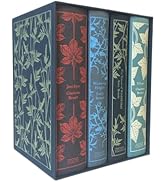
The Woman in White (Penguin Clothbound Classics) [Collins, Wilkie, Sweet, Matthew, Sweet, Matthew, Sweet, Matthew, Bickford-Smith, Coralie] on desertcart.com. *FREE* shipping on qualifying offers. The Woman in White (Penguin Clothbound Classics) Review: A rich, absorbing mystery from a true master - The Woman in White opens with a mysterious encounter between artist Walter Hartright and an unnamed woman dressed entirely in white. Hartright runs into her late at night along the dark road from Hampstead Heath to London. The woman is clearly frightened, fleeing some unseen pursuer. She asks Hartright for directions, which he gives. He doesn’t know who she is, but his instinct tells him to help her. In her disconcerted ramblings, she tells him she had spent a brief portion of her youth in the country house he is planning to visit, and she warns him of an evil man he will soon encounter. After helping her on her way, Hartright eavesdrops on her pursuers: wardens from the insane asylum from which she escaped. Although he knows she’s distraught and probably not in her right mind, he can’t entirely dismiss what she’s told him because she has correctly named the inhabitants of the distant house to which he is about to travel. How’s that for a setup? The great thing about Wilkie Collins at his best is that he sets the highest expectations in the reader and then exceeds them on every level. Here, as in The Moonstone, he’s at his best. The breadth, intricacy, and coherence of his plots are extraordinary, the quality of his prose is superb, his characters are vivid and alive, and the worlds he creates are richly textured and utterly absorbing. As in The Moonstone, this story is told from multiple perspectives. In fact, it may be the first novel to be told by multiple narrators. The primary narrator, Hartright, makes a disclaimer up front, saying that the story will not be told in the usual novelistic form, but more in the form of a court case, in which each of the key players testifies in their own words about what they know. Collins shows an extraordinary range of styles as each narrator has a distinctive voice and perspective. Two of the least likable characters, the cunning and evil Count Fosco and the whiny, selfish Mr. Fairlie, offer up the funniest narratives in the book. Before we get to hear their sides of the story, we have seen them both act heartlessly, inflicting cruelty in their various ways on poor, virtuous Laura Fairlie. If these two were given a chapter to narrate in a contemporary mystery, the author would probably have them tell their story in nasty tones and malevolent terms to reinforce the reader’s hatred of them. But what, at bottom, allows one person to treat another heartlessly? In many cases, it’s a sense of arrogance, a sense that one is so far above the person they mistreat that the victim doesn’t matter and that all consideration is due to the perpetrator. This kind of arrogance is ripe for satire, and when Count Fosco and Mr. Fairlie do finally get their turns to narrate, we see the story through their hilariously distorted perspectives. The way they see the world around them is disturbing, to be sure, but they’re so self-absorbed and so colossally egotistical you can’t help but laugh. These chapters are some of the funniest I’ve ever read. The hardest thing about reading Collins is that the next book you read after his feels pale and thin. He truly was a master, and you can see in his works the pattern upon which almost all subsequent mystery and thriller writers built their work. I won’t try to summarize this one. I’ll just say that if you’re looking for a deeply absorbing read in which to immerse yourself, put this on your list. Review: Beautiful 19th century writing - This book is an amazing teaching tool. Not because it conveys any great lessons in life or exhibits profound understanding and insight but because it so clearly delineates the beauty and differences in 19th century writing and 21st century writing. The story is definitely very gothic and one of the best mysteries available. It is in the length of the story - most especially the length of the writing that will probably cause many readers to balk. The descriptions, the conversations, the ideas... virtually everything is pondered at length. Reading this in today's society, where TV, the internet, pictures, videos etc. etc. grant us instant understanding and gratification, can be a tedious and boring job. In order to truly appreciate Collins writing, one must put themselves in the shoes of a reader amid 19th century standards. Most people knew little of life outside their small communities. Few traveled or had experience with people and places beyond the immediate. Thus the need for long explanations and descriptions. It was the only door open for a reader to experience life beyond. A perfect example would be the description of Count Fosco, a very large Itallian man. His description was so intricate and detailed as to take pages (not paragraphs - pages.) To us, that description might seem never-ending. To one who had probably never seen, let alone known an Italian man - good or bad - it described one so perfectly that the reader (without our modern day photography) could picture him with ease. Therefore, any accurate review of this book must allow for those differences. Readers who enjoy the beauty of the written word just for itself will absolutely revel in this story. Those who are more story driven will need to put on their patience caps to get through it. The story itself is immaculately well-done, it is dark without being terrifying, riveting without being graphic. It is just couched within a style long forgotten and truly appreciated.




| Best Sellers Rank | #66,060 in Books ( See Top 100 in Books ) #220 in Classic Literature & Fiction #730 in Gothic Fiction #2,508 in Psychological Thrillers (Books) |
| Customer Reviews | 4.3 out of 5 stars 14,437 Reviews |
A**D
A rich, absorbing mystery from a true master
The Woman in White opens with a mysterious encounter between artist Walter Hartright and an unnamed woman dressed entirely in white. Hartright runs into her late at night along the dark road from Hampstead Heath to London. The woman is clearly frightened, fleeing some unseen pursuer. She asks Hartright for directions, which he gives. He doesn’t know who she is, but his instinct tells him to help her. In her disconcerted ramblings, she tells him she had spent a brief portion of her youth in the country house he is planning to visit, and she warns him of an evil man he will soon encounter. After helping her on her way, Hartright eavesdrops on her pursuers: wardens from the insane asylum from which she escaped. Although he knows she’s distraught and probably not in her right mind, he can’t entirely dismiss what she’s told him because she has correctly named the inhabitants of the distant house to which he is about to travel. How’s that for a setup? The great thing about Wilkie Collins at his best is that he sets the highest expectations in the reader and then exceeds them on every level. Here, as in The Moonstone, he’s at his best. The breadth, intricacy, and coherence of his plots are extraordinary, the quality of his prose is superb, his characters are vivid and alive, and the worlds he creates are richly textured and utterly absorbing. As in The Moonstone, this story is told from multiple perspectives. In fact, it may be the first novel to be told by multiple narrators. The primary narrator, Hartright, makes a disclaimer up front, saying that the story will not be told in the usual novelistic form, but more in the form of a court case, in which each of the key players testifies in their own words about what they know. Collins shows an extraordinary range of styles as each narrator has a distinctive voice and perspective. Two of the least likable characters, the cunning and evil Count Fosco and the whiny, selfish Mr. Fairlie, offer up the funniest narratives in the book. Before we get to hear their sides of the story, we have seen them both act heartlessly, inflicting cruelty in their various ways on poor, virtuous Laura Fairlie. If these two were given a chapter to narrate in a contemporary mystery, the author would probably have them tell their story in nasty tones and malevolent terms to reinforce the reader’s hatred of them. But what, at bottom, allows one person to treat another heartlessly? In many cases, it’s a sense of arrogance, a sense that one is so far above the person they mistreat that the victim doesn’t matter and that all consideration is due to the perpetrator. This kind of arrogance is ripe for satire, and when Count Fosco and Mr. Fairlie do finally get their turns to narrate, we see the story through their hilariously distorted perspectives. The way they see the world around them is disturbing, to be sure, but they’re so self-absorbed and so colossally egotistical you can’t help but laugh. These chapters are some of the funniest I’ve ever read. The hardest thing about reading Collins is that the next book you read after his feels pale and thin. He truly was a master, and you can see in his works the pattern upon which almost all subsequent mystery and thriller writers built their work. I won’t try to summarize this one. I’ll just say that if you’re looking for a deeply absorbing read in which to immerse yourself, put this on your list.
T**Y
Beautiful 19th century writing
This book is an amazing teaching tool. Not because it conveys any great lessons in life or exhibits profound understanding and insight but because it so clearly delineates the beauty and differences in 19th century writing and 21st century writing. The story is definitely very gothic and one of the best mysteries available. It is in the length of the story - most especially the length of the writing that will probably cause many readers to balk. The descriptions, the conversations, the ideas... virtually everything is pondered at length. Reading this in today's society, where TV, the internet, pictures, videos etc. etc. grant us instant understanding and gratification, can be a tedious and boring job. In order to truly appreciate Collins writing, one must put themselves in the shoes of a reader amid 19th century standards. Most people knew little of life outside their small communities. Few traveled or had experience with people and places beyond the immediate. Thus the need for long explanations and descriptions. It was the only door open for a reader to experience life beyond. A perfect example would be the description of Count Fosco, a very large Itallian man. His description was so intricate and detailed as to take pages (not paragraphs - pages.) To us, that description might seem never-ending. To one who had probably never seen, let alone known an Italian man - good or bad - it described one so perfectly that the reader (without our modern day photography) could picture him with ease. Therefore, any accurate review of this book must allow for those differences. Readers who enjoy the beauty of the written word just for itself will absolutely revel in this story. Those who are more story driven will need to put on their patience caps to get through it. The story itself is immaculately well-done, it is dark without being terrifying, riveting without being graphic. It is just couched within a style long forgotten and truly appreciated.
J**.
Wilkie at His Best, Again - Great Villian You Love to Hate
Let me first state that this is the fifth book that I have read by Wilkie (Dead Secret, Haunted Hotel, Moonstone, and No Name). I went into this book with some bias since I have very much like the other stories that I have read by him. I will say that this book did not disappoint. This is a very good book that I would recommend. With that being said, the book does begin a little on the slow side. However, after the first 100 pages or so the story really begins to pick up and does not stop until the end. This is a story, not so much about the Woman in White, as it as about Laura and Marian. Marian, although being somewhat "ugly", turned out to be my favorite character, along with Count Fosco. The Woman in While plays a small but key role in the book. The mystery surrounding her makes the book very interesting since she seems to hold the key to the demise of Sir Percival Glyde. Percival has a secret that can cause him great pain and social harm. This is the mystery of which the Woman in White knows and is trying to communicate to Laura so to save her from Percival and Count Fosco. Also, it does come out in the end how Laura and the Woman in White look so much alike. You must put aside your doubts about so many conincidences and remember this is just a story. If you can do this, the book will be so much better. Count Fosco: what can I say about him. He is one of the best villians in literature. Deep down you know he is bad guy. Deep down Laura and Marian knows he is a bad guy but he is such a gentleman. He can talk in a way that is degrading but he does it in such a way that the characters don't even realize they are being insulted. He is also very cunning and smart. However, he does have one weakness that comes through in the end. It is not the looks of a woman that is his weakness but an admiration of this person on an intellectual level. This woman, and I will not give it away, is his match when it comes to cunning and wit. He realizes this and acknowledges it. In the end, you love to hate Count Fosco since you know he is the brains behind the whole conspiracy but what a gentleman. After the slow beginning, the book picks up and does not disappoint. If you have read the Moonstone or No Name, which in my opinion are equal to or better than this book, the Woman in White will not let you down. If you have read Woman in White and are thinking about Wilkie's other works, then I sugget the Moonstone and/or No Name. In the end, read this book. You will not be disappointed that you did. It is a little long (645 pages in the modern library edition) but I read it in a week. It is an easy, enjoyable read and worth the time.
W**E
One of the FIRST Mystery Novels is Still a Classic.
In my opinion, "The Women In White" was a great mystery novel, one of the earliest of the genre. I came across the name of the 19th century author Wilkie Collins when another of his novels, "The Moonstone" made a recent "Top 100 Books" list, I decided to take a flyer (in both Kindle & Audible formats!) on that one, along with this other of his once-runaway best selling novels. I'm glad I did! I found the book to be extremely well-written, with an intricately planned out, frequently suspenseful, airtight mystery, and full of interesting, well-defined characters. Marian Holcombe, Laura Fairlie, Walter Hartright, Anne Catherick and Sir Percival Glyde were among the major characters, and their stories were very engrossing and compelling. Other lesser, but no less interesting, characters bolster the story and add to the suspense. But two characters who stood out most for me were Frederick Fairlie, the inimitable master of the Limmeridge House and the larger-than-life Count Fosco, whose actions drive much of the mysterious doings right up to the very end. I found myself absorbed in the tale, trying to identify who was friend of the protagonists and who was foe and attempting to guess where the well-constructed mystery was going next. And I was never disappointed. One thing I do think worth noting for potential readers is in regard to Collins' writing style. As is typical of the era, the writing is full of the Victorian love of detail, minute observations, and elaborate literary flourishes. (A print copy of the book would clock in at over 700 pages!). His is almost the complete opposite of the sparse, bare-bones style that the work of writers like Hemingway have made us accustomed to today. (It seems to me that Collins says nothing in 10 words that he can't say in 30!) So I do include that caveat to those who may prefer quick read done in a modern, fast-paced style. This novel requires some patience. And fwiw, along the lines of eras and styles; with the story being set in 1850 England, "The Woman In White" also provided me with a detailed glimpse of those times, how people lived and what that society thought, something I personally always find interesting and enlightening in my reading material! In conclusion; for me, "The Women In White" very worthwhile experience.
A**R
dated classic -- very condescendinng toward women
It feels strange to be giving only three stars to a "classic." But having plowed through this Victorian bestseller, I found quite a bit to admire and some things that were sadly dated. On the plus side, the narration is very innovative for its time, telling the mysterious story of the "Woman in White" and the evil Sir Percival from many different points of view. Some of the minor characters spring beautifully to life as they tell their part of the story. The author has a keen eye for Victorian hypocrisy and sham piety and a sly sense of humor. The book's greatest weakness, apart from its Victorian sentimentality, is in its patronizing attitude to women which may have reflected its times (although one certainly doesn't feel that way reading the Brontes or some other contemporaries) but seems almost unbearable today. The "heroine" Laura is such a weak, pathetic creature that one doesn't see her attraction at all. She is treated like a veritable infant by her lover, Walter, as well as her half-sister. Important news is kept from her lest she sicken to the point of death or go mad and she is kept in a cocoon of ignorance for vast swathes of the book. She is truly a helpless heroine. Women are truly powerless in this era against the machinations of unscrupulous men -- but they were surely not as helpless and pathetic as this. Her sister Marian is a much more spirited creature but even she almost dies after getting a bit wet in the rain. I felt she and Walter would have made a far better match but Marian is described as being ugly while Laura has the fair beauty of a china doll. Marian ends up cast in the role of the maiden aunt, an unfair fate for such a lively and self-reliant character. One strength of the book is its most memorable character, the Italian Count Fosco, a huge mountain of a man who loves to train little mice and plays with song birds. He is more of a pantomime villain than a true evil genius and is presented in such a colorful way that he emerges as by far the character that is the fullest of life. The author works his way to a nice climax but one never buys into the love affair at the center of the novel because the two principles are such a pallid pair.
R**O
Dickens Lite
All the contrived intrigue and interesting characters of a minor Dickens work, with little of the humor, pacing, or satisfaction, it is still a wonderful insight to the contrived plotting of Victorian literature. Fun to read for a Dickens fan and anyone interested in the era.
Y**N
A Masterpiece!
This book first reached my "to-read" pile after I finished reading the Preston/Child mystery novel, Brimstone (Pendergast #5) . The mystery writing duo acknowledged that one of their characters was their homage to Collins and what is considered to be the first true mystery novel: The Woman in White. That curiosity deepened after reading Dan Simmons' Drood , where Simmons presents Wilkie Collins as his narrator in telling the tale of Charles Dickens' last days, and also presenting the two writers in a sort of Salieri-Mozart type of relationship. And when I finally sat down to read it, I found myself quite surprised how much I did enjoy it! 19th century novels are not everyone's cup of tea - although it does seem with so many being free on the Kindle and through websites like Project Gutenberg and Google Books, that more people are at least giving these books a fresh try. And this book is long - with sections that surely be entirely edited out under the thumb of a modern editor. Still, it is an important novel and one that deserves a wider audience than many other "classics." Oh, it does take a little bit to get used to the cadence of the novel - and the rampant sexism may startle some readers, but even that loses its power to shock and becomes almost comical. Like other books originally published in a weekly serial, there is a good bit of narrative overlap (compounded with Collins' verbosity) - which will be repetitive to fast readers, but those taking their time with it, may be thankful for this. Collins' love for words is evident, but he puts them to good use - particularly in his mastery of the various points-of-views he employed. Collins handles each character well, giving them their own unique voice (even the female characters - which is rather at odds with the frequently sexist comments). The basic structure of the novel itself is also quite remarkable. Collins sets each scene with an obvious eye towards basic logic, and with each section and character, it is obvious that everything was meticulously outlined before its addition into the book as a whole. It was an enjoyable read - it made me laugh a bit, and though the plot has since been "borrowed," the mystery felt familiar, but the strength of the characters prevented the book from being remotely boring. It truly is a masterpiece!
P**N
The Woman in White by Wilkie Collins: A review
This is another of those books that I've long intended to read but somehow never got around to. My resolution for 2017 is to rectify some of that neglect. The Woman in White is in the grand tradition of the densely plotted Victorian novel. It is, in fact, downright Dickensian or Jamesian in its wordiness. Modern readers who have not been exposed to the circuitous descriptions and verbiage of such writers may falter over its 600+ pages. But lovers of the language may find themselves drooling, as I did, over its skillful use. The story starts with a young drawing master, Walter Hartwright, encountering a mysterious woman dressed all in white as he walks along a moonlit London road. The woman is in distress and asks for directions which Walter gives her and sends her on her way. Soon after, he hears a policeman asking if anyone has seen the woman, who, he says, has escaped from an asylum. Walter keeps quiet and the policeman's search is unsuccessful. Walter has been engaged to teach drawing to two young ladies at Limmeridge House in Cumberland; Laura Fairlie, fair, gentle, pretty, guileless orphan whose guardian is her uncle, the hypochondriac/narcissist Frederick Fairlie, and Marian Halcombe, Laura's elder half-sister and companion, dark, strong-willed, intelligent and resourceful. Over the next few months, Walter and Laura fall in love, but Laura has already been promised (by her deceased father) to Sir Percival Glyde, Baronet, and she is determined to honor that commitment. Marian, understanding the impossible situation, advises Walter to leave the country to get over Laura. With the help of a friend, he secures a position with an archaeological expedition headed to South America. Laura, much to her sorrow, marries Glyde. It is clear from the beginning that Glyde is a villain, although it isn't certain at first just what his villainy entails. When the honeymooners return from a trip to Italy, they have Count and Countess Fosco in tow. Count Fosco is Glyde's closest friend and his wife - surprise, surprise! - is Laura's aunt, who was estranged from the family over the matter of a bequest. It soon becomes clear that both Glyde and Fosco are "embarrassed" financially and their only hope of redeeming themselves is to call on Laura for a loan from her inheritance. Her husband attempts to pressure her into signing papers that would authorize the funds, but, with Marian supporting her, she refuses. How can the nefarious duo get the funds they need? Well, if Laura were dead... Collins' complicated plot over the next few hundred pages explicates very clearly the inequality in law of women and men at that time. A woman was under the control of her father or her guardian until she married and, once married, she was under the thumb of her husband. A married woman could hardly do anything without her husband's consent. She had little recourse in the courts of the time. Willie Collins was trained in the law and he understood this very well. He created a strong and empathetic female character in Marian Halcombe and yet, resourceful as she was, she had little hope of combating the villainous Glyde and Fosco without the manly assistance of Walter Hartwright. Perhaps I was particularly sensitive to this theme, having just completed reading The Bell Jar, but it seemed to me that this book could be read as a 19th century feminist treatise. Collins effectively uses the multiple narrator strategy of telling his story by offering witness statements from all of the principal characters, much as would happen in a court of law. In spite of its length, its complicated plot and its 19th century verbiage, this is a real page-turner of a book. I found it hard to put down and I could not wait to see where the twists and turns of the plot would take me next. As an early example of the mystery novel, with Walter Hartwright standing in as the everyman detective, this sets a high bar for later writers of such novels to reach. Indeed, this has been included on some lists of the greatest novels of all time, and I would not argue with that assessment.
Trustpilot
2 days ago
1 month ago